

Master Thermal Conductivity in PVC Selection for Optimal Performance
Introduction
Mastering thermal conductivity is crucial for manufacturers seeking to optimize PVC performance across diverse applications. With PVC classified as a poor conductor of heat, its selection becomes critical for ensuring efficiency and cost-effectiveness in industries ranging from plumbing to electrical systems.
Manufacturers often struggle to understand how various factors impact thermal conductivity, leading to inefficiencies in their applications. Factors like:
- Additives
- Temperature
- Moisture content
play significant roles in influencing thermal conductivity. By understanding these complexities, manufacturers can significantly enhance the efficiency and cost-effectiveness of their PVC solutions.
Understand Thermal Conductivity and Its Importance in PVC Selection
Understanding thermal conductivity PVC is crucial for selecting the right materials, particularly in PVC applications. With a thermal conductivity PVC of about 0.19 W/m·K, PVC is classified as a poor conductor of heat compared to metals, making it ideal for specific applications where heat retention is crucial. By understanding thermal conductivity PVC, producers can make informed decisions about PVC selection, ensuring optimal performance tailored to their specific operational needs.
Consider the case study on 'Choosing the Right PVC Pipe' - it illustrates how understanding PVC's heat behavior can help businesses optimize costs and performance, directly addressing the needs of OEM Purchasing Managers. Furthermore, recent insights into the thermal conductivity PVC emphasize the significance of considering environmental factors, such as ambient temperature and the nature of the transported liquids, which can influence insulation requirements. As Kevin Pipe, an associate professor of mechanical engineering, observes, "Researchers have focused significantly on creating polymers that conduct electricity effectively... but the engineering of heat-related properties through molecular design has been largely overlooked."
By mastering heat transfer principles, manufacturers can avoid costly mistakes and enhance their operational efficiency with thermal conductivity PVC.

Identify Key Factors Affecting PVC Thermal Conductivity
Understanding the factors that influence the thermal conductivity of PVC is essential for optimizing its performance in diverse applications:
- Additives: The incorporation of fillers and plasticizers can significantly change heat conductivity. For instance, adding thermally conductive fillers like graphite can enhance the thermal conductivity of PVC, making it suitable for applications that require efficient thermal management. Recent advancements in filler technologies are further boosting these capabilities, increasing PVC's versatility across various industrial applications.
- Temperature: Thermal transmission in PVC is temperature-dependent. As temperatures rise, molecular mobility within the PVC increases, improving heat transfer. How does this characteristic affect your applications in environments with fluctuating temperatures?
- Moisture Content: Moisture plays a significant role in how PVC behaves thermally. Elevated moisture levels can enhance heat transfer, impacting performance in humid conditions. This factor is critical for applications in regions with high humidity.
- Molecular Structure: The level of crystallinity in PVC significantly impacts its heat transfer. More crystalline structures generally exhibit higher thermal conductivity compared to amorphous ones. This property is crucial for scenarios where efficient heat transfer is necessary.
- Heat Stabilizers: Due to PVC's low temperature stability, using heat stabilizers is vital to prevent degradation during processing or exposure to light. This is essential for keeping PVC reliable and effective across different applications.
Without a solid grasp of these factors, producers risk creating subpar products that fail in critical applications. For instance, a study found that PVC ceiling materials have a heat transfer rate of 0.17 W/m·K. This confirms their suitability for tropical climates, where insulation is crucial for energy efficiency. Furthermore, improvements in filler technologies are enhancing the heat management abilities of PVC, making it more adaptable in various industrial uses.

Explore Applications of PVC Based on Thermal Conductivity
The exceptional thermal conductivity of PVC opens the door to a multitude of applications, each demanding precision and reliability. Its versatility is evident in several key areas:
- Plumbing: PVC pipes are commonly used for transporting both hot and cold water. The low thermal conductivity PVC helps to reduce heat loss, making it perfect for plumbing systems.
- Electrical Conduits: In electrical applications, PVC's insulating features, along with its heat-related qualities, make it a favored option for conduits that shield wiring from heat damage and environmental influences. This insulation capability is crucial for maintaining the integrity of electrical systems.
- Building Materials: PVC is often used in window frames and insulation panels due to its ability to maintain indoor temperatures, reducing energy costs associated with heating and cooling.
- Agricultural Irrigation: In irrigation systems, PVC pipes are preferred for their durability and low heat transfer, which helps to prevent heat-related deterioration of water quality.
It's crucial to choose the right PVC formulation based on thermal conductivity PVC to ensure your projects perform at their best and have a longer lifespan. For instance, the addition of heat-conductive fillers can significantly enhance PVC's temperature management abilities, as highlighted in the case study on the improvement of heat transfer through fillers. Moreover, the case study titled 'Impact of Processing Conditions on Heat Transfer' demonstrates how heat history and processing parameters can affect PVC's heat transfer properties. Failure to select the appropriate formulation can lead to reduced performance and increased costs over time.

Implement Best Practices for Selecting PVC Materials
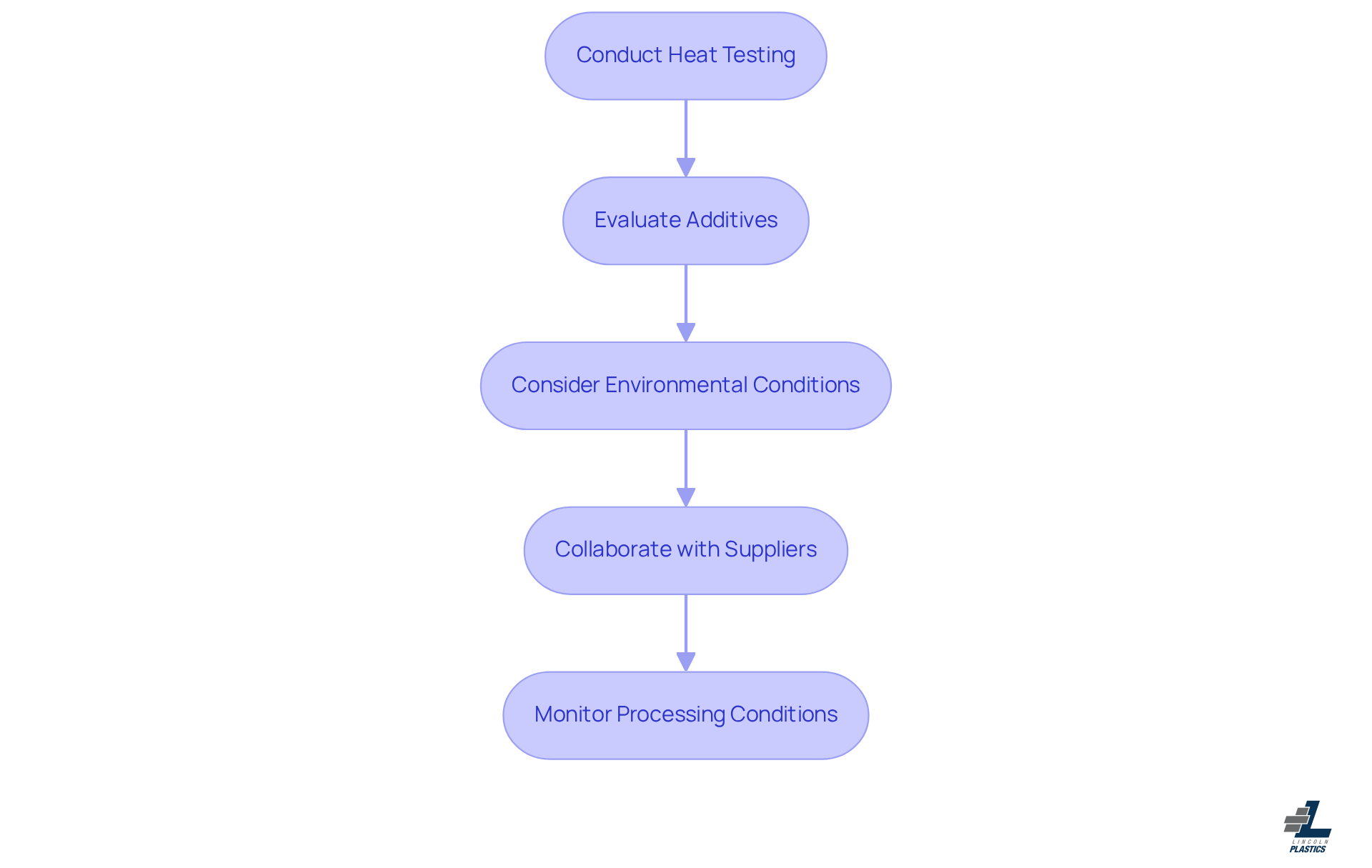
Selecting the right PVC materials is crucial for manufacturers aiming to optimize performance and reliability in their products. To achieve this, consider the following best practices:
- Conduct Heat Testing: Regularly assess the thermal conductivity PVC properties of formulations to ensure they meet the specific requirements of the intended application.
- Evaluate additives by carefully assessing their impact on thermal conductivity. Select fillers that improve heat performance without compromising other essential properties.
- Consider Environmental Conditions: Take into account the environmental conditions where the PVC will be used. For instance, applications in high-humidity areas may require formulations that resist moisture absorption.
- Collaborate with Suppliers: Work closely with resin suppliers to understand the heat characteristics of different PVC grades and how they can be tailored to meet specific performance needs.
- Monitor Processing Conditions: Maintain consistent processing conditions during extrusion to ensure uniform thermal properties across the final product.
By implementing these best practices, manufacturers not only improve product quality but also position themselves for long-term success in a competitive market.
Conclusion
Mastering thermal conductivity in PVC is crucial for manufacturers aiming to optimize performance and avoid costly pitfalls. By selecting the right materials based on their thermal properties, manufacturers can enhance efficiency and reliability, ultimately leading to better product outcomes. These insights show just how critical it is to master thermal conductivity to steer clear of costly mistakes and ensure that PVC products meet the specific needs of their intended applications.
Key factors influencing PVC's thermal conductivity include:
- The use of additives
- Temperature variations
- Moisture content
- Molecular structure
- The incorporation of heat stabilizers
Each of these elements plays a critical role in determining how well PVC performs in different environments. For instance, the addition of thermally conductive fillers can significantly improve heat management, making PVC suitable for a wider range of industrial applications. Furthermore, understanding these factors allows manufacturers to make informed decisions that align with their operational requirements.
The significance of thermal conductivity in PVC selection cannot be overstated. By implementing best practices such as:
- Conducting heat testing
- Evaluating additives
- Collaborating with suppliers
Manufacturers can optimize their PVC materials for enhanced performance. By prioritizing thermal conductivity, manufacturers can not only enhance their product offerings but also secure a competitive edge in the market. For tailored solutions and expert guidance, reaching out to Lincoln Plastics can provide valuable insights and support in navigating the complexities of PVC material selection.
Frequently Asked Questions
What is thermal conductivity in the context of PVC?
Thermal conductivity in PVC refers to its ability to conduct heat, which is approximately 0.19 W/m·K, classifying it as a poor conductor of heat compared to metals.
Why is understanding thermal conductivity important for PVC selection?
Understanding thermal conductivity is crucial for selecting the right PVC materials for specific applications, particularly where heat retention is important, ensuring optimal performance tailored to operational needs.
How does thermal conductivity affect the performance of PVC in applications?
By understanding PVC's thermal conductivity, producers can make informed decisions that optimize costs and performance, particularly in applications like piping where heat behavior is critical.
What environmental factors should be considered when evaluating PVC's thermal conductivity?
Environmental factors such as ambient temperature and the nature of the transported liquids can influence insulation requirements and the overall performance of PVC.
What insights have researchers provided regarding the engineering of heat-related properties in polymers?
Researchers have noted that while there has been significant focus on creating polymers that conduct electricity effectively, the engineering of heat-related properties through molecular design has been largely overlooked.
How can manufacturers benefit from mastering heat transfer principles related to PVC?
By mastering heat transfer principles, manufacturers can avoid costly mistakes and enhance their operational efficiency when using thermal conductivity PVC in their applications.
List of Sources
- Understand Thermal Conductivity and Its Importance in PVC Selection
- Choosing the Right PVC Pipe for Efficient Thermal Performance (https://lessoamerica.com/news/industry-news/choosing-the-right-pvc-pipe-for-efficient-thermal-performance.html)
- Plastic Thermal Conductivity Reference Table - Alfa Chemistry (https://alfa-chemistry.com/plastics/resources/plastic-thermal-conductivity-reference-table.html)
- Measuring the Thermal Conductivity of Chlorinated Polyvinyl Chloride (CPVC) (https://ctherm.com/resources/newsroom/blog/measuring-the-thermal-conductivity-of-chlorinated-polyvinyl-chloride-cpvc)
- Thermal Conductivity of Common Materials (https://samaterials.com/blog/thermal-conductivity-of-common-materials.html)
- Heat-conducting plastic developed (https://phys.org/news/2014-11-heat-conducting-plastic.html)
- Identify Key Factors Affecting PVC Thermal Conductivity
- Understanding Plastic Heat Conductivity: Key Factors and Applications (https://lincoln-plastics.com/news-post/understanding-plastic-heat-conductivity-key-factors-and-applications)
- How additives affect PVC properties?|News|POLYPVC (https://polypvc.com/news/How-additives-affect-PVC-properties.html)
- Investigation of the Thermal Conductivity of Polyvinyl Chloride (Pvc) Ceiling Material Produced In Epz Calabar, For Application Tropical Climate Zones (https://academia.edu/108452679/Investigation_of_the_Thermal_Conductivity_of_Polyvinyl_Chloride_Pvc_Ceiling_Material_Produced_In_Epz_Calabar_For_Application_Tropical_Climate_Zones)
- Plastic Thermal Conductivity Reference Table - Alfa Chemistry (https://alfa-chemistry.com/plastics/resources/plastic-thermal-conductivity-reference-table.html)
- Explore Applications of PVC Based on Thermal Conductivity
- Enhancing Electrical and Plumbing Systems with PVC Pipes and Conduits (https://lessoamerica.com/news/industry-news/enhancing-electrical-and-plumbing-systems-with-pvc-pipes-and-conduits.html)
- Plastic Thermal Conductivity Reference Table - Alfa Chemistry (https://alfa-chemistry.com/plastics/resources/plastic-thermal-conductivity-reference-table.html)
- Measuring the Thermal Conductivity of Chlorinated Polyvinyl Chloride (CPVC) (https://ctherm.com/resources/newsroom/blog/measuring-the-thermal-conductivity-of-chlorinated-polyvinyl-chloride-cpvc)
- Implement Best Practices for Selecting PVC Materials
- Choosing the Right UV-Resistant PVC Pipes and Fittings for Your Project (https://lessoamerica.com/news/industry-news/673.html)
- Thermal Conductivity of Common Materials (https://samaterials.com/blog/thermal-conductivity-of-common-materials.html)
- Industry Fights Back on Misleading Report on PVC Pipe (https://asa.net/industry-fights-back-on-misleading-report-on-pvc-pipe)
- Avient Debuts New Thermal Management Formulations for Polymer Products at FIP and Equiplast 2026 | Avient (https://avient.com/news/avient-debuts-new-thermal-management-formulations-polymer-products-fip-and-equiplast-2026)
Related posts

Discover how to select reliable extrusion companies near me with our comprehensive step-by-step guide.


Discover the top 10 strong plastics ideal for heavy-duty applications. Explore their benefits!
Discover essential steps on how to improve quality in a factory for better operational performance.
