
How to Improve Quality in a Factory: 4 Essential Steps
Introduction
Quality in manufacturing isn’t just a buzzword; it’s really the backbone of operational success and keeping customers happy. As industries change, the push for better quality standards becomes super important. Manufacturers are juggling the challenge of meeting rising customer expectations while also sticking to strict regulations.
So, what can be done? This article dives into four key steps that can really change factory operations. We’ll explore:
- Effective quality control strategies
- How to empower your workforce
- The innovative technologies that can boost product quality
You might be wondering: how can manufacturers navigate this tricky landscape to not just meet, but actually exceed quality benchmarks? Let’s find out together!
Define Quality in Manufacturing
Quality in manufacturing is all about how well a product meets the specified requirements and satisfies customer expectations. It’s a multifaceted concept, and let’s break it down into some key dimensions:
- Quality standards: Products need to stick to established standards regarding dimensions, materials, and performance metrics. This is crucial! Did you know that 95% of executive and director-level respondents see assurance as essential?
- Reliability: Think about it—if an item can function consistently over time without failing, that’s essential. Reliability doesn’t just boost customer satisfaction; it also plays a big role in long-term success.
- Customer satisfaction: At the end of the day, quality reflects the needs and expectations of its users. When customers are happy, they’re more likely to come back and make repeat purchases.
- Compliance: Regulation compliance, like safety standards, is super important for ensuring that products are safe and effective. In fact, 75% of companies have reported a product recall in the past five years, highlighting just how vital compliance is for maintaining product integrity.
By clearly defining standards, manufacturers can easily identify and establish measurable goals on how to improve quality in a factory. This not only enhances overall operational performance but also builds customer trust. So, what do you think? Are there areas in your manufacturing process that could use a little boost?

Implement Effective Quality Control Strategies
To implement effective quality control strategies, let’s break it down into some easy steps:
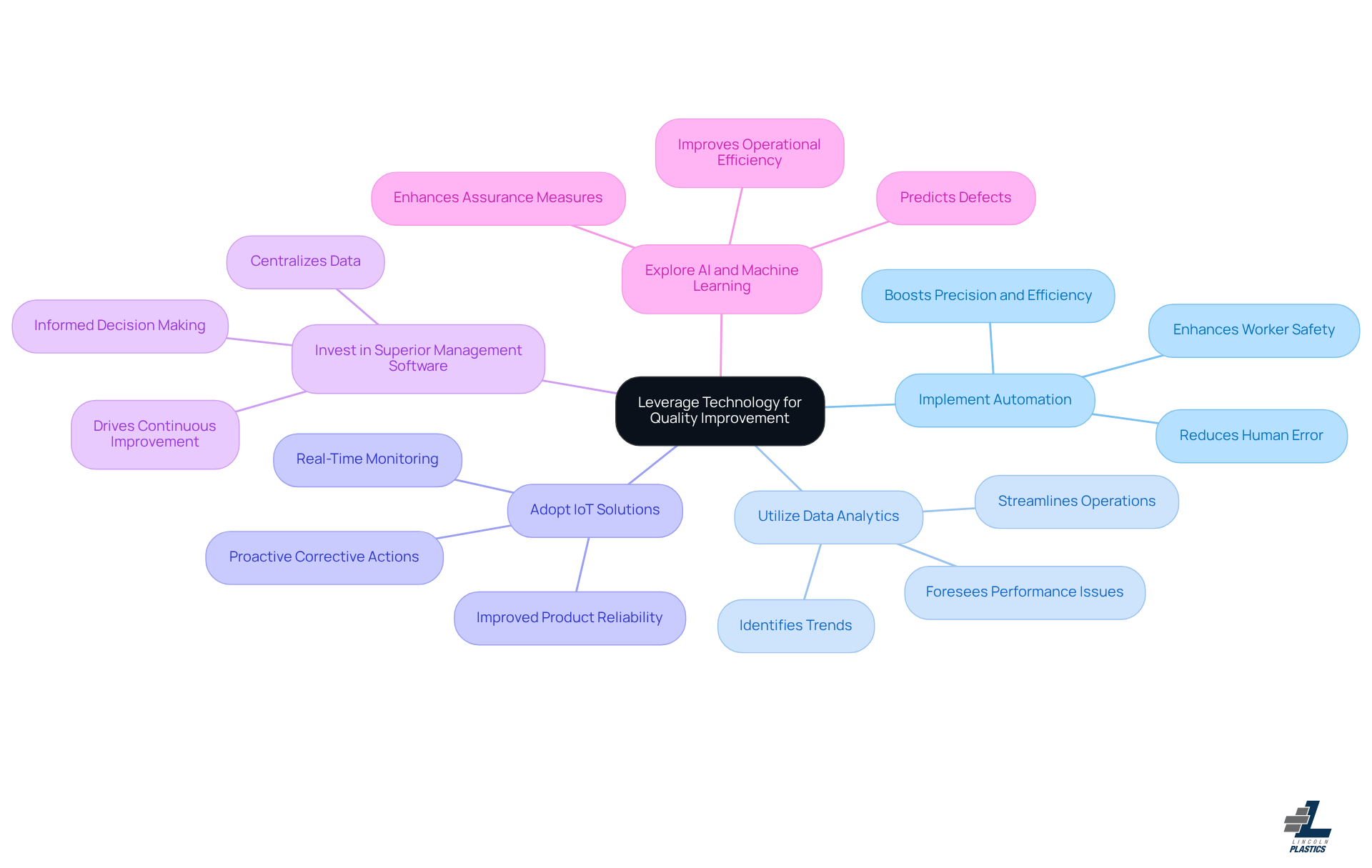
- Establish standards: First off, you’ll want to develop quality standards. This ensures consistency and excellence, particularly in understanding how to meet specifications while meeting those critical dimensions and specifications for OEMs.
- Conduct inspections: Next, think about implementing routine inspections at various stages of production. Catching defects early is essential when considering product quality! You can use tools like Go/No-Go gauges to check product dimensions, making sure everything fits and functions just right.
- Monitor production methods: Now, let’s talk about observing production methods with a focus on quality. This helps detect any variations or trends that might raise concerns about product integrity. It’s a great way to keep everything in line with those specifications.
- Establish a feedback loop: You might be wondering how to resolve problems as they pop up. It is essential to promote dialogue between production and quality control teams to discover solutions. This collaboration helps to understand issues, ensuring that products consistently meet OEM requirements.
- Document and Analyze Data: Finally, don’t forget to document and analyze data. This helps identify patterns and areas related to quality improvement. A solid assurance system, including a dedicated record book for each plastic profile, can really enhance your process by providing critical in-process checks and run documentation.
Train and Empower Your Workforce
Training and empowering your workforce is essential for understanding how to improve quality in a factory. So, let’s dive into some key actions you might want to consider:
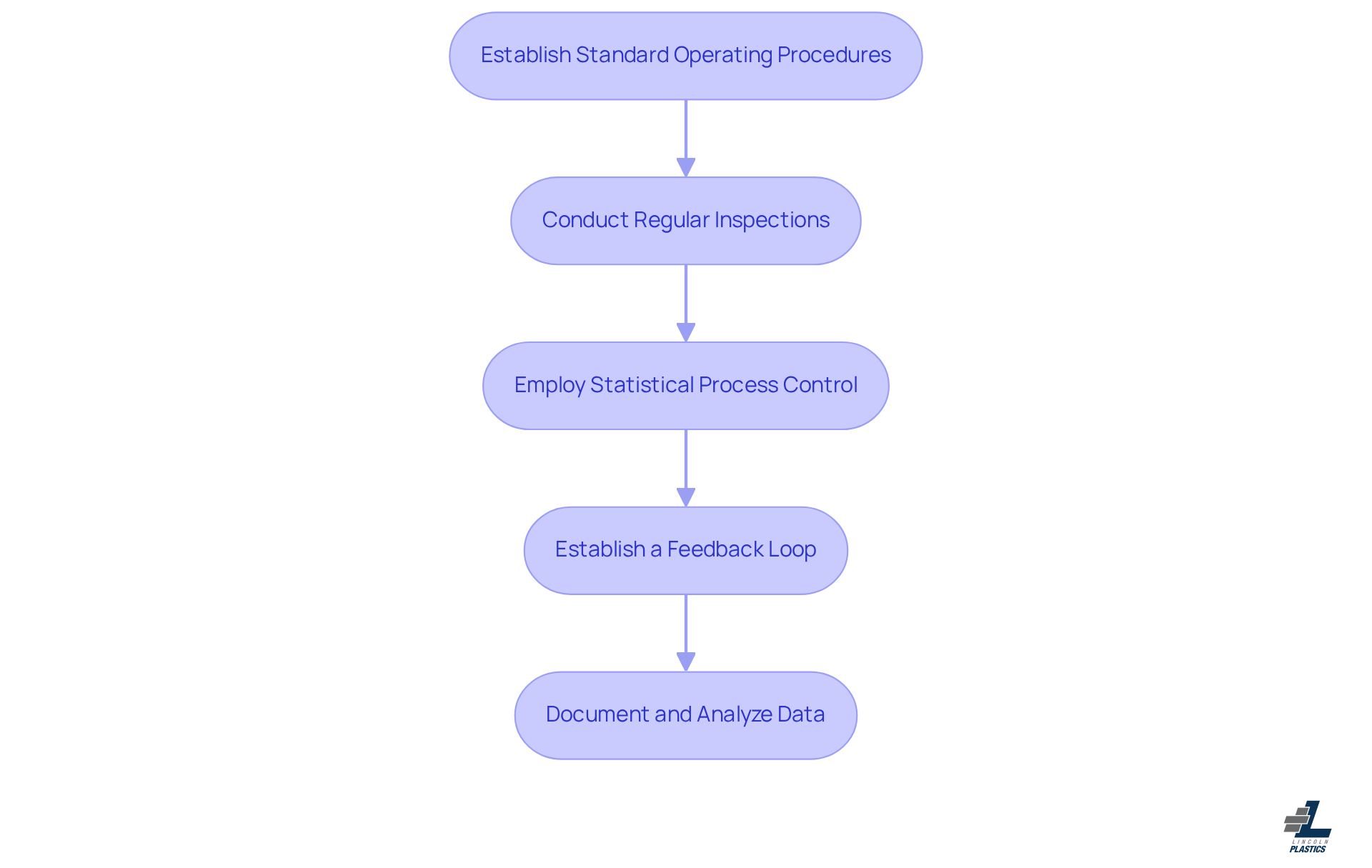
- Deliver Comprehensive Instruction: Start by rolling out educational programs that cover quality standards, inspection techniques, and why quality matters in manufacturing. Did you know that companies see a whopping 218% increase in income per employee? That’s a huge financial boost just from investing in workforce education! Plus, when employees get the support they need, productivity can jump by 17%. So, this can really make a difference.
- Encourage Ownership: Create an environment where your employees feel responsible for excellence. Encourage them to spot issues and suggest improvements. Studies show that 92% of employees believe workplace education positively impacts their job involvement. This can lead to a more proactive approach to managing standards. It’s worth noting that employees pick up 70% of their skills while on the job and only 10% through structured education, making training essential for keeping those standards high.
- Foster Continuous Learning: Keep your educational resources fresh and offer chances for employees to learn about new technologies and techniques. Embracing continuous improvement, or kaizen, is key here. Organizations that adopt this mindset can really ramp up their performance.
- Recognize Contributions: Don’t forget to acknowledge employees who make significant contributions to improvements. Recognition not only highlights the importance of their role but also builds pride and accountability. Research shows that 59% of employees feel that training boosts their overall job performance, and this effect can be amplified with recognition programs.
As W. Edwards Deming wisely said, "Quality is everyone's job." By focusing on these strategies, you can really enhance your workforce, which is essential for understanding how to improve quality in a factory and achieving operational excellence. So, what do you think? Ready to take action?
Leverage Technology for Quality Improvement
To effectively leverage technology for quality improvement, let’s explore some strategies together:
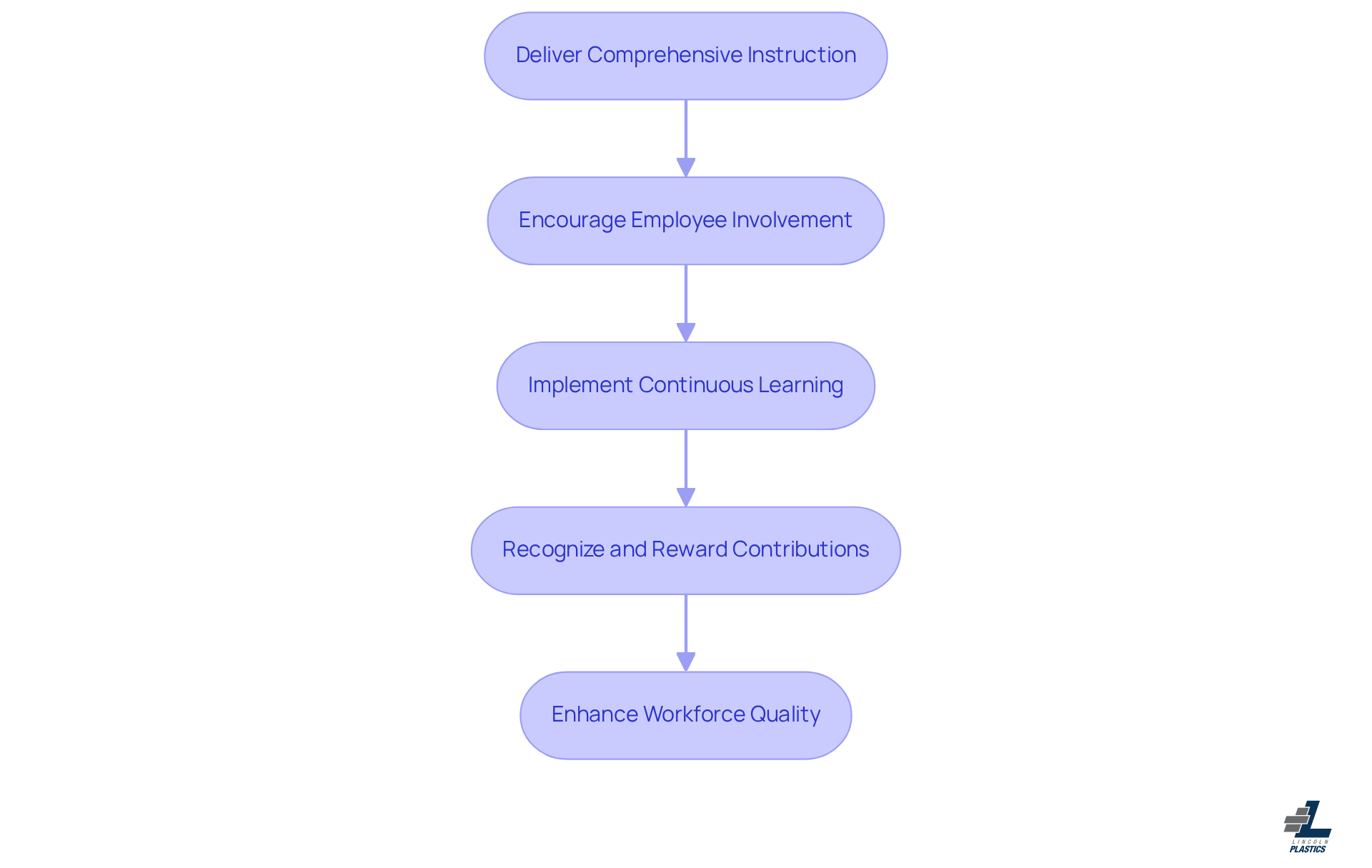
- Implement Automation: Have you ever thought about how automation can change the game? Automation can really boost precision and efficiency in evaluations. They cut down on human error and help maintain consistent item standards. For instance, use computer vision to check items in real-time, catching flaws early in the manufacturing process. This not only minimizes waste but also raises overall quality. Plus, industry experts point out that automation can enhance productivity by taking over repetitive tasks, letting employees focus on more complex and rewarding work.
- Utilize Data Analytics: Now, let’s talk about data. Analyzing production data is key to spotting trends and identifying areas for improvement. Data analytics can even help you foresee potential performance hiccups, allowing you to address them before they become issues. This approach not only boosts item standards but also streamlines operations by reducing downtime and associated costs. With the right tools, you can navigate supply chain uncertainties and stay agile in this ever-changing market.
- Adopt IoT Solutions: Have you considered the benefits of IoT? Integrating Internet of Things (IoT) devices allows for real-time monitoring of equipment performance. This means you can quickly take corrective actions when things go off track. Proactive monitoring can prevent failures and enhance compliance strategies, leading to improved product reliability.
- Invest in Superior Software: Let’s not forget about software! Investing in top-notch software lets you monitor, report, and analyze performance metrics throughout the manufacturing process. By centralizing this data, you can make informed decisions that drive quality improvement and foster a culture of excellence.
- Explore AI and Machine Learning: Lastly, let’s dive into AI. Utilizing AI can really transform your quality control methods. These systems learn from past data to enhance quality assurance measures and predict defects, helping you maintain high standards while keeping costs down. The integration of AI with manufacturing is a pivotal moment for improving operational efficiency and product quality, as many industry specialists highlight.
By integrating these strategies, you can discover how to improve quality in a factory and ensure you meet the evolving demands of the industry. So, what do you think? Ready to take the plunge into these technologies?
Conclusion
Quality in manufacturing isn't just a goal; it's a journey we’re all on together. It requires a multifaceted approach to not just meet but exceed what our customers expect. By defining quality through things like sticking to specifications, ensuring reliability, and keeping customers happy, manufacturers can build a solid framework for improvement. This understanding helps pinpoint specific areas that need a little extra love, leading to better performance and trust from our customers.
So, what can we do to boost quality in our factories? Let’s break it down into four essential steps:
- Implementing effective quality control strategies
- Training and empowering our workforce
- Leveraging technology
- Establishing standard operating procedures, conducting regular inspections, and fostering a culture of continuous learning
Integrating advanced technologies like automation, data analytics, and AI can really amp up our quality control measures, making everything run smoother and more reliably.
Now, let’s wrap this up. The importance of quality in manufacturing is huge—it can’t be overstated! By embracing these strategies, organizations not only improve their product quality but also create a culture of excellence that shines throughout their operations. It’s really important for manufacturers to take action now, using both our human talent and the latest tech to keep up with the ever-evolving industry demands. Committing to quality improvement doesn’t just benefit us; it creates lasting value for our customers and stakeholders too!
Frequently Asked Questions
What is quality in manufacturing?
Quality in manufacturing refers to how well a product meets specified requirements and satisfies customer expectations. It encompasses various dimensions, including conformance to specifications, reliability, customer satisfaction, and compliance with industry regulations.
What does conformance to specifications mean?
Conformance to specifications means that products adhere to established standards regarding dimensions, materials, and performance metrics. This adherence is crucial for manufacturing success.
Why is reliability important in manufacturing?
Reliability is important because it ensures that a product can function consistently over time without failure. This not only enhances customer satisfaction but also contributes to long-term operational efficiency.
How does customer satisfaction relate to quality in manufacturing?
Customer satisfaction is a key aspect of quality, as it reflects how well a product meets the needs and expectations of its users. Happy customers are more likely to return and demonstrate brand loyalty.
What role does compliance play in manufacturing quality?
Compliance involves following industry regulations and standards, such as ISO certifications, which are essential for ensuring that products are safe and effective. A significant percentage of companies have reported product recalls, underscoring the importance of compliance in maintaining product integrity.
How can manufacturers improve quality in their processes?
By clearly defining quality standards, manufacturers can identify areas for improvement and set measurable goals to enhance quality in their factories. This approach not only improves operational performance but also builds customer trust.
List of Sources
- Define Quality in Manufacturing
- manufacturingdive.com (https://manufacturingdive.com/spons/95-of-us-manufacturing-executives-agree-quality-is-mission-critical-to-s/760706)
- qualitymag.com (https://qualitymag.com/articles/98852-the-state-of-the-profession-in-2025)
- qualitymag.com (https://qualitymag.com/events/10489-the-pulse-of-quality-in-manufacturing-2025-industry-survey-results)
- ideagen.com (https://ideagen.com/thought-leadership/blog/manufacturing-quality-the-importance-of-quality-in-manufacturing)
- metrology.news (https://metrology.news/the-importance-of-quality-in-manufacturing)
- Implement Effective Quality Control Strategies
- Statistical Process Control: How It Drives Quality & Optimal Control (https://harfordcontrol.com/news/statistical-process-control-what-it-is-and-how-it-drives-quality-optimal-control-in-food-and-drink-manufacturing)
- nist.gov (https://nist.gov/blogs/manufacturing-innovation-blog/whats-coming-us-manufacturing-2025)
- 2026 Manufacturing Industry Outlook (https://deloitte.com/us/en/insights/industry/manufacturing-industrial-products/manufacturing-industry-outlook.html)
- Just How Important Are SOPs in Manufacturing? Hint: Very! | Quickbase (https://quickbase.com/blog/just-how-important-are-sops-in-manufacturing-hint-very)
- mit-kmi.com (https://mit-kmi.com/standard-operating-procedures-in-manufacturing)
- Train and Empower Your Workforce
- Top 25 Quotes For Lean Business Inspiration - Leading Edge Group (https://leadingedgegroup.com/top-25-quotes-for-lean-business-inspiration)
- augmentir.com (https://augmentir.com/world-class-manufacturing)
- 37 Employee Training Statistics and Trends for 2026 | Devlin Peck (https://devlinpeck.com/content/employee-training-statistics)
- swipeguide.com (https://swipeguide.com/insights/12-lean-manufacturing-quotes-to-inspire)
- dol.gov (https://dol.gov/newsroom/releases/eta/eta20240718-1)
- Leverage Technology for Quality Improvement
- Manufacturing Technology News & Analysis (https://manufacturingdive.com/topic/technology)
- Top Manufacturing Trends | IBM (https://ibm.com/think/insights/manufacturing-trends)
- metrology.news (https://metrology.news/the-transformative-impact-of-ai-on-quality-control)
- aheinfo.com (https://aheinfo.com/news/the-impact-of-automation-solutions-on-automotive-production-quality)
- ibm.com (https://ibm.com/think/topics/ai-in-manufacturing)
Related posts

Why Custom Pipe Extrusion Matters More Than Ever
Standard pipe sizes don’t always work. Learn how Lincoln Plastics delivers custom diameters, wall thicknesses, and finishes in right-sized runs.


Reducing Trip Hazards with Custom Cord Management
Loose cords are more than messy — they’re a safety hazard. Lincoln Plastics’ custom cord covers and Flexiduct solutions improve safety and efficiency.
The Power of Custom Plastic Profiles for OEMs
Off-the-shelf profiles force compromises. Learn how Lincoln Plastics designs custom extruded profiles for OEMs with exact specs and right-sized runs.
