

What Type of Plastic is Polyethylene? Key Facts and Uses
Introduction
Polyethylene is not just a thermoplastic; it's a cornerstone of modern manufacturing, driving innovation across diverse industries. Its remarkable versatility and adaptability make it the backbone of countless applications, from agricultural irrigation systems to robust packaging solutions. Yet, as industries face mounting pressure to adopt sustainable practices, the challenge lies in leveraging polyethylene's advantages while effectively managing waste and recycling issues. This exploration will shed light on the composition, history, and diverse applications of polyethylene, emphasizing its crucial role in shaping the future of manufacturing and sustainability.
Define Polyethylene: Understanding Its Composition and Structure
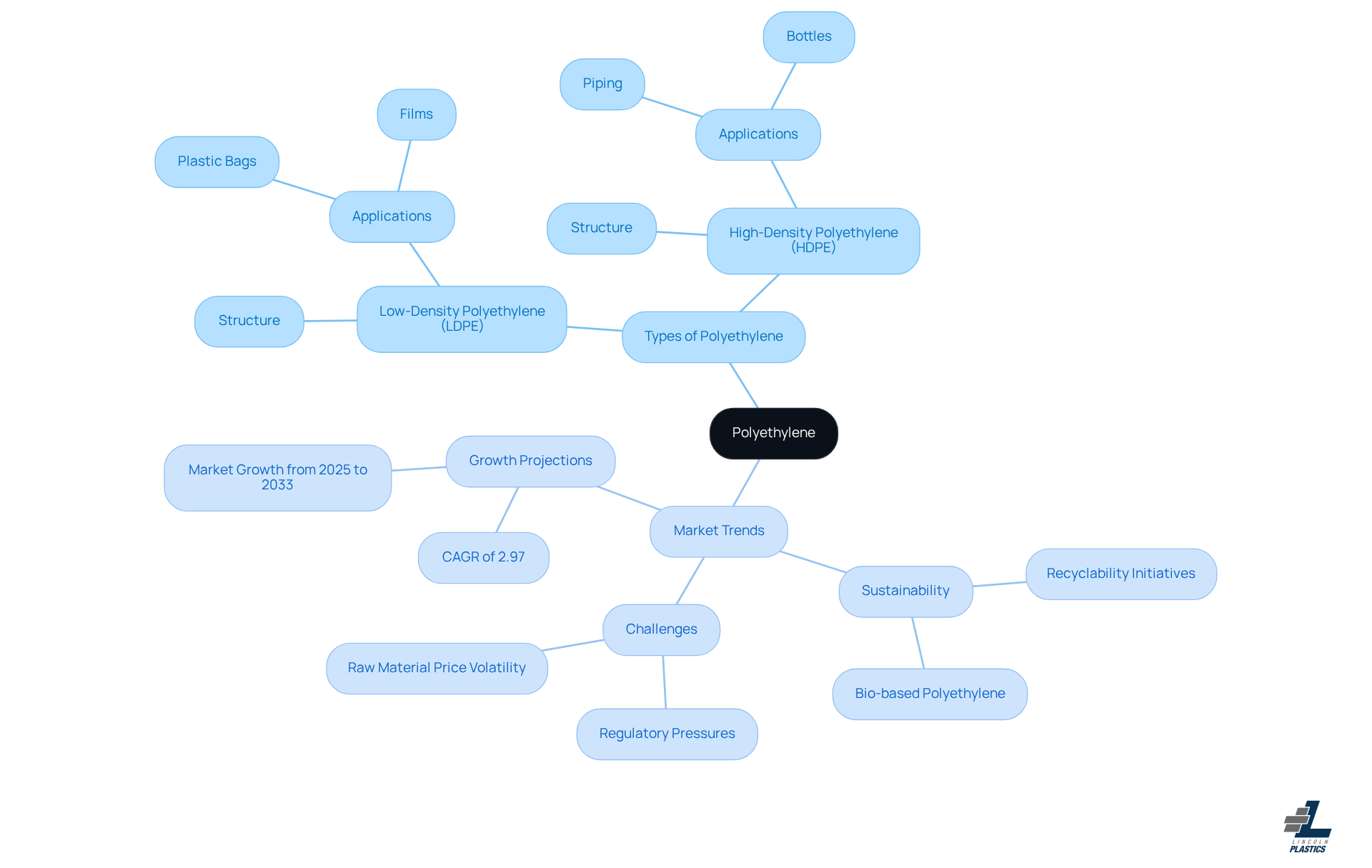
In the world of thermoplastics, one might ask what type of plastic is polyethylene, as it stands as a cornerstone showcasing remarkable versatility and adaptability across various industries. The polymerization of ethylene monomers, represented by the chemical formula (C2H4)n, creates long chains of repeating ethylene units, leading to the question of what type of plastic is polyethylene. These chains lead to various structural forms of this material, including low-density types and, importantly, what type of plastic is polyethylene, which refers to high-density polyethylene (HDPE). LDPE, with its branched structure, offers flexibility, making it ideal for applications like plastic bags and films. In contrast, HDPE's more linear structure provides enhanced strength and rigidity, leading to the question of what type of plastic is polyethylene, making it suitable for products such as bottles and piping.
How does this material's versatility shine in agriculture? It's used for everything from irrigation systems to protective coverings. Recent advancements in plastic production have focused on enhancing sustainability and recyclability. The U.S. plastic market is set for significant growth, projected to rise from $47.66 billion in 2025 to $60.23 billion by 2033. This growth reflects a compound annual growth rate (CAGR) of 2.97%, driven by rising demand in packaging, automotive, and construction sectors.
Key facts about this material's composition reveal its adaptability, with segments like LDPE and LLDPE gaining prominence due to their environmental benefits. The growth of e-commerce has greatly boosted the need for lightweight and cushioning packaging solutions, as emphasized by case studies on the effect of e-commerce on plastic demand. However, navigating regulatory pressures and fluctuating raw material prices poses significant challenges for manufacturers in today's market landscape. As industries continue to prioritize sustainability, this shift not only aligns with sustainability goals but also opens new avenues for innovation in plastic production.
Explore the History of Polyethylene: Key Milestones and Innovations
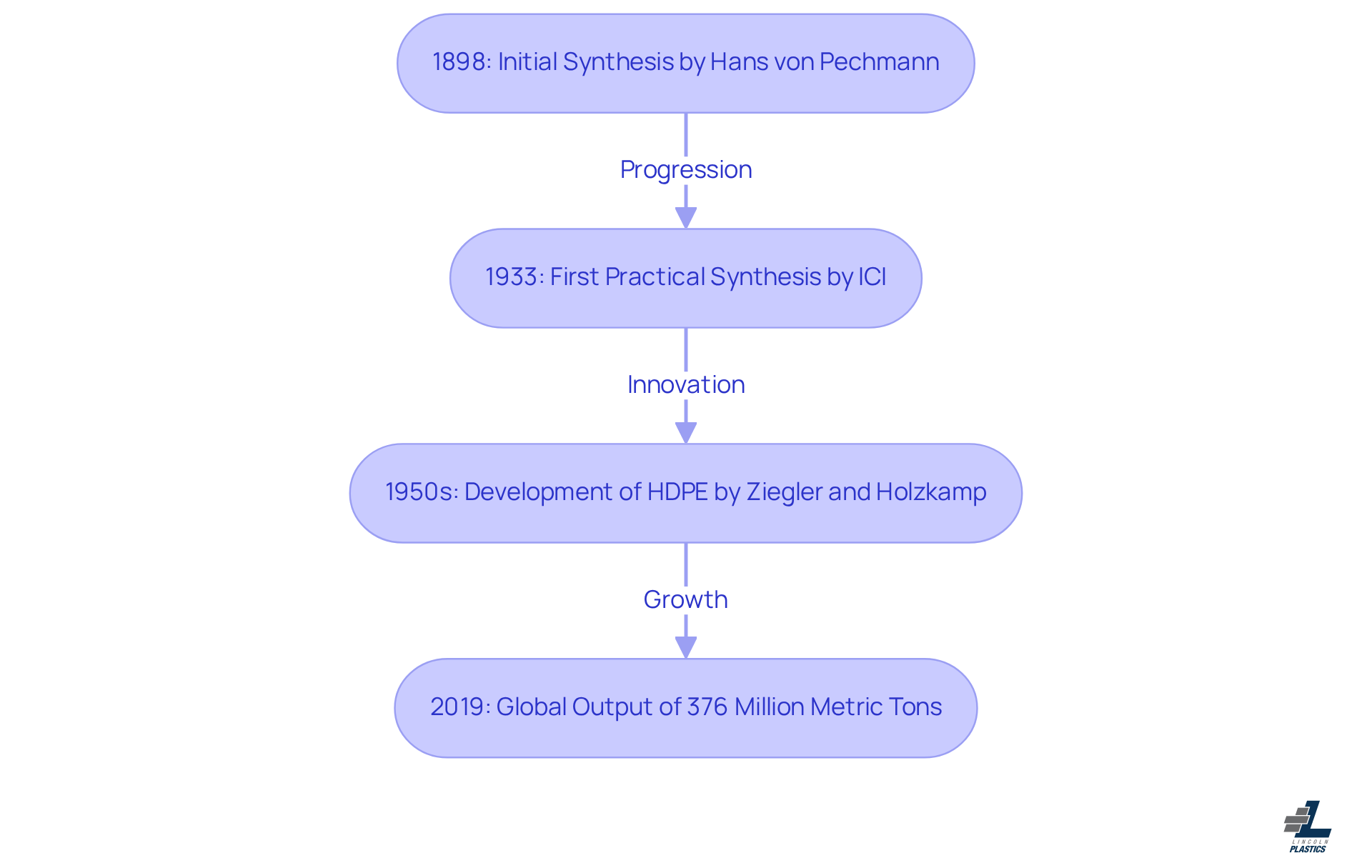
The journey of polyethylene, from its initial synthesis in 1898 to its pivotal role in modern manufacturing, showcases the remarkable evolution of this versatile material. Polyethylene was first synthesized by German chemist Hans von Pechmann during experiments with diazomethane, leading to the discovery of a waxy substance. However, significant improvements in manufacturing didn't occur until the 1930s.
In 1933, chemists at Imperial Chemical Industries (ICI) in the UK accomplished the first practical synthesis of low-density plastic through high-pressure polymerization. This marked the beginning of industrial manufacturing. The 1950s introduced additional innovation with the arrival of high-density plastic (HDPE), developed by Karl Ziegler and Erhard Holzkamp, who created a catalyst allowing the creation of HDPE at reduced pressures. This breakthrough transformed the manufacturing process and broadened the uses of this material across various sectors, including packaging, construction, and consumer products.
By 2019, worldwide output of plastics surged to around 376 million metric tons. How has this versatile and cost-effective material become a cornerstone in various industries? In the Midwest, where farming and production thrive, the applications of this plastic play a crucial role in supporting local economies and industries. As the need for plastic continues to increase, advancements in manufacturing techniques and uses are anticipated to further improve its significance in these sectors. As a result, the evolution of polyethylene has not only transformed manufacturing processes but also reshaped entire industries, from packaging to construction.
Identify Types of Polyethylene: Characteristics and Applications
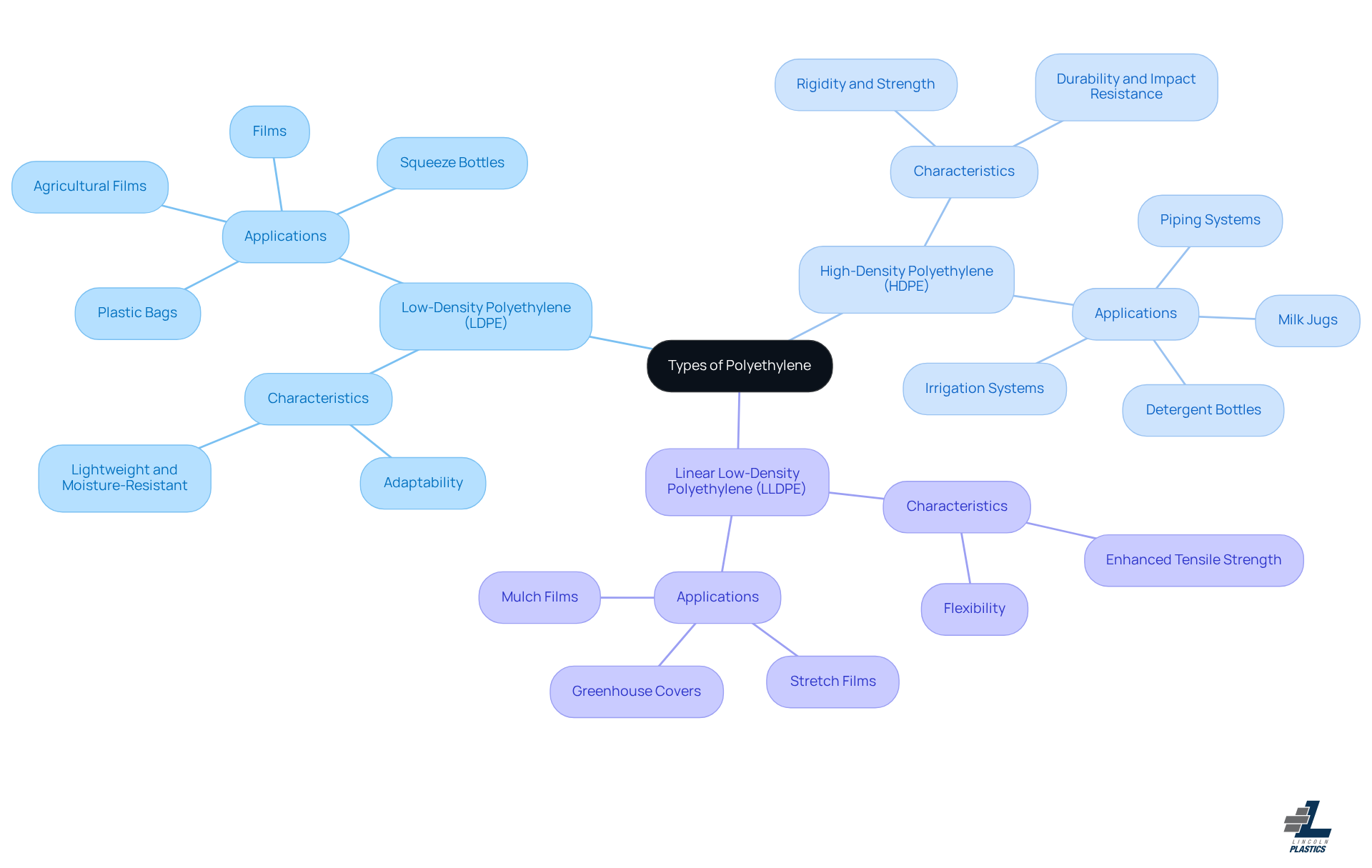
Understanding what type of plastic is polyethylene is essential for making informed decisions in your production processes. When discussing polyethylene, one might ask what type of plastic is polyethylene, as it is mainly classified into three primary types: low-density polyethylene, high-density polyethylene (HDPE), and linear low-density polyethylene.
- Low-Density Polyethylene is famous for its adaptability, making it a go-to choice for applications like plastic bags, films, and squeeze bottles. Its lightweight and moisture-resistant qualities make it a go-to choice for packaging and agricultural films, where it serves as an effective barrier against environmental factors.
- In contrast, HDPE is characterized by its rigidity and strength, commonly utilized in products like milk jugs, detergent bottles, and piping systems. Its durability and resistance to impact render it appropriate for challenging uses, including construction and industrial purposes. The agricultural sector increasingly adopts HDPE for irrigation systems, where its flexibility and resistance to harsh chemicals enhance operational efficiency.
- LLDPE is an example of what type of plastic is polyethylene, as it combines the advantageous characteristics of both low-density polyethylene and HDPE, providing enhanced tensile strength and flexibility. This makes it especially suitable for stretch films and agricultural uses, such as greenhouse covers and mulch films, which require durability and adaptability to various environmental conditions.
The low-density polyethylene market is set for significant growth. This expansion is driven by increasing applications in agriculture, construction, and packaging. For example, the agricultural sector's dependence on low-density polyethylene for greenhouse films and irrigation tubing is a significant growth factor, as these materials aid in more efficient and sustainable farming practices. Furthermore, low-density polyethylene's application in office management, especially for protective coatings and packaging solutions, highlights its adaptability across various sectors.
With sustainability pressures mounting, the LDPE industry faces the challenge of innovating to improve recycling capabilities and minimize environmental impact. This shift aligns with regulatory pressures and consumer demand for eco-friendly materials, ensuring that this plastic remains a vital component in various applications.
Failing to master the tube extrusion process could lead to inefficiencies and quality issues, jeopardizing your competitive edge in the plastic production sector. Lincoln Plastics, strategically located in Lincoln, Nebraska, is well-positioned to support these needs, offering quick order turnaround and efficient logistics, including less-than-truckload shipping and international delivery. Our ISO 9001:2015 certification underscores our commitment to quality management, ensuring that all products meet rigorous standards. As the sector keeps progressing, adjusting to these trends will be essential for managing the intricate environment of plastic procurement effectively. For tailored solutions, we invite you to contact Lincoln Plastics experts for quotes and assistance. Ignoring these advancements could leave your operations vulnerable to inefficiencies and missed opportunities in a rapidly evolving market.
Assess Environmental Impact: Recycling and Sustainability of Polyethylene
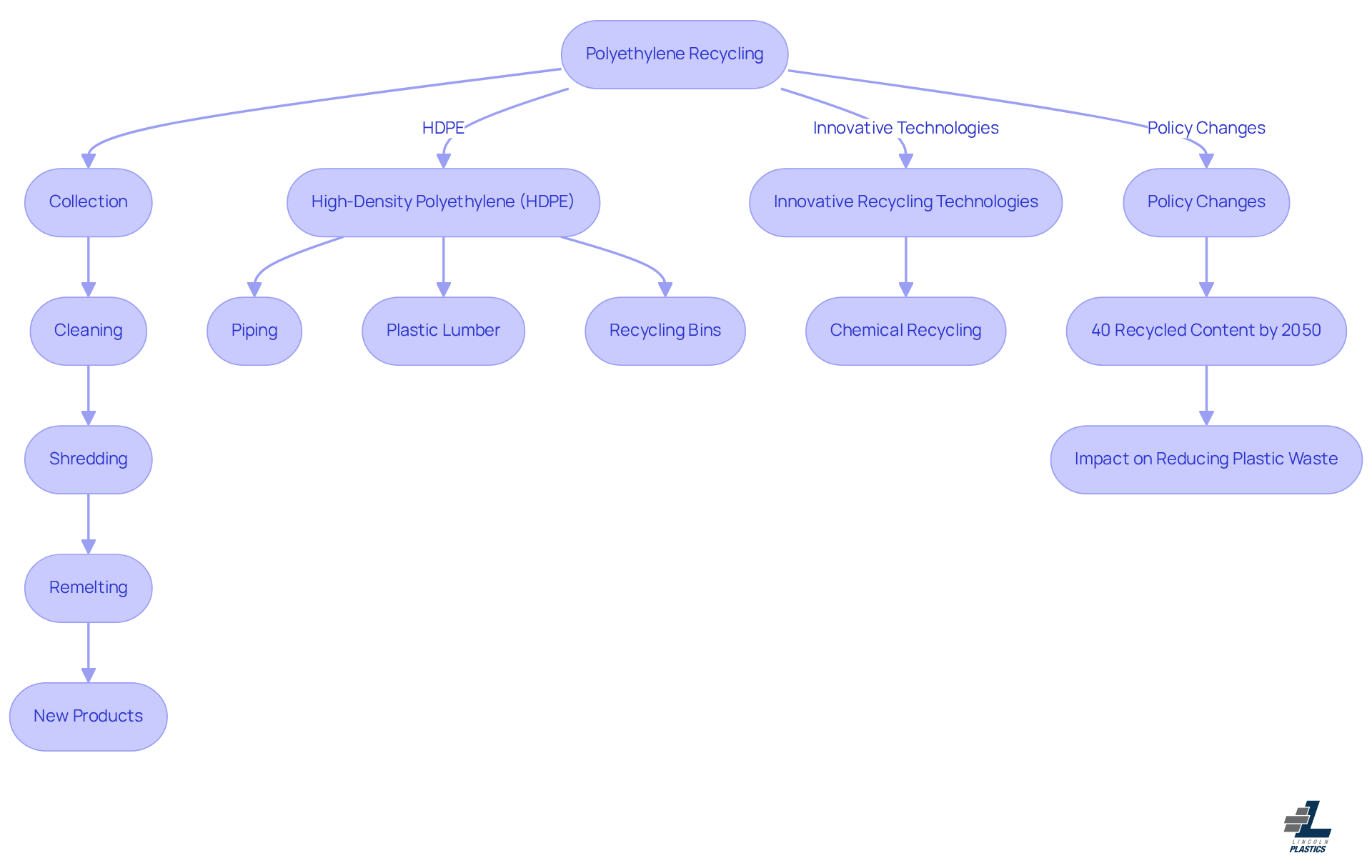
The persistent nature of polyethylene in our environment raises urgent concerns about pollution and sustainability. Fortunately, innovative recycling initiatives are actively addressing these challenges. Polyethylene can be recycled through mechanical processes, where it is collected, cleaned, shredded, and remelted to create new products. High-Density Polyethylene (HDPE) is one of the most widely recycled plastics, often repurposed into items like piping, plastic lumber, and recycling bins.
Furthermore, efforts are underway to develop biodegradable alternatives and improve recycling technologies to enhance the sustainability of this plastic. Notably, advanced recycling technologies, such as chemical recycling, are being explored to further increase recycling rates and reduce environmental impact.
As industries prioritize eco-friendly practices, it’s crucial to grasp the environmental implications of polyethylene to drive responsible consumption and policy change. Requiring 40% recycled content in new plastic products and packaging by 2050 could halve plastic waste and reduce new plastic production by 44%, highlighting the importance of policy in driving sustainable practices.
Without proactive measures, the burden of plastic waste will continue to escalate, threatening our ecosystems and future generations.
Conclusion
Polyethylene is not just a material; it's a cornerstone of modern manufacturing that demands attention. It's essential for manufacturers and consumers to understand the type of plastic polyethylene is and its diverse applications. We've delved into the composition, history, and types of polyethylene, emphasizing its significance in sectors such as agriculture, packaging, and construction.
Key insights reveal that polyethylene's unique properties, including flexibility in low-density variants and strength in high-density forms, make it suitable for a wide range of applications. The historical evolution of polyethylene, from its initial synthesis to modern innovations, highlights its pivotal role in shaping manufacturing processes. Furthermore, the growing emphasis on sustainability and recycling underscores the need for responsible consumption and innovative solutions to mitigate environmental impacts.
Navigating the complexities of polyethylene production can be daunting for many manufacturers. As industries evolve, recognizing the importance of polyethylene is crucial for staying competitive. Embracing advancements in recycling technologies and sustainable practices will be essential for future growth. For those seeking tailored solutions in plastic manufacturing, Lincoln Plastics, located in Lincoln, Nebraska, offers expertise and commitment to quality, backed by ISO 9001:2015 certification. Choosing Lincoln Plastics means investing in a partner committed to your success in the evolving landscape of polyethylene.
Frequently Asked Questions
What is polyethylene and how is it formed?
Polyethylene is a type of thermoplastic created through the polymerization of ethylene monomers, represented by the chemical formula (C2H4)n. This process results in long chains of repeating ethylene units.
What are the different types of polyethylene?
The main types of polyethylene are low-density polyethylene (LDPE) and high-density polyethylene (HDPE). LDPE has a branched structure that offers flexibility, making it suitable for applications like plastic bags and films. In contrast, HDPE has a more linear structure, providing enhanced strength and rigidity, ideal for products such as bottles and piping.
How is polyethylene used in agriculture?
Polyethylene is utilized in agriculture for various applications, including irrigation systems and protective coverings, showcasing its versatility in the industry.
What is the projected growth of the U.S. plastic market?
The U.S. plastic market is projected to grow from $47.66 billion in 2025 to $60.23 billion by 2033, reflecting a compound annual growth rate (CAGR) of 2.97%. This growth is driven by rising demand in sectors such as packaging, automotive, and construction.
What environmental considerations are associated with polyethylene?
Recent advancements in plastic production have focused on enhancing sustainability and recyclability. Segments like LDPE and linear low-density polyethylene (LLDPE) are gaining prominence due to their environmental benefits.
What challenges do manufacturers face in the polyethylene market?
Manufacturers face challenges such as navigating regulatory pressures and fluctuating raw material prices, which can impact production and pricing strategies.
How has e-commerce influenced the demand for polyethylene?
The growth of e-commerce has significantly increased the need for lightweight and cushioning packaging solutions, highlighting the adaptability of polyethylene in meeting new market demands.
List of Sources
- Define Polyethylene: Understanding Its Composition and Structure
- Polyethylene (PE) Industry to Reach $230.69 Billion by 2030 at 5.17% CAGR - Leaders Innovating with New Manufacturing Techniques and Sustainability Initiatives (https://uk.finance.yahoo.com/news/polyethylene-pe-industry-reach-230-131800227.html)
- Viewpoint: New PE capacity favorable to buyers in 2026 | Latest Market News (https://argusmedia.com/en/news-and-insights/latest-market-news/2769247-viewpoint-new-pe-capacity-favorable-to-buyers-in-2026)
- U.S.-Canadian PE and PP markets look for better days in 2026 (https://plasticsnews.com/suppliers/materials/pn-sagel-pe-pp)
- United States Polyethylene Industry Report 2025: A $60+ Billion Market by 2033 - Rising Demand in Packaging, Automotive, and Construction Industries, Alongside Advances in Manufacturing Technologies (https://finance.yahoo.com/news/united-states-polyethylene-industry-report-115600676.html)
- SunSirs: New Polypropylene and Polyethylene Production Capacity in China by 2026 (https://sunsirs.com/uk/detail_news-29284.html)
- Explore the History of Polyethylene: Key Milestones and Innovations
- Plastic Production and Industry | Plastics and the Environment Series (https://genevaenvironmentnetwork.org/resources/updates/plastic-production-and-industry)
- Asia Dominates Global Polyethylene Market (https://industrialinfo.com/iirenergy/industry-news/article/asia-dominates-global-polyethylene-market--331793)
- Polyethylene (https://chemxplore.com/substances/polyethylene)
- History and Future of Plastics (https://sciencehistory.org/education/classroom-activities/role-playing-games/case-of-plastics/history-and-future-of-plastics)
- What is the history of Polyethylene? (https://plextrusions.com/materials/polyethylene/what-is-the-history-of-polyethylene)
- Identify Types of Polyethylene: Characteristics and Applications
- Viewpoint: New PE capacity favorable to buyers in 2026 | Latest Market News (https://argusmedia.com/en/news-and-insights/latest-market-news/2769247-viewpoint-new-pe-capacity-favorable-to-buyers-in-2026)
- Low-Density Polyethylene Market Size and Forecast, 2026-2033 (https://coherentmarketinsights.com/market-insight/low-density-poly-ethylene-ldpe-market-3844)
- Low Density Polyethylene Market (https://market.us/report/global-low-density-polyethylene-market)
- Innovative Applications of High-Density Polyethylene (HDPE) in Construction, Agriculture, and Industry|News|POLYPVC (https://polypvc.com/news/Innovative-Applications-of-HighDensity-Polyethylene-HDPE-in-Construction-Agriculture-and-Industry.html)
- Assess Environmental Impact: Recycling and Sustainability of Polyethylene
- PVC, PP,PE,LLDPE,LDPE,HDPE (https://chimei-plastic.com/news/innovation-in-pe-materials-is-accelerating-with-environmentally-friendly-polyethylene-gaining-a-new-advantage-in-the-packaging-field.html)
- Using More Recycled Plastic is the Best Strategy to Reduce Global Plastic Waste and the Production of More New Plastic - Association of Plastic Recyclers (APR) (https://plasticsrecycling.org/resources/using-more-recycled-plastic-is-the-best-strategy-to-reduce-global-plastic-waste-and-the-production-of-more-new-plastic)
- Reducing plastic’s environmental impact with machine learning | Cornell Chronicle (https://news.cornell.edu/stories/2025/03/reducing-plastics-environmental-impact-machine-learning)
- Polyethylene packaging may have lower global warming impact than alternatives, study finds (https://phys.org/news/2025-07-polyethylene-packaging-global-impact-alternatives.html)
- Advanced Recycling Could More Than Double U.S. Plastic Recycling Rates, New PPI Report Shows - Progressive Policy Institute (https://progressivepolicy.org/advanced-recycling-could-more-than-double-u-s-plastic-recycling-rates-new-ppi-report-shows)
Related posts

Why Custom Pipe Extrusion Matters More Than Ever
Standard pipe sizes don’t always work. Learn how Lincoln Plastics delivers custom diameters, wall thicknesses, and finishes in right-sized runs.


Reducing Trip Hazards with Custom Cord Management
Loose cords are more than messy — they’re a safety hazard. Lincoln Plastics’ custom cord covers and Flexiduct solutions improve safety and efficiency.
The Power of Custom Plastic Profiles for OEMs
Off-the-shelf profiles force compromises. Learn how Lincoln Plastics designs custom extruded profiles for OEMs with exact specs and right-sized runs.
