
What is Extrusion? Key Examples and Insights for OEM Managers
Introduction
Extrusion technology is not just a manufacturing process; it's a game-changer that empowers industries to innovate and thrive. By enabling the creation of complex profiles with remarkable precision and efficiency, it offers OEM managers a powerful tool to enhance production capabilities and reduce costs. Many companies struggle to adapt to the rapid advancements in extrusion technology, risking their competitive edge.
How can your company leverage these innovations to not just meet, but exceed operational goals? This understanding could be the key to unlocking unprecedented operational success in your industry.
Define Extrusion: Understanding the Process and Its Importance
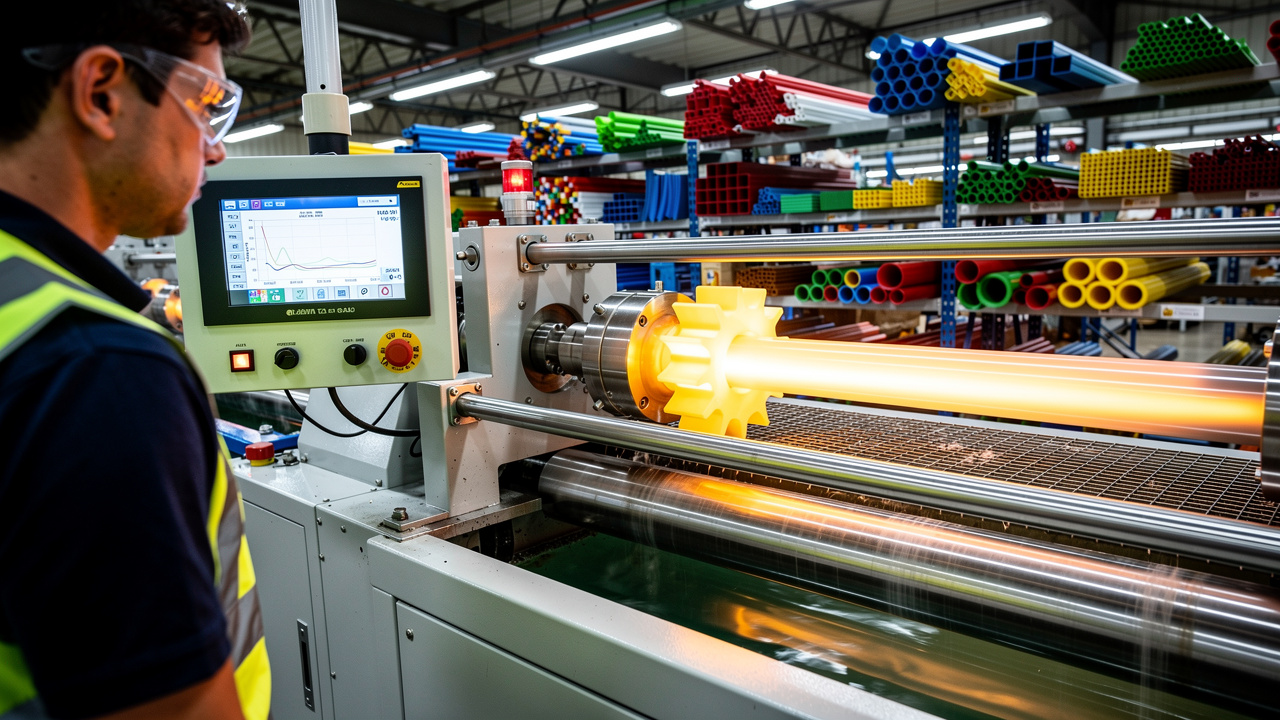
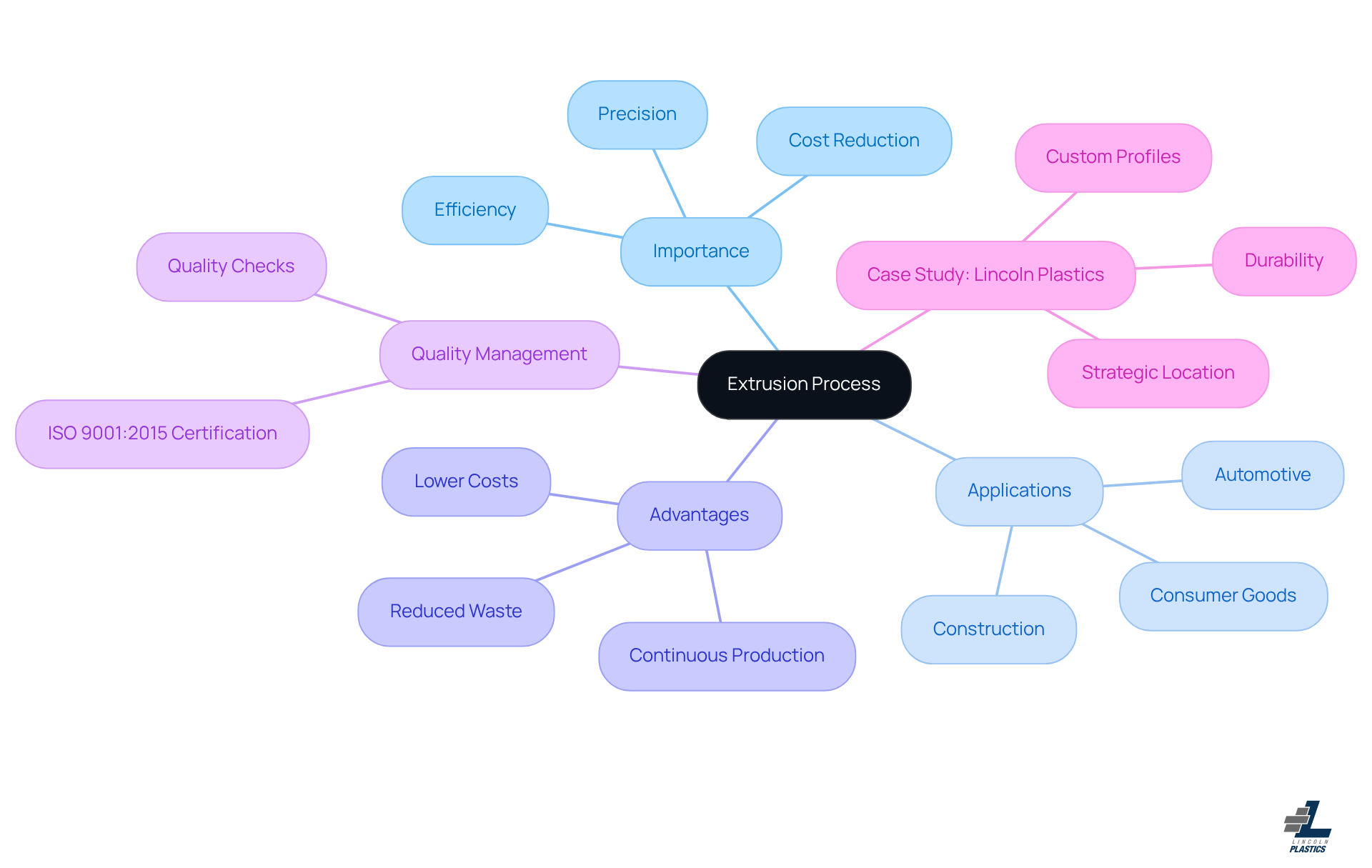
Extrusion is not just a manufacturing process; it's a game-changer for industries seeking precision and efficiency. This technique is widely used in sectors like construction, automotive, and consumer goods. Why? Because it produces intricate shapes with exceptional precision and efficiency. The versatility of this process is a key advantage; it facilitates continuous production, significantly reduces waste, and lowers costs. For OEM managers aiming to enhance their manufacturing operations, extrusion is indispensable.
For an extrusion example, consider Lincoln Plastics. They specialize in a broad array of standard and custom round plastic profiles, offering various colors, diameters, and lengths, along with co-shaping capabilities for multi-color or multi-material profiles. This flexibility not only showcases the manufacturing technique's adaptability but also highlights its importance in meeting specific industry requirements. Shaping manufacturing is effective because it cuts production costs and boosts output standards. Isn't that what every manufacturer aims for?
Furthermore, Lincoln Plastics shows its commitment to quality with ISO 9001:2015 certification. This means they have strict quality management plans, including dedicated quality books and in-process checks. Case studies reveal that plastic shaping is highly efficient, decreasing waste and allowing manufacturers to innovate. The durability of extruded products, made from impact-resistant and environmentally resilient plastics, ensures they meet the rigorous demands of their intended applications. As the industry progresses, mastering the factors of material, method, and design will be essential in removing defects and downtime, further reinforcing the role of this technique as a cornerstone of effective manufacturing.
Additionally, Lincoln Plastics' strategic location in Lincoln, Nebraska, enables quick order turnaround and efficient logistics, enhancing their service to OEMs across various industries. As the landscape of manufacturing evolves, those who master extrusion will lead the charge in innovation and efficiency.
Trace the History of Extrusion: Evolution and Milestones
The evolution of shaping methods has been pivotal in revolutionizing manufacturing processes since the late 18th century. In 1797, Joseph Bramah received the first patent for a method specifically designed for manufacturing lead pipes. This groundbreaking method paved the way for innovations that would transform the industry. The 1930s represented a notable turning point with the introduction of thermoplastics, broadening the variety of products that could be produced through shaping. During this decade, Paul Troester created the screw extruder, which is an important extrusion example that significantly improved both the efficiency and versatility of the shaping process.
As the decades progressed, the industry witnessed remarkable advancements in materials and technology. The development of co-extrusion and multi-layer processing techniques enabled manufacturers to produce intricate items with enhanced characteristics. These advancements not only streamline production but also enhance the quality and variety of products available in the market. Today, this process stands as a cornerstone of manufacturing, reflecting a legacy of continuous improvement and adaptation to meet evolving market demands.

Explore Extrusion Applications: Real-World Examples Across Industries
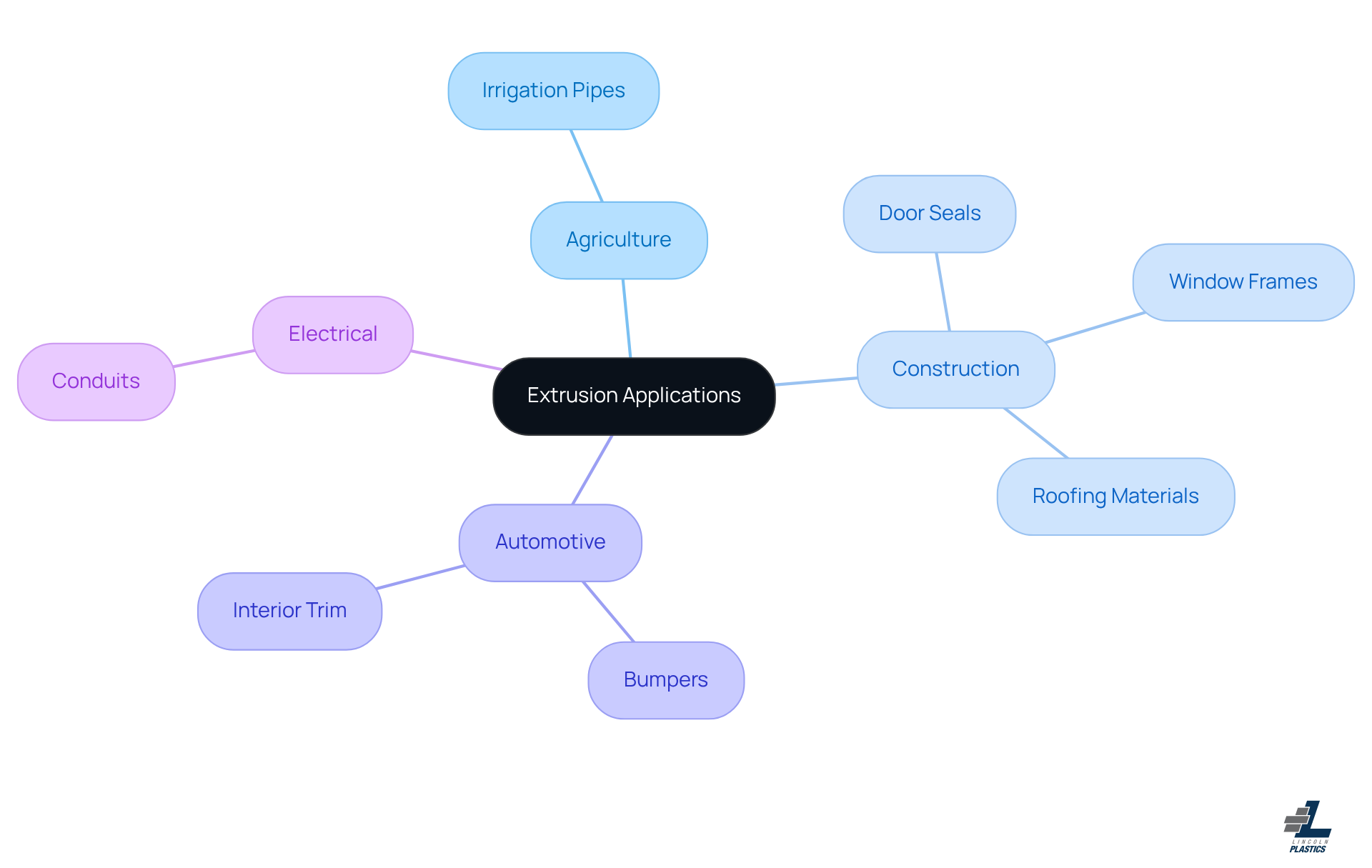
In today's competitive landscape, an extrusion example highlights the crucial role of enhancing operational efficiency. An extrusion example highlights its crucial role across multiple industries, particularly in agriculture, where it is instrumental in producing custom irrigation pipes that enhance water management efficiency. Are you struggling to find reliable solutions for your irrigation needs? Lincoln Plastics specializes in creating essential components that optimize farming operations.
In addition to agriculture, the construction industry utilizes various extrusion examples of extruded profiles for applications such as window frames, door seals, and roofing materials, all of which contribute to improved durability and energy efficiency. The automotive industry also gains greatly from shaping, with parts such as bumpers and interior trim being produced through this extrusion example, which ensures both functionality and visual attractiveness. Furthermore, in the electrical industry, an extrusion example is the use of extruded conduits, which are essential for safeguarding wiring and enhancing safety measures.
Lincoln Plastics ensures that all products meet rigorous quality standards through its ISO 9001:2015 certification and a dedicated quality management program, which includes critical in-process checks and comprehensive quality documentation. Additionally, Lincoln Plastics offers co-extrusion capabilities for multi-color or multi-material profiles and can source colors to meet Pantone specifications, further enhancing customization options for OEMs.
By choosing Lincoln Plastics, you ensure enhanced efficiency and safety in your operations, making the extrusion example's versatility essential for OEM managers aiming to stay ahead in their industries.
Examine Types of Extrusion: Variations and Their Characteristics
Understanding the various techniques, such as the extrusion example, is crucial for OEM managers aiming to optimize production efficiency and product quality. There are numerous kinds of extrusion techniques, and each serves as an extrusion example designed for particular applications and defined by unique operational methods. The most prevalent types include:
- Direct Extrusion: This method pushes the material through a die using a ram, making it highly efficient for producing simple shapes. An extrusion example is widely adopted in various industries due to its straightforward approach and effectiveness, achieving production speeds of up to 760 meters per minute, making it ideal for high-volume applications.
- An extrusion example is the indirect extrusion process, where the die moves toward the stationary substance, minimizing friction and enhancing surface finish. This method serves as an extrusion example that is especially beneficial for forming intricate shapes, providing enhanced design flexibility and improving surface quality by up to 30% compared to direct shaping.
- An extrusion example of co-extrusion demonstrates this advanced technique, which allows the simultaneous extrusion of multiple substances, resulting in composite profiles with varying properties. Lincoln Plastics excels in co-extrusion capabilities, which serve as an extrusion example for creating multi-color or multi-material profiles that meet diverse product specifications. This extrusion example can result in considerable resource savings, decreasing waste by up to 20%.
- Extrusion Example: Blown film extrusion is predominantly used in packaging, involving the process of blowing air into a tube of molten plastic to create a bubble, which is then cooled and flattened into thin films. An extrusion example of this method is essential for producing lightweight and versatile packaging materials, with line speeds often exceeding 365 meters per minute.
Understanding these shaping variations provides an extrusion example that assists OEM managers in selecting the right method for their specific product needs and production goals. An extrusion example highlights how choosing between direct and indirect shaping can significantly impact production efficiency and product quality, making informed decisions vital for optimizing manufacturing methods. Additionally, proper die and billet preparation is essential for achieving optimal results in an extrusion example. Lincoln Plastics is committed to quality, supported by rigorous quality management plans, including dedicated quality books and in-process checks, ensuring that every product meets the highest standards. With the right extrusion example, you can not only meet but exceed your production goals, ensuring your products stand out in the market.

Conclusion
In today's competitive manufacturing landscape, the efficiency and precision of extrusion technology are indispensable for success. By transforming raw materials into intricate shapes, extrusion streamlines production while reducing waste and costs, making it essential for OEM managers. The versatility of extrusion, particularly as demonstrated by Lincoln Plastics, showcases its ability to meet diverse industry needs through custom profiles and co-extrusion capabilities.
Throughout this article, we've explored the history and evolution of extrusion, highlighting its transformative impact on manufacturing. From the early patents of lead pipe production to modern advancements in co-extrusion and multi-layer processing, the journey of extrusion reflects a commitment to innovation. Real-world applications across agriculture, construction, and automotive sectors further illustrate how this process enhances operational efficiency and product quality. Lincoln Plastics' adherence to ISO 9001:2015 standards and rigorous quality management practices underscores the importance of maintaining high-quality outputs in every extrusion project.
As the manufacturing landscape evolves, how can you ensure your operations remain competitive by embracing extrusion technology? OEM managers are encouraged to explore the benefits of this process and consider what tailored solutions Lincoln Plastics can offer to help you harness the full potential of extrusion for your production needs. By leveraging the advantages of extrusion, businesses can not only optimize their operations but also drive innovation and excellence in their respective fields. Ignoring the potential of extrusion could mean falling behind in innovation and operational excellence.
Frequently Asked Questions
What is extrusion and why is it important?
Extrusion is a manufacturing process that produces intricate shapes with exceptional precision and efficiency. It is important because it facilitates continuous production, significantly reduces waste, and lowers costs, making it indispensable for industries like construction, automotive, and consumer goods.
How does Lincoln Plastics utilize the extrusion process?
Lincoln Plastics specializes in a wide range of standard and custom round plastic profiles, offering various colors, diameters, and lengths. They also provide co-shaping capabilities for multi-color or multi-material profiles, showcasing the adaptability of the extrusion technique to meet specific industry requirements.
What are the benefits of using extrusion in manufacturing?
The benefits of extrusion include reduced production costs, increased output standards, and the ability to produce durable products from impact-resistant and environmentally resilient plastics. This efficiency allows manufacturers to innovate while minimizing waste.
How does Lincoln Plastics ensure quality in their extrusion process?
Lincoln Plastics is ISO 9001:2015 certified, which indicates they have rigorous quality management plans in place, including dedicated quality books and in-process checks to maintain high standards throughout their manufacturing processes.
What role does Lincoln Plastics' location play in their operations?
Lincoln Plastics' strategic location in Lincoln, Nebraska, enables quick order turnaround and efficient logistics, enhancing their service to OEMs across various industries and facilitating less-than-truckload shipping and international delivery.
Why is mastering extrusion essential for manufacturers?
Mastering extrusion is essential for manufacturers as it allows them to lead in innovation and efficiency. Understanding the factors of material, method, and design is crucial for removing defects and minimizing downtime, reinforcing the technique's role as a cornerstone of effective manufacturing.
List of Sources
- Define Extrusion: Understanding the Process and Its Importance
- Engineering Realities Defining Plastic Extrusion Manufacturing in 2026 - SANTA FE MACHINE WORKS, INC. (https://santafemachine.com/extrusion/engineering-realities-defining-plastic-extrusion-manufacturing-in-2026)
- The Role of Plastic Extrusion in Modern Manufacturing | Rocal (https://rocalextrusions.co.uk/news/the-role-of-plastic-extrusion-in-modern-manufacturing)
- Extrusion 2026 Registration Opens (https://ptonline.com/news/extrusion-2026-registration-opens)
- Why Extrusion in Manufacturing Matters for OEM Purchasing Managers (https://lincoln-plastics.com/news-post/why-extrusion-in-manufacturing-matters-for-oem-purchasing-managers)
- Food Extrusion Market Trends 2026-2030: Regional Perspectives and Size Evaluation (https://food.einnews.com/pr_news/892706362/food-extrusion-market-trends-2026-2030-regional-perspectives-and-size-evaluation)
- Trace the History of Extrusion: Evolution and Milestones
- Understanding the Extrusion Process in Manufacturing: Key Insights (https://lincoln-plastics.com/news-post/understanding-the-extrusion-process-in-manufacturing-key-insights)
- Extrusion: Definition, History, & Process - NW Rubber Extruders (https://nwreinc.com/extrusion-definition-history-process)
- The History & Evolution of Plastic Extrusion (https://lakelandplastics.com/history-of-plastic-extrusion)
- A Brief History of Aluminum Extrusions and How They Will Shape the Future - Taber Extrusions (https://taberextrusions.com/a-brief-history-of-aluminum-extrusions)
- Exploring the History and Evolution of Plastic Extrusion - Goodfish (https://goodfishgroup.com/exploring-the-history-and-evolution-of-plastic-extrusion)
- Explore Extrusion Applications: Real-World Examples Across Industries
- The Extrusion Industry in 2025: Innovations, Trends, and Opportunities (https://plextrusions.com/extrusion-blog/the-extrusion-industry-in-2025-innovations-trends-and-opportunities)
- Extrusion Machinery Market Size & Share Report, 2025-2030 (https://grandviewresearch.com/industry-analysis/extrusion-machinery-market-report)
- Extruders Market Size, Share, Trends and Analysis, 2034 (https://marketdataforecast.com/market-reports/extruders-market)
- Custom Plastic Extrusion for Construction & Buildings | Preferred Plastics (https://preferredplastics.com/construction-and-building-plastic-extrusion.html)
- Plastic Extrusions and the UK Construction Sector - Rocal Extrusions (https://rocalextrusions.co.uk/news/plastic-extrusions-and-the-uk-construction-sector)
- Examine Types of Extrusion: Variations and Their Characteristics
- Comparing the Different Types of Extrusion Processes | OneMonroe (https://monroeengineering.com/blog/comparing-the-different-types-of-extrusion-processes)
- Understanding the Extrusion Process and Its Benefits | KEYENCE America (https://keyence.com/products/measure-sys/image-measure/resources/image-measure-resources/what-is-the-extrusion-process-types-and-advantages.jsp)
- Understanding Extrusion: A Fundamental Manufacturing Process (https://tfgusa.com/understanding-extrusion-a-fundamental-manufacturing-process)
- Extrusion Process : Working, Types, Application, Advantages and Disadvantages (https://paulmurphyplastics.com/industry-news-blog/extrusion-process-working-types-application-advantages-and-disadvantages)
- Extrusion - Screw design, operating principle, process types, and optimization (https://specialchem.com/plastics/guide/an-in-depth-look-at-extrusion)
Related posts

Discover best practices for sourcing extruders plastic to enhance production efficiency and quality.


Discover the strongest plastic materials: Acetal, Nylon, and Polycarbonate, and their applications.
Discover best practices for effectively using 6 clear PVC pipe in various applications.
