
What Are Extruded Polymers and Why They Matter in Manufacturing
Introduction
Have you ever thought about how the materials we use in manufacturing shape our world? Extruded polymers have become a game changer in modern manufacturing, transforming how industries create and use materials. These versatile plastics, formed through a unique melting and shaping process, offer amazing customization and efficiency. They're now essential in everything from construction to automotive.
But here's the thing: as we push for more sustainable practices, how can manufacturers balance the perks of extruded polymers with the need to protect our environment? This is where it gets interesting. Exploring this dynamic landscape not only highlights the importance of these materials but also uncovers the challenges and innovations that lie ahead. So, let’s dive in and see what’s next!
Define Extruded Polymers and Their Importance in Manufacturing
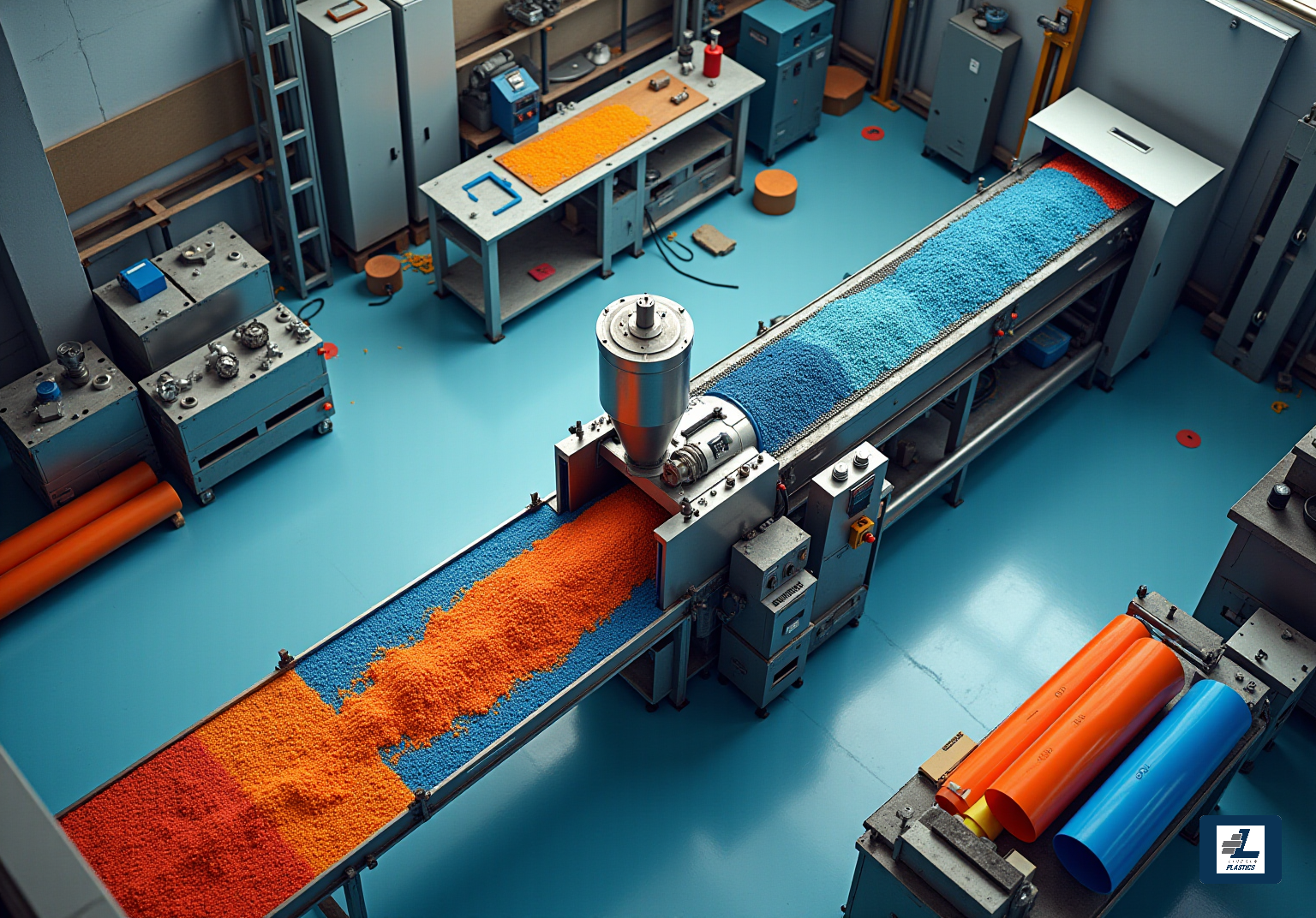
Let’s dive into the world of extruded plastics! These synthetic materials are created using a pretty cool method where raw material is melted and pushed through a die. This process gives us continuous forms like pipes, sheets, and profiles. It’s a game-changer in manufacturing, thanks to its efficiency in crafting complex shapes with uniform cross-sections.
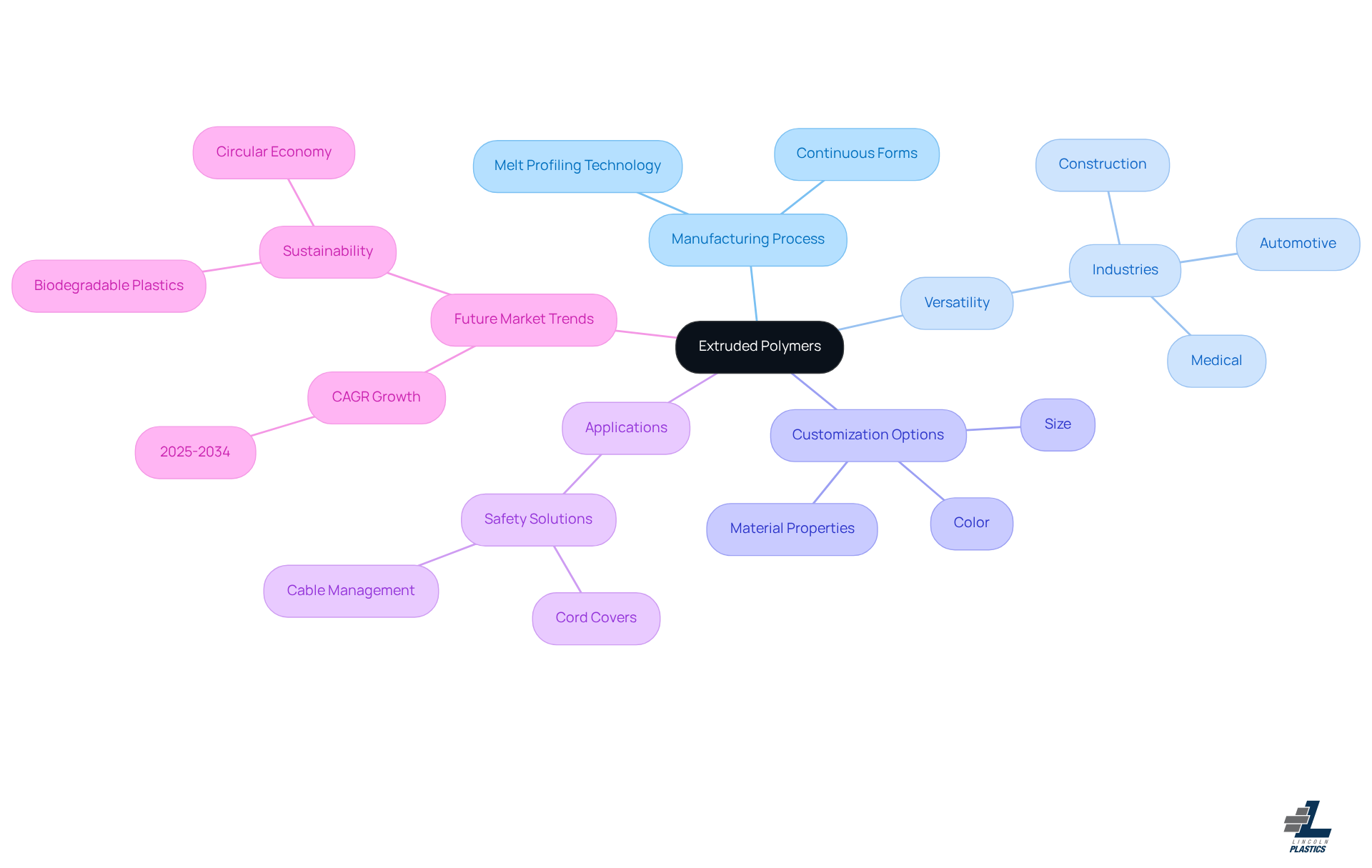
Now, you might be wondering about the versatility of these materials. Well, they can be tailored for a bunch of applications—think construction, automotive, and even medical sectors! Companies like Lincoln Plastics are all about this. They specialize in custom solutions, offering products and services that can be customized in various plastics like polyethylene and PVC.
What’s really neat is their ability to customize—size, color, and material properties are all on the table. This means manufacturers can meet specific operational needs effectively. Plus, with recent advancements like melt profiling technology, the quality and consistency of these products are getting even better. Isn’t that impressive?
Practical applications abound! For instance, Lincoln Plastics’ tailored products and innovative solutions show how processed plastics can help tackle safety risks and operational challenges. And let’s not forget how easy these cord covers and protective barriers are to install—they’re perfect for all sorts of environments.
Looking ahead, the market is expected to expand, with a forecasted compound annual growth rate (CAGR) exceeding 3.91% from 2025 to 2034. This really highlights how essential formed materials are in boosting efficiency and effectiveness in various settings. Plus, with the shift towards sustainability, such as the circular economy and biodegradable plastics, the importance of extruded polymers in modern manufacturing is growing. Exciting times ahead!
Explore Types of Polymers Used in Extrusion Processes
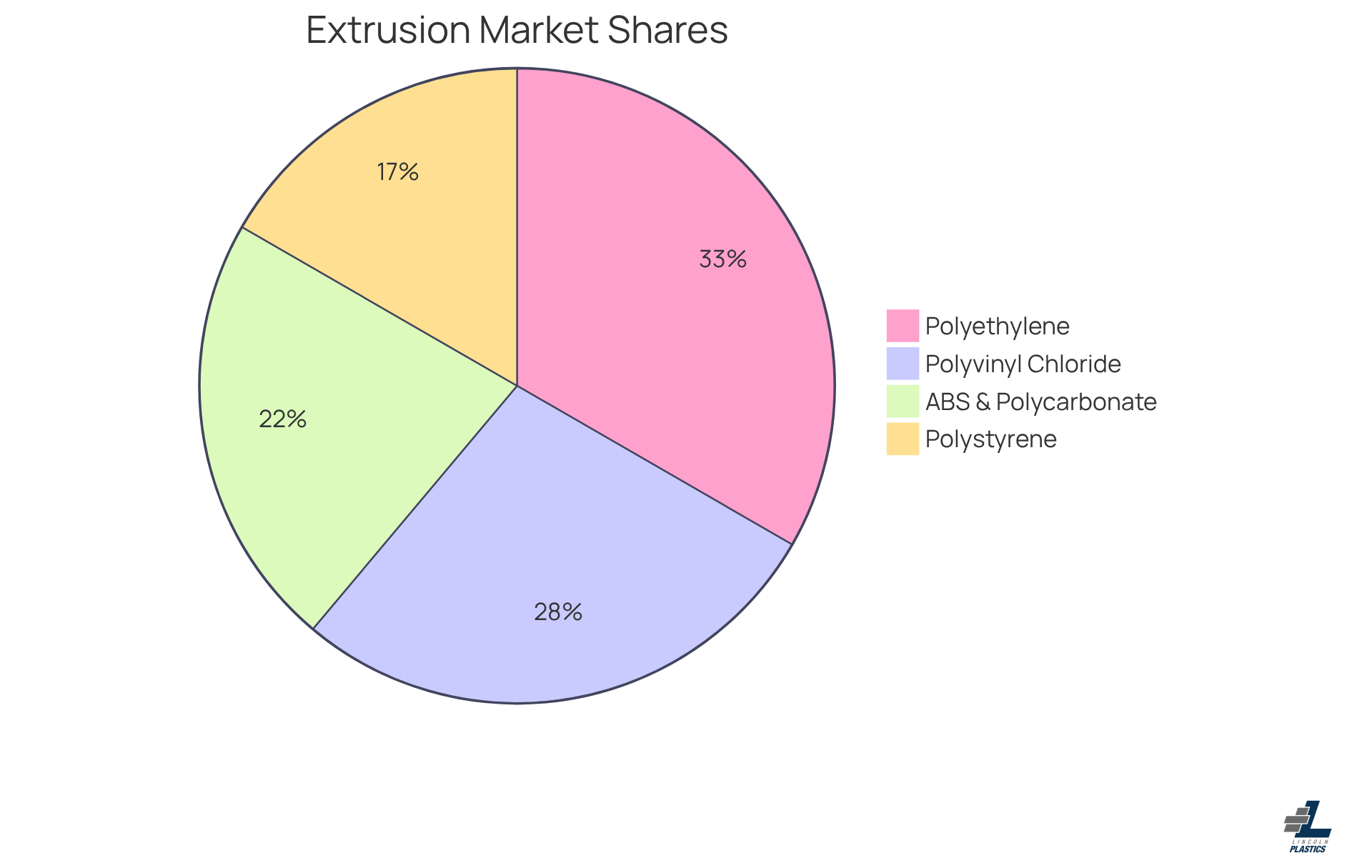
In the manufacturing world, extruded polymers are some plastics that really stand out because of their unique traits and suitability for different uses. Take polyethylene, for instance. It's a top pick, known for its flexibility and great chemical resistance, making it perfect for things like packaging. Did you know that PE holds about 30% of the total extrusion market? That’s pretty impressive and shows just how versatile it is across various sectors.
Now, let’s talk about polyvinyl chloride. This polymer is celebrated for its durability. You’ll find it everywhere in products like pipes, siding, and window frames—where durability really matters. PVC’s resistance to environmental degradation makes it a go-to choice for many applications, contributing to the popularity of extruded polymers, which hold a market share of around 25% in the extrusion sector.
Then there's polystyrene, which is favored for its rigidity and ease of processing. You probably see it in consumer goods like packaging and disposable utensils. Its lightweight nature and cost-effectiveness make it a popular option across various industries, holding a market share of about 15%.
Additionally, let’s not forget about engineering plastics like Acrylonitrile Butadiene Styrene (ABS) and Polycarbonate (PC). These materials are increasingly used in demanding applications because of their superior strength and impact resistance. They’re crucial in industries that need high-performance materials, such as automotive and electronics.
You might be wondering about the future of polymers. Well, there’s a growing interest in sustainable materials. Innovations in biodegradable and recyclable polymers are gaining traction. For example, researchers are looking into materials like Polylactic Acid (PLA) and Polyhydroxyalkanoates (PHA) for their environmental benefits. Plus, the industry is seeing a rise in the development of water-soluble plastics for packaging and single-use items, which dissolve in water without harming the environment.
As the industry evolves, understanding the latest trends is essential. It can really help producers enhance their shaping processes and meet the changing demands of the market. So, what do you think? Are you ready to dive deeper into the world of plastics?
Understand the Polymer Extrusion Process and Equipment
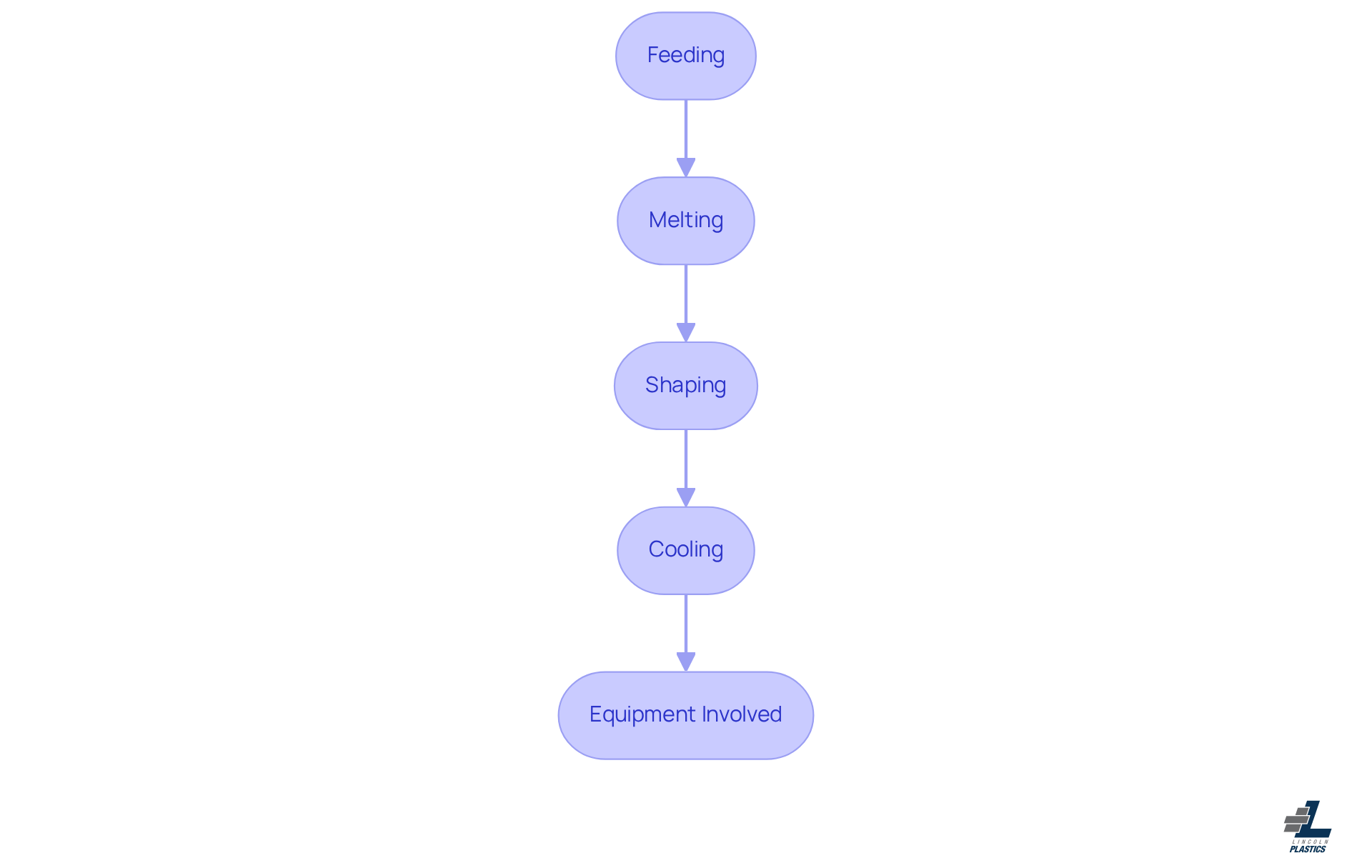
Let’s dive into the process of creating extruded polymers! It’s made up of several key stages: feeding, melting, shaping, and cooling. First up, raw plastic pellets are introduced into a hopper, where they’re whisked away to a heated barrel. Here, the magic happens as the pellets melt and mix together, creating a uniform consistency.
Next, the molten material is pushed through a die to form into the desired profile. After that, the material cools down—usually with water baths or air cooling systems—to solidify its shape. You might be curious about the equipment involved in all this. Well, we’re talking about extruders, dies, cooling systems, and cutting machines.
At Lincoln Plastics, we take pride in our products, ensuring they meet industry standards. We’re certified to the highest quality standards, which speaks volumes about our commitment to excellence. Plus, we collaborate closely with OEMs to meet specific requirements, including special checks for fit and function using various check gauges.
Understanding these processes and equipment is crucial for any manufacturer looking to improve efficiency. So, are you ready to take your production to the next level?
Examine Applications of Extruded Polymers in Industry
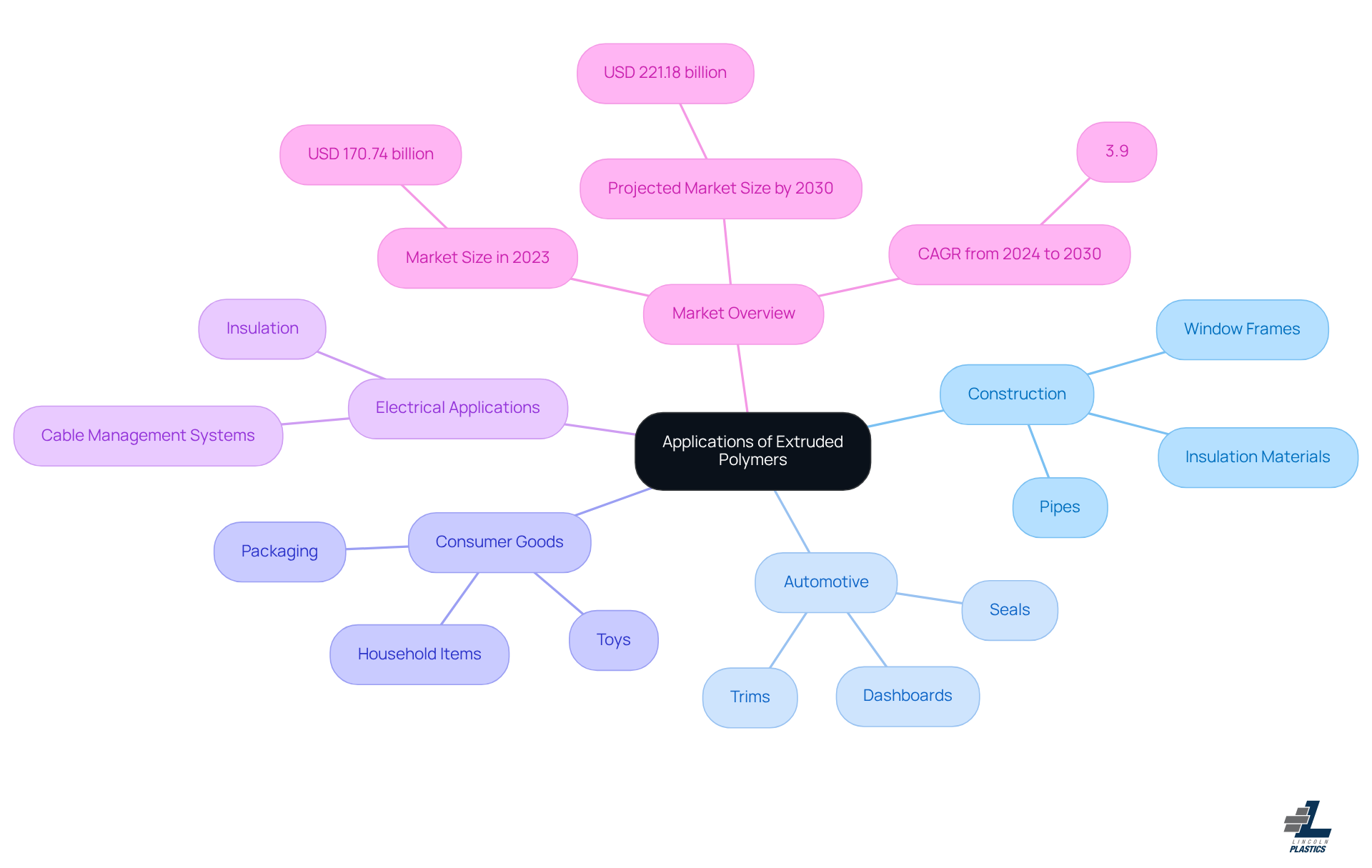
play a crucial role in many industries, showcasing their versatility and adaptability. For instance, in construction, they’re widely used for things like pipes, window frames, and insulation materials. You might have noticed that extruded polymers are often preferred because they’re recyclable and have a lower environmental impact compared to metal options.
Now, let’s talk about the automotive sector. Here, extruded polymers are used for parts like dashboards, trims, and seals. Why? Because they’re lightweight and durable, which helps boost vehicle performance and fuel efficiency. In the consumer goods arena, you’ll find extruded polymers in packaging, toys, and household items, demonstrating their ability to meet various design and functional needs.
Moreover, extruded polymers are vital in electrical applications, such as wiring and insulation. Their properties ensure safety and efficiency, which is pretty important, right? At Lincoln Plastics, we work closely with OEMs to make sure our products meet all specifications. We even have special checks for 'fit and function.'
Our robust quality system includes a dedicated quality book for each plastic profile. This book has everything—drawings, critical in-process checks, and run documentation. This way, you can be sure that the products are exactly what you specified for those applications.
The versatility of these products really enhance their applicability, making them essential for meeting the evolving demands of modern manufacturing. Speaking of which, did you know that the market size was estimated at USD 170.74 billion in 2023? It’s projected to hit USD 221.18 billion by 2030, growing at a CAGR of 3.9% from 2024 to 2030. This really highlights how relevant these materials are across different sectors!
Conclusion
Extruded polymers are really changing the game in modern manufacturing, aren’t they? Their versatility and efficiency are revolutionizing industries left and right. With advanced extrusion processes, manufacturers can whip up a huge variety of products tailored just for specific operational needs. This adaptability not only boosts production capabilities but also makes extruded polymers essential in sectors like construction, automotive, and consumer goods.
Now, let’s dive into some key points. Different polymers, such as Polyethylene, PVC, and Polystyrene, each have their own unique properties and advantages for specific applications. Isn’t it fascinating how customization in extrusion processes, paired with tech advancements, allows manufacturers to optimize their operations to keep up with ever-changing market demands? Plus, the growth potential of the extruded polymers market really highlights their importance in today’s manufacturing landscape.
As we look to the future, industries are increasingly embracing sustainability and innovation. The role of extruded polymers is only going to grow. Companies should definitely explore the benefits of these materials—not just for their immediate applications, but also for how they can help create a more sustainable future. By embracing advancements in polymer extrusion, we can enhance efficiency, safety, and environmental responsibility. So, let’s keep investing and developing in this crucial area together!
Frequently Asked Questions
What are extruded polymers?
Extruded polymers are synthetic materials created by melting raw material and pushing it through a die, resulting in continuous forms like pipes, sheets, and profiles.
Why are extruded polymers important in manufacturing?
They are important because they efficiently craft complex shapes with uniform cross-sections, which enhances manufacturing processes across various industries.
In which industries are extruded polymers used?
Extruded polymers are used in multiple industries, including construction, automotive, and medical sectors.
How can extruded polymers be customized?
They can be customized in terms of size, color, and material properties, allowing manufacturers to meet specific operational needs effectively.
What advancements have improved extruded polymers?
Recent advancements like melt profiling technology have improved the quality and consistency of extruded polymer products.
What are some practical applications of extruded polymers?
Practical applications include tailored pipe extrusion services and innovative cord management solutions, which help address safety risks and operational challenges.
What is the forecast for the processed plastics market?
The processed plastics market is expected to expand, with a forecasted compound annual growth rate (CAGR) exceeding 3.91% from 2025 to 2034.
How is sustainability influencing the importance of extruded polymers?
The shift towards sustainable methods, such as the circular economy and biodegradable plastics, is increasing the importance of extruded polymers in modern manufacturing.
List of Sources
- Define Extruded Polymers and Their Importance in Manufacturing
- precedenceresearch.com (https://precedenceresearch.com/extruded-plastics-market)
- mdplastics.com (https://mdplastics.com/the-future-of-plastics-manufacturing-trends-and-innovations-for-2025-and-beyond)
- lincoln-plastics.com (https://lincoln-plastics.com/news-post/9-essential-plastic-extrusion-process-steps-for-oem-managers)
- The Extrusion Industry in 2025: Innovations, Trends, and Opportunities (https://plextrusions.com/extrusion-blog/the-extrusion-industry-in-2025-innovations-trends-and-opportunities)
- Explore Types of Polymers Used in Extrusion Processes
- goodfishgroup.com (https://goodfishgroup.com/types-of-polymers-used-in-plastic-extrusion)
- Interplas Insights | Latest Plastics Extrusion Machinery News (https://interplasinsights.com/plastics-machinery/plastics-extrusion-machinery-news)
- mdplastics.com (https://mdplastics.com/the-future-of-plastics-manufacturing-trends-and-innovations-for-2025-and-beyond)
- The Extrusion Industry in 2025: Innovations, Trends, and Opportunities (https://plextrusions.com/extrusion-blog/the-extrusion-industry-in-2025-innovations-trends-and-opportunities)
- thermofisher.com (https://thermofisher.com/blog/materials/how-extrusion-can-help-streamline-new-polymer-development)
- Understand the Polymer Extrusion Process and Equipment
- grandviewresearch.com (https://grandviewresearch.com/industry-analysis/extrusion-machinery-market-report)
- The Extrusion Industry in 2025: Innovations, Trends, and Opportunities (https://plextrusions.com/extrusion-blog/the-extrusion-industry-in-2025-innovations-trends-and-opportunities)
- Examine Applications of Extruded Polymers in Industry
- The Extrusion Industry in 2025: Innovations, Trends, and Opportunities (https://plextrusions.com/extrusion-blog/the-extrusion-industry-in-2025-innovations-trends-and-opportunities)
- Extruded Plastics Market Size, Share & Growth Report, 2030 (https://grandviewresearch.com/industry-analysis/extruded-plastics-market-report)
- Unlocking the Versatility of Plastic Profile Extrusion (https://lakelandplastics.com/understanding-the-versatility-of-plastic-profile-extrusion)
- goodfishgroup.com (https://goodfishgroup.com/types-of-polymers-used-in-plastic-extrusion)
Related posts

Why Custom Pipe Extrusion Matters More Than Ever
Standard pipe sizes don’t always work. Learn how Lincoln Plastics delivers custom diameters, wall thicknesses, and finishes in right-sized runs.


Reducing Trip Hazards with Custom Cord Management
Loose cords are more than messy — they’re a safety hazard. Lincoln Plastics’ custom cord covers and Flexiduct solutions improve safety and efficiency.
The Power of Custom Plastic Profiles for OEMs
Off-the-shelf profiles force compromises. Learn how Lincoln Plastics designs custom extruded profiles for OEMs with exact specs and right-sized runs.
