

Unlocking Thermoplastics Properties: Essential Insights for OEMs
Introduction
In the fast-evolving landscape of manufacturing, thermoplastics stand out as a game-changer, offering unmatched flexibility and sustainability. Original Equipment Manufacturers (OEMs) can significantly benefit from understanding the properties and applications of these versatile materials as they navigate the complexities of material selection and product design.
Navigating the myriad of options can be overwhelming for OEMs. Are you making the right choices to balance performance and sustainability?
Let’s explore the key insights on thermoplastics that can help you succeed in today’s competitive and eco-conscious market.
Define Thermoplastics: Key Characteristics and Importance
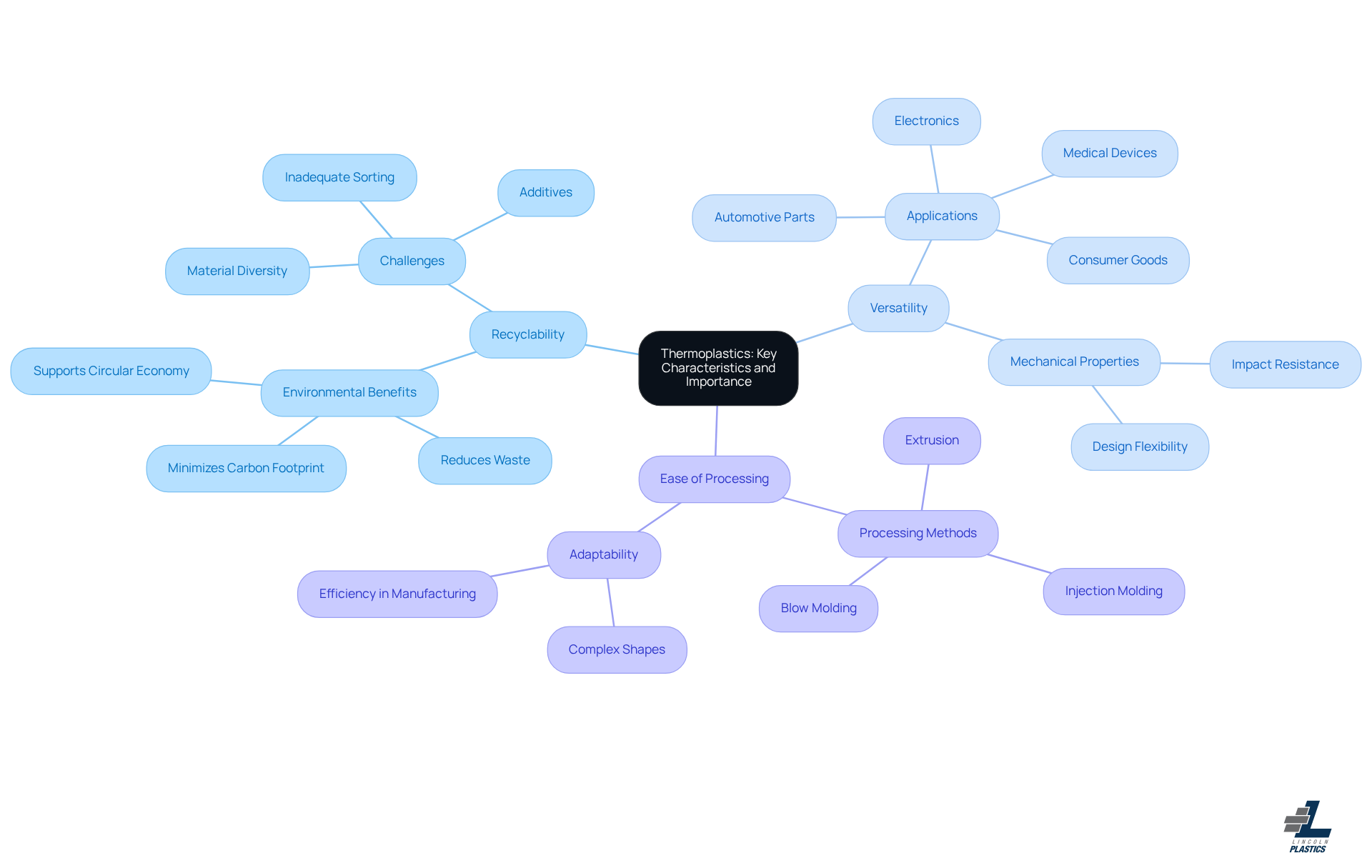
Thermoplastics stand out as a revolutionary category of polymers, offering unmatched flexibility and sustainability in manufacturing. These materials become pliable or moldable upon heating and solidify upon cooling, allowing them to be reshaped multiple times without significant degradation. Key characteristics include:
- Recyclability: Thermoplastics can be melted and remolded, making them environmentally friendly and suitable for sustainable manufacturing practices. Their recyclability contributes to a circular economy, reducing waste and minimizing the carbon footprint of industrial production.
- Versatility: These materials can be formulated to achieve a wide range of mechanical properties, making them suitable for various applications, from automotive parts to consumer goods. For instance, thermoplastics like ABS and polycarbonate are widely used in vehicle interiors and exteriors due to their impact resistance and design flexibility.
- Ease of Processing: Thermoplastics can be processed using various methods, including extrusion, injection molding, and blow molding, which enhances their usability in manufacturing. This adaptability enables original equipment manufacturers to create complex shapes and components efficiently.
At Lincoln Plastics, we work hand-in-hand with OEMs to guarantee their products hit all quality benchmarks, including special checks for ‘fit and function’. Our robust quality system includes a dedicated quality book for your material profile with drawings, critical in-process checks, and run documentation. We utilize multiple types of check gauges to ensure a proper end-use fit and can easily source colors that meet your Pantone specifications for consistency across manufacturers.
Have you considered how these characteristics impact your material choices and product designs? Understanding these factors is essential for OEMs, as they influence material selection and product design, ensuring that the final products meet performance and regulatory standards. As Pravin Luthada, CEO of Addcomposites, notes, "The growing concerns regarding the increasing plastic waste globally are driving the need to reduce plastic waste using various methods, including recycling, thus driving the market." This highlights the essential role of plastic materials in minimizing environmental impact and improving product functionality. As the industry evolves, understanding thermoplastics properties will be crucial for OEMs aiming to lead in sustainability and innovation.
Explore Types of Thermoplastics: Properties and Applications
Selecting the right thermoplastic is crucial for OEMs, as each type offers unique properties that can significantly impact product performance:
- Polyethylene (PE): PE is known for its flexibility and chemical resistance, making it widely used in packaging, containers, and piping systems.
- Polypropylene (PP): This thermoplastic is valued for its strength and lightweight nature, making it ideal for automotive parts and consumer products. In 2026, PP is anticipated to possess a significant market share in automotive uses, particularly in components such as bumpers and dashboards, owing to its excellent thermoplastics properties and durability.
- Polyvinyl Chloride (PVC): PVC exhibits thermoplastics properties that make it commonly used in construction for pipes and fittings due to its durability and resistance to environmental factors. The ongoing recovery in infrastructure investment is expected to bolster PVC demand in 2026.
- Acrylonitrile Butadiene Styrene (ABS): ABS is recognized for its impact resistance and is frequently utilized in consumer electronics and automotive sectors, offering a balance of strength and visual attractiveness.
- Polycarbonate (PC): With excellent transparency and impact resistance, PC is used in applications requiring high strength and clarity, such as safety glasses and automotive components.
Choosing the right thermoplastic can be overwhelming due to the variety of options available. We work hand-in-hand with OEMs to ensure that the plastic materials we choose meet all quality standards, including specific assessments for fit and function. We utilize multiple types of check gauges to ensure a proper end-use fit. Our robust quality system includes a dedicated quality book for each plastic profile, featuring drawings, critical in-process checks, and run documentation. Additionally, we can easily source colors that meet your Pantone specifications for consistency across manufacturers. By partnering with Lincoln Plastics, OEMs can confidently navigate their material choices, ensuring both performance and cost-effectiveness in their applications.

Evaluate Advantages and Limitations of Thermoplastics
Thermoplastics properties offer a unique blend of benefits and challenges that OEMs must navigate to enhance their manufacturing processes.
Advantages:
- Recyclability: Thermoplastics can be recycled multiple times, significantly reducing waste and promoting sustainability in manufacturing processes.
- Cost-Effectiveness: Typically, these types of plastics are cheaper to manufacture than thermosetting varieties, making them a more budget-friendly option for high-volume uses. The market is expected to increase from USD 1.4 billion in 2026 to USD 2.86 billion by 2035, suggesting a competitive advantage in pricing for plastic materials.
- Versatility: These materials can be tailored to satisfy specific performance requirements, enabling a range of uses across different industries.
- Ease of Processing: Their capacity to be molded and reshaped effortlessly makes these materials suitable for a variety of manufacturing processes, enhancing production efficiency.
Limitations:
- Heat Sensitivity: One of the primary limitations of thermoplastics is their tendency to soften or deform under high temperatures. This limitation can hinder the use of thermoplastics in critical applications where heat resistance is paramount. Recent studies highlight that while some heat-resistant plastics, such as PEEK, can withstand moderate heat, they may not be suitable for environments exceeding certain thermal thresholds.
- Chemical Resistance: Although many types of plastic show good chemical resistance, some varieties may not withstand exposure to certain solvents or severe environments, potentially resulting in material degradation.
- Mechanical Properties: In comparison to thermosetting plastics, the thermoplastics properties frequently demonstrate reduced tensile strength and rigidity, which can affect their performance in challenging uses. Industry specialists, including Razmik Akopyan, observe that although progress is occurring, the mechanical constraints of plastic materials remain a factor in high-stress environments.
Ultimately, recognizing these advantages and limitations allows OEMs to strategically select materials that align with their operational goals and performance standards.

Understand Processing Methods for Thermoplastics
Navigating the diverse landscape of thermoplastic processing methods can be daunting for manufacturers. Each method is tailored for specific applications, offering unique advantages that can enhance production efficiency and product quality.
- Extrusion: This technique melts plastic pellets and forces them through a die to create continuous profiles, such as pipes and sheets. We collaborate with OEMs to guarantee that our products meet stringent quality standards, including specific checks for ‘fit and function’. Our robust quality system includes multiple types of check gauges to ensure a proper end-use fit, making extrusion particularly advantageous for high-volume production.
- Injection Molding: In this process, molten thermoplastic is injected into a mold to produce complex shapes. This technique is favored for its ability to create intricate parts with high precision, making it ideal for applications requiring detailed designs. The 2-Shot Injection Molding Market is projected to reach $15.82 billion in 2026, highlighting the growing importance of this method in the industry.
- Blow Molding: This technique forms hollow plastic parts, such as bottles, by inflating a heated plastic tube within a mold. It is essential for producing lightweight and durable containers, contributing to the packaging industry's efficiency. Notably, the ROI timeline for all-electric blow molding machines has shortened in 2026, making them a more attractive option for manufacturers.
- Thermoforming: In thermoforming, a sheet of plastic is heated and shaped over a mold, enabling the production of large parts with varying thicknesses. This technique is extensively utilized for purposes such as appliance housings and automotive parts, where seamless designs are essential. For instance, thermoforming is utilized to create large door liners for refrigerators and freezers, ensuring leak-proof designs.
- Co-extrusion: This advanced method combines two or more thermoplastics to create multi-layered products, enhancing performance characteristics such as barrier properties and aesthetics. Co-extrusion is becoming more popular in applications that require enhanced durability and functionality due to the advantages of thermoplastics properties.
Are you struggling to find the best method for your production needs? By mastering these techniques, you can elevate your production capabilities and stay ahead in a competitive market.

Assess Environmental Impact and Sustainability of Thermoplastics
In today's manufacturing landscape, the environmental impact of thermoplastics is not just a consideration; it's a necessity for OEMs striving for sustainability and market relevance.
- Recyclability: One of the most significant advantages of thermoplastics is their ability to be recycled multiple times without losing quality. This helps reduce plastic waste and is essential in promoting a circular economy, allowing materials to be reused rather than discarded.
- Energy Efficiency: The creation of heat-sensitive plastics often demands less energy compared to heat-curing plastics, aiding in reduced carbon emissions during production. For instance, recent studies suggest that certain plastics can use up to 30% less energy in production processes, making them a more sustainable option for manufacturers.
- Sustainability Initiatives: Many manufacturers are adopting sustainable practices, such as using bio-based plastic materials or incorporating recycled substances into their products. This enhances their environmental credentials. The Plastics Industry Association has emphasized the industry's ongoing commitment to sustainability, particularly highlighted during Earth Day 2026.
Conducting a lifecycle assessment (LCA) can help original equipment manufacturers understand the environmental impacts of thermoplastics properties throughout their lifecycle, from production to disposal. This comprehensive analysis is crucial for understanding the long-term sustainability of materials used in manufacturing.
By embracing sustainable practices, OEMs can not only meet regulatory demands but also position themselves as leaders in a market increasingly driven by environmental responsibility.

Conclusion
Thermoplastics are not just materials; they are the backbone of modern manufacturing, driving innovation and sustainability. Their ability to be reshaped multiple times without significant degradation makes them essential for sustainable and efficient production processes.
Throughout this article, we’ve explored the characteristics of thermoplastics, including their recyclability, ease of processing, and the diverse types available for various applications. We highlighted their advantages, such as cost-effectiveness and mechanical properties, while also addressing challenges like heat sensitivity. Furthermore, we discussed various processing methods, emphasizing how each technique can optimize production efficiency. The environmental impact of thermoplastics and the industry's commitment to sustainability further underscore their importance in shaping a more responsible manufacturing landscape.
However, navigating the challenges of heat sensitivity can be daunting for manufacturers. As the manufacturing sector prioritizes sustainability and innovation, OEMs must leverage the properties of thermoplastics to enhance product performance while minimizing environmental impact. Failing to adapt could mean falling behind in a competitive market. By embracing these materials and understanding their characteristics, manufacturers can position themselves at the forefront of industry advancements, ensuring they meet both regulatory standards and consumer expectations for eco-friendly products. The choice to embrace thermoplastics today could define your competitive edge tomorrow.
Frequently Asked Questions
What are thermoplastics?
Thermoplastics are a category of polymers that become pliable or moldable upon heating and solidify upon cooling, allowing them to be reshaped multiple times without significant degradation.
What are the key characteristics of thermoplastics?
The key characteristics of thermoplastics include recyclability, versatility, and ease of processing. They can be melted and remolded, can be formulated for various mechanical properties, and can be processed using methods like extrusion and injection molding.
How do thermoplastics contribute to sustainability?
Thermoplastics are environmentally friendly due to their recyclability, which supports sustainable manufacturing practices and contributes to a circular economy by reducing waste and minimizing the carbon footprint of industrial production.
What are some common applications of thermoplastics?
Thermoplastics are used in a wide range of applications, including automotive parts, consumer goods, packaging, containers, and construction materials.
What are some types of thermoplastics and their properties?
- Polyethylene (PE): Known for flexibility and chemical resistance, used in packaging and piping.
- Polypropylene (PP): Valued for strength and lightweight, ideal for automotive parts.
- Polyvinyl Chloride (PVC): Durable and resistant to environmental factors, commonly used in construction.
- Acrylonitrile Butadiene Styrene (ABS): Offers impact resistance, used in consumer electronics and automotive sectors.
- Polycarbonate (PC): Known for transparency and impact resistance, used in safety glasses and automotive components.
How does Lincoln Plastics support OEMs in selecting thermoplastics?
Lincoln Plastics collaborates with OEMs to ensure that selected plastic materials meet quality standards, including assessments for fit and function. They provide a dedicated quality book for each plastic profile and utilize various check gauges to ensure proper end-use fit.
Why is understanding thermoplastics important for OEMs?
Understanding the properties of thermoplastics is essential for OEMs as it influences material selection and product design, ensuring that final products meet performance and regulatory standards while also addressing sustainability concerns.
List of Sources
- Define Thermoplastics: Key Characteristics and Importance
- aeromorning.com (https://aeromorning.com/en/daher-accelerates-the-industrialization-of-thermoplastic-composite-revalorization)
- grandviewresearch.com (https://grandviewresearch.com/industry-analysis/recycled-thermoplastics-market-report)
- Exploring the Versatility of Thermoplastic Parts Across Industries — Automation Plastics Corporation (https://automationplastics.com/news/exploring-the-versatility-of-thermoplastic-parts-across-industries)
- k-online.com (https://k-online.com/en/media_news/k-mag/raw-materials/thermoplastics-definition)
- addcomposites.com (https://addcomposites.com/post/thermoplastic-composites-take-center-stage-5-jec-2026-innovations-proving-the-tp-revolution-is-here)
- Explore Types of Thermoplastics: Properties and Applications
- ptonline.com (https://ptonline.com/articles/april-2026-volume-resin-prices-mostly-up-uncertainty-looms)
- juyuans.com (https://juyuans.com/top-5-most-watched-plastic-raw-material-trends-in-2026)
- linkedin.com (https://linkedin.com/pulse/thermoplastics-materials-market-technology-size-vfmtc)
- plasticstoday.com (https://plasticstoday.com/industry-trends/plastics-industry-braces-for-2026-construction-market-challenges)
- Evaluate Advantages and Limitations of Thermoplastics
- plasticstoday.com (https://plasticstoday.com/injection-molding/displacement-intrusion-molding-shapes-evolving-process)
- gminsights.com (https://gminsights.com/industry-analysis/high-performance-thermoplastics-in-aerospace-market)
- energy.gov (https://energy.gov/cmei/articles/department-energy-announces-25-million-plastics-recycling-rd-launches-upcycling)
- addcomposites.com (https://addcomposites.com/post/thermoplastic-composites-take-center-stage-5-jec-2026-innovations-proving-the-tp-revolution-is-here)
- eurekalert.org (https://eurekalert.org/news-releases/1122443)
- Understand Processing Methods for Thermoplastics
- Injection molding outlook: Cautious optimism for 2026 (https://plasticsnews.com/suppliers/machinery/pn-machinery-outlook-injection-molding-2025)
- parker-global.com (https://parker-global.com/news/2026-global-plastic-blow-molding-industry-outlook.html)
- evokpoly.com (https://evokpoly.com/feeds/blog/injection-molding-trends-2026)
- swellderplastics.com (https://swellderplastics.com/news/in-2026-plastic-thermoforming-will-be-a-good-85377377.html)
- plasticstaffing.com (https://plasticstaffing.com/blow-molding-hiring-trends)
- Assess Environmental Impact and Sustainability of Thermoplastics
- prnewswire.com (https://prnewswire.com/news-releases/cooper-standards-flexicore-thermoplastic-automotive-body-seal-earns-2026-environmentenergy-leader-award-for-innovation-in-sustainability-302749425.html)
- americanchemistry.com (https://americanchemistry.com/chemistry-in-america/news-trends/press-release/2026/america-s-plastic-makers-applaud-epa-s-action-on-advanced-recycling)
- sulapac.com (https://sulapac.com/blog/sustainability-is-no-longer-just-a-footnote-in-thermoforming-the-european-thermoforming-conference-2026-showed-an-industry-in-transition)
- plasticsindustry.org (https://plasticsindustry.org/newsroom/plastics-industry-association-earth-day-highlights-industrys-ongoing-commitment-to-circularity-and-u-s-manufacturing)
- plasticsindustry.org (https://plasticsindustry.org/newsroom/plastics-announces-2026-plastic-sustainability-innovation-award-winners)


