
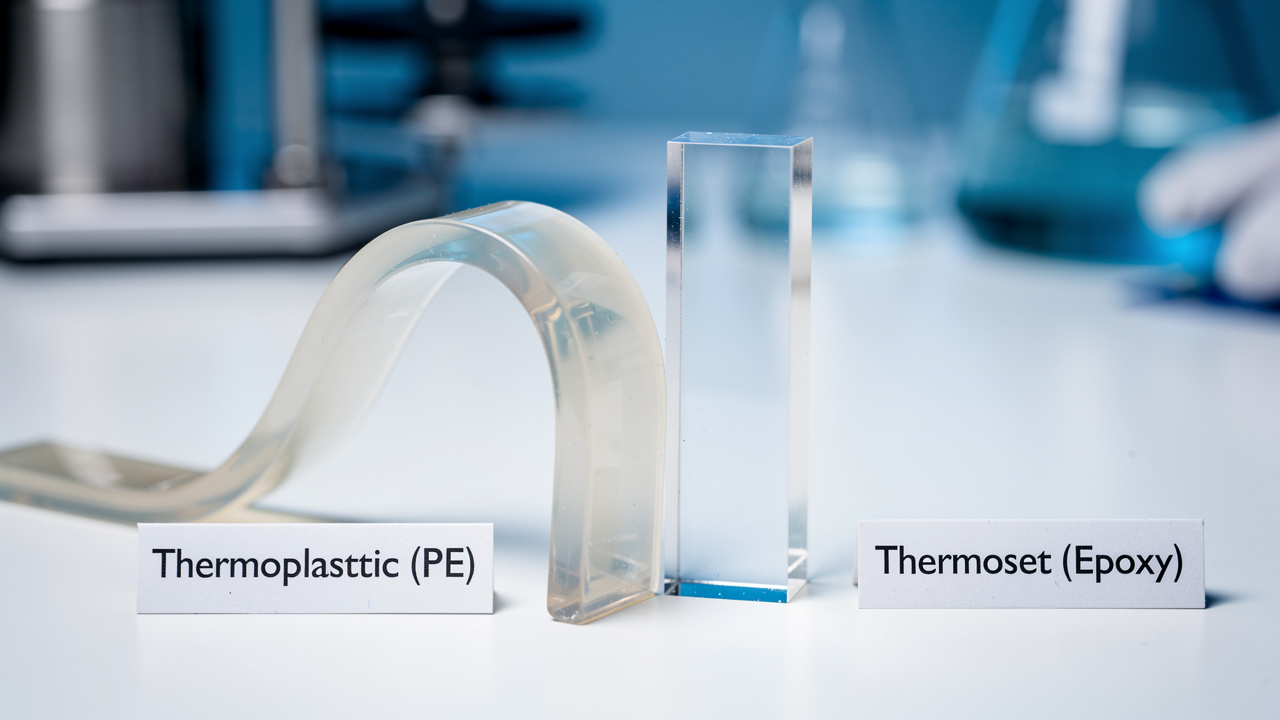
Understanding the Difference Between Thermoplastic and Thermosetting Plastic
Introduction
Choosing the right plastic material can make or break a manufacturer’s success in today’s competitive landscape. Understanding the nuances between thermoplastic and thermosetting plastic is crucial for optimizing product performance and sustainability.
- Thermoplastics offer remarkable versatility and recyclability, making them a popular choice across various industries.
- In contrast, thermosetting plastics provide unmatched durability and heat resistance for demanding applications.
Manufacturers often struggle to choose the right material due to varying performance needs and sustainability goals. What specific properties set thermoplastics apart from thermosetting plastics, and how can manufacturers utilize this knowledge to optimize their production processes? Understanding these differences is not just beneficial; it’s essential for manufacturers aiming to thrive in a sustainable future.
Define Thermoplastics and Thermosetting Plastics
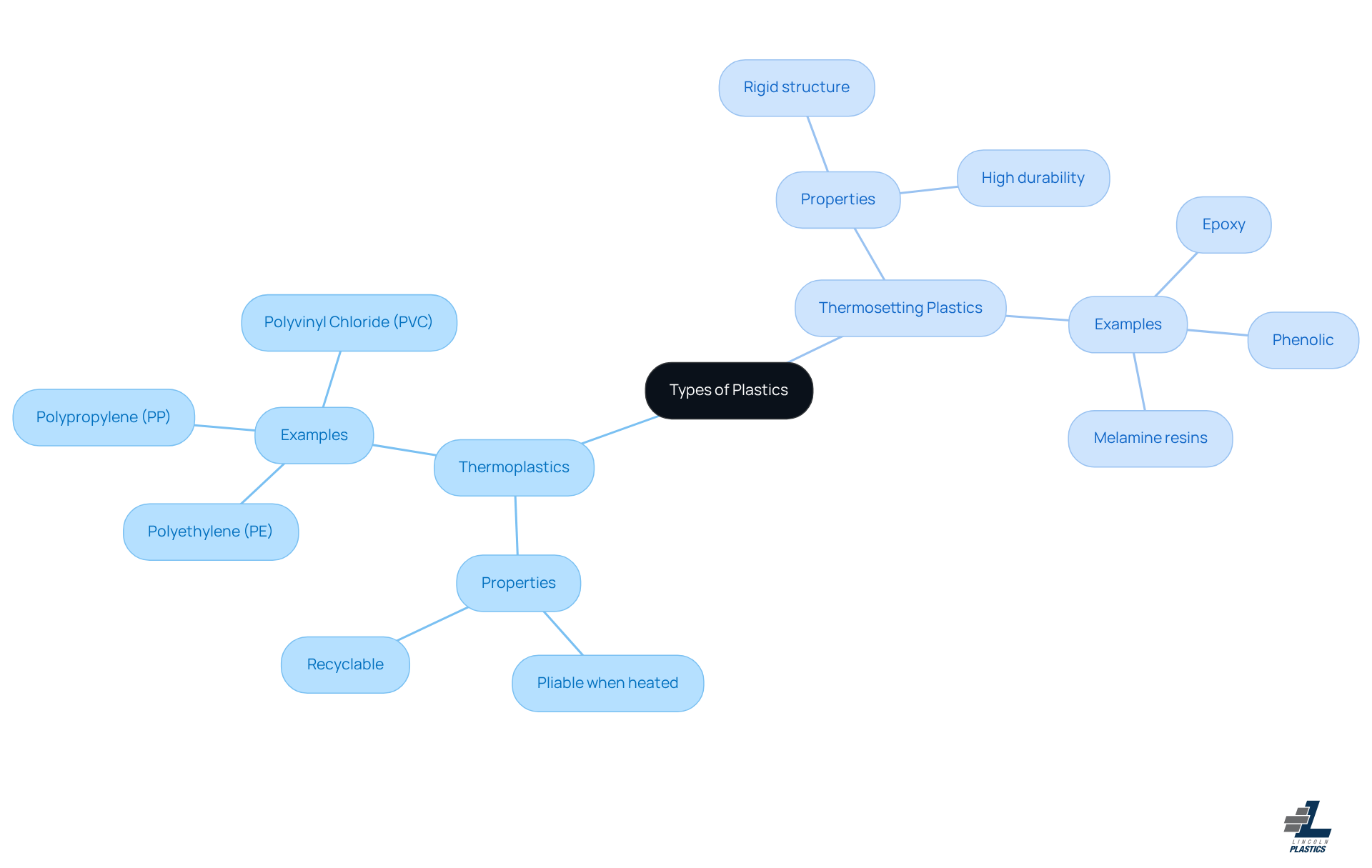
Understanding the difference between thermoplastic and thermosetting plastic is crucial for making informed material choices in manufacturing. Thermoplastics, for instance, become pliable when heated and solidify upon cooling, allowing for multiple remolding and recycling without significant property degradation. Common examples include:
- polyethylene (PE)
- polypropylene (PP)
- polyvinyl chloride (PVC)
On the other hand, thermosetting plastics undergo a chemical transformation when heated, creating a rigid structure that remains fixed, making them ideal for applications requiring high durability and heat resistance. Examples include:
- epoxy
- phenolic
- melamine resins
Choosing the right type of plastic can significantly impact the performance and longevity of your products, so consider your options carefully.
Compare Molecular Structures and Properties
Understanding the difference between thermoplastic and thermosetting plastic is crucial for making informed material choices. Thermoplastics possess linear or branched molecular structures characterized by weak intermolecular forces, allowing them to soften upon heating. This unique structure allows for reshaping and recycling, enhancing their adaptability for various applications. In contrast, thermosetting plastics feature a cross-linked molecular structure formed through a curing process, resulting in robust covalent bonds that impart rigidity and thermal stability. Once set, these materials can't be reshaped, which is why they're great for high-temperature applications.
For instance, thermoplastics such as PVC exhibit flexibility, making them ideal for use in pipes and packaging. Conversely, materials like epoxy are preferred in adhesives and coatings due to their outstanding heat resistance and mechanical strength. The selection among these substances often depends on specific application needs, including thermal exposure and mechanical performance. However, the rigidity of thermosetting plastics makes recycling a challenge, raising important sustainability concerns. Understanding the difference between thermoplastic and thermosetting plastic is essential for OEM Purchasing Managers to make better resource choices for their projects. Ultimately, the choice between these materials can significantly impact both project outcomes and sustainability efforts.

Explore Applications in Industry
In a world where material quality can make or break a product, thermoplastics stand out for their versatility and recyclability. Widely used in industries such as packaging, automotive, and consumer goods, these materials are favored for their ease of processing. For instance, polyethylene is commonly used for plastic bags and containers, while polypropylene finds its place in automotive parts and textiles. At Lincoln Plastics, we take pride in ensuring our thermoplastic products meet the highest quality standards. But how do we achieve this? Through our robust quality management program, which includes:
- ISO 9001:2015 certification
- Dedicated quality plans
- In-process checks to guarantee precision and consistency
We also utilize multiple types of check gauges to ensure a proper end-use fit.
On the other hand, when high strength and thermal stability are essential, it is important to understand the difference between thermoplastic and thermosetting plastic. Think about electrical housings, automotive parts, and construction supplies - these applications demand nothing less than the best. Epoxy resins are frequently employed in adhesives and coatings, whereas phenolic resins are used in circuit boards and heat-resistant applications. By collaborating closely with OEMs, we ensure these substances meet all quality standards, including special checks for fit and function. This commitment not only enhances product reliability but also builds trust with our clients. By prioritizing quality and collaboration, we empower our clients to achieve their production goals with confidence.

Evaluate Pros and Cons of Each Material
When it comes to manufacturing, understanding the difference between thermoplastic and thermosetting plastic can significantly impact your production efficiency and product quality. Thermoplastics present several advantages in manufacturing, including:
- Recyclability: They can be remolded and reshaped multiple times, contributing to sustainability efforts and reducing waste.
- Flexibility: Typically more adaptable and impact-resistant than thermosets, making them suitable for a range of uses.
- Ease of Processing: Ideal for high-volume manufacturing processes such as extrusion and injection molding, which can lead to significant energy savings and lower production costs. At Lincoln Plastics, we focus on best practices that elevate our tube extrusion process, ensuring efficiency and quality.
Despite their advantages, thermoplastics come with certain drawbacks that manufacturers must consider:
- Heat Sensitivity: They can soften or deform under high temperatures, limiting their use in heat-intensive applications. This limitation can lead to costly failures in critical applications, impacting your bottom line.
- Reduced Structural Integrity: In specific uses, they may not offer the same degree of strength as thermosetting plastics, which can be essential for durability.
On the other hand, thermosetting plastics offer distinct advantages:
- High Heat Resistance: They maintain structural integrity at elevated temperatures, making them suitable for applications requiring durability under heat.
- Durability: Known for excellent mechanical properties and chemical resistance, these materials are often preferred in industries like aerospace and automotive where performance is paramount.
Their disadvantages include:
- Irreversibility: Once cured, thermosets cannot be remolded or recycled, which poses challenges for sustainability.
- Increased Production Expenses: The curing procedure generally renders certain plastics more costly than others, affecting overall project budgets.
In assessing the advantages and disadvantages of these substances, case studies indicate that thermoplastics are preferred for high-volume production because of their cost-effectiveness and recyclability. This preference underscores the importance of aligning material properties with production strategies for optimal outcomes, whereas thermosets are selected for uses requiring high strength and heat resistance. For manufacturers and product designers, understanding the difference between thermoplastic and thermosetting plastic is crucial to optimize material selection based on specific performance requirements. By leveraging Lincoln Plastics' ISO 9001:2015 certification and commitment to quality management, OEMs can enhance their production processes and achieve superior results. By making informed material choices, manufacturers can not only enhance their product performance but also drive sustainability in their operations.

Conclusion
Making the right choice between thermoplastics and thermosetting plastics is crucial for manufacturing success. Each type of plastic offers unique properties and applications that can significantly influence product performance and sustainability. Recognizing the characteristics of thermoplastics - versatile and recyclable - alongside the durability and heat resistance of thermosetting plastics, allows manufacturers to select the most suitable materials for their needs.
Throughout this article, we've shared key insights regarding the molecular structures, properties, and industrial applications of both thermoplastics and thermosetting plastics. Thermoplastics, with their ability to be reshaped and remolded, are ideal for high-volume production and sustainability efforts. In contrast, thermosetting plastics excel in applications requiring high strength and thermal stability, despite their limitations in recyclability. The discussion also highlighted the importance of quality management practices, such as those implemented by Lincoln Plastics, which ensure that products meet rigorous standards and enhance reliability.
Choosing the wrong plastic can lead to costly production delays and compromised product quality. By understanding these distinctions, manufacturers can enhance their production efficiency and product reliability. By leveraging the expertise of Lincoln Plastics and its commitment to excellence, OEMs can navigate these material choices effectively. Working with Lincoln Plastics for tailored solutions supports optimal production outcomes and fosters a partnership focused on quality and innovation.
Frequently Asked Questions
What are thermoplastics?
Thermoplastics are materials that become pliable when heated and solidify upon cooling. They can be remolded and recycled multiple times without significant degradation of their properties. Common examples include polyethylene (PE), polypropylene (PP), and polyvinyl chloride (PVC).
What are thermosetting plastics?
Thermosetting plastics undergo a chemical transformation when heated, resulting in a rigid structure that remains fixed. This makes them suitable for applications that require high durability and heat resistance. Examples of thermosetting plastics include epoxy, phenolic, and melamine resins.
Why is it important to understand the difference between thermoplastics and thermosetting plastics?
Understanding the difference is crucial for making informed material choices in manufacturing, as the type of plastic selected can significantly impact the performance and longevity of products.
Can thermoplastics be recycled?
Yes, thermoplastics can be recycled multiple times without significant property degradation, allowing for sustainable manufacturing practices.
Are thermosetting plastics suitable for high-temperature applications?
Yes, thermosetting plastics are ideal for applications requiring high durability and heat resistance due to their rigid structure after the chemical transformation.
List of Sources
- Define Thermoplastics and Thermosetting Plastics
- Chemists make tough plastics recyclable (https://news.mit.edu/2020/tough-thermoset-plastics-recyclable-0722)
- Thermosetting Plastics Market Size & Future Growth, 2033 (https://persistencemarketresearch.com/market-research/thermosetting-plastics-market.asp)
- Thermosetting Plastics Market Size and Forecast, 2026-2033 (https://coherentmarketinsights.com/market-insight/thermosetting-plastics-market-5639)
- Innovations in Thermoplastic Injection: Leading the Way in Materials Science — Automation Plastics Corporation (https://automationplastics.com/news/innovations-in-thermoplastic-injection-leading-the-way-in-materials-science)
- Compare Molecular Structures and Properties
- Thermoplastics vs. Elastomers vs. Thermosets: Key Differences Explained (https://pexco.com/news-and-events/thermoplastics-elastomers-and-thermosets-explained)
- Thermoplastics vs. Thermosets for Structural Applications – What’s the Difference? (https://strongwell.com/news/thermoplastics-vs-thermosets-for-structural-applications-whats-the-difference)
- Thermoset vs Thermoplastics | Pros & Cons | Differences (https://vantageplastics.com/vantage-news-updates/thermoset-vs-thermoplastics-whats-the-difference)
- Thermoplastic vs. Thermosetting Plastic: Key Differences, Properties, and Applications (https://osborneindustries.com/news/difference-between-thermoplastic-thermosetting-plastic)
- Explore Applications in Industry
- Exploring the Versatility of Thermoplastic Parts Across Industries — Automation Plastics Corporation (https://automationplastics.com/news/exploring-the-versatility-of-thermoplastic-parts-across-industries)
- Thermoplastics in Expanded Automotive Applications (https://ptonline.com/blog/post/thermoplastics-take-on-all-comers-in-expanded-automotive-applications)
- Thermosetting Plastics Market Size & Future Growth, 2033 (https://persistencemarketresearch.com/market-research/thermosetting-plastics-market.asp)
- North America Thermoplastics Market - Size, Share & Companies (https://mordorintelligence.com/industry-reports/north-america-thermoplastics-market)
- Evaluate Pros and Cons of Each Material
- Thermoplastic vs. Thermosetting Plastic: Key Differences, Properties, and Applications (https://osborneindustries.com/news/difference-between-thermoplastic-thermosetting-plastic)
- Thermoset vs Thermoplastics | Pros & Cons | Differences (https://vantageplastics.com/vantage-news-updates/thermoset-vs-thermoplastics-whats-the-difference)
- Thermoplastics vs. Thermosets: What’s the Difference? - SyBridge Technologies (https://sybridge.com/thermoplastics-thermosets)
- Are Thermoplastics Sustainable? (https://cdiproducts.com/blog/are-thermoplastics-sustainable)
- Plastics recycling is in trouble (https://cen.acs.org/environment/recycling/Plastics-recycling-trouble/103/web/2025/11)
Related posts

Discover essential steps for selecting reliable custom plastic tubing solutions for various industries.


Discover best practices for procuring clear plastic flexible tubing to enhance performance and reliability.
Discover key insights and features of top flexible PVC manufacturers for your business needs.
