
Understanding PVC: Key Uses and Benefits for Your Business
Introduction
You might not think about it much, but Polyvinyl Chloride (PVC) is a real game changer in a bunch of industries, from construction to healthcare. This handy material is known for being durable and cost-effective, giving businesses a ton of ways to boost product performance while keeping costs down. But as we all start to focus more on sustainability, how can companies make the most of PVC without ignoring its environmental impact?
Exploring the many uses of PVC not only highlights its importance in manufacturing but also uncovers the challenges and opportunities that lie ahead. So, let’s dive in and see how we can navigate this landscape together!
Define Polyvinyl Chloride (PVC) and Its Importance
Have you ever thought about the materials that make our everyday lives easier? Well, Polyvinyl Chloride (PVC) is one of those unsung heroes. This synthetic plastic polymer is made through the polymerization of vinyl chloride, and it’s one of the most widely produced plastics out there! The versatility and durability of PVC are significant reasons for its many uses across various sectors.
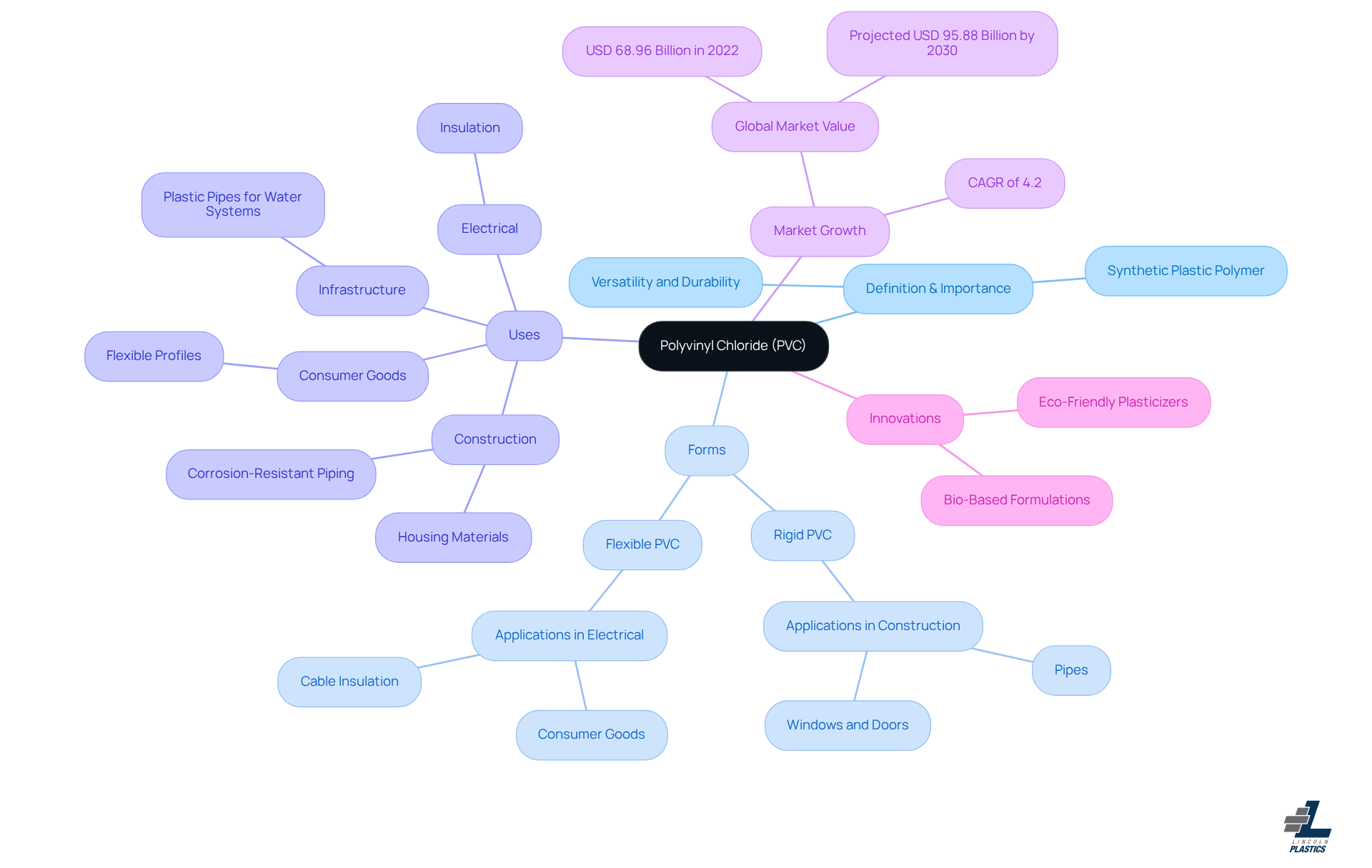
Now, PVC comes in two main forms: rigid and flexible. In construction, the rigid form includes strong and corrosion-resistant applications such as pipes. On the flip side, flexible PVC, which is Lincoln Plastics’ specialty, has many uses, including electrical cable insulation, flooring, and all sorts of consumer goods since it can bend and conform without breaking. Plus, Lincoln Plastics offers a wide range of flexible profiles in different sizes and substances, even with various colors. How cool is that?
What’s really impressive about PVC are its key properties. In fact, the global PVC market was valued at around USD 68.96 billion in 2022 and is expected to hit USD 95.88 billion by 2030, growing at a rate of 4.2% each year. This growth is largely driven by the construction and chemical sectors, highlighting the various applications, such as corrosion-resistant piping and housing materials.
You might be wondering about the latest innovations in PVC. Well, there have been exciting advancements in technology that enhance the sustainability of PVC products. Experts agree that the unique properties are critical in various industries, demonstrating its reliability and performance in demanding environments like automotive and healthcare. Its ability to be shaped into different forms only strengthens its importance in everything from infrastructure projects to everyday consumer products.
Let’s not forget the health considerations, particularly in relation to their safety in drinking water and storm and sanitary sewer systems. This really highlights the importance of quality. With testing and quality assurance, OEMs can confidently rely on their products in both rigid and flexible applications. So, if you're in the market for PVC, you know where to turn!
Explore Common Applications of PVC in Various Industries
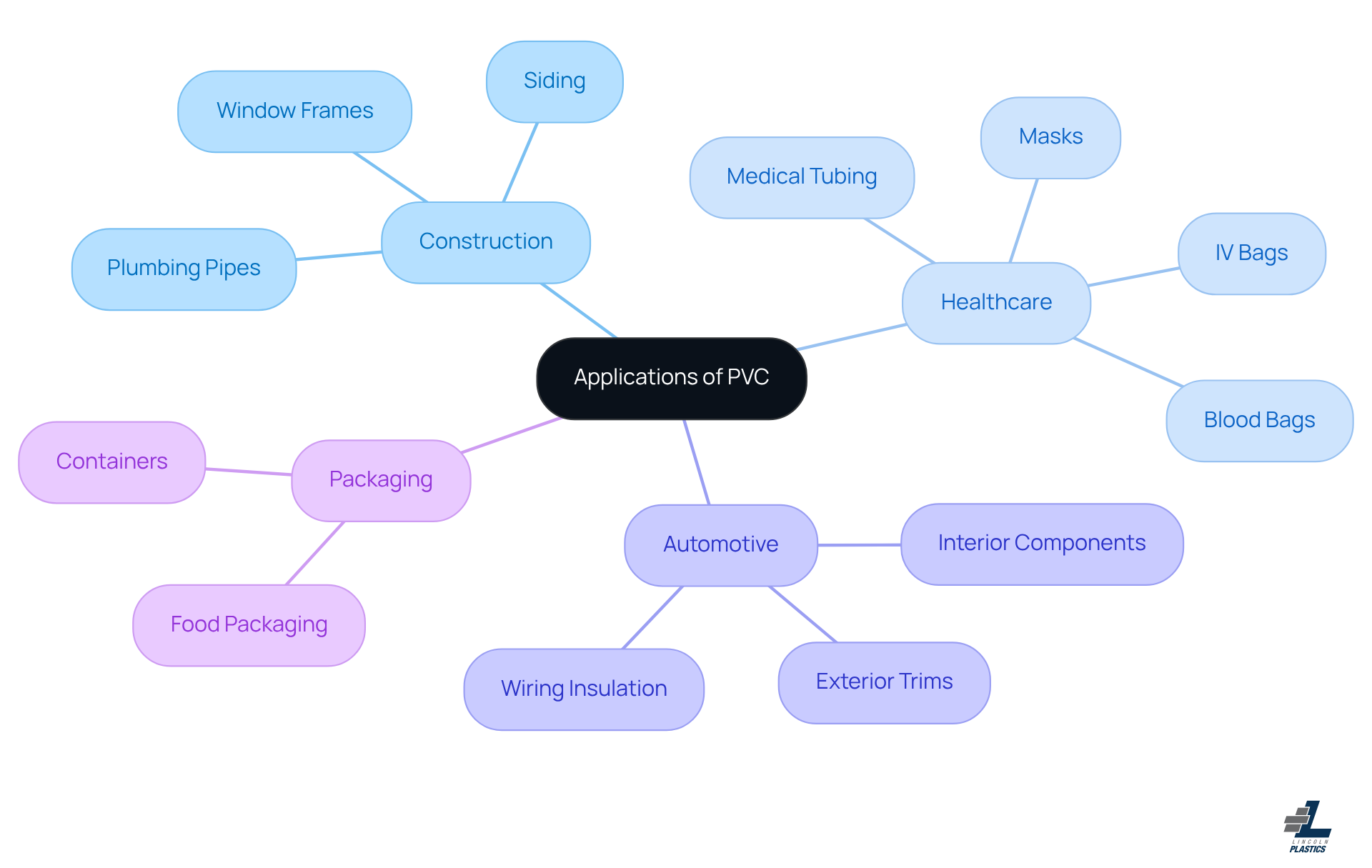
PVC is pretty versatile, right? It’s an essential material. Take construction, for example. It’s a go-to choice for plumbing pipes, siding, and window frames, highlighting the many uses for PVC. Why? Because it’s durable and low maintenance compared to traditional materials. And in healthcare, the applications are a real lifesaver. It’s used for products like IV bags and tubing, thanks to its safety, biocompatibility, and ease of sterilization. Did you know it’s the only material that meets the strict requirements for blood bags? That means it can safely store red blood cells for up to 49 days. Talk about a breakthrough! Plus, if we switched to other materials, we could see a 30% increase in medical device costs, which would hit healthcare affordability hard.
Now, let’s talk about the automotive sector. There are numerous uses for PVC, including interior components, wiring insulation, and exterior trims. It really stands out. Its flexibility and resistance to environmental factors make it perfect for various applications, showcasing many uses for PVC. And don’t forget about packaging! The properties contribute to its effectiveness in food packaging and containers. With about 30% market share in disposable products, it’s clear that the uses for PVC play a vital role in enhancing product performance and longevity across these sectors.
But wait, there’s more! Recent trends show a growing focus on sustainability. Initiatives like VinylPlus® Med are all about recycling, helping to create a circular economy in healthcare. Plus, chlorinated PVC is expected to expand for high-temperature uses, with a predicted CAGR of 6% from 2025-2026. This just goes to show how adaptable PVC is in meeting changing needs. As industries keep innovating, PVC remains a fundamental component, ready to adjust while keeping its essential advantages intact.
Analyze Key Properties and Advantages of PVC
PVC is well-known for its properties, which contribute to its numerous uses for PVC in many industries. Its fantastic resistance to chemicals, moisture, and UV light means it’s perfect for both indoor and outdoor projects. This durability gives it a long lifespan, which really cuts down on how often you need to replace it and the costs that come with that. Plus, being lightweight makes PVC super easy to transport and install, which is a big win for manufacturers.
Now, let’s talk about versatility. PVC is easy to process and mold, allowing for the creation of products that fit specific needs. And with growing environmental concerns, its sustainability is crucial in today’s market. Lincoln Plastics takes full advantage of these properties by offering innovative solutions. These solutions provide systems that boost workplace safety by keeping cables organized and hazards at bay.
You might be wondering about the market for PVC. Well, it was valued at 60.4 billion USD in 2021 and is projected to reach 100.9 billion USD by 2031. Clearly, its benefits are significant, making it a key player in optimizing performance while keeping costs down. Additionally, Lincoln Plastics offers tailored extrusion profiles and a variety of services, including customization and specialized packaging, ensuring clients get exactly what they need.

Considerations for Using PVC in Manufacturing
When considering the use of PVC in manufacturing, there are a few important things to take into account. First off, it’s essential to look at what you need for your specific application—like how much temperature resistance, flexibility, and chemical exposure you’re dealing with. Did you know that there are many important benefits of PVC, making it one of the most commonly used synthetic plastics worldwide? This makes its advantages something we really need to think about. The production of PVC can lead to environmental issues, such as air and water contamination, along with increased cancer risks from toxic chemicals like vinyl chloride. So, exploring recycling options can really help reduce these effects.
Now, let’s talk about how manufacturers who focus on sustainability can really boost the benefits associated with the material. For example, some companies have successfully adopted eco-friendly PVC methods, while still keeping product quality high. Plus, understanding the regulations for PVC in areas like healthcare and food packaging is super important for ensuring product safety and gaining market acceptance. This compliance not only protects consumers but also aligns with the growing industry standards aimed at safeguarding health and the environment. As Dr. Val Z. Schüll points out, PVC production poses risks to communities through pollution, so it’s crucial for businesses to tackle these issues head-on.

Conclusion
Polyvinyl Chloride (PVC) really shines as a crucial material in so many industries, thanks to its amazing versatility and durability. This synthetic polymer comes in both rigid and flexible forms, making it essential for construction, healthcare, automotive, and packaging sectors. Plus, its cost-effectiveness and adaptability mean that PVC is a go-to choice for manufacturers, keeping it a key player in today’s applications.
Now, let’s dive into the many uses of PVC. It’s hugely important in:
- Construction for pipes and window frames
- Healthcare for medical devices
- Automotive world for interior components
And with innovations in sustainability—like recycling initiatives and eco-friendly formulations—its value just keeps growing. The significant market growth projected for PVC really highlights its ongoing relevance and demand across various sectors.
As industries evolve, the push for sustainable practices becomes more important than ever. By embracing PVC’s advantages while focusing on eco-friendly methods, we can use this material more responsibly. Understanding PVC's properties and applications allows businesses to make informed choices that not only boost product performance but also support environmental stewardship. The future of PVC is looking bright, and its role in shaping innovative solutions is more crucial than ever. So, how can you get involved in making a positive impact with PVC? Let’s keep this conversation going!
Frequently Asked Questions
What is Polyvinyl Chloride (PVC)?
Polyvinyl Chloride (PVC) is a synthetic plastic polymer made through the polymerization of vinyl chloride. It is one of the most widely produced plastics due to its versatility and durability.
What are the two main forms of PVC?
The two main forms of PVC are rigid and flexible. Rigid PVC is commonly used in construction applications, while flexible PVC is used for products like electrical cable insulation and flooring.
What are some common applications of rigid PVC?
Rigid PVC is used in strong and corrosion-resistant applications such as pipes, doors, and windows.
What are some uses of flexible PVC?
Flexible PVC is used in electrical cable insulation, flooring, and various consumer goods due to its ability to bend and conform without breaking.
How significant is the global PVC market?
The global PVC market was valued at around USD 68.96 billion in 2022 and is expected to reach USD 95.88 billion by 2030, growing at a rate of 4.2% each year, primarily driven by the construction and chemical sectors.
What recent innovations have been made in PVC?
Recent innovations in PVC include advancements in bio-based formulations and eco-friendly plasticizers, which enhance the sustainability of PVC products.
Why is PVC important in various industries?
PVC is critical in various industries due to its reliability and performance in demanding environments such as automotive and healthcare, as well as its versatility in being shaped into different forms.
What is the role of PVC in infrastructure?
PVC plays a vital role in infrastructure, particularly in the rising demand for plastic pipes used for drinking water and storm and sanitary sewer systems.
How does Lincoln Plastics contribute to the PVC market?
Lincoln Plastics offers a wide range of flexible PVC profiles in different sizes and substances, including custom options, and is committed to on-time delivery and quality assurance for OEMs relying on PVC solutions.
List of Sources
- Define Polyvinyl Chloride (PVC) and Its Importance
- fortunebusinessinsights.com (https://fortunebusinessinsights.com/polyvinyl-chloride-pvc-market-109398)
- Plastic pipe demand growing due to its ‘critical roles' (https://plasticsnews.com/news/us-plastic-pipe-market-hit-268b-2028-amid-infrastructure-surge)
- Page Not Found (404 Error) | SpecialChem (https://specialchem.com/plastics/guide/polyvinyl-chloride-pvc-plastic)
- ud-machine.com (https://ud-machine.com/blog/pvc-applications)
- Explore Common Applications of PVC in Various Industries
- Applications of PVC: Versatile Utility Across Modern Industries (https://chemanalyst.com/NewsAndDeals/NewsDetails/applications-of-pvc-versatile-utility-across-modern-industries-37716)
- accio.com (https://accio.com/business/trend-of-new-pvc-plastic)
- pvc.org (https://pvc.org/applications/pvc-in-healthcare)
- prnewswire.com (https://prnewswire.com/news-releases/pvc-rigid-foam-market-to-reach-3-1-billion-globally-by-2033-at-4-3-cagr-allied-market-research-302396794.html)
- Analyze Key Properties and Advantages of PVC
- lincoln-plastics.com (https://lincoln-plastics.com/news-post/understanding-pvc-key-applications-for-oem-purchasing-managers)
- renolit.com (https://renolit.com/cn/company/market-units/visual-communication/news-stories/renolit-revinyl-a-sustainable-decision-for-pvc)
- Page Not Found (404 Error) | SpecialChem (https://specialchem.com/plastics/guide/polyvinyl-chloride-pvc-plastic)
- statista.com (https://statista.com/topics/11401/polyvinyl-chloride-pvc?srsltid=AfmBOooMu28uNgWe4m35MQeDksKPNv6EISNwgBzOyD1n-LKv8mf7XZiR)
- Considerations for Using PVC in Manufacturing
- New Website Highlights Public Health & Environmental Risks of PVC - GreenLatinos (https://greenlatinos.org/new-website-highlights-public-health-environmental-risks-of-pvc)
Related posts

Why Custom Pipe Extrusion Matters More Than Ever
Standard pipe sizes don’t always work. Learn how Lincoln Plastics delivers custom diameters, wall thicknesses, and finishes in right-sized runs.


Reducing Trip Hazards with Custom Cord Management
Loose cords are more than messy — they’re a safety hazard. Lincoln Plastics’ custom cord covers and Flexiduct solutions improve safety and efficiency.
The Power of Custom Plastic Profiles for OEMs
Off-the-shelf profiles force compromises. Learn how Lincoln Plastics designs custom extruded profiles for OEMs with exact specs and right-sized runs.
