

Understanding Plastic Thermal Expansion: Impacts and Management Strategies
Introduction
Understanding the behavior of plastics under varying temperatures is essential in industries where precision and reliability are non-negotiable. Plastic thermal expansion can cause significant size changes in response to heat, leading to serious performance issues in applications ranging from construction to automotive components. How can engineers effectively tackle the challenges posed by this phenomenon to ensure the durability and integrity of their products?
This article explores the impacts of thermal expansion on plastic materials and offers strategic insights for managing these effects. By equipping readers with the knowledge to enhance product design and performance, we aim to empower engineers to navigate these complexities with confidence.
Furthermore, understanding these dynamics not only improves product reliability but also fosters innovation in design. As a result, readers will find actionable strategies that can be implemented to mitigate risks associated with thermal expansion, ultimately leading to superior product outcomes.
Explain Thermal Expansion in Plastics
Plastic thermal expansion is a critical factor in the performance of plastic materials, particularly due to their unique molecular structures. When exposed to heat variations, substances tend to change in size or volume. As temperatures rise, the process of plastic thermal expansion occurs as the molecules within plastics absorb energy, causing them to move apart and increase in size. This behavior is quantified by the coefficient of linear heat increase (CLTE), which measures the change in length per degree of heat change and is an important factor in plastic thermal expansion, typically expressed in units such as mm/m°C.
Common thermoplastics, such as PVC and polyethylene, demonstrate plastic thermal expansion values that can reach up to 300 ppm/°C, significantly higher than metals, which generally have much lower heat growth rates. For instance, aluminum has a CLTE of around 24 ppm/°C, while concrete falls between 10-12 ppm/°C. This disparity can pose challenges in applications that demand precise dimensional stability, especially in environments with fluctuating temperatures caused by plastic thermal expansion.
The real-world implications of thermal growth are evident across various applications. In building construction, for example, the expansion of plastic components can lead to misalignments and structural issues if not properly managed. Additionally, in automotive applications, changes in heat can compromise the performance of plastic materials, affecting everything from interior components to engine parts.
Experts emphasize the importance of understanding plastic thermal expansion in relation to the design and engineering of plastic parts. Recent studies indicate that the mechanical properties of plastics, including stiffness, can decrease by over 20% when operating conditions shift from 23°C to 40°C. Moreover, the Arrhenius law suggests that the degradation rate of plastics doubles with every 10-degree increase in temperature, emphasizing the necessity of considering plastic thermal expansion when selecting materials.
At Lincoln Plastics, we collaborate closely with OEMs to ensure our products meet stringent quality requirements, including specialized checks for fit and function. Our robust quality system features dedicated documentation for your plastic profiles, ensuring critical dimensions are upheld. We employ various check gauges to guarantee a proper end-use fit. Furthermore, increased heat can lead to more than a 75% reduction in oxygen barrier effectiveness for materials like ethylene vinyl alcohol, crucial for food packaging applications. This underscores the essential need for engineers to account for temperature variations when selecting materials and designing components, ensuring reliability and durability under diverse heat conditions. We also manufacture a range of conduits for electrical and specialty applications, and can easily source colors that align with your Pantone specifications for consistency across manufacturers.

Discuss Impacts of Thermal Expansion on Plastic Products
Challenges arise for plastic products due to plastic thermal expansion, especially in critical applications. Did you know that plastic thermal expansion allows plastic components to expand 3 to 10 times more than their metal counterparts? The misalignment and stress concentrations caused by plastic thermal expansion can ultimately result in joint failures or leaks. For instance, in piping systems, uncontrolled heat increases can cause ruptures if not managed properly.
Real-world examples highlight the consequences of ignoring temperature changes. Items like irrigation pipes and electrical conduits can twist or distort under extreme temperature variations, severely impacting their performance and durability. Engineers must recognize these effects to design robust products that can withstand heat stresses without compromising performance.
As industry specialists indicate, effectively managing temperature variation is crucial. Utilizing specialized pipe supports that allow for controlled movement can prevent unwanted stress and ensure system integrity. Hani Almufti emphasizes that if this movement is not managed, it can lead to material fatigue, stress fractures, or even ruptures. This underscores the importance of proactive measures in design.
In conclusion, addressing the challenges of plastic thermal expansion is essential for the reliability and longevity of plastic products. By implementing effective strategies and understanding the implications of temperature variations, engineers can create solutions that not only meet but exceed performance expectations.

Outline Strategies to Manage Thermal Expansion in Applications
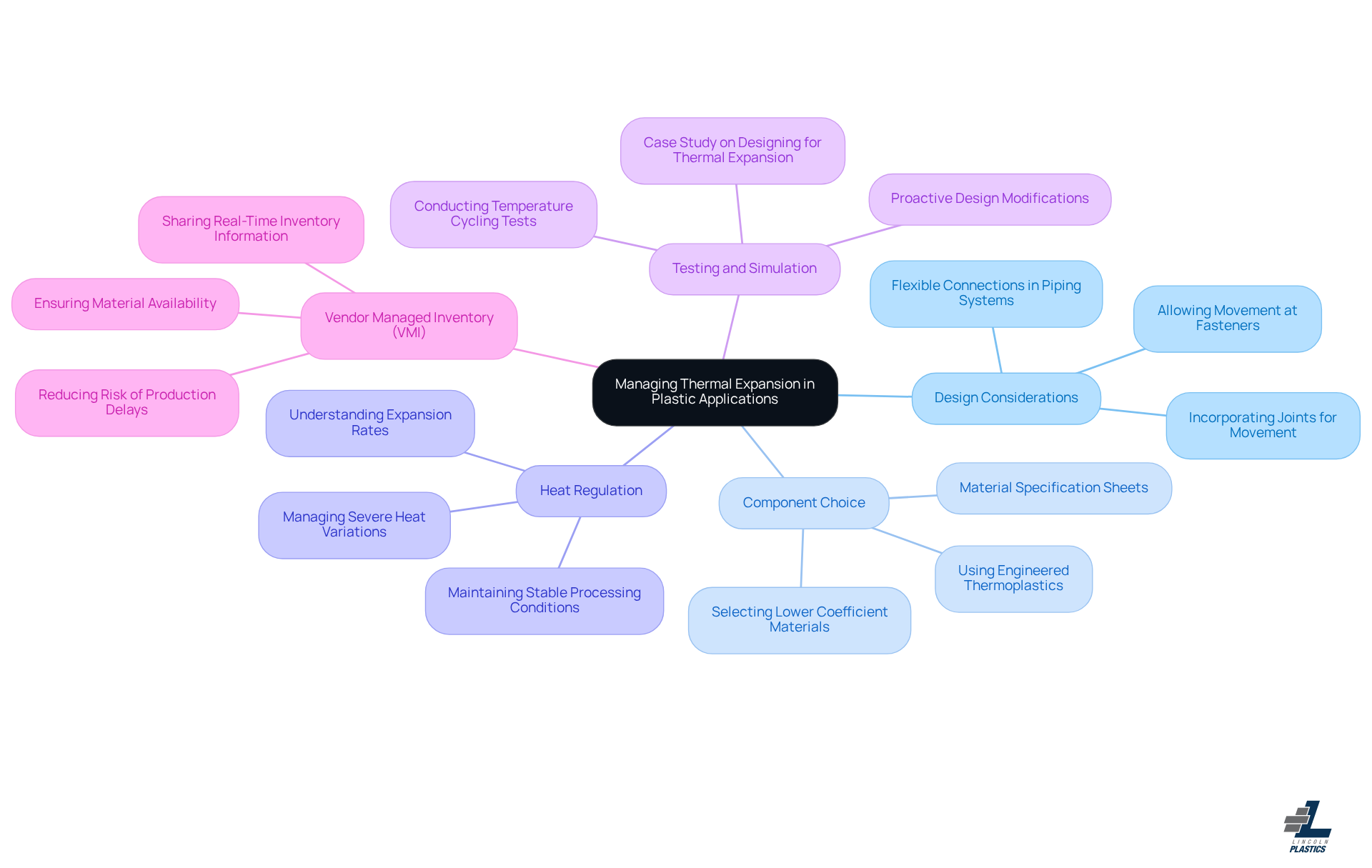
To effectively manage thermal expansion in plastic applications, several strategies can be employed:
- Design Considerations: Incorporating joints for movement or flexible connections in piping systems is essential to accommodate motion. This design method enables heat growth without causing stress on the joints, which can lead to failures. For instance, an 80-foot run of 2-inch-diameter PVC Schedule 80 pipe can expand up to 1.35 inches with a temperature increase from 73°F to 120°F. This highlights the need for proper design to mitigate stress. At Lincoln Plastics, we work closely with clients to ensure that designs are optimized for manufacturing, taking into account the specific requirements of each project.
- Component Choice: Selecting substances with lower coefficients of thermal growth for essential parts can greatly minimize growth-related problems. Engineered thermoplastics, such as reinforced plastics or composites, can be tailored to match the expansion rates of adjacent components, minimizing connection stress and enhancing overall system integrity. We offer material specification sheets and can connect you with material experts to help you make informed decisions based on your application needs.
- Heat Regulation: Maintaining stable conditions during processing and operation is crucial. Severe variations in heat can exacerbate growth problems, leading to potential failures. For example, the expansion rate of UHMWPE ranges from 150-230 x 10^-6 m/m.K, necessitating careful heat management to avoid structural issues.
- Testing and Simulation: Conducting temperature cycling tests during the design stage enables engineers to anticipate how materials will respond to temperature variations. This proactive approach allows for essential modifications prior to production, ensuring that the final product can withstand heat stresses effectively. As noted in the case study on "Designing for Thermal Expansion," designs should facilitate movement rather than restrict it, particularly at fasteners and wear strips.
- Vendor Managed Inventory (VMI): Implementing VMI solutions can further enhance the management of heat-related growth by ensuring that materials are available when needed, thus maintaining consistent production conditions. By sharing real-time inventory information, we assist clients in managing their stock levels efficiently, reducing the risk of delays that could exacerbate temperature-related issues.
Implementing these strategies can significantly enhance the performance and reliability of plastic products by managing plastic thermal expansion across various applications, ultimately leading to improved operational efficiency and reduced risk of failure. At Lincoln Plastics, we are committed to providing expert guidance on custom pipe and tube manufacturing solutions, ensuring that your projects are successful from design to production.
Detail Measurement Techniques and Calculations for Thermal Expansion
Ensuring the reliability of plastic items hinges on precise assessment of plastic thermal expansion. This is where our expertise shines. By employing advanced measurement techniques, we empower engineers to predict how their products will perform under thermal stress, particularly considering plastic thermal expansion, leading to more robust designs.
Dilatometry is one such technique. It involves using a dilatometer to measure the change in length of a substance as it undergoes temperature fluctuations. The coefficient of linear heat increase can be calculated with the formula: α = ΔL / (L₀ × ΔT), where ΔL represents the change in length, L₀ is the original length, and ΔT is the change in temperature. This method provides critical insights into material behavior.
Thermomechanical Analysis (TMA) is another valuable tool. TMA evaluates the dimensional changes of materials under controlled temperature conditions, offering a deeper understanding of their heat-related behavior. This analysis is crucial for developing products that can withstand varying thermal environments, particularly in relation to plastic thermal expansion.
Adhering to ASTM Standards, such as ASTM D696 or ASTM E831, guarantees that measurements are both consistent and reliable. These standards outline the procedures for determining the plastic thermal expansion coefficients of various materials, ensuring that engineers can trust their data.
By utilizing these measurement techniques, engineers can enhance their designs, ensuring that their plastic products not only meet but exceed performance expectations. Are you ready to elevate your product reliability? Let's discuss how we can assist you in achieving your goals.

Conclusion
Understanding the nuances of plastic thermal expansion is not just important; it’s essential for ensuring the reliability and performance of plastic products across various applications. Temperature variations can significantly impact the dimensions and mechanical properties of plastics. This reality necessitates a proactive approach to design and material selection.
Consider the stark differences in thermal expansion rates between plastics and metals. These differences can lead to structural issues in critical applications like construction and automotive. Therefore, implementing effective management strategies is crucial. Techniques such as:
- Utilizing flexible connections
- Selecting appropriate materials
- Conducting thorough testing
are vital for mitigating the adverse effects of thermal expansion.
Ultimately, recognizing and addressing the challenges posed by plastic thermal expansion is crucial for enhancing product durability and performance. By employing best practices and innovative solutions, engineers can ensure that their designs withstand thermal stresses and meet the evolving demands of their respective industries. Embracing these strategies will pave the way for more reliable and efficient plastic products, fostering greater confidence in their applications across the board.
Frequently Asked Questions
What is plastic thermal expansion?
Plastic thermal expansion refers to the change in size or volume of plastic materials when exposed to variations in temperature. As temperatures rise, the molecules within plastics absorb energy, causing them to move apart and increase in size.
How is plastic thermal expansion measured?
It is quantified by the coefficient of linear heat increase (CLTE), which measures the change in length per degree of heat change, typically expressed in units such as mm/m°C.
How do the thermal expansion values of plastics compare to metals?
Common thermoplastics, such as PVC and polyethylene, can have thermal expansion values reaching up to 300 ppm/°C, which is significantly higher than metals like aluminum (around 24 ppm/°C) and concrete (10-12 ppm/°C).
What challenges can plastic thermal expansion pose in real-world applications?
It can lead to misalignments and structural issues in building construction, and can compromise the performance of plastic materials in automotive applications, affecting components from interiors to engine parts.
Why is it important to understand plastic thermal expansion in design and engineering?
Understanding plastic thermal expansion is crucial for ensuring dimensional stability and reliability of plastic parts, especially in environments with fluctuating temperatures. Changes in temperature can significantly affect the mechanical properties of plastics.
What impact does temperature have on the mechanical properties of plastics?
Studies indicate that the stiffness of plastics can decrease by over 20% when operating conditions shift from 23°C to 40°C.
How does the Arrhenius law relate to plastic materials?
The Arrhenius law suggests that the degradation rate of plastics doubles with every 10-degree increase in temperature, highlighting the importance of considering thermal expansion when selecting materials.
What measures does Lincoln Plastics take to ensure product quality?
Lincoln Plastics collaborates with OEMs to meet stringent quality requirements, including specialized checks for fit and function, dedicated documentation for plastic profiles, and the use of check gauges to ensure proper end-use fit.
How does increased heat affect the oxygen barrier effectiveness of certain materials?
Increased heat can lead to more than a 75% reduction in oxygen barrier effectiveness for materials like ethylene vinyl alcohol, which is critical for food packaging applications.
What types of products does Lincoln Plastics manufacture?
Lincoln Plastics manufactures a range of conduits for electrical and specialty applications and can source colors that align with Pantone specifications for consistency across manufacturers.
List of Sources
- Explain Thermal Expansion in Plastics
- nature.com (https://nature.com/articles/s41467-024-46127-9)
- frontiersin.org (https://frontiersin.org/news/2025/11/27/plastic-pollution-worsened-by-warming-climate)
- pmc.ncbi.nlm.nih.gov (https://pmc.ncbi.nlm.nih.gov/articles/PMC12693757)
- cnn.com (https://cnn.com/2025/11/27/climate/how-extreme-weather-is-making-plastic-pollution-more-mobile-persistent-and-hazardous)
- azom.com (https://azom.com/article.aspx?ArticleID=4100)
- Discuss Impacts of Thermal Expansion on Plastic Products
- edtengineers.com (https://edtengineers.com/blog-post/thermal-effects-piping-systems)
- desopipe.com (https://desopipe.com/blog/ppr-valve/plumbing-industry-trends)
- intelmarketresearch.com (https://intelmarketresearch.com/tubular-expansion-joint-market-39611)
- redlineips.com (https://redlineips.com/blog/managing-thermal-expansion-in-industrial-piping-best-practices-and-solutions)
- mecsengineering.com (https://mecsengineering.com/thermal-expansion-in-piping-systems)
- Outline Strategies to Manage Thermal Expansion in Applications
- mercury-plastics.com (https://mercury-plastics.com/blog/thermal-management-challenges-in-bess-systems)
- dotmar.co.nz (https://dotmar.co.nz/insights/educational/plastics-designing-for-thermal-expansion)
- openpr.com (https://openpr.com/news/4476006/what-will-be-the-future-growth-of-the-thermally-conductive)
- charlottepipe.com (https://charlottepipe.com/articles/calculating-for-thermal-expansion-and-contraction)
- lincoln-plastics.com (https://lincoln-plastics.com/news-post/does-plastic-expand-in-heat-key-insights-for-oe-ms-on-thermal-expansion?dcc2137a_page=4)
- Detail Measurement Techniques and Calculations for Thermal Expansion
- infinitalab.com (https://infinitalab.com/blog/dilatometry-testing-services?srsltid=AfmBOoqtBh5cgMFz0vBp1zdN2idBi1E7Adgl8mp3T8aWi3nhCs5jmXHa)
- analyzing-testing.netzsch.com (https://analyzing-testing.netzsch.com/en/blog/2025/the-brand-new-netzsch-dil-502-expedis-dilatometer-the-future-of-low-and-high-temperature-dilatometry)
- unparalleled-group.com (https://unparalleled-group.com/news/top-trends-in-precision-measurement-2026-the-85509327.html?srsltid=AfmBOorF1KRw9HUw6Xed8tJZ_m0NxjoLykneZzhxbPlZ6Kfac5x6wYFi)
- ri.se (https://ri.se/en/materials-and-durability/service/thermal-expansion-measurement-and-calculation-of-the-thermal)
- spectroscopyonline.com (https://spectroscopyonline.com/view/simultaneous-thermal-analyzer-for-recycled-plastic-feb-2026)
Related posts

Right-Sized Production Runs: Flexibility Without the Waste
Lincoln Plastics offers right-sized production runs with a 10-hour minimum — balancing efficiency with flexibility so OEMs avoid oversized orders.


Co-Extrusion: Combining Two Materials for Better Performance
Lincoln Plastics offers co-extrusion, combining two plastics into a single profile for greater design freedom, performance, and cost savings.
Beyond Extrusion: Value-Added Services That Simplify Production
Beyond Extrusion: Value-Added Services That Simplify Production
