

Understanding HDPE Plastic Density: Properties and Applications Explained
Introduction
High-density polyethylene (HDPE) stands as a pivotal material, driving innovation across industries from agriculture to packaging. With a density typically ranging from 0.93 to 0.97 g/cm³, HDPE offers a unique combination of strength, durability, and chemical resistance, making it an ideal choice for a myriad of applications. Grasping how HDPE density works can unlock its full potential, especially when considering its molecular structure and environmental influences.
Manufacturers often struggle with the complexities of HDPE's molecular structure and its impact on performance. Failing to optimize HDPE can lead to subpar product performance and increased environmental impact.
Define High-Density Polyethylene (HDPE)
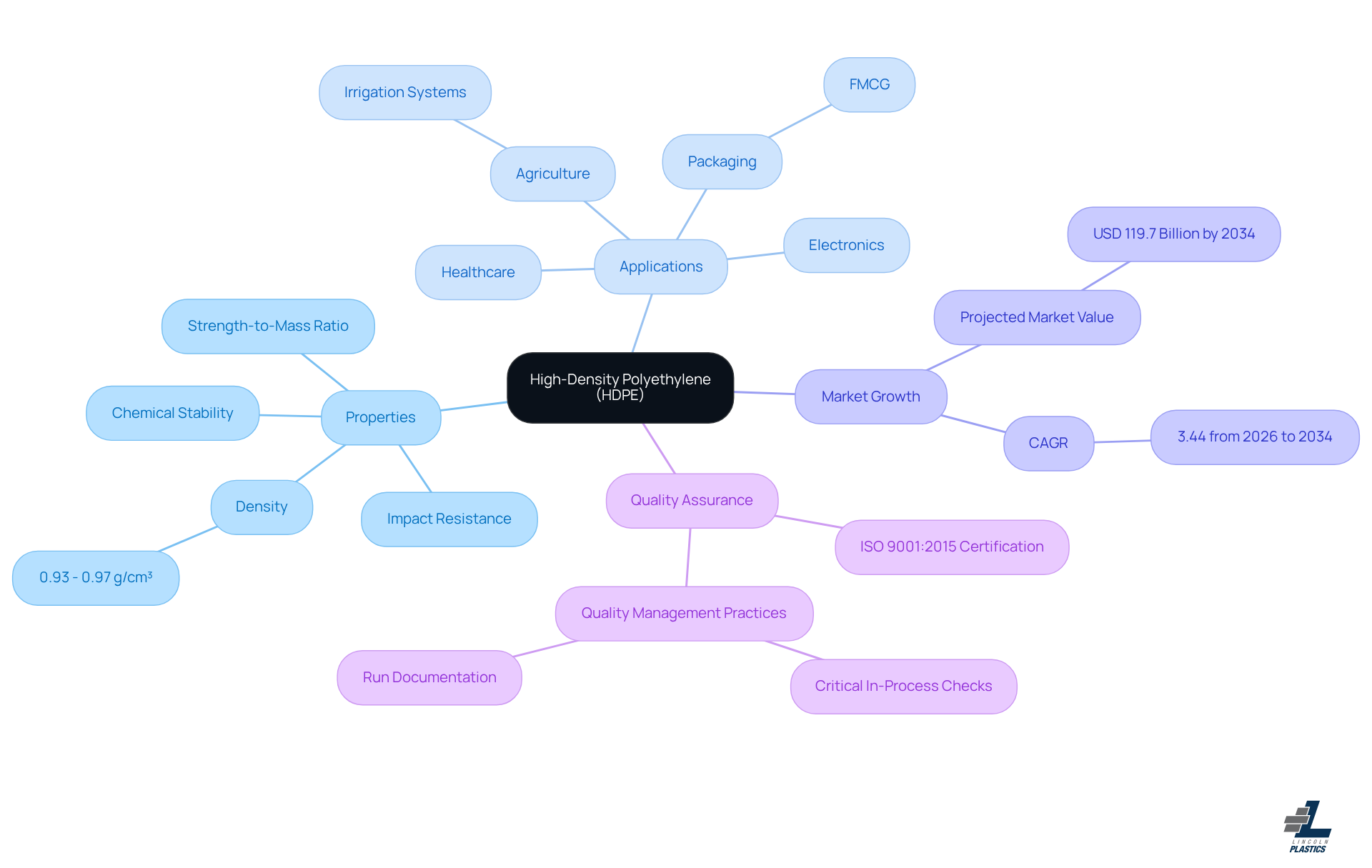
In a world where material reliability is paramount, high-density polyethylene stands out as a superior choice for diverse applications. This thermoplastic polymer, made from ethylene monomers, has an hdpe plastic density that typically falls between 0.93 and 0.97 g/cm³, providing a high strength-to-mass ratio. The hdpe plastic density provides rigidity and durability, making high-density polyethylene suitable for a wide range of uses. As one of the most widely utilized plastics globally, its molecular structure features minimal branching, resulting in stronger intermolecular forces compared to low-density polyethylene (LDPE). This structural integrity contributes to its exceptional impact resistance and chemical stability, making it a preferred material in various industrial sectors, including agriculture, where it is often used for irrigation systems and piping solutions.
We at Lincoln Plastics work hand-in-hand with OEMs to ensure our high-density polyethylene products meet all quality standards, including specific assessments for 'fit and function.' Our robust quality management program, certified to ISO 9001:2015, includes dedicated quality books with drawings, critical in-process checks, and run documentation to guarantee precision and compliance. Furthermore, we offer co-extrusion capabilities for multi-color or multi-material profiles and can source colors that meet your Pantone specifications for consistency across manufacturers.
Did you know the high-density polyethylene market is projected to reach USD 119.7 billion by 2034, with a compound annual growth rate (CAGR) of 3.44% from 2026 to 2034? This growth is largely fueled by its uses in the packaging sector, especially for fast-moving consumer goods (FMCG), healthcare, and electronics. In the Midwest, the hdpe plastic density is particularly relevant for agricultural applications, where it is extensively used in irrigation systems, ensuring efficient water management and crop productivity. Expert insights indicate that the demand for high-density polyethylene in these sectors is expected to rise, reflecting its critical role in supporting sustainable practices and enhancing operational efficiency.
Choosing high-density polyethylene isn't just a decision; it's a commitment to quality and efficiency that can redefine your operational success. Reach out to our Lincoln Plastics experts today for tailored solutions and quotes that can elevate your operations.
Explore HDPE Properties Affecting Density
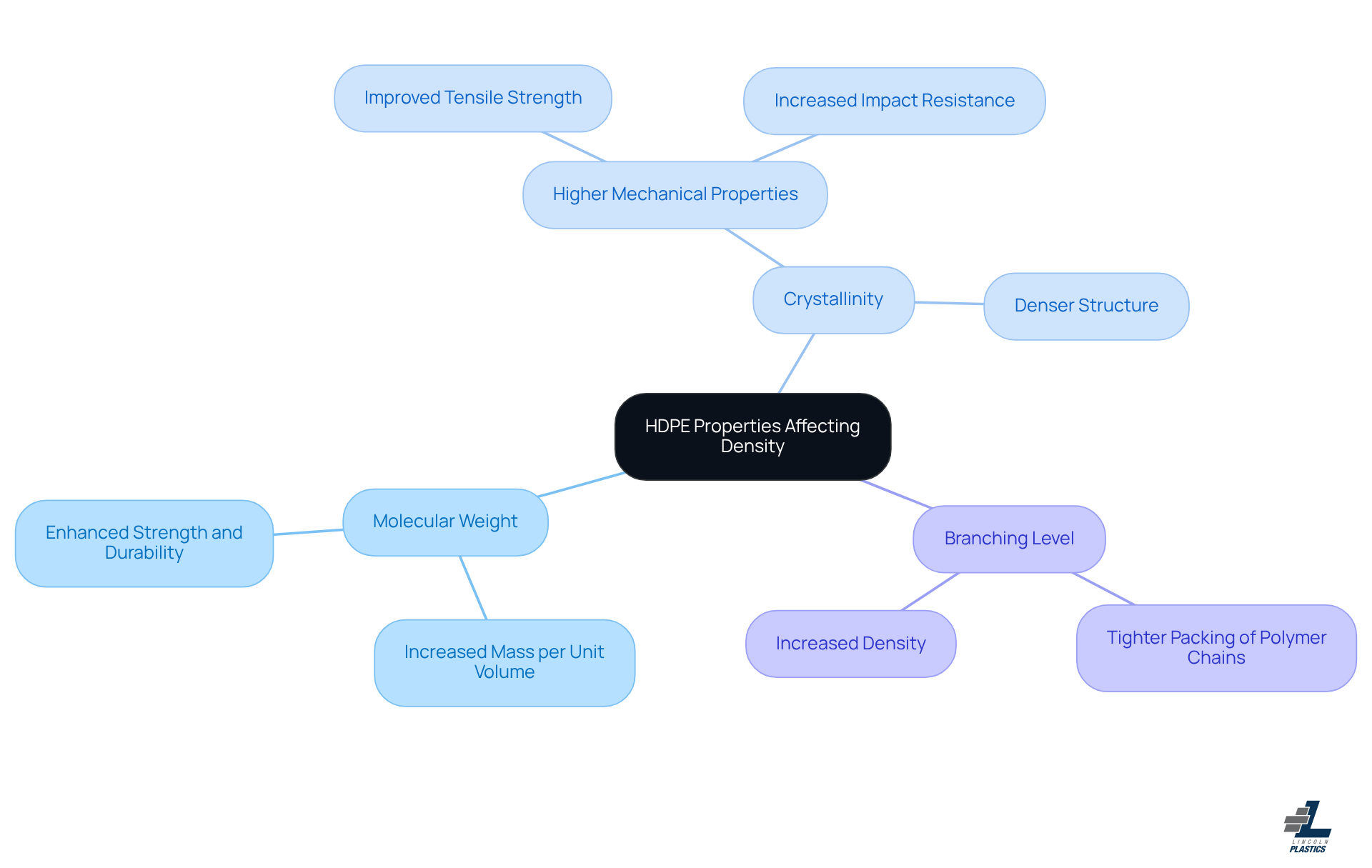
High-density polyethylene's unique properties make it a cornerstone material in various industries, yet many overlook the science behind its performance. The hdpe plastic density is significantly influenced by its molecular weight, crystallinity, and branching level. Generally, when the molecular weight increases, so does the mass per unit volume, enhancing strength and durability.
Crystallinity, which refers to how polymer chains are arranged, is crucial; a higher degree of crystallinity leads to a denser structure, improving mechanical properties like tensile strength and impact resistance, ultimately affecting hdpe plastic density. Furthermore, minimal branching in high-density polyethylene allows for tighter packing of polymer chains, which contributes to an overall increase in hdpe plastic density.
Together, these traits make high-density polyethylene a tough choice for demanding applications like piping systems and industrial containers. Recent market trends indicate that the global high-density polyethylene market is projected to reach USD 117.29 billion by 2034, with a compound annual growth rate (CAGR) of 3.34% from 2026 to 2034.
In June 2026, high-density polyethylene prices in the USA hit 1143 USD/MT, while in the UK, prices were at 1327 USD/MT, and in Brazil, they reached 1001 USD/MT, reflecting the material's growing importance across various sectors. With the market projected to grow significantly, understanding these properties is essential for leveraging high-density polyethylene's full potential in your applications.
Analyze the Impact of Density on HDPE Applications
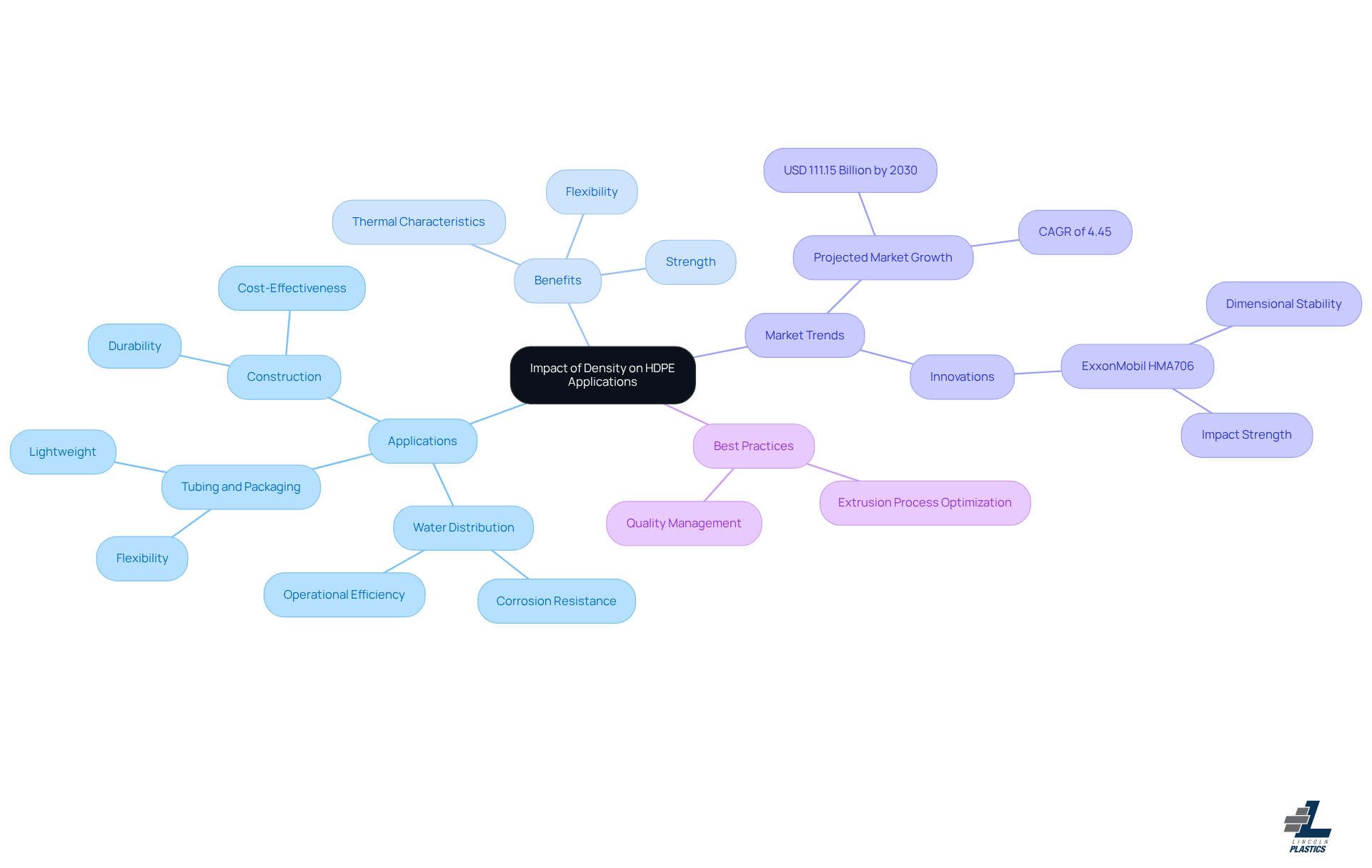
Understanding the hdpe plastic density is critical for manufacturers aiming to optimize their product applications. When it comes to water distribution systems, manufacturers often choose higher density high-density polyethylene for its superior strength and resistance to environmental stressors, making it ideal for transporting potable water and chemicals. For instance, high-density polyethylene pipes have replaced conventional materials in plumbing systems, showcasing their corrosion resistance and operational effectiveness. This shift is particularly evident in initiatives under India's Smart Cities Mission, where IoT-enabled high-density polyethylene pipes have been deployed to enhance wastewater systems, leading to a reduction in water losses by as much as 25%.
Conversely, lower-density high-density polyethylene shines in applications where flexibility is key, like tubing and packaging materials. The thermal characteristics of high-density polyethylene also vary with its mass; higher mass variants can withstand elevated temperatures, making them suitable for construction and industrial uses. As demand for high-density polyethylene continues to rise, especially in the packaging sector, understanding hdpe plastic density dynamics becomes essential for producers. This knowledge empowers them to select the appropriate high-density polyethylene grade, ensuring optimal performance and durability in their products.
To enhance the output of high-density polyethylene items, manufacturers should implement best practices in the extrusion process. Mastering the tube extrusion process can significantly boost efficiency and quality in OEM applications. By adhering to these best practices, OEMs can ensure their plastic products meet the stringent standards required across various industries. Lincoln Plastics, with its ISO 9001:2015 certification and dedicated quality management plans, exemplifies a commitment to excellence in high-density polyethylene production. Their strategic location in Lincoln, Nebraska, facilitates quick order turnaround and efficient logistics, including less-than-truckload shipping and international delivery.
Recent market trends indicate that the high-density polyethylene market is projected to reach USD 111.15 billion by 2030, with a compound annual growth rate (CAGR) of 4.45% from 2023 to 2030. This growth is fueled by the increasing demand for high-density polyethylene across various sectors, including construction and packaging, underscoring the material's versatility and significance in modern manufacturing. Furthermore, innovations like ExxonMobil's new high-density polyethylene product range, HMA706, recognized for its dimensional stability and impact strength, further highlight the progress in polyethylene technology. As the high-density polyethylene market evolves, staying informed about these dynamics will be key to maintaining a competitive edge in manufacturing.
Measure and Evaluate HDPE Density
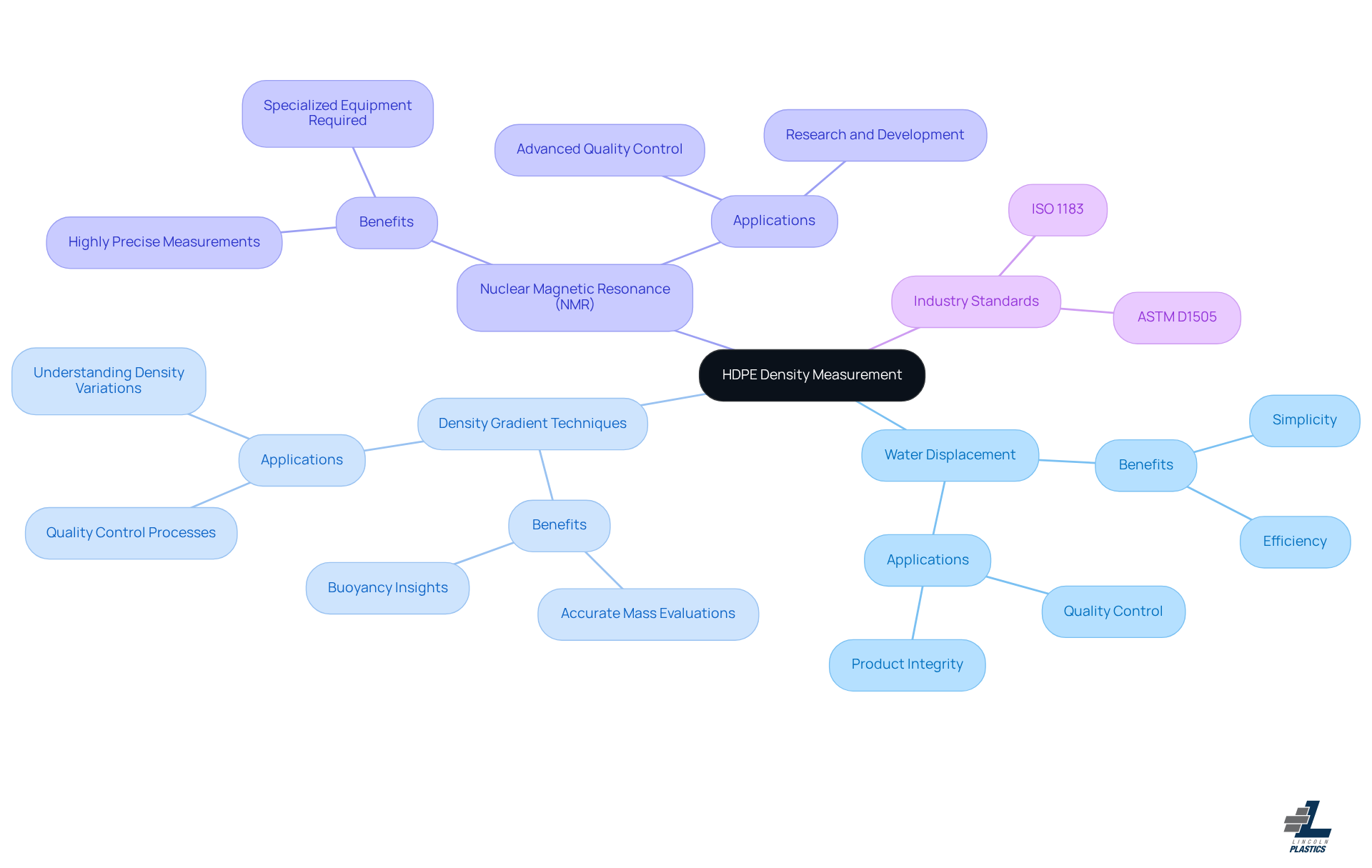
Accurate density measurements of hdpe plastic density are not just beneficial; they are essential for maintaining product integrity and compliance. Assessing the mass per unit volume of high-density polyethylene can be achieved through various recognized techniques, each providing distinct benefits. The water displacement technique is a favored method for its simplicity and efficiency. Typically, the hdpe plastic density is characterized by a mass per unit volume ranging from 0.93 to 0.97 g/cm³. Density gradient techniques also offer valuable insights by utilizing a liquid medium with varying weights to determine the mass per unit volume of the HDPE sample, which is essential for understanding hdpe plastic density based on its buoyancy. This technique enables accurate mass evaluations, particularly beneficial in quality control processes.
For more sophisticated applications, nuclear magnetic resonance (NMR) can provide highly precise mass measurements, although it may require specialized equipment and expertise. Following industry standards like ASTM D1505 is key to ensuring your density evaluations are accurate and consistent. Regular testing and quality control measures are essential for manufacturers to maintain the integrity of their high-density polyethylene products, ensuring compliance with necessary specifications for various uses.
Case studies highlight the importance of these measurement methods. For instance, the ASTM D2290 test assesses the apparent hoop tensile strength of plastic pipes, ensuring they can withstand operational stresses. Understanding these measurement methods preserves quality and enhances the performance and safety of high-density polyethylene applications in agriculture, construction, and consumer goods. As noted by industry expert Yash Doshi, accurate density measurements are vital for optimizing product performance and meeting market demands. Neglecting these measurements can lead to costly recalls and damage to brand reputation, especially as the HDPE market is projected to grow at a CAGR of 5.1% from 2026 to 2033.
Conclusion
Many manufacturers overlook the critical role of high-density polyethylene (HDPE) density in optimizing their production processes. HDPE is a versatile material that plays a crucial role in various industries due to its unique properties and reliable performance. It's crucial for manufacturers and OEMs to understand the significance of HDPE plastic density. This is especially true in sectors like agriculture, construction, and packaging. The density of HDPE not only influences its strength and durability but also determines its suitability for specific applications, making it a key factor in product development and optimization.
Throughout this article, we've explored the properties affecting HDPE density, including:
- Molecular weight
- Crystallinity
- Branching levels
These characteristics contribute to the material's exceptional mechanical properties, such as tensile strength and impact resistance. Additionally, we've highlighted the importance of accurate density measurement methods, emphasizing the need for rigorous quality control to maintain product integrity and compliance with industry standards. Lincoln Plastics, with its ISO 9001:2015 certification and commitment to quality management, exemplifies the high standards necessary for successful HDPE production.
With the rising demand for high-density polyethylene, especially in the Midwest, it is vital for manufacturers to leverage this knowledge to enhance their operations. Many manufacturers struggle to grasp the complexities of HDPE density, which can hinder their production efficiency. By understanding the dynamics of HDPE plastic density and implementing best practices in production, businesses can ensure optimal performance and durability in their products. Without this knowledge, manufacturers risk producing subpar products that fail to meet industry standards. For tailored solutions and expert guidance, contacting Lincoln Plastics can help you navigate the complexities of HDPE applications and elevate your operational success. By partnering with Lincoln Plastics, you can transform your understanding of HDPE density into a competitive advantage.
Frequently Asked Questions
What is high-density polyethylene (HDPE)?
High-density polyethylene (HDPE) is a thermoplastic polymer made from ethylene monomers, known for its high strength-to-mass ratio and density typically between 0.93 and 0.97 g/cm³. It is recognized for its rigidity, durability, and exceptional impact resistance.
What are the key properties of HDPE?
HDPE features minimal branching in its molecular structure, resulting in stronger intermolecular forces compared to low-density polyethylene (LDPE). This contributes to its chemical stability and makes it suitable for various applications, particularly in agriculture for irrigation systems and piping solutions.
How does Lincoln Plastics ensure the quality of its HDPE products?
Lincoln Plastics adheres to a robust quality management program certified to ISO 9001:2015, which includes dedicated quality books, critical in-process checks, and run documentation to ensure precision and compliance with quality standards.
What are the applications of HDPE in the agricultural sector?
In agriculture, HDPE is extensively used for irrigation systems and piping solutions, ensuring efficient water management and enhancing crop productivity.
What is the projected market growth for HDPE?
The high-density polyethylene market is projected to reach USD 119.7 billion by 2034, with a compound annual growth rate (CAGR) of 3.44% from 2026 to 2034, driven largely by its applications in packaging, healthcare, and electronics.
How does Lincoln Plastics support customization for HDPE products?
Lincoln Plastics offers co-extrusion capabilities for multi-color or multi-material profiles and can source colors that meet Pantone specifications, ensuring consistency across manufacturers.
Why should businesses choose HDPE for their operations?
Choosing HDPE represents a commitment to quality and efficiency, which can significantly enhance operational success, particularly in sectors like agriculture where sustainable practices are increasingly important.
How can I get in touch with Lincoln Plastics for tailored solutions?
Interested parties can reach out to Lincoln Plastics experts for quotes and tailored solutions that can elevate their operations.
List of Sources
- Define High-Density Polyethylene (HDPE)
- Global High Density Polyethylene (HDPE) Market to Reach USD 119.7 Billion by 2034 (https://imarcgroup.com/global-high-density-polythylene-market)
- High-Density Polyethylene Manufacturing Plant Cost DPR 2026: ROI, IRR, Break-Even Analysis and Financial Model (https://openpr.com/news/4592186/high-density-polyethylene-manufacturing-plant-cost-dpr-2026)
- High-Density Polyethylene (HDPE) Market Size & Industry Statistics By 2029 (https://databridgemarketresearch.com/reports/global-high-density-polyethylene-hdpe-market?srsltid=AfmBOooH71MQN6tKFmqGMUdPqdcXAeG2jP-0mhV7J4-lNsezfOKbr3NC)
- Explore HDPE Properties Affecting Density
- High Density Polyethylene Market Size, Trends, 2026-2033 Forecast & Market Values (https://linkedin.com/pulse/high-density-polyethylene-market-size-trends-2026-2033-forecast-jpouc)
- High Density Polyethylene (HDPE) Price Trend & Forecast 2026 (https://imarcgroup.com/hdpe-pricing-report)
- Assessing Polymer Molecular Weight (https://azom.com/article.aspx?ArticleID=19607)
- High-density polyethylene (HDPE) - Linseis (https://linseis.com/en/wiki/high-density-polyethylene-hdpe-an-inside-look)
- Analyze the Impact of Density on HDPE Applications
- High Density Polyethylene (HDPE) Market Size & Trends, 2033 (https://coherentmarketinsights.com/industry-reports/high-density-polyethylene-hdpe-market)
- High-Density Polyethylene Market to Surpass 111.15 Billion by 2030 Drives Due to the Rising Demand for Packaging Films (https://finance.yahoo.com/news/high-density-polyethylene-market-surpass-013000303.html)
- Measure and Evaluate HDPE Density
- HDPE Testing & Properties Guide | High-Density Polyethylene (https://infinitalab.com/blog/high-density-polyethylene-hdpe-testing?srsltid=AfmBOoowqhWSasLZd8bHBUyrwzSvPyoj4JMlj4KtzMMoCFCO5gj3Zktz)
- High Density Polyethylene (HDPE) Market Size & Trends, 2033 (https://coherentmarketinsights.com/industry-reports/high-density-polyethylene-hdpe-market)
- HDPE Density: Technical Overview and Standards (https://waterpipefactory.com/knowledge/hdpe-density-technical-overview-and-standards)
- High Density Polyethylene (HDPE) Price Trend & Forecast 2026 (https://imarcgroup.com/hdpe-pricing-report)
- Global High Density Polyethylene Market (2021 to 2026) - Industry Trends, Share, Size, Growth, Opportunity and Forecasts (https://prnewswire.com/news-releases/global-high-density-polyethylene-market-2021-to-2026---industry-trends-share-size-growth-opportunity-and-forecasts-301284743.html)
Related posts

Discover essential practices for selecting a reliable plastic extrusion supplier to meet your needs.


Discover the essential PVC properties that make this versatile material ideal for various applications.
Master the selection of extrusion heads with this comprehensive step-by-step guide for OEMs.
