
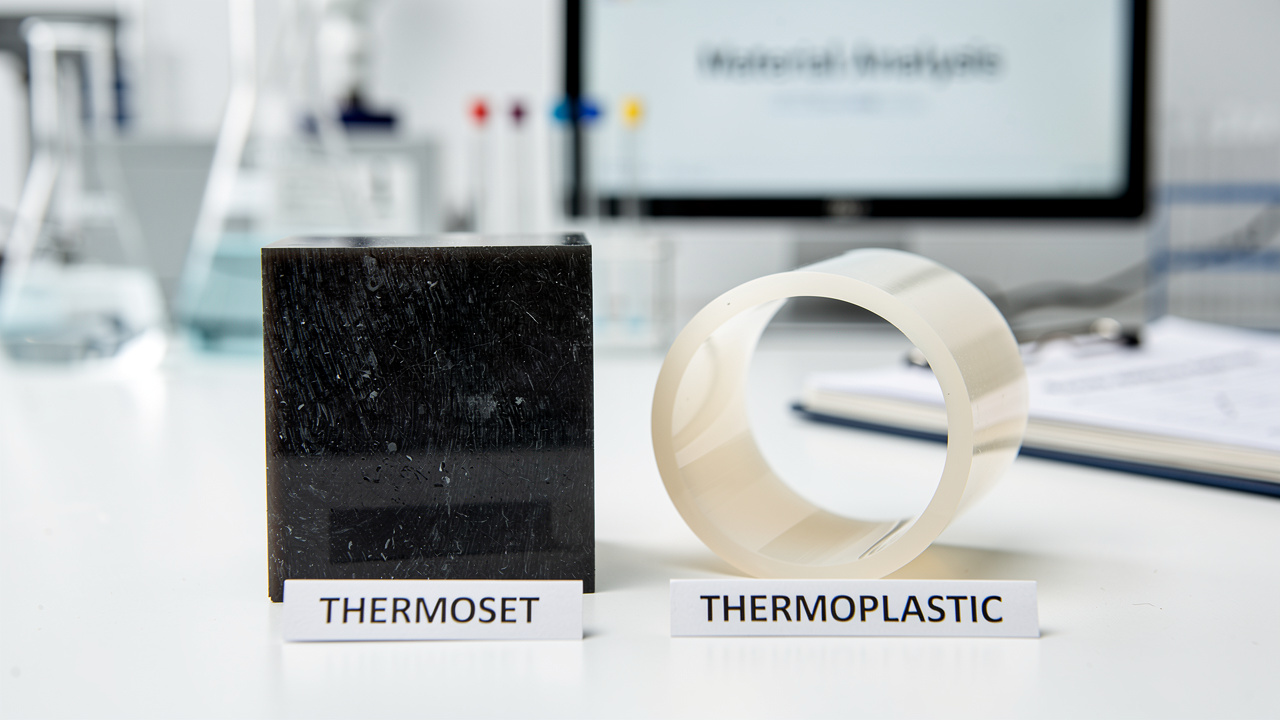
Thermoset vs Thermoplastic: Key Differences for OEM Purchasing Managers
Introduction
Navigating the complex landscape of material selection requires a deep understanding of thermosets and thermoplastics. Each type of polymer presents distinct advantages and limitations that can significantly impact manufacturing processes, product performance, and sustainability efforts. As the demand for innovative and efficient materials grows, decision-makers must ask themselves: how can they effectively weigh the strengths and weaknesses of these two categories to make informed choices that align with their operational goals?
Let’s explore the critical differences between thermosets and thermoplastics to provide valuable insights for those optimizing material use in their industries.
Define Thermosets and Thermoplastics: Key Characteristics
In the world of polymers, understanding the distinction of thermoset vs thermoplastic is crucial for making informed material choices. Thermosets are polymers that undergo a curing process, resulting in a rigid structure that cannot be remelted or reshaped once set. This curing involves cross-linking of polymer chains, which imparts exceptional thermal stability and chemical resistance. Typical instances consist of epoxy resins and phenolic plastics, often utilized in contexts requiring durability and heat resistance, like in agricultural machinery and electrical components.
In contrast, thermoplastics can be melted and reshaped repeatedly without altering their chemical makeup. This characteristic enables simpler processing and recycling, making plastics such as polyethylene and polypropylene commonly utilized in applications ranging from packaging to automotive components. For example, in farming, plastic materials are frequently utilized for irrigation systems and protective coverings, demonstrating their versatility and practicality.
Have you considered how these fundamental characteristics impact your material selection as an OEM purchasing manager? The choice between thermoset vs thermoplastic materials can greatly influence product performance, manufacturing efficiency, and sustainability initiatives. Ultimately, the right choice in polymers can significantly enhance product performance and operational efficiency, shaping the future of manufacturing.

Compare Material Properties: Strengths and Limitations
When it comes to material selection, understanding the differences in thermoset vs thermoplastic is crucial for ensuring optimal performance in demanding applications.
- Strength and Durability: Thermosets generally exhibit superior strength and rigidity due to their cross-linked structure, making them ideal for high-stress applications. According to Mahdi M. Abu-Omar, "20% of all commercial polymers are thermoset, of which, 70% is polyepoxide." This highlights just how often thermosetting plastics are relied upon in critical applications. They maintain their integrity under extreme temperatures and harsh environments, which is crucial for components in sectors like aerospace and automotive. But what happens when thermoplastics are exposed to heat? They can soften, which limits their effectiveness in high-temperature environments, possibly resulting in deformation under challenging conditions.
- Thermal Resistance: Thermosets can endure higher temperatures without deforming, making them suitable for applications such as electrical housings and automotive parts. For example, rigid polymers are increasingly utilized in high-stress components such as heavy-duty brake calipers, where thermal stability is crucial.
- Recyclability: Thermoplastics have the advantage of being recyclable, which is increasingly important in sustainable manufacturing practices. This characteristic allows for repurposing into new products, aligning with eco-friendly initiatives. Conversely, thermosets are not recyclable due to their irreversible curing process, posing challenges in waste management and sustainability efforts. As noted by industry experts, this limitation can hinder the adoption of thermosets in environmentally conscious markets.
- Processing: Thermoplastics are easier to process and mold, allowing for faster production cycles and lower costs. They are favored for high-volume production due to their efficiency. Certain types of polymers require more intricate processing methods, which can elevate manufacturing duration and expenses, rendering them less appropriate for quick production demands.
This comparison of thermoset vs thermoplastic highlights the importance of selecting the right material based on specific application requirements and operational constraints. Ultimately, the right choice can mean the difference between success and failure in high-stakes environments.

Examine Applications: Industry-Specific Uses and Suitability
In today's competitive landscape, understanding the distinct roles of thermoset vs thermoplastic materials is crucial for industry leaders.
- Automotive Industry: The automotive industry is poised for a significant shift, with thermosetting plastics projected to reach a market value of US$ 27.66 billion by 2033. Thermosets are increasingly used for structural components, such as engine covers and electrical housings, due to their high strength and thermal stability. In contrast, plastic materials are favored for interior components and exterior trims, where flexibility and impact resistance are essential.
- Electrical and Electronics: Thermosets excel in applications requiring excellent electrical insulation and heat resistance, making them ideal for circuit boards and connectors. Thermoplastics, on the other hand, are widely used for housings and casings, benefiting from their ease of molding and aesthetic versatility. While thermoplastics are widely used for their recyclability and cost-effectiveness, how can manufacturers overcome the challenges posed by their limitations in durability?
- Construction: In construction, the choice between thermoset vs thermoplastic materials can significantly impact project outcomes, with each offering unique advantages. Thermosets are utilized for durable materials like adhesives and coatings, while thermoplastics are preferred for pipes and fittings due to their lightweight and corrosion-resistant properties. The expanding construction sector is anticipated to further boost the need for thermosetting plastics, emphasizing their advantages in diverse uses.
- Consumer Goods: Thermoplastics dominate this sector, being employed in everything from packaging to household items, thanks to their recyclability and cost-effectiveness. These types of plastics find specialized uses in high-performance products that demand improved durability. However, their inability to be recycled and reshaped presents a considerable obstacle to market expansion.
Comprehending these uses allows OEM purchasing managers to align their material selections with industry demands and performance expectations. By aligning material choices with industry demands, OEM purchasing managers can drive innovation and efficiency in their operations.

Evaluate Pros and Cons: Making Informed Choices
When it comes to selecting materials, understanding the strengths and weaknesses of thermoset vs thermoplastic is crucial for OEM purchasing managers.
Thermosets offer several advantages:
- Pros:
- Exceptional strength and rigidity, making them ideal for demanding applications.
- Outstanding thermal and chemical resistance, ensuring performance in extreme conditions.
- Superior dimensional stability, which guarantees precise tolerances.
- Non-recyclable, raising significant environmental concerns.
- More complex processing, which can lead to increased production costs.
- Limited flexibility, potentially restricting design options.
On the other hand, thermoplastics present a different set of benefits:
- Pros:
- Recyclable and easier to process, supporting sustainability and cost-effectiveness.
- Flexible and impact-resistant, appropriate for a variety of uses.
- Quicker production cycles, which help reduce lead times.
- Lower thermal resistance compared to thermosets, limiting their use in high-temperature applications.
- May not match the strength and durability of thermosets in demanding environments.
Have you weighed the pros and cons? Doing so empowers OEM purchasing managers to make informed decisions that meet operational needs and sustainability goals. Furthermore, the rising demand for plastic materials highlights their critical role in sustainable manufacturing practices. Improvements in recycling technologies are increasing the recyclability of plastic materials, making them a more appealing choice for environmentally aware purchasing strategies. As noted by Nefab, "Besides significant material and cost savings, thermoplastics also contribute to lower CO2 emissions when compared to foam," reinforcing the sustainability argument for thermoplastics. As the industry evolves, making informed choices about material selection will not only enhance product performance but also align with sustainability goals.

Conclusion
Navigating the complexities of material selection is crucial for OEM purchasing managers aiming to enhance product performance and sustainability. The choice between these two types of polymers significantly impacts product performance. It also affects manufacturing efficiency and sustainability efforts. By recognizing the unique characteristics and applications of each material, decision-makers can align their strategies with industry demands and operational goals.
Key insights from the comparison reveal that thermosets offer exceptional strength and thermal stability, making them suitable for high-stress environments. On the other hand, thermoplastics provide recyclability and ease of processing, catering to sustainability initiatives. Each material has its strengths and limitations, influencing their suitability for various applications across industries such as automotive, electronics, construction, and consumer goods. By weighing these factors, OEM purchasing managers can make informed choices that enhance product performance and align with environmental goals.
This choice not only affects product performance but also shapes sustainability strategies. As the demand for eco-friendly solutions grows, embracing the advantages of thermoplastics may offer a pathway to innovation and efficiency. By collaborating with experts like Lincoln Plastics, OEMs can confidently navigate these critical decisions and drive innovation in their operations. Contacting Lincoln Plastics for quotes or customized material options can further empower OEMs to navigate this critical decision-making process effectively.
Frequently Asked Questions
What are thermosets?
Thermosets are polymers that undergo a curing process, resulting in a rigid structure that cannot be remelted or reshaped once set. This curing involves cross-linking of polymer chains, providing exceptional thermal stability and chemical resistance.
What are some common examples of thermosets?
Common examples of thermosets include epoxy resins and phenolic plastics, which are often used in applications requiring durability and heat resistance, such as agricultural machinery and electrical components.
What are thermoplastics?
Thermoplastics are polymers that can be melted and reshaped repeatedly without altering their chemical makeup. This characteristic allows for simpler processing and recycling.
What are some common examples of thermoplastics?
Common examples of thermoplastics include polyethylene and polypropylene, which are widely used in applications ranging from packaging to automotive components.
How do thermosets and thermoplastics differ in terms of processing?
Thermosets cannot be remelted or reshaped once cured, while thermoplastics can be melted and reshaped multiple times, making thermoplastics easier to process and recycle.
Why is it important for OEM purchasing managers to understand the differences between thermosets and thermoplastics?
Understanding the differences can greatly influence product performance, manufacturing efficiency, and sustainability initiatives, ultimately enhancing product performance and operational efficiency in manufacturing.
List of Sources
- Define Thermosets and Thermoplastics: Key Characteristics
- Thermosetting Plastics Market Size and Forecast, 2026-2033 (https://coherentmarketinsights.com/market-insight/thermosetting-plastics-market-5639)
- EATC releases comprehensive thermoplastic composites market study (https://compositesworld.com/news/eatc-releases-comprehensive-thermoplastic-composites-market-study)
- Fiber reinforced thermoplastic composites 2026 trends (https://patsnap.com/resources/blog/articles/fiber-reinforced-thermoplastic-composites-2026-trends)
- smithers.com (https://smithers.com/services/market-reports/materials/the-future-of-thermoplastic-elastomers-to-2026)
- Making thermosets that can be recycled 12 times (https://cen.acs.org/materials/polymers/thermoset-recycling-polymers/104/web/2026/04)
- Compare Material Properties: Strengths and Limitations
- Thermoplastics vs. Thermosets for Structural Applications – What’s the Difference? (https://strongwell.com/news/thermoplastics-vs-thermosets-for-structural-applications-whats-the-difference)
- Thermoplastics vs Thermosets: Testing for Heat Success (https://qualitest.us/blogs/insight/thermoplastics-vs-thermosets?srsltid=AfmBOortdDxasZsa7QZaLXmoWKCE0bQPzZch_kFuuvukvNr2wcj6Yrv-)
- Thermoplastic vs. Thermosetting Plastic: Key Differences, Properties, and Applications (https://osborneindustries.com/news/difference-between-thermoplastic-thermosetting-plastic)
- Thermoset Plastics - an overview | ScienceDirect Topics (https://sciencedirect.com/topics/materials-science/thermoset-plastics)
- Thermoset vs Thermoplastics | Pros & Cons | Differences (https://vantageplastics.com/vantage-news-updates/thermoset-vs-thermoplastics-whats-the-difference)
- Examine Applications: Industry-Specific Uses and Suitability
- Thermoset Resin for Automotive Market Report: Trends, Forecast and Competitive Analysis to 2030 (https://researchandmarkets.com/reports/6033597/thermoset-resin-automotive-market-report?srsltid=AfmBOopQ7i5YaaQFtc5h6KldDqSBVynyuH1Gkp48B7peC6h-CU67HE7X)
- Thermosetting Plastics Market 2026-2033 (https://datamintelligence.com/research-report/thermosetting-plastics-market)
- smithers.com (https://smithers.com/services/market-reports/materials/the-future-of-thermoplastic-elastomers-to-2026)
- Automotive Thermoplastic Resin Composites Market Trend, Top Growth Companies and Industry Forecast, 2026-2033 (https://einpresswire.com/article/921788178/automotive-thermoplastic-resin-composites-market-trend-top-growth-companies-and-industry-forecast-2026-2033)
- Evaluate Pros and Cons: Making Informed Choices
- Thermoplastics vs. Thermosets for Structural Applications – What’s the Difference? (https://strongwell.com/news/thermoplastics-vs-thermosets-for-structural-applications-whats-the-difference)
- 3 benefits of thermoformed plastics for sustainable supply chains (https://nefab.com/news-insights/2022/3-benefits-of-thermoformed-plastics-for-sustainable-supply-chains)
- Chemists make tough plastics recyclable (https://news.mit.edu/2020/tough-thermoset-plastics-recyclable-0722)
- Interplas Insights | Plastics Sustainability & Sustainable Plastics News (https://interplasinsights.com/plastics-environment-news/plastics-and-sustainability-news)
- Durable plastic gets a sustainability makeover | Cornell Chronicle (https://news.cornell.edu/stories/2025/01/durable-plastic-gets-sustainability-makeover)
Related posts

Discover best practices for sourcing polycarbonate plastic products effectively and efficiently.


Explore the diverse applications of PVC across industries, showcasing its versatility and benefits.
Explore 10 innovative applications of co-extruded plastics for enhanced performance across industries.
