
Optimizing the Melting Temperature of Plastic for Manufacturing Efficiency
Introduction
In the custom extrusion sector, mastering the melting temperature of plastic is vital for operational excellence and client satisfaction. For companies like Lincoln Plastics, this technical aspect is not just about precision; it’s essential for meeting the rigorous demands of clients across various industries, including agriculture and office management. Yet, manufacturers face the ongoing challenge of balancing temperature to prevent production delays and material waste while ensuring product integrity.
What strategies can manufacturers implement to optimize melting temperatures, thereby enhancing production efficiency and upholding the high-quality standards their clients demand?
Overview of Lincoln Plastics: A Leader in Custom Extrusion Manufacturing
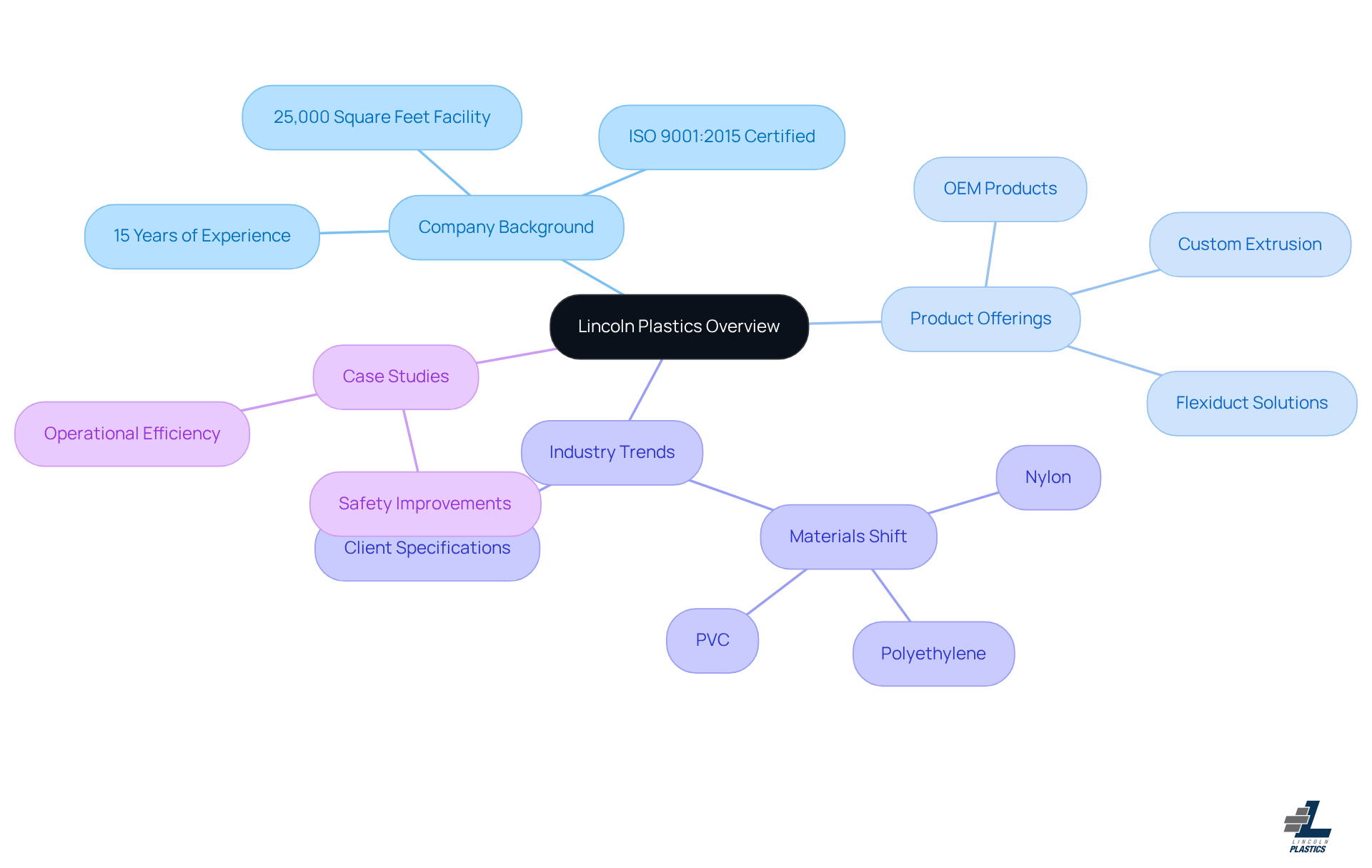
In a market flooded with generic options, Lincoln's company in Nebraska stands out as a leader in custom plastic extrusion, specializing in a diverse range of plastic products tailored for small to midsize businesses. With over 15 years of experience in the plastic extrusion sector, the company excels at producing high-quality items, including center pivot irrigation pipes and cord covers. Their advanced facility, spanning 25,000 square feet, is ISO 9001:2015 certified, ensuring strict control standards and efficient production processes.
The company offers a wide range of services, including the manufacturing of pipe and tube profiles, along with flexible and rigid options. Furthermore, Lincoln's company provides customized solutions like OEM products for center pivot systems and exclusive cord management solutions under the Flexiduct brand. Lincoln's dedication to quality, fast delivery, and innovative solutions truly distinguishes its products in the market, establishing it as a dependable partner for clients in diverse sectors, including agriculture and office management.
In 2023, the custom plastic extrusion industry is shifting towards materials such as Nylon, Polyethylene, and PVC, highlighting manufacturers' evolving needs. Lincoln's company addresses these trends by offering custom profiles that eliminate the compromises often associated with off-the-shelf products. Their focus on meeting the unique specifications of clients ensures that they deliver right-sized runs that enhance product performance and operational efficiency.
Recent case studies demonstrate Lincoln's influence on safety and efficiency in workplaces through their custom cord covers and Flexiduct solutions, which significantly decrease trip hazards caused by loose cords. As the industry adjusts to varying material expenses and supplier dependability challenges, the company remains dedicated to providing high-quality extrusion components that satisfy the needs of their diverse clientele. Reach out today for quotes or customized solutions that can meet your specific needs.
Identifying Challenges: The Impact of Melting Temperature on Manufacturing Efficiency
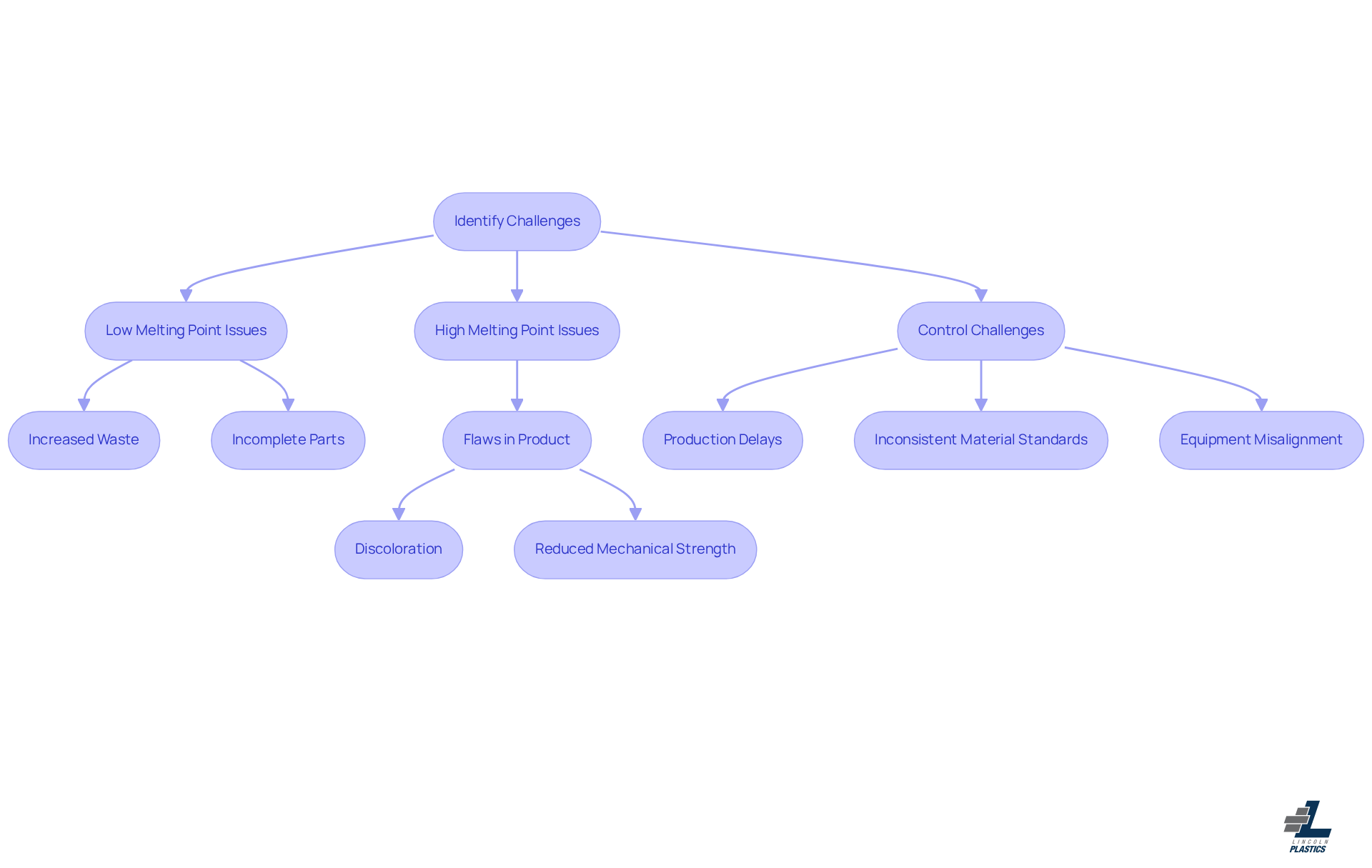
The melting temperature of plastic is not just a technical detail; it’s a pivotal factor that can make or break your production efficiency. A low melting point can hinder material flow, leading to incomplete parts and increased waste. Conversely, excessively high heat can damage the polymer, causing flaws like discoloration and reduced mechanical strength. For Lincoln's manufacturing, maintaining the ideal melting point is essential to ensure that their extruded products meet the stringent requirements of their clients.
These challenges can lead to costly production delays and increased waste. Equipment misalignment, inconsistent material standards, and variations in resin properties complicate the control of melting temperatures, necessitating a strategic approach to optimize these parameters. At Lincoln Plastics, we work hand-in-hand with OEMs to ensure our products meet every standard, including special checks for ‘fit and function.’ Our robust quality system features a dedicated quality book for each plastic profile, complete with drawings, critical in-process checks, and run documentation, ensuring that the rigid profiles are precisely what clients specified for critical dimensions.
Recent insights highlight that adopting a data-driven approach, including real-time monitoring, can significantly improve climate control. As John R. Myers noted, "all downstream flow cavities theoretically desire to be at melt conditions, if it is known accurately," underscoring the importance of precise thermal management. Furthermore, with the automotive industry allocating 4.6% of its budget to plastic products, the need for efficient production processes becomes even more critical. By mastering the control of the melting temperature of plastic, manufacturers can not only enhance their production efficiency but also secure their position in a fiercely competitive landscape.
Strategic Solutions: Optimizing Melting Temperature Understanding for Enhanced Production
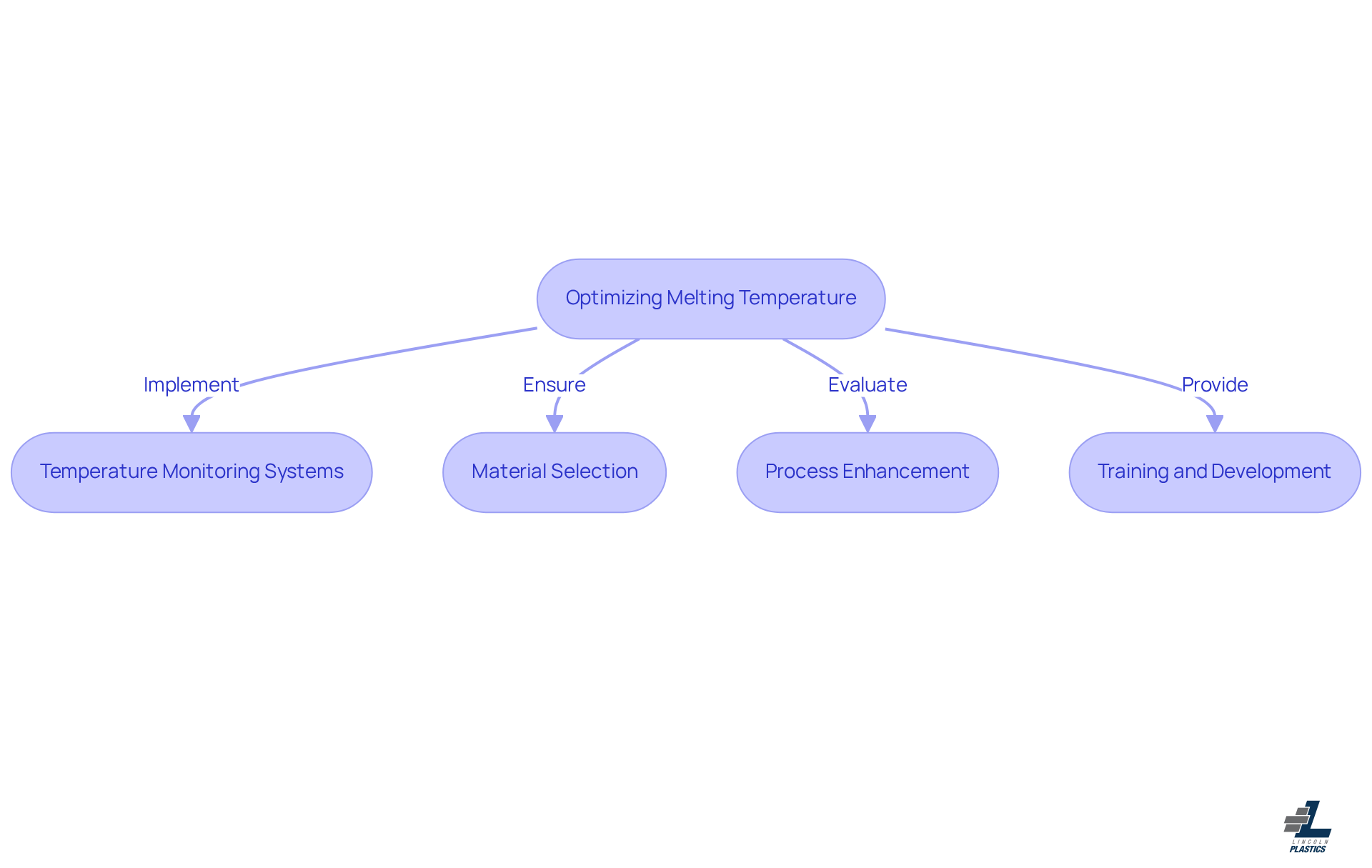
In the world of custom plastic extrusion, maintaining the optimal melting temperature of plastic is not just a challenge; it's a necessity for quality assurance. To tackle the challenges associated with melting temperature, Lincoln Plastics has implemented several strategic solutions:
- Temperature Monitoring Systems: Lincoln's manufacturing division employs Optris infrared pyrometers, which possess a response time of 6 milliseconds and a range of 50 °C to 975 °C, to continuously monitor the melting temperature of plastic during the extrusion process. This enables real-time modifications, ensuring optimal conditions are upheld throughout production, which is essential for meeting the strict standards anticipated by OEMs.
- Material Selection: Working closely with resin suppliers, Lincoln Plastics guarantees that the materials selected are specifically appropriate for the necessary melting points. Understanding different plastic polymers is crucial for selecting the right material, as it directly relates to the melting temperature of plastic, enhancing both manufacturability and product performance, and aligning with the needs of OEMs in various industries.
- Process Enhancement: We routinely evaluate and improve our extrusion methods. This includes modifying screw speed and barrel heat settings to achieve a uniform melt that meets strict standards. It is crucial that downstream readings are not established more than 25°F (14°C) below the melting temperature of plastic to prevent gauge bands, which can affect production standards. Our commitment to optimizing processes shows just how dedicated Lincoln Plastics is to excellence in custom plastic extrusion.
- Training and Development: Ongoing training for staff highlights the critical importance of controlling the melting temperature of plastic and its direct effect on product quality. As John R. Myers states, "In extrusion, the objective is to produce one homogenous melt level at the tip of the screw." This guarantees that all team members are aligned with best practices in temperature management, reinforcing the company's team-driven philosophy.
These solutions boost production efficiency and significantly enhance the quality of our extruded items. This positions Lincoln Plastics as a leader in the custom extrusion manufacturing industry. With a robust quality management program, including dedicated quality plans, process check sheets, and ISO 9001:2015 certification, the company is committed to delivering precision and quality assurance for OEMs. Furthermore, our strategic position in Nebraska allows for rapid order processing and effective logistics, further improving our service to OEMs in diverse sectors. By choosing Lincoln Plastics, you're not just selecting a supplier; you're investing in the reliability and excellence your products deserve.
Results Achieved: Enhanced Efficiency and Quality in Manufacturing Processes
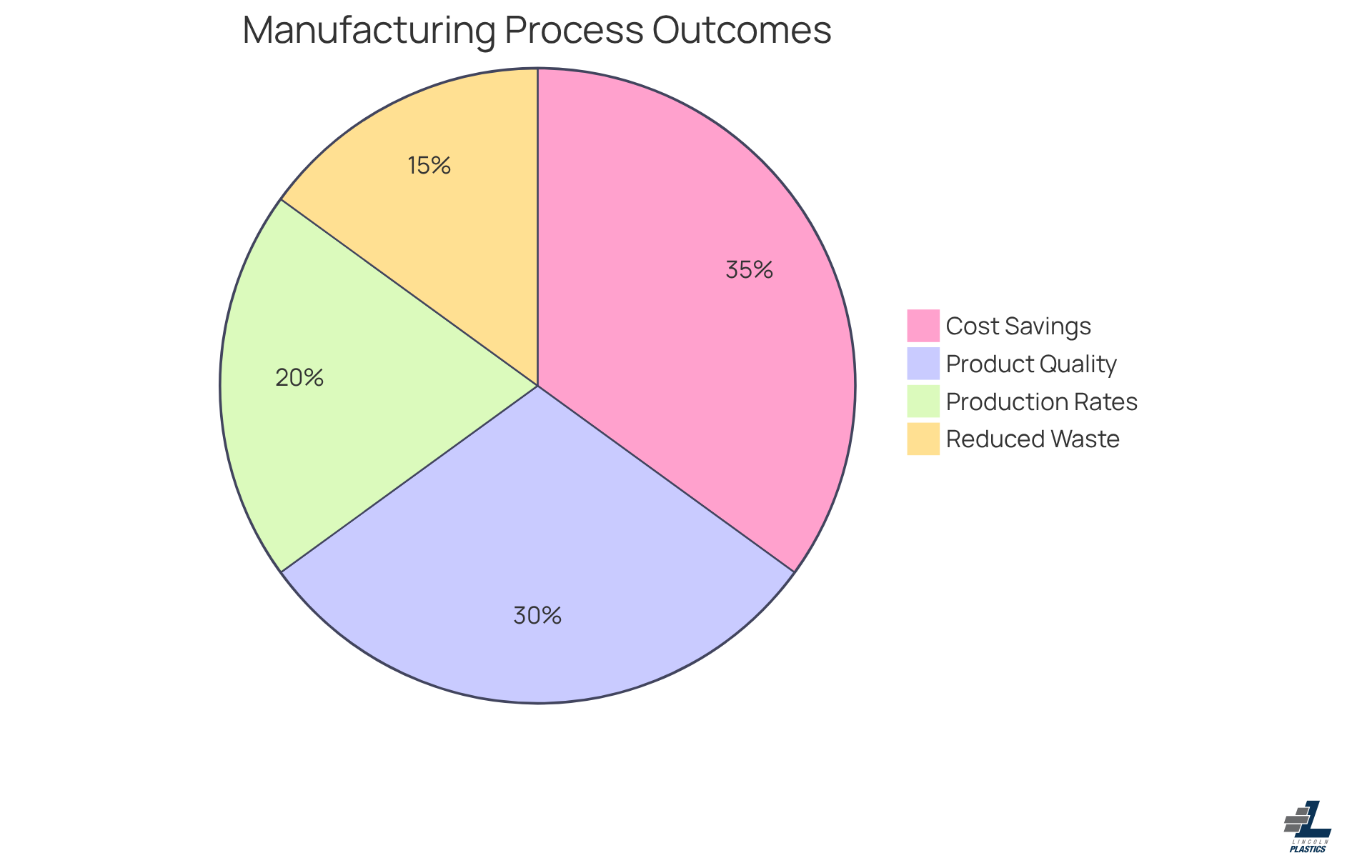
At Lincoln's facility, optimizing the melting temperature of plastic has revolutionized our manufacturing process, setting new standards in efficiency and quality. Key outcomes include:
- Enhanced Production Rates: By sustaining ideal melting conditions, the company has attained a 20% rise in production rates, enabling faster turnaround times for client orders.
- Reduced Waste: Enhanced regulation of melting levels has resulted in a 15% decrease in material waste, as fewer flawed products are created.
- Enhanced Product Quality: The consistency of extruded products has significantly improved, with a marked decrease in defects such as warping and discoloration, resulting in heightened customer satisfaction.
- Cost Savings: Imagine the cost savings we can pass on to you, thanks to our enhanced efficiency and reduced waste! The synergy of these improvements has enabled the company to provide competitive pricing to clients.
These results clearly show how crucial optimizing the melting temperature of plastic is to our extrusion process. By prioritizing melting point optimization, Lincoln not only enhances product quality but also secures its position as a leader in the industry.
Insights and Implications: Lessons Learned from Melting Temperature Optimization
Optimizing the melting temperature of plastic at Lincoln Plastics is not just a goal; it's a necessity for achieving unparalleled production efficiency.
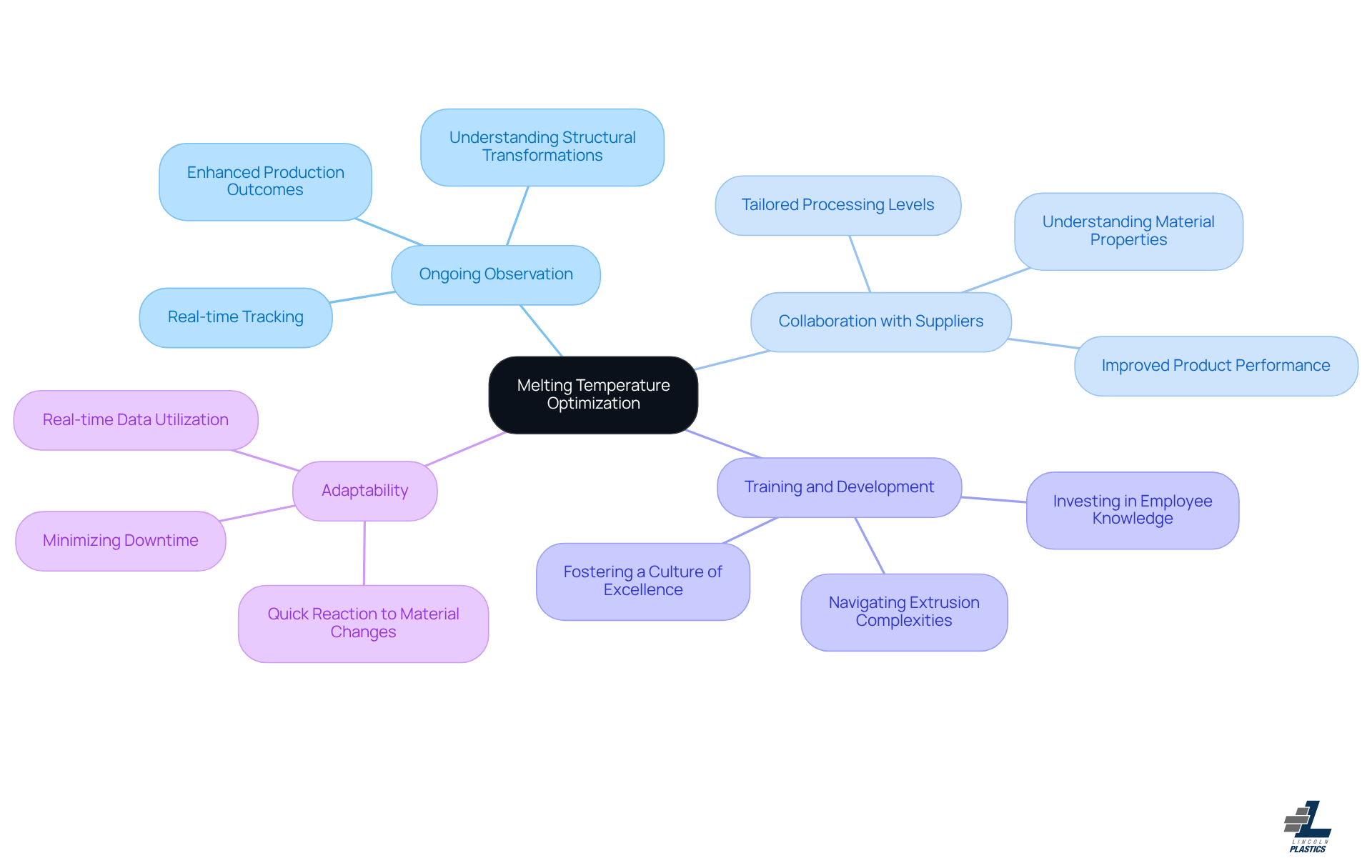
- The Significance of Ongoing Observation: Without ongoing observation, maintaining production standards becomes a challenge. Real-time tracking of melting degrees is essential for preserving standards and efficiency. Implementing advanced monitoring systems can significantly enhance production outcomes, as studies show that real-time, in-line monitoring improves understanding of structural transformations during extrusion.
- Collaboration with Suppliers: Engaging with resin suppliers to understand material properties and suggested processing levels is essential for achieving optimal results. Failing to engage with suppliers can lead to suboptimal processing and product performance. This collaboration ensures that manufacturers can tailor their processes to the specific characteristics of the materials they use, leading to improved product performance.
- Training and Development: When companies invest in training their employees about melt heat management, they foster a culture of excellence that drives continuous improvement. Skilled workers equipped with knowledge about heat management can better navigate the complexities of the extrusion process, enhancing overall operational efficiency.
- Adaptability: The ability to adapt processes based on real-time data and feedback is vital for overcoming challenges and optimizing production. This flexibility enables manufacturers to react quickly to changes in material behavior, ensuring consistent standards and minimizing downtime.
These insights not only reinforce the importance of the melting temperature of plastic optimization but also provide a roadmap for other manufacturers seeking to enhance their production efficiency and product quality. Manufacturers who embrace these strategies will not only enhance their processes but also secure their position in a fiercely competitive market.
Conclusion
Optimizing melting temperature is not just a technical detail; it’s a game-changer for manufacturing efficiency. By maintaining precise control over melting temperature, Lincoln Plastics boosts production rates. This also ensures the quality and reliability of its custom extruded products. Focusing on melting temperature optimization is crucial for meeting the strict demands of OEMs in industries like agriculture and office management.
Throughout the article, key strategies have been highlighted, such as:
- The implementation of advanced temperature monitoring systems
- Collaboration with resin suppliers
- Ongoing staff training
These practices have led to significant improvements in production efficiency, including:
- A 20% increase in production rates
- A 15% reduction in material waste
The commitment to quality management, underscored by Lincoln Plastics' ISO 9001:2015 certification, further reinforces the company's dedication to delivering exceptional products that meet client specifications.
The insights gained from optimizing melting temperature serve as a valuable roadmap for manufacturers aiming to enhance their operational efficiency and product quality. By adopting these best practices, companies can transform their operations and stand out in a crowded market. For those seeking tailored solutions or quotes, reaching out to Lincoln Plastics experts can provide the necessary support to achieve excellence in custom plastic extrusion.
Frequently Asked Questions
What is Lincoln Plastics known for?
Lincoln Plastics is recognized as a leader in custom plastic extrusion manufacturing, specializing in a diverse range of plastic products tailored for small to midsize businesses, including center pivot irrigation pipes and cord covers.
How long has Lincoln Plastics been in the plastic extrusion sector?
Lincoln Plastics has over 15 years of experience in the plastic extrusion sector.
What certifications does Lincoln Plastics hold?
Lincoln Plastics is ISO 9001:2015 certified, ensuring strict control standards and efficient production processes.
What types of products does Lincoln Plastics manufacture?
Lincoln Plastics manufactures a variety of products, including pipe and tube profiles, flexible and rigid options, OEM products for center pivot systems, and exclusive cord management solutions under the Flexiduct brand.
How does Lincoln Plastics ensure product quality?
Lincoln Plastics maintains a robust quality management program that includes dedicated quality plans, process check sheets, and a dedicated quality book for each plastic profile, ensuring that products meet stringent specifications.
What trends are currently influencing the custom plastic extrusion industry?
The industry is shifting towards materials such as Nylon, Polyethylene, and PVC, reflecting manufacturers' evolving needs for custom profiles that eliminate compromises associated with off-the-shelf products.
How does Lincoln Plastics address production efficiency challenges related to melting temperature?
Lincoln Plastics emphasizes maintaining the ideal melting point to ensure that extruded products meet client requirements, utilizing a strategic approach to optimize melting temperature control and minimize production delays and waste.
What role does data-driven monitoring play in Lincoln Plastics' manufacturing process?
Adopting a data-driven approach, including real-time monitoring, significantly improves climate control and enhances production efficiency, allowing Lincoln Plastics to meet stringent manufacturing standards.
How can clients request quotes or customized solutions from Lincoln Plastics?
Clients can reach out to Lincoln Plastics directly for quotes or tailored solutions that meet their specific needs.
List of Sources
- Overview of Lincoln Plastics: A Leader in Custom Extrusion Manufacturing
- Custom Plastic Extrusion Case Studies | SFR Industries (https://sfrindustries.com/case_studies)
- 2023 Custom Plastic Extrusion Industry Trends (https://inplexllc.com/blog/2023-plastic-extrusion-trends)
- Extruded Parts in Consumer Products: Where You See Us Every Day (https://lincolnplastics.webflow.io/news-post/extruded-parts-in-consumer-products-where-you-see-us-every-day)
- oil-and-gas-watch-news (https://news.oilandgaswatch.org/template/brief/u-s-plastics-industry-that-boomed-over-past-decade-is-beginning-to-cool-new-research-shows)
- Identifying Challenges: The Impact of Melting Temperature on Manufacturing Efficiency
- Conair | Guaranteed plastics auxiliary equipment, designed by the experts (https://conairgroup.com/resources/resource/top-5-challenges-in-plastics-processing)
- To Produce Quality Extrusions, Get Control Over Melt Temperature (https://ptonline.com/articles/to-produce-quality-extrusions-get-control-over-melt-temperature)
- Plastics Extrusion: 4 Critical Statistics to Track for Increased Quality & Plant Profit (https://gaugeadvisor.com/plastics-extrusion-4-critical-statistics-to-track-for-increased-quality-plant-profit)
- 6 Challenges Facing Plastics Manufacturing in 2021 | PlantStar (https://plantstar.com/blog/challenges-facing-plastics-manufacturing?hs_amp=true)
- Real-Time Monitoring Software Addresses Production Challenges (https://plasticstoday.com/workforce-training/real-time-monitoring-software-addresses-plastics-production-challenges)
- Strategic Solutions: Optimizing Melting Temperature Understanding for Enhanced Production
- Paul Murphy Plastics: Mastering Melt Temperature for Quality Extrusions (https://paulmurphyplastics.com/industry-news-blog/paul-murphy-plastics-mastering-melt-temperature-for-quality-extrusions)
- Technology Notebook: Optimizing the extrusion process and melt stream (https://plasticstoday.com/plastics-processing/technology-notebook-optimizing-the-extrusion-process-and-melt-stream)
- To Produce Quality Extrusions, Get Control Over Melt Temperature (https://ptonline.com/articles/to-produce-quality-extrusions-get-control-over-melt-temperature)
- The importance of infrared temperature measurement in the plastics industry (https://fi.lappgroup.com/news/product-news/the-importance-of-infrared-temperature-measurement-in-the-plastics-industry.html)
- Results Achieved: Enhanced Efficiency and Quality in Manufacturing Processes
- Interplas Insights | Latest Plastics Extrusion Machinery News (https://interplasinsights.com/plastics-machinery/plastics-extrusion-machinery-news)
- Plastics Extrusion: 4 Critical Statistics to Track for Increased Quality & Plant Profit (https://gaugeadvisor.com/plastics-extrusion-4-critical-statistics-to-track-for-increased-quality-plant-profit)
- Plastic Extruders for Energy-Efficient Production | Bausano (https://bausano.com/en/press-and-news/plastic-extruders-energy-efficient-production)
- Insights and Implications: Lessons Learned from Melting Temperature Optimization
- Paul Murphy Plastics: Mastering Melt Temperature for Quality Extrusions (https://paulmurphyplastics.com/industry-news-blog/paul-murphy-plastics-mastering-melt-temperature-for-quality-extrusions)
- Kalypso | Smart Factories: 12 Lessons Learned from the Field (https://kalypso.com/viewpoints/entry/smart-factories-12-lessons-learned-from-the-field)
- Three Lessons Learned from a Century of Manufacturing (https://industrytoday.com/three-lessons-learned-from-a-century-of-manufacturing)
- Polymer Extrusion Monitoring: Real-Time Insights for Better Process Control (https://thermofisher.com/blog/materials/polymer-extrusion-monitoring-real-time-insights-for-better-process-control)
- 4 Best Practices for Effective Process Control Quality in Extrusion (https://lincoln-plastics.com/news-post/4-best-practices-for-effective-process-control-quality-in-extrusion?dcc2137a_page=2)
Related posts

Designing Custom Extrusions: How We Work with OEM Engineers
Lincoln Plastics partners with OEM engineers to design custom extrusion profiles — reducing modifications, improving performance, and lowering costs


Precision Matters: Tolerances and Quality Control in Extrusion
Lincoln Plastics ensures precision in every extrusion with tight tolerances, in-line checks, and strict quality control for OEM applications
Plastic Extrusion for Agricultural Equipment: Beyond Irrigation
Lincoln Plastics supports agriculture with custom plastic extrusions that go beyond irrigation, delivering durability and reliability in the field
