
Maximize Efficiency with Your Plastic Pipe Extruder: 4 Best Practices
Introduction
Maximizing efficiency in plastic pipe extrusion is super important for manufacturers who want to boost production quality and cut costs. By following some best practices, operators can really tap into the full potential of their plastic pipe extruders, ensuring they perform at their best and are reliable. But with so many factors to consider - like material selection, equipment optimization, and the latest technologies - how do you navigate the complexities of the extrusion process to get the best results?
You might be wondering where to start. Well, let’s dive into some relatable challenges you might face and explore some insights and solutions together. It’s all about making the process smoother and more efficient, so you can focus on what really matters.
Understand Plastic Pipe Extrusion Fundamentals
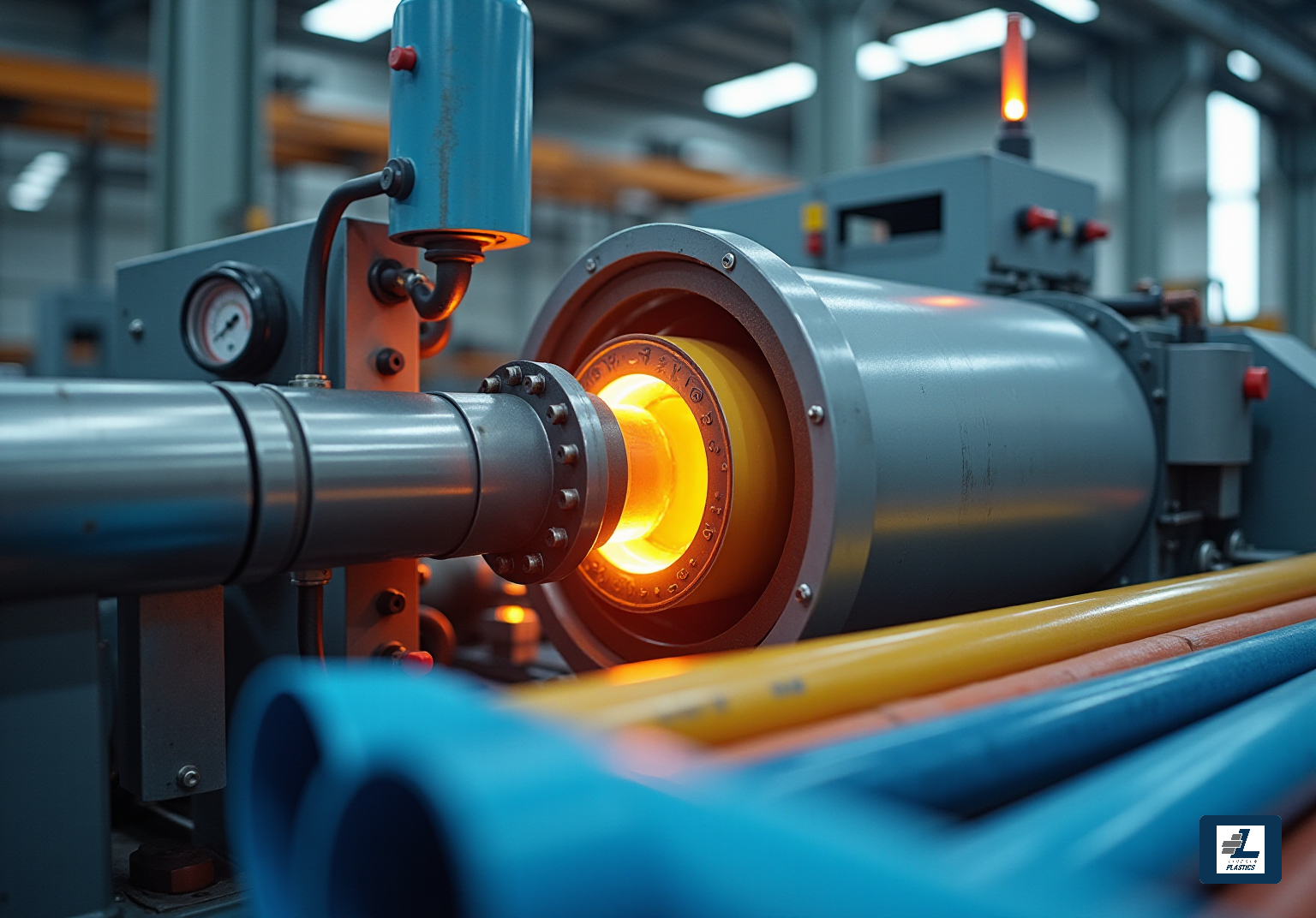
Have you ever thought about how those sturdy polymer pipes are made? Well, it all starts with a process known as plastic pipe extrusion. This continuous manufacturing method takes raw polymers and transforms them into pipes using a die. At the heart of this process is the extruder, which is designed with a screw and barrel to melt and convey the plastic. Then, there's the die that shapes the molten material into the pipe profile we need. Understanding how heat, pressure, and material flow interact is key to boosting efficiency and ensuring top-notch quality.
Now, let’s talk about temperature control. Keeping it just right is crucial to avoid degrading the material and to maintain product integrity. Different polymers, like PVC and HDPE, have specific processing requirements that need to be followed for the best results. And don’t forget about material viscosity! Managing it effectively is vital since it affects how uniformly the material melts and mixes, leading to consistent outcomes.
Successful extrusion often relies on a control system that utilizes sensors to monitor and adjust heat and pressure in real-time. This ensures the optimal processing conditions. Industry experts emphasize that understanding these parameters not only improves quality but also enhances overall productivity. And who doesn’t want that? It ultimately helps the bottom line in manufacturing!

Optimize Key Components of Your Extruder
If you’re looking to boost the performance of your extruder, we should focus on some key components that truly matter, such as the screw design, barrel configuration, and die setup. Have you ever thought about how a barrier screw could make a difference? It can really amp up the efficiency and improve material mixing, leading to better product consistency.
Now, here’s a tip from Mark A. Spalding, a Fellow in Packaging & Specialty Plastics at Dow Inc.: operators need to have some experience when it comes to setting and adjusting temperature controls. It’s crucial for hitting that peak performance. Regularly calibrating the heat zones in the barrel is a must. For example, Barrel Zone 1 should be set between 300 °F and 400 °F if you’re working with polyolefin resins. This helps ensure you’re in the sweet spot for processing conditions.
Keeping these ideal conditions in check is important. It minimizes the risk of defects and helps you maintain quality. And let’s not forget about the feed rate! A consistent feed rate is vital - fluctuations can lead to variations in product quality, which no one wants.
So, make it a habit to do regular checks on these components. It’s key to preventing unexpected downtimes and keeping your production flow smooth. And watch out for common pitfalls, like pellet bridging due to improper feed casing temperatures. That can really mess with throughput and disrupt your production.
What do you think? Are you ready to take these steps to enhance the performance of your extruder?

Select and Prepare Materials for Optimal Performance
Choosing the right materials for the extruder is super important. It directly impacts things like performance and durability. Take PVC, for instance. It's a popular choice because it's durable and cost-effective, making it a go-to for many applications. On the flip side, HDPE stands out for its strength and flexibility, which is a big deal in high-stress situations. Did you know HDPE can handle flow rates of up to 14 feet per second? That’s way better than PVC’s 5.5 feet per second in similar conditions. This performance really matters, especially when you consider that the U.S. sees around 700 water main breaks every day. It just shows how crucial it is to have reliable materials.
Now, let’s talk about material preparation. The preparation process plays a key role in ensuring the quality of the extrusion. Properly drying the resin is crucial to remove moisture, as it can lead to defects during the operation of the extruder. Plus, mixing materials or adding specific additives can boost features like UV resistance and color stability, making the final product even better. For example, HDPE is ideal for replacing drinking water mains. This really highlights how important material selection is for essential infrastructure. And don’t forget, while HDPE might have a higher initial cost compared to PVC, it offers long-term savings.
Testing before jumping into full-scale production is crucial. This practice helps pinpoint the best options for specific applications, ensuring the final products hit the necessary performance standards. As the industry evolves, there’s a noticeable shift towards materials that not only meet performance needs but also enhance sustainability. Industry experts point out that HDPE make it the top choice for trenchless installation practices, which really emphasizes its benefits in modern applications.

Leverage Advanced Technologies for Enhanced Efficiency
If you're looking to improve the operation of a plastic pipe extruder, why not think about integrating some advanced technologies? Things like automation, monitoring systems, and predictive maintenance can really make a difference. Automation helps streamline those repetitive tasks, which means increased productivity and less chance for human error. Did you know that a 2017 EY study found that 30-50% of initial RPA projects fail? That just shows how important it is to implement these changes carefully.
Now, let’s talk about monitoring systems. They let you keep an eye on key parameters continuously, so you can make quick adjustments to keep everything running smoothly. For example, in-line thickness gauges give you the ability to maintain that target thickness, which is super important for product quality.
And don’t forget about predictive maintenance! They can actually forecast issues before they happen, which means less downtime and lower maintenance costs. Plus, exploring innovations like 3D printing for prototyping and advanced die designs, including the use of a hot runner system, can really take your production capabilities and product quality to the next level.
As Bill Gates wisely said, "Automation applied to an efficient operation will magnify efficiency." So, it’s crucial to optimize your processes before diving into automation to avoid any pitfalls. By embracing these technologies, you can really position yourself to meet the ever-changing market demands effectively. What do you think? Ready to take the plunge?

Conclusion
Maximizing efficiency in plastic pipe extrusion isn’t just about knowing your machines; it’s also about putting into practice some solid strategies that boost performance and quality. Think about it: by honing in on the basics of the extrusion process, optimizing key components, picking the right materials, and tapping into advanced technologies, manufacturers can really step up their production game.
Let’s highlight some key practices here:
- Maintaining optimal melt temperatures
- Managing back pressure
- Ensuring consistent feed rates
And don’t forget about material selection! Choosing the right ones, like PVC and HDPE, and prepping them properly can help you dodge defects. Plus, bringing in automation and real-time monitoring can really streamline your operations and cut down on downtime. This means better product consistency and some nice cost savings, too.
In an industry that’s always changing, these practices are more important than ever. By embracing these strategies, manufacturers can not only boost their operational efficiency but also play a part in making infrastructure more sustainable and reliable. So, why wait? Now’s the time to act! Implement these best practices and watch your extrusion processes transform.
Frequently Asked Questions
What is polymer pipe extrusion?
Polymer pipe extrusion is a continuous manufacturing process that transforms raw polymers into pipes using a plastic pipe extruder and a die.
What is the role of the plastic pipe extruder in the extrusion process?
The plastic pipe extruder is designed with a screw and barrel to melt and convey the plastic, enabling the transformation of raw materials into molten form before shaping them into pipes.
Why is melt temperature important in the extrusion process?
Maintaining the right melt temperature is crucial to avoid degrading the material and to ensure consistent quality in the final product.
What are some examples of polymers used in pipe extrusion?
Common polymers used in pipe extrusion include PVC (polyvinyl chloride) and HDPE (high-density polyethylene), each having specific processing requirements.
How does back pressure affect the extrusion process?
Managing back pressure effectively is vital as it impacts how uniformly the material melts and mixes, leading to consistent outcomes in the final product.
What technologies are used in modern plastic pipe extruders?
Modern plastic pipe extruders utilize cutting-edge technologies to monitor and adjust heat and pressure in real-time, ensuring smooth operation of the extrusion line.
How does understanding extrusion parameters benefit manufacturing?
Understanding parameters like heat, pressure, and material flow improves quality and enhances overall operational efficiency, which ultimately benefits the bottom line in manufacturing.
List of Sources
- Understand Plastic Pipe Extrusion Fundamentals
- plasticstoday.com (https://plasticstoday.com/extrusion-pipe-profile/conair-advances-plastics-industry-with-ai-innovations)
- The Role of Temperature and Pressure in Extrusion (https://southernheatcorp.com/the-role-of-temperature-and-pressure-in-extrusion)
- Plastics Extrusion: 4 Critical Statistics to Track for Increased Quality & Plant Profit (https://gaugeadvisor.com/2025/05/26/plastics-extrusion-4-critical-statistics-to-track-for-increased-quality-plant-profit)
- How Temperature Impacts Plastic Extrusion (https://paulmurphyplastics.com/industry-news-blog/how-temperature-impacts-plastic-extrusion)
- Optimize Key Components of Your Extruder
- qiangshengplas.com (https://qiangshengplas.com/news/essential-tips-for-plastic-extruder-maintenance-keep-your-machine-running-smoothly)
- ptonline.com (https://ptonline.com/articles/optimizing-barrel-temperatures-for-single-screw-extruders)
- xaloy.com (https://xaloy.com/optimizing-barrel-temperatures)
- The Importance of Barrel Temperature Optimization for Plastic Extrusion and Injection Molding - SANTA FE MACHINE WORKS, INC. (https://santafemachine.com/barrels/the-importance-of-barrel-temperature-optimization-for-plastic-extrusion-and-injection-molding)
- zsjtjx.com (https://zsjtjx.com/news/the-role-of-the-extruder-screw-in-the-extruder)
- Select and Prepare Materials for Optimal Performance
- trenchlesstechnology.com (https://trenchlesstechnology.com/stating-their-case-pvc-vs-hdpe)
- plasticpipe.org (https://plasticpipe.org/PPI-Home/Municipal_Industrial/Case-Studies.aspx)
- Plastics Extrusion: 4 Critical Statistics to Track for Increased Quality & Plant Profit (https://gaugeadvisor.com/2025/05/26/plastics-extrusion-4-critical-statistics-to-track-for-increased-quality-plant-profit)
- piedmontplastics.com (https://piedmontplastics.com/blog/pvc-vs-hdpe?srsltid=AfmBOoopFhImdxsHv_PefPeX_Ty4VkwIBGYqup831TsHlCc4jAhL26kv)
- Leverage Advanced Technologies for Enhanced Efficiency
- 32 of the Best AI and Automation Quotes To Inspire Healthcare Leaders - Blog - Akasa (https://akasa.com/blog/automation-quotes)
- Plastics Extrusion: 4 Critical Statistics to Track for Increased Quality & Plant Profit (https://gaugeadvisor.com/2025/05/26/plastics-extrusion-4-critical-statistics-to-track-for-increased-quality-plant-profit)
- Quotes That Make You Rethink Intelligent Automation | UiPath (https://uipath.com/blog/automation/rethink-intelligent-automation-quotes)
- letsdatascience.com (https://letsdatascience.com/news/plastic-extrusion-industry-signals-equipment-upgrades-0f0d7000)


