
Master the PVC Extrusion Process: Key Steps and Equipment Insights
Introduction
The PVC extrusion process is not just a manufacturing method; it's a vital component that shapes the future of diverse industries. As manufacturers strive to enhance their offerings, understanding the intricacies of PVC shaping-from material preparation to the final cutting and finishing stages-becomes essential. Manufacturers face constant challenges in adapting to new technologies and market demands. How can they ensure they leverage the best practices and equipment to stay competitive? Let’s explore the key steps and equipment insights of the PVC extrusion process, providing a roadmap for manufacturers aiming to master this critical technique.
Define PVC Extrusion: Key Concepts and Importance
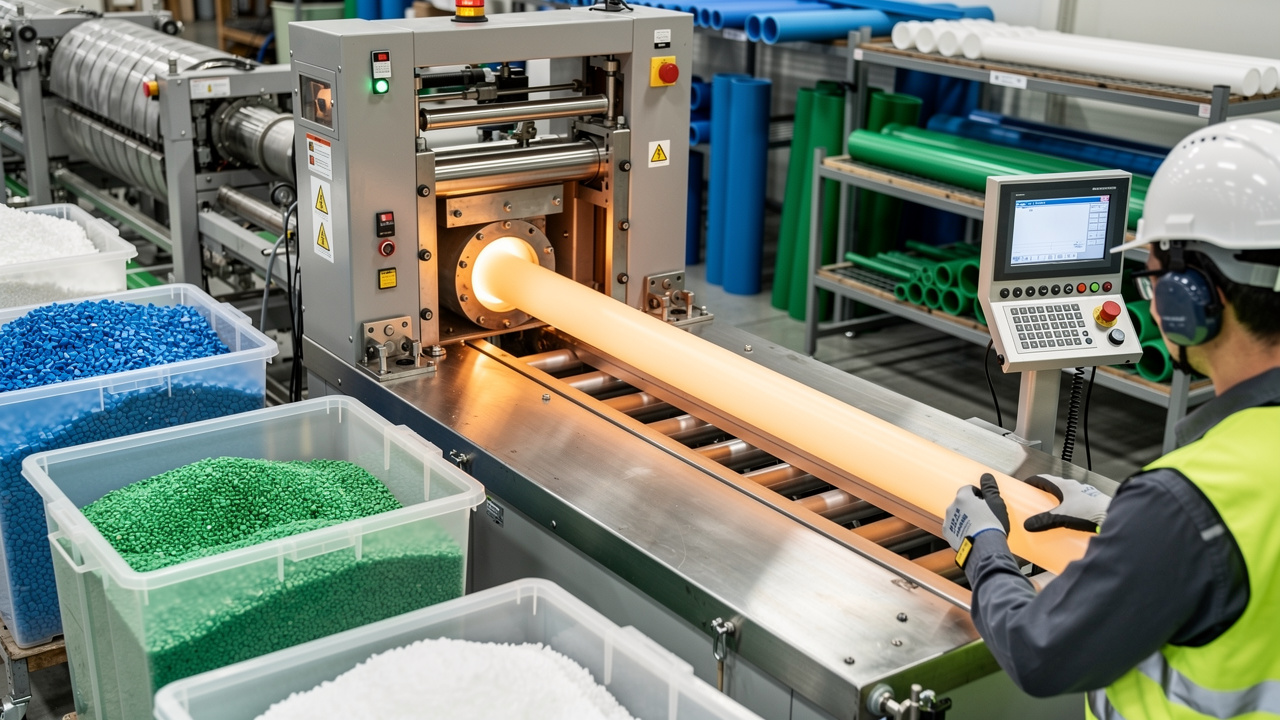
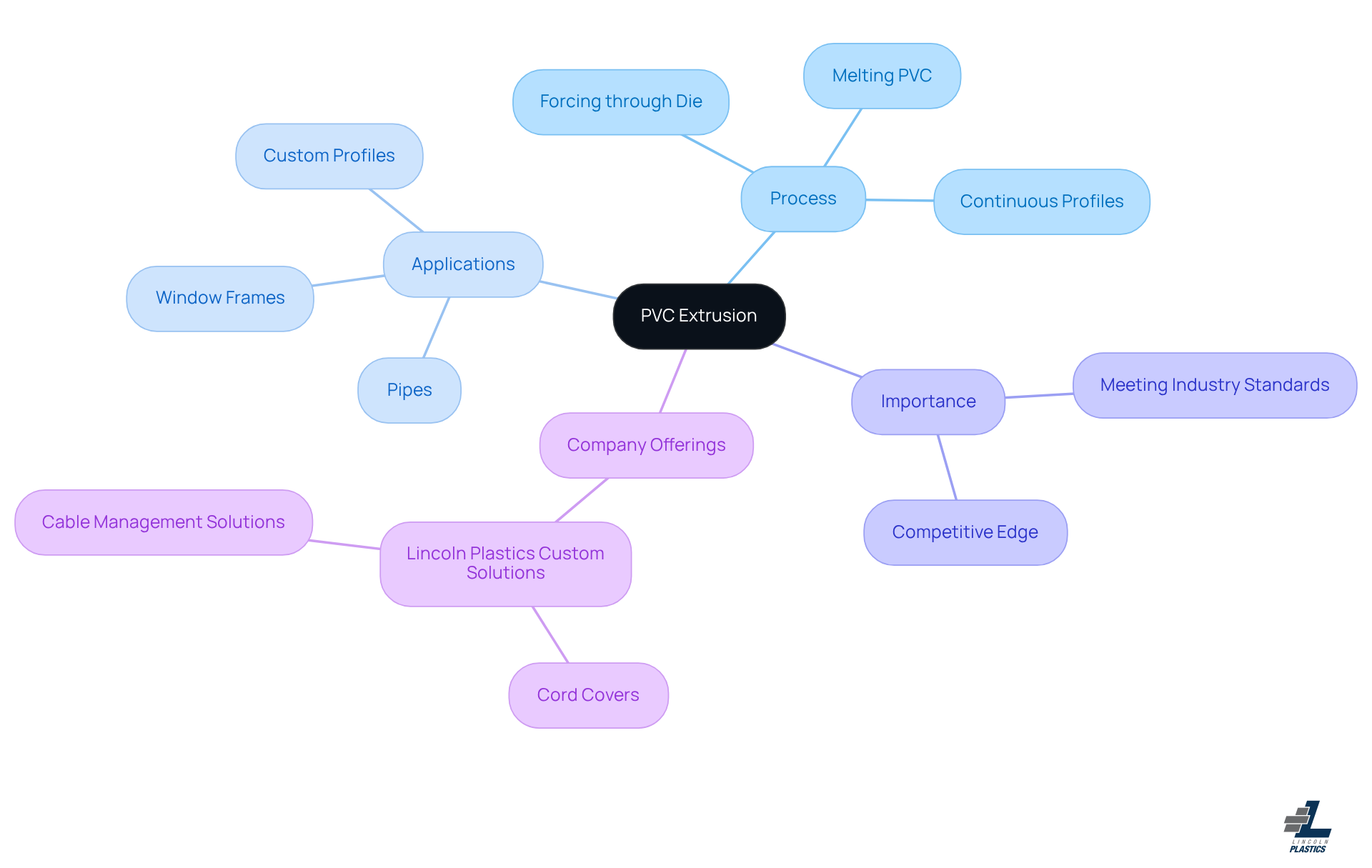
In the world of manufacturing, PVC shaping stands out as a game-changer, enabling the creation of high-quality, tailored products that meet diverse industry needs. The PVC extrusion process is critical as it involves melting Polyvinyl Chloride (PVC) resin and forcing it through a die to create continuous profiles. The versatility of PVC allows for the production of a wide range of items, from pipes and window frames to custom profiles designed for construction and industrial applications. Have you considered how PVC shaping can revolutionize your product offerings with durable, lightweight, and cost-effective solutions?
Manufacturers face increasing pressure to deliver reliable solutions that meet evolving industry standards. Mastering the PVC extrusion process is essential for those looking to enhance performance and address the changing demands of sectors like agriculture, where dependable and effective solutions are vital. Recent advancements in PVC shaping methods have further highlighted its importance. As a result, companies that embrace these advancements can gain a competitive edge in the market.
Lincoln Plastics' custom cord covers and cable management solutions play a crucial role in enhancing workplace safety by reducing trip hazards associated with loose cords. With Lincoln Plastics' ISO 9001:2015 certification and rigorous quality management plans, including dedicated quality books and in-process checks, customers can trust in the quality and reliability of their products. By choosing Lincoln Plastics, you're not just investing in products; you're securing a partnership that prioritizes quality and innovation in every solution. For tailored solutions and quotes, we invite you to contact Lincoln Plastics today.
Outline the PVC Extrusion Process: Step-by-Step Breakdown
The pvc extrusion process is a critical component in delivering high-quality products that meet stringent industry standards.
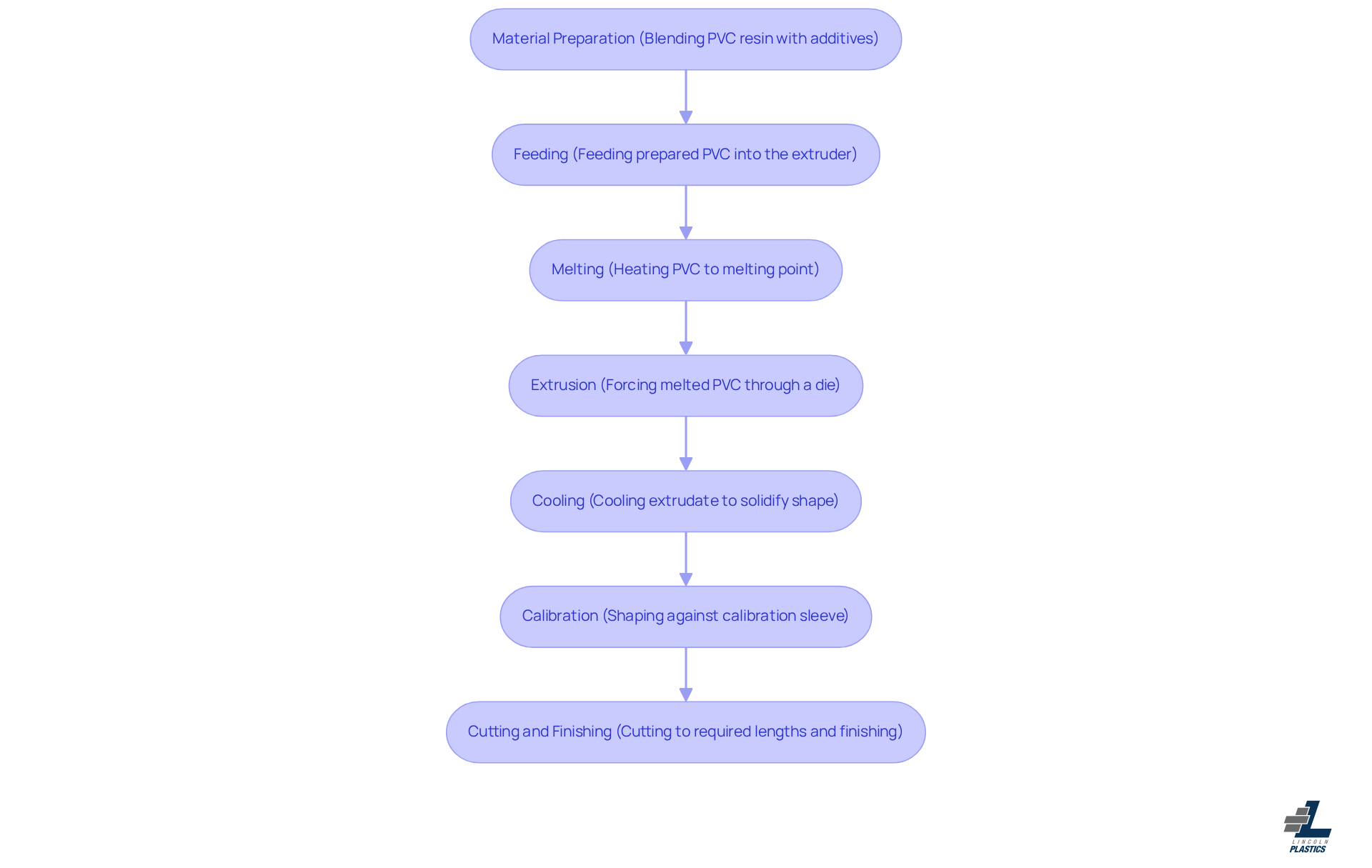
- Material Preparation: The process begins with the careful selection and preparation of PVC resin. This stage often involves blending the resin with various additives, such as stabilizers and plasticizers, to enhance properties like flexibility and UV resistance. This ensures the material meets specific application requirements.
- Feeding: The prepared PVC is then fed into the extruder through a hopper. This gravity-fed system ensures a consistent flow of material into the heated barrel, which is crucial for maintaining stable extrusion pressure and wall thickness.
- Melting: Inside the barrel, the PVC is heated to its melting point, typically ranging from 160°C to 260°C. Heating occurs through external heaters and the friction from a rotating screw. This process facilitates the material's plastification.
- Extrusion: Once melted, the PVC is forced through a die, shaping it into the desired profile. The design of the die is essential, as it determines the final shape, diameter, and wall thickness of the extrudate, affecting the overall performance of the item.
- Cooling: After exiting the die, the extrudate is cooled using water baths or air cooling systems. Cooling solidifies the shape, ensuring dimensional accuracy and preventing deformation during handling.
- Calibration: The cooled profile then enters a calibration stage, where it is shaped against a calibration sleeve. This step is essential for guaranteeing that the extruded item meets specified dimensions and tolerances, critical for maintaining standards in manufacturing. Lincoln Plastics employs multiple types of check gauges to ensure a proper end-use fit, reflecting our commitment to rigorous quality management, including our ISO 9001:2015 certification and dedicated quality plans.
- Cutting and Finishing: Finally, the extruded item is cut to the required lengths using an automatic cutting machine, which operates continuously to enhance production efficiency. Additional finishing processes, such as surface treatment or printing, may be applied to improve functionality and aesthetic appeal.
Case Studies: Have you considered how accurate temperature regulation during melting and shaping can prevent flaws like scorching or warping? Recent research emphasizes this significance. Maintaining a stable feeding process is essential to prevent fluctuations in pressure and wall thickness, which can significantly affect the quality of the final product.
Statistics: Research indicates that a well-controlled shaping system can lead to a reduction in defects by emphasizing the importance of precise temperature control and stable feeding processes throughout the process.
Expert Commentary: Industry specialists emphasize that the calibration and cooling stages are essential control points in the PVC shaping process. Proper synchronization between the haul-off unit and extruder output in the pvc extrusion process is necessary to ensure consistent wall thickness and prevent surface defects, which can compromise product integrity.
Updates: As the industry evolves, staying ahead of challenges in the PVC extrusion process will define the leaders. The PVC extrusion industry is currently facing challenges such as rising raw material prices and sustainability targets. To remain competitive, manufacturers must adopt advanced technologies that enhance efficiency and reduce waste. At Lincoln Plastics, we are committed to excellence and customer partnership, leveraging our strategic Midwest location for quick order turnaround and efficient logistics.
Explore Types of PVC Extrusion Machines and Their Applications
Are you looking for reliable extrusion solutions that elevate your production capabilities?
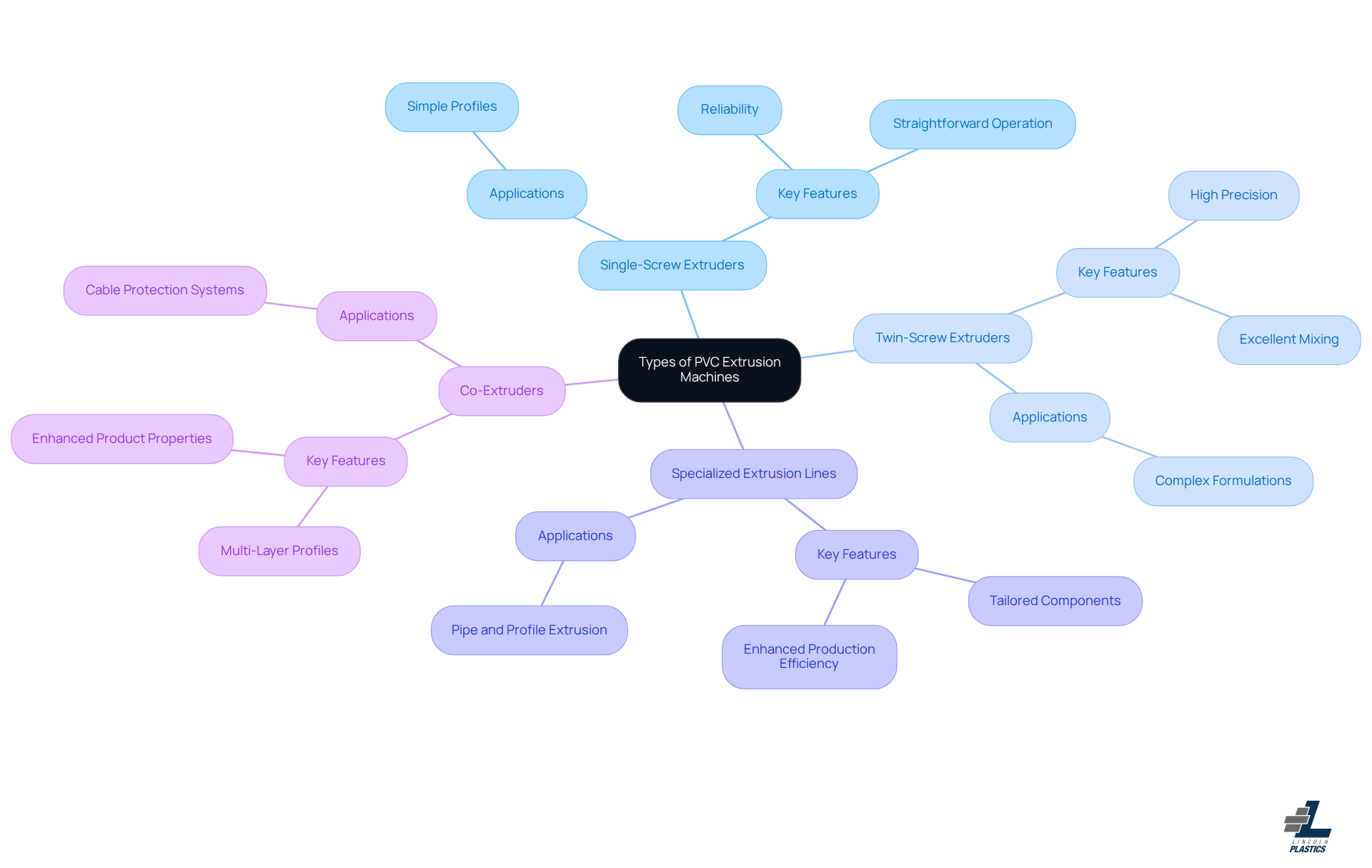
- Single-screw extruders are the most prevalent type of extruder used in the PVC extrusion process, utilizing a single rotating screw to melt and push the material through the die. They are particularly effective for producing simple profiles, known for their reliability and straightforward operation. We take pride in ensuring our extruders meet all standards through rigorous checks for fit and function - how do your current solutions measure up? Our ISO 9001:2015 certification underscores our commitment to maintaining high-quality standards in every aspect of our operations.
- The twin-screw extruders used in the PVC extrusion process feature two intermeshing screws, excelling in mixing and material handling, which makes them ideal for complex formulations. Their capability to attain high precision and uniformity renders them appropriate for applications demanding strict performance standards. Are you confident that your current output meets the exact specifications required? We work closely with OEMs to ensure just that, supported by our rigorous quality management plans.
- The specialized extrusion lines, tailored for specific applications such as pipe or profile extrusion, may incorporate additional components like vacuum calibration tanks or cooling systems in the PVC extrusion process. These enhancements significantly boost production efficiency and are essential for meeting the demands of high-volume manufacturing. Imagine reducing your production time while meeting high-volume demands effortlessly. Located strategically in Lincoln, Nebraska, we leverage our position to ensure quick order turnaround and efficient logistics for our clients.
- The PVC extrusion process utilizes co-extruders designed for producing multi-layer profiles, which enable the combination of different materials to enhance product properties such as barrier performance and aesthetics. This capability is particularly beneficial in applications like cable protection systems, where durability and visual appeal are critical. Our capability to obtain colors that align with Pantone standards guarantees uniformity among producers, further reinforcing our dedication to excellence and customization. With our advanced technology and commitment to quality, your production challenges can become a thing of the past.
Identify Key Considerations for Choosing PVC Extrusion Equipment
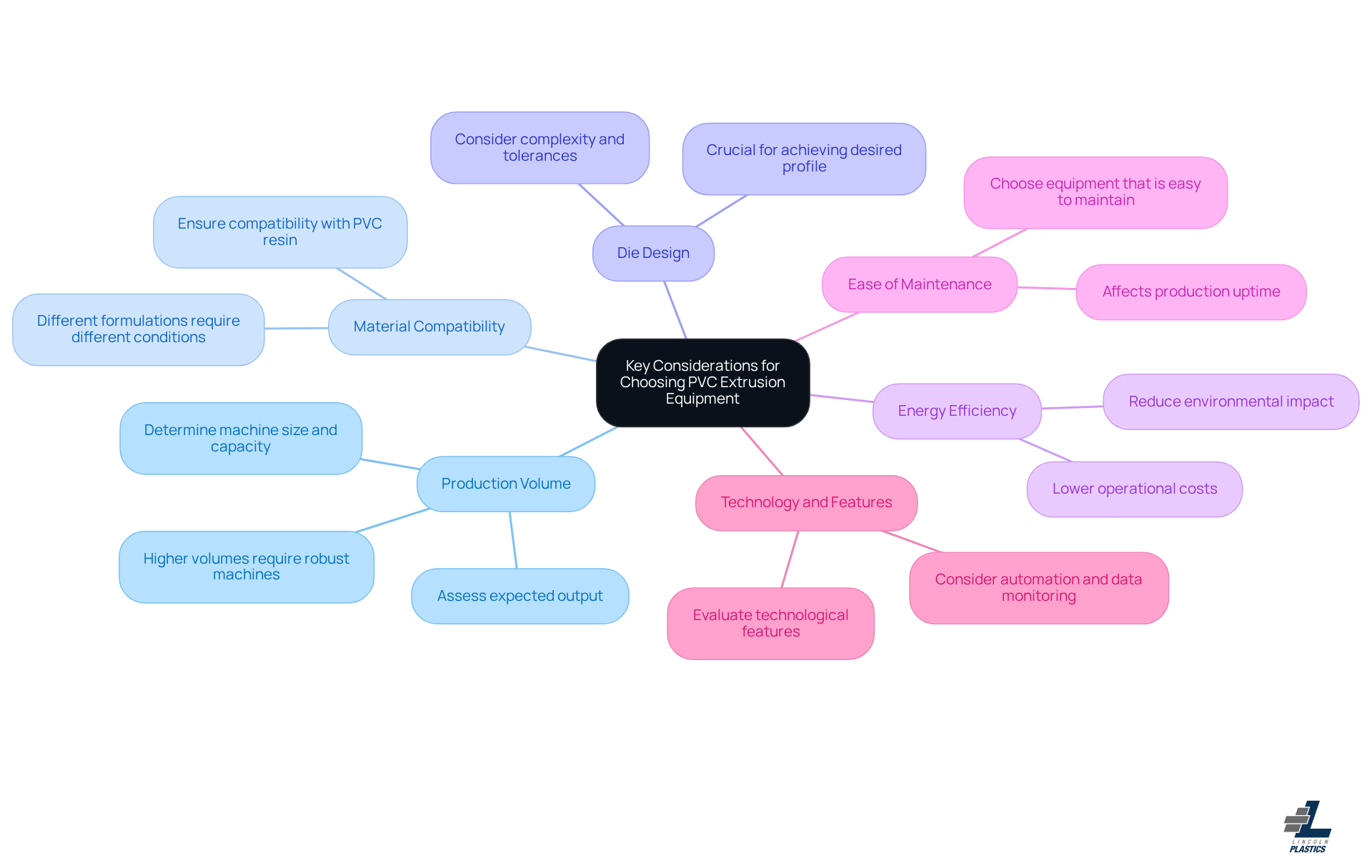
Selecting the right equipment for custom plastic extrusion is critical to achieving optimal production efficiency and quality.
- Production Volume: Assess the expected output to determine the appropriate machine size and capacity. Higher volumes may require more robust machines with faster processing speeds.
- Material compatibility is essential; ensure the extruder is compatible with the specific type of PVC resin being used in the PVC extrusion process, as different formulations may require different processing conditions.
- Die Design: The die's design is crucial for achieving the desired profile. Consider the complexity of the shape and the required tolerances when selecting a die.
- Energy Efficiency: Are you aware of how energy-efficient machines can lower your operational costs and environmental impact? Look for machines that offer energy-efficient operation.
- Ease of Maintenance: Furthermore, choose equipment that is easy to maintain and service, as this can significantly affect production uptime and overall efficiency.
- Technology and Features: Evaluate the technological features of the extruder, such as temperature control, automation capabilities, and data monitoring systems, which can enhance production quality and efficiency. Ultimately, making informed choices about your extrusion equipment can lead to significant long-term benefits for your operations.
Conclusion
Mastering the PVC extrusion process is not just beneficial; it's essential for manufacturers aiming to thrive in a competitive landscape. This process involves melting and shaping PVC, while also highlighting the importance of quality management and innovation. By understanding the intricacies of PVC extrusion, manufacturers can enhance their product offerings and maintain a competitive edge in the market.
Throughout the article, we outlined key steps in the PVC extrusion process, from material preparation and melting to extrusion, cooling, and finishing. Each phase plays a critical role in ensuring the final product meets stringent quality standards. Additionally, we discussed different types of extrusion machines, emphasizing the importance of selecting the right equipment based on production volume, material compatibility, and energy efficiency. Lincoln Plastics' commitment to quality, underscored by its ISO 9001:2015 certification and rigorous quality management plans, ensures that customers receive reliable and innovative solutions.
Are you keeping up with the latest advancements in the PVC extrusion industry? Staying informed is crucial for your success. Embracing these changes not only enhances production efficiency but also aligns with sustainability goals. For those looking to elevate their manufacturing capabilities, reach out to Lincoln Plastics today to elevate your production capabilities and lead the way in the PVC extrusion industry.
Frequently Asked Questions
What is PVC extrusion?
PVC extrusion is a manufacturing process that involves melting Polyvinyl Chloride (PVC) resin and forcing it through a die to create continuous profiles. This process allows for the production of a wide range of items, including pipes, window frames, and custom profiles for various applications.
Why is PVC extrusion important in manufacturing?
PVC extrusion is important because it enables the creation of high-quality, tailored products that meet diverse industry needs. It allows manufacturers to produce durable, lightweight, and cost-effective solutions, which are essential for sectors like agriculture and construction.
How does Lincoln Plastics ensure the quality of its PVC products?
Lincoln Plastics ensures the quality of its PVC products through its ISO 9001:2015 certification and rigorous quality management plans. This includes dedicated quality books and in-process checks, which help maintain high standards of reliability and performance.
What are some applications of PVC extrusion?
PVC extrusion can be used to create a variety of products, including pipes, window frames, custom profiles for construction, and cable management solutions that enhance workplace safety by reducing trip hazards.
How can companies gain a competitive edge through PVC shaping?
Companies can gain a competitive edge by embracing recent advancements in PVC shaping methods, which can enhance product performance and meet the evolving demands of various industries.
What specific solutions does Lincoln Plastics offer related to PVC extrusion?
Lincoln Plastics offers custom cord covers and cable management solutions that help improve workplace safety by managing loose cords effectively.
How can I get tailored solutions or quotes from Lincoln Plastics?
To receive tailored solutions or quotes, you can contact Lincoln Plastics directly for assistance with your specific needs.
List of Sources
- Define PVC Extrusion: Key Concepts and Importance
- Industry News (https://paulmurphyplastics.com/industry-news-blog)
- Latest Plastic Extrusion News | Bausano (https://bausano.com/en/press-and-news?q=NEWS)
- Master the Extrusion Manufacturing Process: 5 Best Practices for OEMs (https://lincoln-plastics.com/news-post/master-the-extrusion-manufacturing-process-5-best-practices-for-oems)
- PVC Plastic Extrusion: Examining the Process and its Benefits - Port Erie Plastics | Solutions in Plastics Processing (https://porterie.com/blog/pvc-plastic-extrusion-examining-the-process-and-its-benefits)
- Outline the PVC Extrusion Process: Step-by-Step Breakdown
- Master the PVC Pipe Extrusion Process: Steps, Tools, and Solutions (https://lincoln-plastics.com/news-post/master-the-pvc-pipe-extrusion-process-steps-tools-and-solutions)
- PVC extrusion in transition: overcoming challenges and tapping potential (https://inoex.com/news/detail/pvc-extrusion-in-transition-overcoming-challenges-and-tapping-potential)
- Step-by-Step Plastic Extrusion Process in PVC Pipe Manufacturing - SHARC (https://sharcpm.com/news/step-by-step-plastic-extrusion-process-in-pvc-pipe-manufacturing)
- Plastics Extrusion: 4 Critical Statistics to Track for Increased Quality & Plant Profit (https://gaugeadvisor.com/plastics-extrusion-4-critical-statistics-to-track-for-increased-quality-plant-profit)
- PVC Melting Point: Complete Guide to Temperatures, Types & Processing - Baosheng (https://baoshengindustry.com/resources/materials/pvc-melting-point)
- Explore Types of PVC Extrusion Machines and Their Applications
- Plastic Extrusion Machine Market Size, Share & 2031 Growth Trends Report (https://mordorintelligence.com/industry-reports/plastic-extrusion-machine-market)
- Plastic Extrusion Machine Market to Grow at 4.7% CAGR During 2025-2035, Boosting Global Industry to USD 12,343.2 Million by 2035 | Future Market Insights, Inc. (https://finance.yahoo.com/news/plastic-extrusion-machine-market-grow-153000748.html)
- Interplas Insights | Latest Plastics Extrusion Machinery News (https://interplasinsights.com/plastics-machinery/plastics-extrusion-machinery-news)
- Plastic Extrusion Machine Market to Reach $8.24 Bn, Globally, by 2025 at 3.8% CAGR: AMR (https://prnewswire.com/news-releases/plastic-extrusion-machine-market-to-reach-8-24-bn-globally-by-2025-at-3-8-cagr-amr-300844189.html)
- Tariffs, policy shifts weigh on extrusion machinery outlook (https://plasticsnews.com/suppliers/machinery/pn-extrusion-outlook-2025)
- Identify Key Considerations for Choosing PVC Extrusion Equipment
- Plastic Extrusion Machinery Market Size & Statistics 2026 (https://globalgrowthinsights.com/market-reports/plastic-extrusion-machinery-market-105121)
- blessonextrusion.com (https://blessonextrusion.com/blog/best-profile-extrusion-line-options-2026)
- Plastic Extrusion Machine Market Size, Share & 2031 Growth Trends Report (https://mordorintelligence.com/industry-reports/plastic-extrusion-machine-market)
- Interplas Insights | Latest Plastics Extrusion Machinery News (https://interplasinsights.com/plastics-machinery/plastics-extrusion-machinery-news)
- 10 new extrusion technologies reshaping plastics processing in 2026 (https://plasticsmachinerymanufacturing.com/extrusion/article/55395844/10-new-extrusion-technologies-reshaping-plastics-processing-in-2026)
Related posts

Discover the key benefits of ISO certified plastic extrusion services for reliability and efficiency.


Discover the diverse applications of plastic tubing PVC across industries, enhancing efficiency and safety.
Master the installation and benefits of strain relief clamps for range cords to enhance safety and reliability.
