
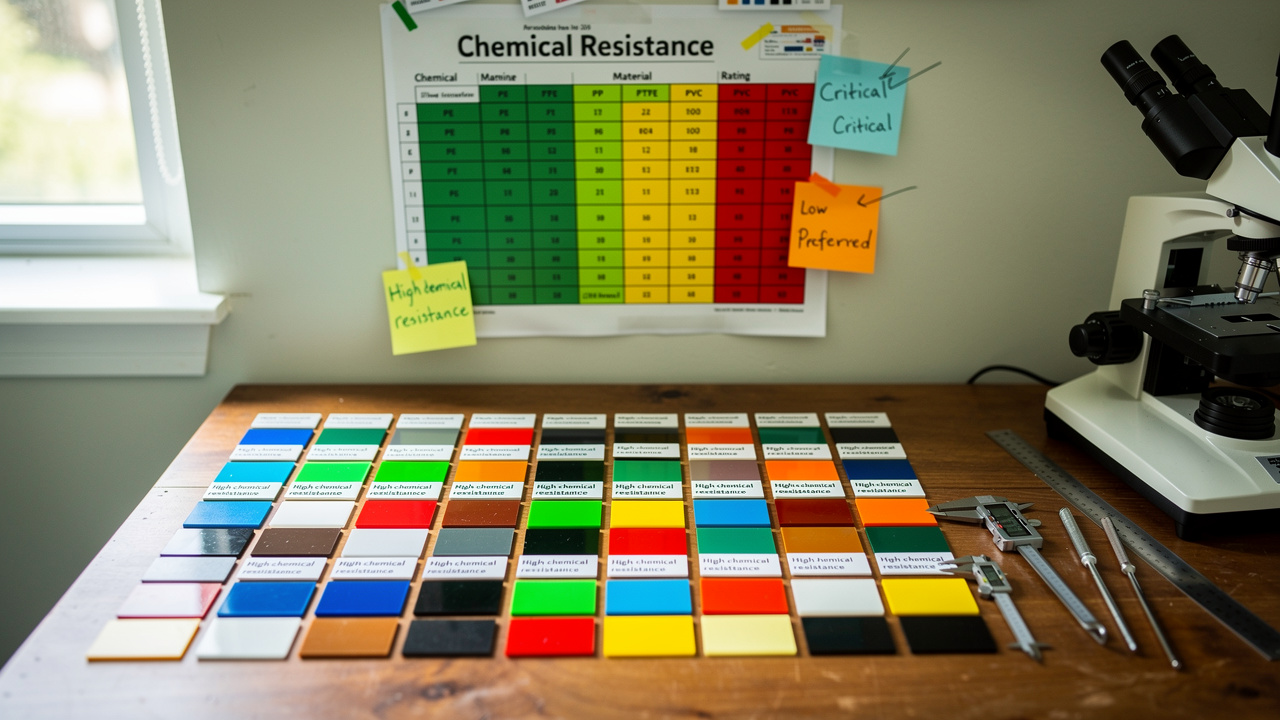
Master the Plastic Chemical Resistance Chart for Material Selection
Introduction
Manufacturers must grasp the complexities of plastic chemical resistance to ensure their products thrive in demanding environments. The plastic chemical resistance chart is an essential tool in this process, providing insights that significantly influence material selection. Yet, the complexity of navigating this chart raises a critical question: how can manufacturers interpret these ratings effectively to prevent costly mistakes and uphold product integrity?
Understand Chemical Resistance in Plastics
Choosing the right materials is essential for ensuring that products endure the harshest environments without compromising their integrity. In polymer extrusion, understanding the factors that influence chemical resistance, as outlined in the plastic chemical resistance chart, is crucial for guaranteeing that final products can withstand the specific conditions they will face. Several key factors play a crucial role in determining chemical resistance:
- Chemical Composition: The molecular structure of different plastics significantly affects their resistance to chemicals. For instance, polyethylene (PE) is generally resistant to acids and bases, making it suitable for various applications, while polyvinyl chloride (PVC) may degrade when exposed to certain solvents.
- Temperature: The effectiveness of a plastic's resistance can vary with temperature. Increased temperatures can speed up reactions, potentially resulting in faster deterioration of the material.
- Concentration and Exposure Time: The concentration of the substance and the duration of exposure are critical factors. A polymer may show resistance to a chemical at low concentrations but may fail when exposed to higher levels over time.
Manufacturers often struggle to find materials that can withstand harsh environments, which is detailed in the plastic chemical resistance chart, without compromising performance. For instance, studies suggest that brominated flame-retarded materials can be effectively recycled, retaining approximately 79% of bromine from decabromodiphenyl ethane (DBDPE) during processing, and 72% of bromine from tetrabromobisphenol A (TBBPA) in solid residue. This highlights the importance of selecting materials that meet performance standards while also supporting sustainability goals. As noted by the American Chemistry Council, "the goal is straightforward and impactful: keep flame-retarded materials in the resource loop, not the landfill." Moreover, challenges posed by brominated flame retardants (BFRs) in the recycling of mixed material streams, particularly in e-waste, underscore the need for careful material selection and recycling strategies. Research at Charles Darwin University’s Energy and Resources Institute focuses on reclaiming valuable elements from brominated flame-retardant materials, aiding in a safer and more sustainable circular economy.

Interpret the Chemical Resistance Chart
Understanding the plastic chemical resistance chart is essential for selecting the appropriate plastic materials for your applications. The plastic chemical resistance chart visually depicts how different plastics respond to various substances, and mastering its interpretation can significantly impact your material choices. Let’s break down how to interpret these charts effectively:
- Identify the Substance: Locate the substance you are interested in on the chart. Each plastic chemical resistance chart typically lists a range of common chemicals along one axis.
- Choose the Plastic Substance: Find the plastic substance you are contemplating on the other axis. The plastic chemical resistance chart includes common substances such as PVC, polyethylene, and polypropylene.
- Read the Ratings: The intersection of the chemical and substance will provide a rating indicating the level of resistance. Ratings often include:
- A (Excellent): No significant effect on the material.
- B (Good): Minor effects, such as slight discoloration.
- C (Fair): Moderate effects, potential for degradation.
- D (Poor): Significant degradation expected.
- Consider Application Context: Always take into account the specific conditions of your application, such as temperature and concentration, as these can influence the performance of the substance beyond what the chart indicates.
Interpreting resistance charts can be daunting without a clear understanding of the ratings and their implications. Misinterpretation can result in selecting materials that fail under specific conditions, compromising product integrity. By mastering these charts, you not only enhance product reliability but also ensure long-term success in your projects.

Select Optimal Materials Based on Chart Insights
Selecting the right components for your application is crucial for ensuring optimal performance and reliability in custom plastic extrusion. Here’s how to make the best choices:
- Match Requirements: Compare the resistance ratings of substances with the specific materials outlined in the plastic chemical resistance chart that your product will encounter. For instance, if your application entails contact with strong acids, consult the plastic chemical resistance chart to select substances rated 'A' for those compounds.
- Consider Environmental Factors: Have you considered how environmental factors like temperature and mechanical stress might impact your material choices? If the substance will be used in high-temperature environments, ensure that the chosen plastic maintains its properties under those conditions. Recent data suggests that the performance of recycled-content products can surpass new resources in chemical resistance, making them a viable option for many applications.
- Consult with Suppliers: Engage with resource providers to discuss your specific needs. They can offer perspectives on the newest substances and their performance in practical uses. As Dumain observed, "In certain applications testing, we see improved outcomes in substance and hardness development compared to a reference standard," emphasizing the significance of choosing the appropriate components.
- Prototype Testing: Before finalizing your selection, consider creating prototypes to assess the chosen substances under actual operating conditions. This step can help identify any unforeseen issues before full-scale production. Additionally, early engagement with suppliers and regulatory bodies can ensure compliance with evolving regulations in the chemicals industry, which is increasingly important for procurement managers.
By taking these steps, you not only enhance the reliability of your products but also position yourself ahead of industry standards and expectations.

Utilize Additional Resources for Material Selection
To optimize your material selection process, it’s essential to utilize a variety of reliable resources that ensure quality and performance:
- Online Compatibility Databases: Platforms like Cole-Parmer and Curbell Plastics offer searchable databases that allow you to evaluate the compatibility of various substances with specific compounds. This ensures that your choices fulfill the required performance standards. As Chris Clark, Corporate Sales & Marketing Coordinator, observes, "We acknowledge that substance compatibility is frequently the determining factor in whether a part endures for years or fails in weeks."
- Industry Publications: Engage with industry publications and technical papers that explore advancements in plastic substances and their chemical resistance properties. These resources provide valuable insights into new substances and innovative applications that can improve your product offerings. The influence of these publications on product selection statistics is substantial, as they direct purchasing choices based on the latest research and trends.
- Material Supplier Guides often include a plastic chemical resistance chart that provides comprehensive details on the chemical resistance of their products. Using these resources can greatly guide your decision-making process, assisting you in selecting substances that match your operational needs. For example, the 'Interactive Plastic Chemical Resistance Chart' provided by Interstate Advanced Materials serves as a valuable resource for identifying suitable substances for chemically challenging environments.
- Consultation with Experts: Consider reaching out to industry specialists or consultants for tailored advice on resource selection. Their expertise can provide insights that address your specific application needs, ensuring that you make informed choices.
Incorporating these resources into your material selection strategy enhances the performance and reliability of your extruded products. In a market where every decision counts, leveraging these resources can be the difference between success and costly setbacks.

Conclusion
Selecting the right plastic materials is crucial for ensuring product durability in challenging environments. Mastering the plastic chemical resistance chart helps you make informed material choices and boosts product reliability. Do you know what factors influence chemical resistance? These include:
- Chemical composition
- Temperature
- Exposure time
Understanding these elements equips manufacturers with the knowledge necessary to navigate complex material selection processes effectively.
Key insights from the article emphasize the importance of interpreting the chemical resistance chart accurately. By identifying the substances and matching them with the appropriate plastics, manufacturers can avoid costly mistakes that could compromise product integrity. Additionally, considering environmental factors and consulting with suppliers further strengthens the material selection process, ensuring that chosen plastics meet the demands of specific applications.
In our fast-paced industry, using resources like online databases and expert consultations can greatly improve your decision-making. By embracing these best practices, manufacturers not only enhance their product outcomes but also contribute to sustainability efforts within the market. Ultimately, mastering the plastic chemical resistance chart is not just beneficial; it's essential for driving innovation and reliability in your products.
Frequently Asked Questions
Why is understanding chemical resistance important in plastics?
Understanding chemical resistance is essential to ensure that products can endure harsh environments without compromising their integrity, particularly in polymer extrusion.
What factors influence the chemical resistance of plastics?
Key factors that influence chemical resistance include chemical composition, temperature, concentration of the chemical, and exposure time.
How does chemical composition affect plastic's resistance to chemicals?
The molecular structure of different plastics affects their resistance; for example, polyethylene (PE) is resistant to acids and bases, while polyvinyl chloride (PVC) may degrade when exposed to certain solvents.
How does temperature impact the chemical resistance of plastics?
The effectiveness of a plastic's resistance can vary with temperature, as increased temperatures can accelerate reactions, potentially leading to faster material deterioration.
Why are concentration and exposure time critical in determining chemical resistance?
A polymer may resist a chemical at low concentrations but may fail when exposed to higher concentrations over extended periods.
What challenges do manufacturers face regarding material selection for harsh environments?
Manufacturers often struggle to find materials that can withstand harsh environments without compromising performance, as detailed in the plastic chemical resistance chart.
What is the significance of recycling brominated flame-retardant materials?
Studies suggest that brominated flame-retarded materials can be effectively recycled, retaining a significant percentage of bromine during processing, which supports sustainability goals.
What are the challenges associated with brominated flame retardants (BFRs) in recycling?
BFRs pose challenges in recycling mixed material streams, particularly in e-waste, highlighting the need for careful material selection and effective recycling strategies.
What is the goal of the research conducted at Charles Darwin University’s Energy and Resources Institute?
The research focuses on reclaiming valuable elements from brominated flame-retardant materials to aid in creating a safer and more sustainable circular economy.
List of Sources
- Understand Chemical Resistance in Plastics
- americanchemistry.com (https://americanchemistry.com/chemistry-in-america/news-trends/blog-post/2026/turning-a-challenge-into-a-circular-opportunity-how-new-pyrolysis-research-advances-safe-sustainable-recycling-of-brominated-flame-retarded-plastics)
- Interpret the Chemical Resistance Chart
- atlasfibre.com (https://atlasfibre.com/mastering-the-compatibility-of-chemicals-a-comprehensive-guide)
- acplasticsinc.com (https://acplasticsinc.com/informationcenter/r/a-chemical-resistance-guide-for-plastics)
- plasticsintl.com (https://plasticsintl.com/chemical-resistance-chart)
- Select Optimal Materials Based on Chart Insights
- linkedin.com (https://linkedin.com/pulse/procurement-professionals-quotes-inspiration-reena-daba)
- pinterest.com (https://pinterest.com/ideas/procurement-quotes/947933919985)
- smartbrief.com (https://smartbrief.com/original/analysis-the-chemicals-industry-is-being-disrupted-from-multiple-angles)
- Plastics: Material-Specific Data | US EPA (https://epa.gov/facts-and-figures-about-materials-waste-and-recycling/plastics-material-specific-data)
- thesustainableagency.com (https://thesustainableagency.com/blog/environmental-impact-of-plastic-pollution)
- Utilize Additional Resources for Material Selection
- americanchemistry.com (https://americanchemistry.com/chemistry-in-america/data-industry-statistics)
- Plastics News - Plastic Industry News, Resin Pricing & Analysis (https://plasticsnews.com)
- researchgate.net (https://researchgate.net/publication/266607522_Statistical_methods_applied_for_materials_selection)
- interstateplastics.com (https://interstateplastics.com/new-digital-tool-simplifies-plastic-chemical-compatibility-research?srsltid=AfmBOoojvp-ylzoYIQgNBX8uKDJoykS0-CkVrKjcfVdCG1hk8xwcnRKw)
Related posts

Why Custom Pipe Extrusion Matters More Than Ever
Standard pipe sizes don’t always work. Learn how Lincoln Plastics delivers custom diameters, wall thicknesses, and finishes in right-sized runs.


Reducing Trip Hazards with Custom Cord Management
Loose cords are more than messy — they’re a safety hazard. Lincoln Plastics’ custom cord covers and Flexiduct solutions improve safety and efficiency.
The Power of Custom Plastic Profiles for OEMs
Off-the-shelf profiles force compromises. Learn how Lincoln Plastics designs custom extruded profiles for OEMs with exact specs and right-sized runs.
