

Master the Extruded Tubing Process: Key Steps and Insights for OEMs
Introduction
Manufacturing is a fascinating world, especially when it comes to extruded tubing. This process shapes plastic into all sorts of handy forms for countless applications. For Original Equipment Manufacturers (OEMs), getting the hang of this technique isn’t just a nice-to-have; it’s crucial for optimizing product design and boosting operational efficiency.
But here’s the thing: as industries change and the demand for customized solutions grows, how can manufacturers stay ahead? How can they tap into the latest advancements in extrusion technology while keeping quality high?
In this article, we’ll dive into the key steps of the extruded tubing process. We’ll explore why it matters, the innovations shaping the field, and the vital role it plays across various sectors. So, let’s get started!
Understand Extruded Tubing: Definition and Importance
Extruded pipes might sound technical, but they play a huge role in shaping plastic materials into those handy tubes we see everywhere. By forcing plastic through a die, manufacturers create everything from pipes to medical hoses and protective covers. This versatility means extruded tubing is a go-to solution across various industries, making it a key player in manufacturing.
Now, if you’re an OEM, understanding the ins and outs of the extrusion process is super important. Why? Because it directly impacts product design, functionality, and how efficiently things get made. Common materials used in industrial extrusion include:
- PVC
- Polyethylene
- Polypropylene
Each one is picked based on what it needs to do. For example, PVC is cost-effective, while polyethylene shines with its excellent chemical resistance, making it perfect for a range of applications.
Let’s talk about some cool advancements in extrusion technology. Innovations like inline laser gauging are game-changers, providing real-time measurements. This means precision and consistency in production are taken to the next level. Plus, with AI-driven analytics, manufacturers can predict maintenance needs and spot anomalies before they become issues, boosting efficiency.
But the importance of extruded tubing goes beyond just making things. They’re vital in areas like industrial machinery, construction, and even agricultural irrigation. For instance, extruded tubes for cable management not only safeguard sensitive wiring but also make installations look great. And in farming, tubes are essential for center pivot irrigation systems, ensuring water is distributed effectively.
In summary, the extrusion process serves as a cornerstone of modern manufacturing. The versatility of extruded tubing provides OEMs the flexibility to craft tailored solutions that meet a variety of operational needs. By embracing innovative materials and technologies, manufacturers can enhance their production processes and deliver high-quality products that meet industry standards.

Explore the Extrusion Process: Step-by-Step Manufacturing
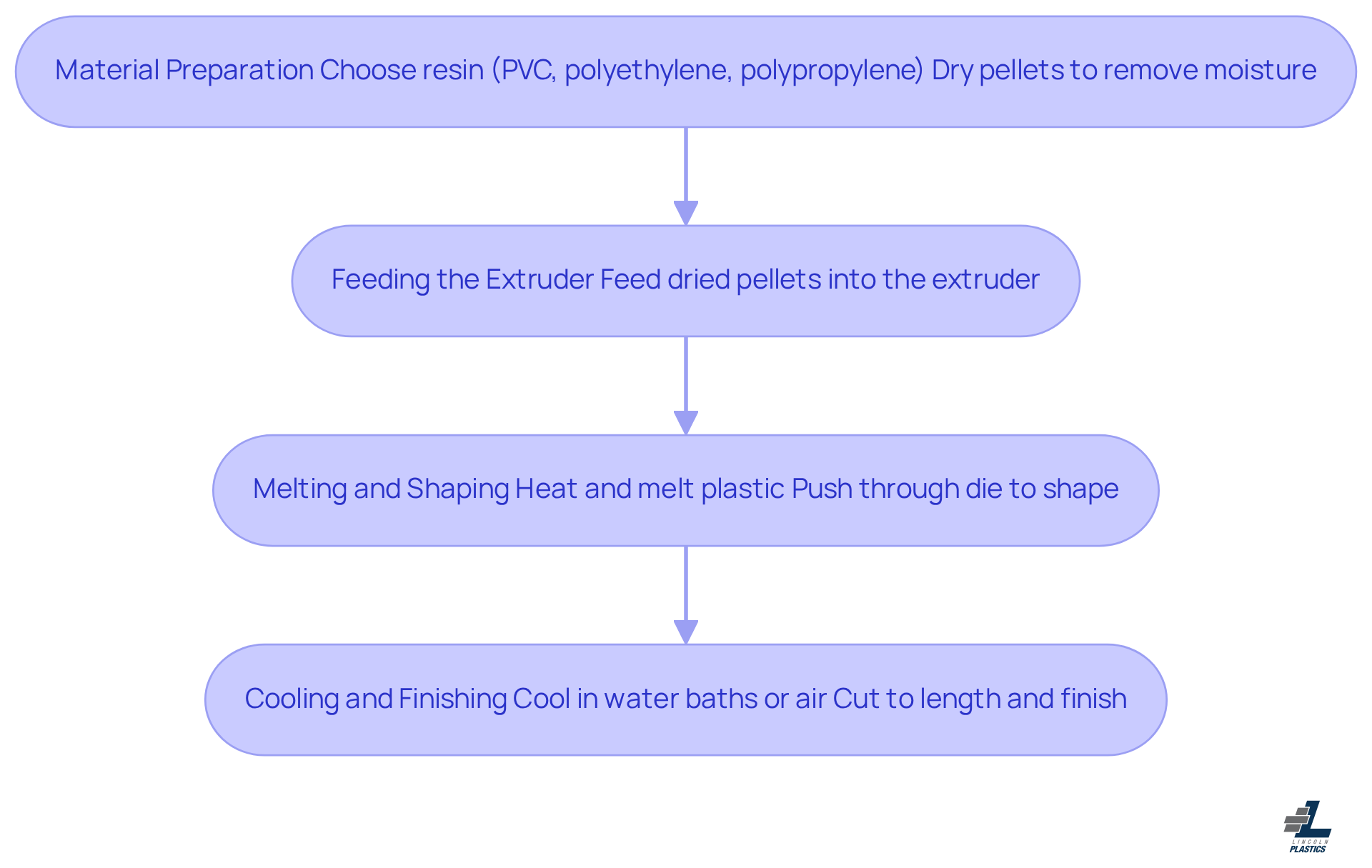
The extruded tubing process involves several key steps that help produce high-quality products, especially for OEM applications.
- Material Preparation: First off, choosing the right resin-like PVC, polyethylene, or polypropylene-is super important. Usually, these materials come in pellet form and need to be dried to get rid of moisture, which can mess with the extrusion process. Plus, with the growing emphasis on sustainability, being sustainable in your choices is becoming more crucial. At Lincoln Plastics, we’re here to offer expert advice on materials tailored to your specific needs, ensuring top-notch performance in various environments.
- Feeding the Extruder: After drying, those pellets are fed into the extruder. This is where they get heated and melted, getting ready for shaping.
- Melting and Shaping: Next, the molten plastic is pushed through a die that shapes it into the profile you want. This step requires precision to make sure everything is uniform and consistent in the final product. Lincoln Plastics specializes in custom extrusions, ensuring that each extrusion meets the exact specifications our OEM partners need.
- Cooling and Finishing: Once the plastic exits the die, it’s cooled-usually in water baths or through air cooling. Then, it’s cut to the specified lengths and might go through some finishing touches, like trimming or surface treatment. Did you know that about 30% of energy can be saved through modernized equipment? Modernizing equipment can cut energy consumption by up to 30%! At Lincoln Plastics, we’re committed to boosting efficiency through innovative practices, including inventory management that help keep your inventory levels just right.
Now, let’s talk about some recent trends. The introduction of advanced technologies is making production even more efficient. As producers adapt to these advancements, understanding the unique properties of materials becomes essential to avoid costly mistakes and ensure optimal production results. At Lincoln Plastics, we’re here to support you every step of the way in the extruded tubing process, including design optimization and material selection.
Identify Applications of Extruded Tubing: Industry Insights
Extruded tubing plays a crucial role in various industries, and you might be surprised at just how many applications it has. Let’s dive into a few of them:
- Cable Protection Systems: Have you ever thought about how electrical cables are protected from environmental hazards? The tubing is key to ensuring durability and safety in different settings. As the demand for reliable solutions grows - thanks to the increasing complexity of cable systems in industrial applications - the market is set to expand significantly. In fact, estimates suggest it could jump from USD 1.5 billion in 2024 to USD 2.8 billion by 2033, with a compound annual growth rate (CAGR) of 7.5% from 2026 to 2033. That’s where 'Lincoln Plastics' comes in, offering products that meet these evolving needs, enhancing the reliability of cable systems while ensuring top-notch quality.
- Industrial Machinery: Now, let’s talk about machinery. Tubing solutions are essential here, providing protection and guidance for moving parts. These tailored solutions not only boost operational efficiency but also cut down on maintenance costs, making them a must-have in manufacturing environments. Lincoln Plastics specializes in crafting profiles that align perfectly with the specific needs of OEMs, ensuring optimal performance across various applications.
In the agricultural world, the tubing is a game changer, especially in irrigation systems. It helps distribute water efficiently to crops, which is vital for maximizing yield and managing resources wisely. With the ability to customize designs, Lincoln Plastics meets the unique needs of agricultural equipment producers, showcasing their commitment to quality and personalization.
- Medical Devices: And let’s not forget about the medical sector! Tubing is crucial in applications like catheters and fluid management systems, where precision and reliability are non-negotiable. The ability to modify dimensions and materials ensures these products meet strict industry standards, highlighting Lincoln Plastics' expertise in delivering tailored solutions for OEMs.
As we see a growing reliance on formed pipe solutions, particularly in industrial and agricultural sectors, it’s clear that Lincoln Plastics' products, developed through innovation, are making a significant impact in this expanding market. So, if you’re looking for reliable solutions, you know where to turn!

Differentiate Types of Extruded Tubing: Characteristics and Uses
Different types of tubing produced by the industry serve distinct purposes, each with unique properties. Let’s break it down:
- PVC: This one’s a favorite! Known for its durability and chemical resistance, PVC is widely used in plumbing and irrigation systems. Its strength and versatility make it a go-to for everything from water supply to drainage.
- Polyethylene: Now, if you’re looking for something that shines outdoors, polyethylene is your best bet. It offers fantastic UV resistance and impact strength, making it perfect for landscaping and other outdoor settings where durability is key.
- Polypropylene: Lightweight and tough, polypropylene is often found in medical applications and food processing. Its ability to handle repeated stress makes it ideal for environments that require high hygiene standards.
- Multilayer: Here’s where it gets interesting! The multilayer tubing combines multiple materials to enhance properties such as barrier resistance and flexibility. This makes it super valuable for specialized applications that need unique performance characteristics.
At Lincoln Plastics, we’re all about collaboration. We work closely with OEMs to ensure our products meet all requirements, including specific inspections for fit and function. Our robust quality system features a dedicated quality book for each plastic profile, complete with drawings, critical in-process checks, and run documentation. We even use various check gauges to ensure a proper end-use fit.
As the demand for extruded tubing grows, understanding the specific applications and benefits of these materials is crucial for OEMs looking to enhance their product offerings. So, what do you think? Ready to explore how these tubing options can work for you?

Ensure Quality Control in Extruded Tubing Production: Standards and Best Practices
Quality control is super important in the extruded tubing process. Let’s dive into some practices that can really make a difference:
- Inspection: First off, checking the materials is a must. You want to make sure they meet the required standards before you even start production. Why? Because the final product's integrity relies heavily on the quality of what you’re using. Common materials like flexible PVC, rigid PVC, and high impact polystyrene each have their own inspection protocols to ensure they’re right for the job.
- Monitoring: Next up, keeping an eye on parameters like temperature, pressure, and speed is crucial. Regular monitoring helps catch any deviations that might mess with product quality. It’s all about making sure the extrusion line runs smoothly and efficiently.
- Dimensional Testing: Now, let’s talk about in-process measurements. This step is key to confirming that the tubing meets the necessary specifications. It’s especially important in applications where precision is everything, like OEM machinery and cable protection systems.
- Performance Testing: Finally, testing the products is essential. You want to see how they perform under different conditions to ensure they meet safety and industry standards. This includes checking for hardness, flexibility, and resistance to heat and chemicals. After all, you want those profiles to be reliable and effective for their intended use.
By sticking to these best practices, manufacturers can significantly reduce material inspection failures and improve the overall quality of products made through the extruded tubing process. This not only leads to happier customers but also improves operational efficiency. So, let’s keep these tips in mind and strive for excellence in our production processes!

Conclusion
As we wrap up, let’s take a moment to appreciate the extruded tubing process. It’s not just a manufacturing technique; it’s a game changer for OEMs looking to create customized solutions across various applications. By really getting to grips with this process, manufacturers can boost product design, enhance functionality, and ramp up production efficiency. This way, they can meet the diverse needs of their industries head-on.
Throughout this article, we’ve explored some key insights into the extrusion process. We talked about the importance of choosing the right materials - like PVC, polyethylene, and polypropylene. Plus, we touched on some exciting advancements in technology, such as inline laser gauging and IoT integration, which are shaking things up in terms of production efficiency. And let’s not forget the wide range of applications for extruded tubing - from protecting cables to aiding agricultural irrigation. It really shows how adaptable and vital this manufacturing technique is across different sectors.
Now, with the demand for high-quality extruded tubing on the rise, it’s crucial for OEMs to embrace best practices in quality control and stay updated on industry trends. You might be wondering how to stay ahead in such a competitive landscape. Well, investing in innovative technologies and sustainable materials can make a huge difference. Not only can manufacturers improve their production processes, but they can also play a part in creating a more efficient and eco-friendly future in manufacturing. So, let’s keep pushing the boundaries and striving for excellence together!
Frequently Asked Questions
What is extruded tubing and why is it important?
Extruded tubing refers to plastic materials shaped into tubes through a process where plastic is forced through a die. It is important because it is widely used across various industries for making pipes, medical hoses, and protective covers, playing a crucial role in manufacturing.
What materials are commonly used in the extrusion process?
Common materials used in industrial extrusion include PVC, polyethylene, and polypropylene. Each material is selected based on its specific properties, such as PVC's durability and cost-effectiveness, and polyethylene's excellent chemical resistance.
What are some advancements in extrusion technology?
Advancements in extrusion technology include inline laser gauging for real-time monitoring of outer diameter and wall thickness, as well as AI-driven analytics for predicting maintenance needs and identifying anomalies, which enhance production efficiency.
In what applications are extruded pipes used?
Extruded pipes are vital in various applications, including industrial machinery, cable protection systems, and agricultural irrigation, such as center pivot irrigation systems that ensure effective water distribution.
What are the key steps in the extruded tubing manufacturing process?
The key steps in the extruded tubing manufacturing process include: 1. Material Preparation: Selecting and drying the right resin materials. 2. Feeding the Extruder: Feeding the dried pellets into the extruder. 3. Melting and Shaping: Heating and melting the plastic, then shaping it through a die. 4. Cooling and Finishing: Cooling the shaped plastic, cutting it to length, and applying finishing touches.
How does material preparation impact the extrusion process?
Proper material preparation is crucial as it involves selecting the right resin and drying it to eliminate moisture, which can negatively affect extrusion quality. Sustainable material choices are also becoming increasingly important.
What are some trends in the extruded tubing industry?
Recent trends include a focus on energy efficiency, with about 70% of manufacturers aiming to modernize equipment to reduce energy consumption, and the integration of IoT technologies for enhanced real-time monitoring and predictive maintenance.
How can manufacturers ensure optimal production results in extrusion?
Manufacturers can ensure optimal production results by understanding the unique properties of materials, selecting appropriate materials, and utilizing modern technologies for design optimization and efficient production processes.
List of Sources
- Understand Extruded Tubing: Definition and Importance
- demaxoem.com (https://demaxoem.com/blog/7905.html)
- mpo-mag.com (https://mpo-mag.com/pushing-the-limit-of-medical-device-extrusion)
- nextmsc.com (https://nextmsc.com/news/how-is-precision-evolving-in-medical-tubing)
- The Extrusion Industry in 2025: Innovations, Trends, and Opportunities (https://plextrusions.com/extrusion-blog/the-extrusion-industry-in-2025-innovations-trends-and-opportunities)
- rocalextrusions.co.uk (https://rocalextrusions.co.uk/news/everything-you-need-to-know-about-extruded-tubing)
- Explore the Extrusion Process: Step-by-Step Manufacturing
- plasticstoday.com (https://plasticstoday.com/industry-trends/plastics-industry-braces-for-2026-construction-market-challenges)
- 2026 Top Extrusion Machine Trends Every Manufacturer Should Know? (https://jurryextrusion.com/blog/2026-extrusion-machine-trends-manufacturers-should-know)
- openpr.com (https://openpr.com/news/4427046/united-states-extruded-plastics-market-2026-growth-drivers)
- Interplas Insights | Latest Plastics Extrusion Machinery News (https://interplasinsights.com/plastics-machinery/plastics-extrusion-machinery-news)
- Emerging Trends Shaping Plastic Extruders in 2026 (https://audop.com/c/emerging-trends-shaping-plastic-extruders-in-2026.htm)
- Identify Applications of Extruded Tubing: Industry Insights
- lincoln-plastics.com (https://lincoln-plastics.com/news-post/10-essential-insights-on-extrusion-tubing-for-oe-ms)
- linkedin.com (https://linkedin.com/pulse/cable-protection-tube-market-insights-innovation-avrdf)
- How Does the Agricultural Industry Use Extruded Plastics? | Plextrusions (https://plextrusions.com/markets/how-does-the-agricultural-industry-use-extruded-plastics)
- lincoln-plastics.com (https://lincoln-plastics.com/news-post/10-innovative-applications-of-co-extruded-plastics-for-oe-ms?dcc2137a_page=53)
- freudenbergmedical.com (https://freudenbergmedical.com/technologies/custom-extrusions)
- Differentiate Types of Extruded Tubing: Characteristics and Uses
- linkedin.com (https://linkedin.com/pulse/flexible-plastic-tubing-industry-sector-market-dynamics-kxjwe)
- linkedin.com (https://linkedin.com/pulse/growth-projections-pvc-extruded-tubes-market-in-depth-size-fjode)
- finance.yahoo.com (https://finance.yahoo.com/news/pvc-pipes-fittings-market-worth-113000268.html)
- openpr.com (https://openpr.com/news/4422166/pvc-pipes-market-size-to-surpass-119-43-billion-by-2033-with)
- Ensure Quality Control in Extruded Tubing Production: Standards and Best Practices
- One moment, please... (https://condaleplastics.com/extrusion-advice/plastic-extrusion-a-guide-to-quality-control)
- Quality Control in Plastic Extrusion for Consistent Results | Rocal (https://rocalextrusions.co.uk/news/quality-control-in-plastic-extrusion-to-ensure-consistent-results)
- 5 Proven Practices to Increase Product Quality in Extrusion (https://lincoln-plastics.com/news-post/5-proven-practices-to-increase-product-quality-in-extrusion)
- Quality Control and Testing Procedures - Plastic Extrusion Technologies (https://plasticextrusiontech.net/quality-control-and-testing-procedures-in-plastic-extrusions)
Related posts

Why Custom Pipe Extrusion Matters More Than Ever
Standard pipe sizes don’t always work. Learn how Lincoln Plastics delivers custom diameters, wall thicknesses, and finishes in right-sized runs.


Reducing Trip Hazards with Custom Cord Management
Loose cords are more than messy — they’re a safety hazard. Lincoln Plastics’ custom cord covers and Flexiduct solutions improve safety and efficiency.
The Power of Custom Plastic Profiles for OEMs
Off-the-shelf profiles force compromises. Learn how Lincoln Plastics designs custom extruded profiles for OEMs with exact specs and right-sized runs.
