

Master Plastic Chemical Names for Effective Procurement Strategies
Introduction
Navigating the complexities of plastic chemical nomenclature is crucial for effective procurement strategies in the custom plastic extrusion industry. As organizations strive for operational excellence, mastering the terminology surrounding materials like polyethylene and polypropylene can significantly enhance communication and reduce costly errors.
But what steps can teams take to ensure they have the knowledge and tools to navigate this complex landscape? We’ll explore best practices for:
- Leveraging standardized chemical names
- Keeping thorough documentation
- Fostering a culture of continuous learning
to optimize procurement processes and boost efficiency.
Understand Plastic Chemical Nomenclature
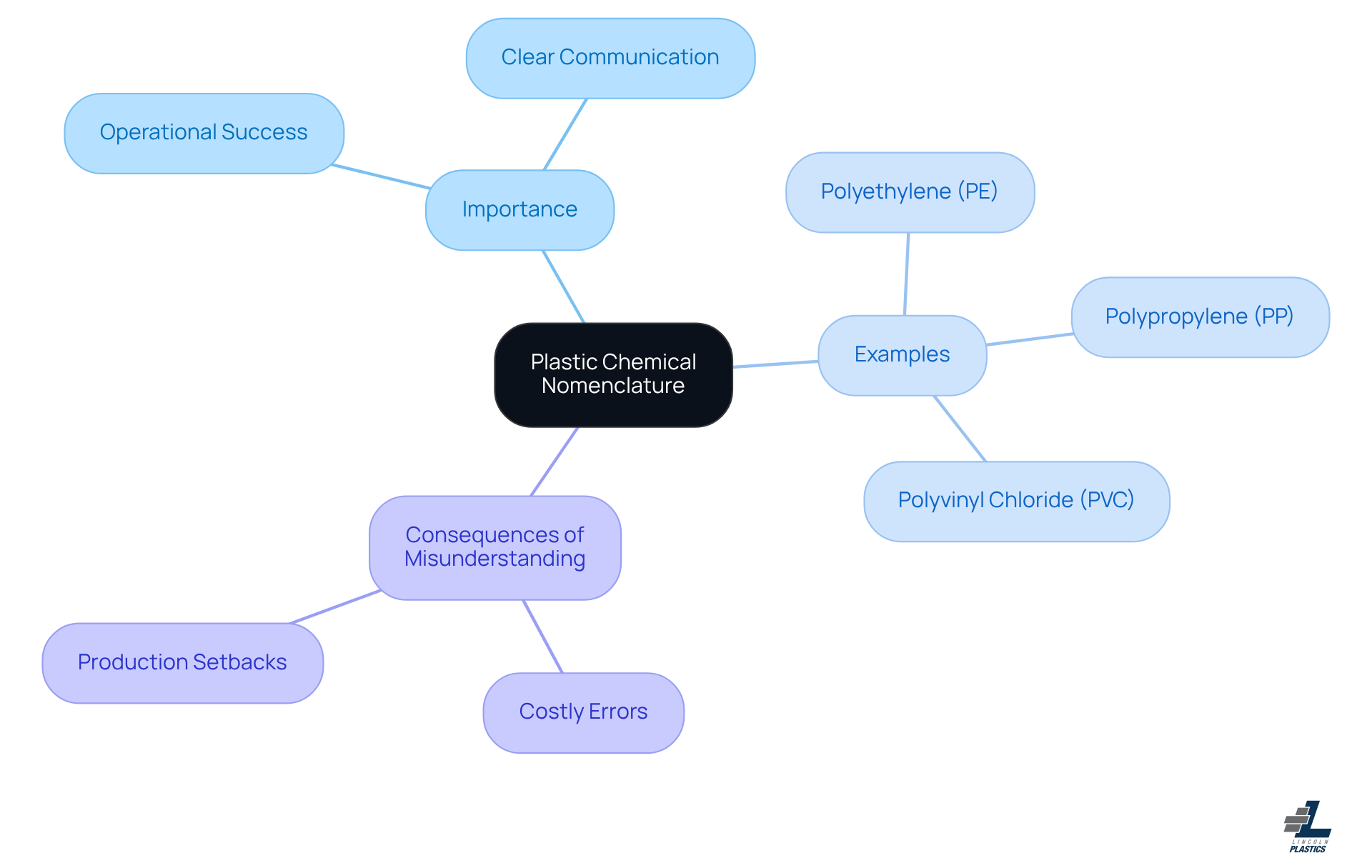
In the world of custom plastic extrusion, precise chemical nomenclature is not just important; it's essential for operational success. Plastic chemical name nomenclature involves the systematic naming of polymers and their components, which is vital for clear communication in purchasing. Knowledge of terms such as polyethylene (PE), polypropylene (PP), and polyvinyl chloride (PVC) enables purchasing teams to specify substances precisely.
Are you confident that your team understands the IUPAC naming conventions? This knowledge can significantly enhance clarity and alignment among all stakeholders. Grasping these conventions is essential for preventing misunderstandings that could lead to costly purchasing mistakes or delays in production.
Without a firm grasp of these terms, your purchasing decisions could lead to costly errors and production setbacks.
Utilize Standardized Chemical Names in Procurement
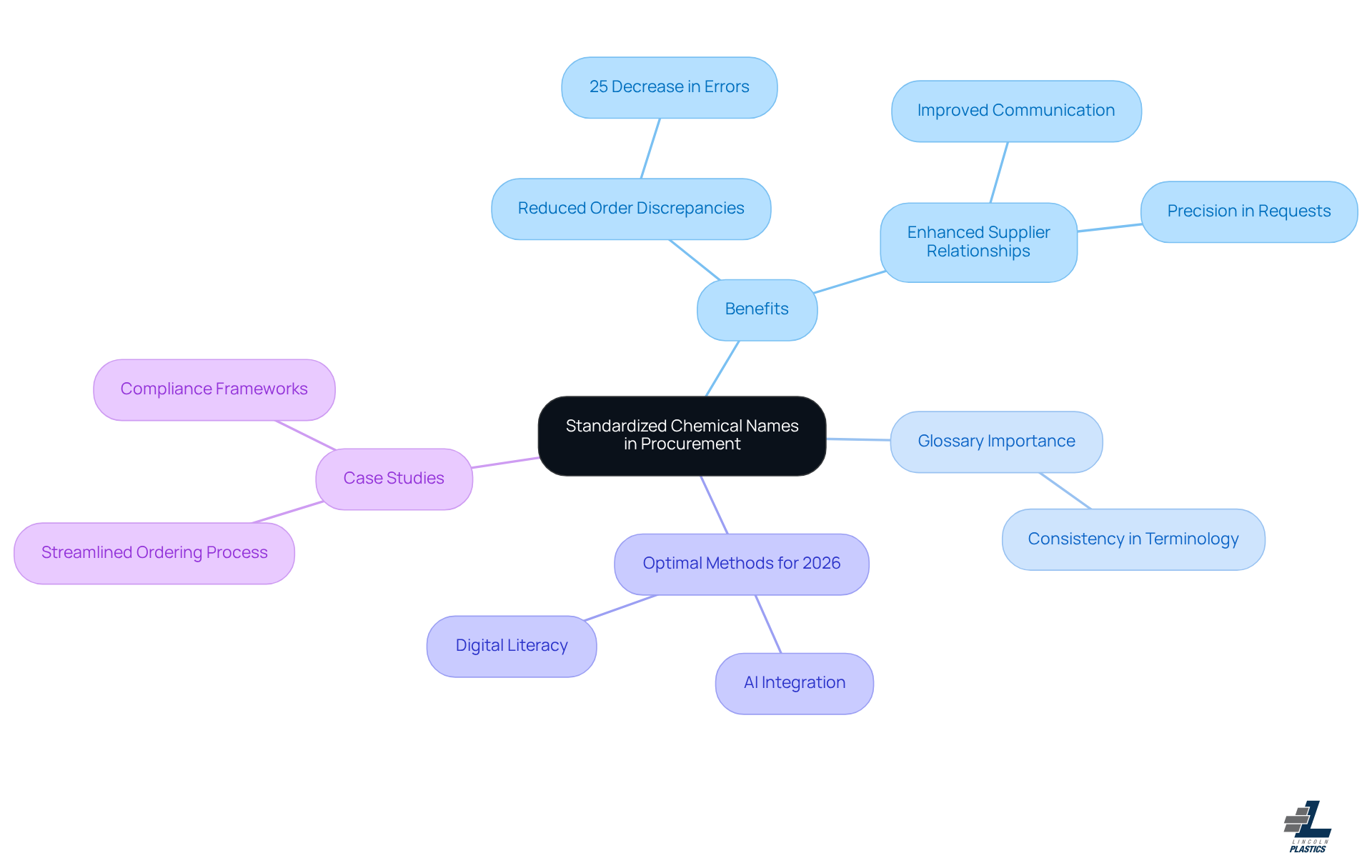
Acquiring the right materials hinges on the effective integration of the plastic chemical name and other standardized substance titles into purchasing procedures. For instance, utilizing the complete formula, like polyethylene terephthalate, rather than the abbreviation PET, reduces confusion when engaging with various suppliers about the plastic chemical name. Did you know that organizations using standardized terms like plastic chemical name see a 25% drop in order discrepancies? This highlights just how crucial clarity is in purchasing communications that involve the plastic chemical name. However, it's essential to correctly apply the plastic chemical name labels. Miscommunication can lead to sourcing errors that impact your operations.
A glossary of standardized terms, which includes the plastic chemical name, serves as a vital reference for purchasing teams. It ensures consistency in terminology across all communications that include the plastic chemical name. This practice not only enhances communication but also strengthens supplier relationships, as suppliers value precision in requests for the plastic chemical name. Optimal methods for 2026 highlight the necessity for sourcing teams to consistently embrace uniform substance titles, such as the plastic chemical name, as this strategy is progressively acknowledged as a crucial element in effective supplier cooperation. Furthermore, incorporating AI into purchasing processes and improving digital literacy will further aid the effective use of standardized terms, such as the plastic chemical name.
Case studies illustrate the effectiveness of this strategy: one organization reported a significant decrease in lead times after implementing standardized naming conventions, which streamlined their ordering process and improved overall efficiency. As sourcing develops, adopting standardized substance names, such as the plastic chemical name, is not just a trend; it's a necessity for navigating the complexities of modern supply chains.
Maintain Comprehensive Documentation of Chemical Specifications
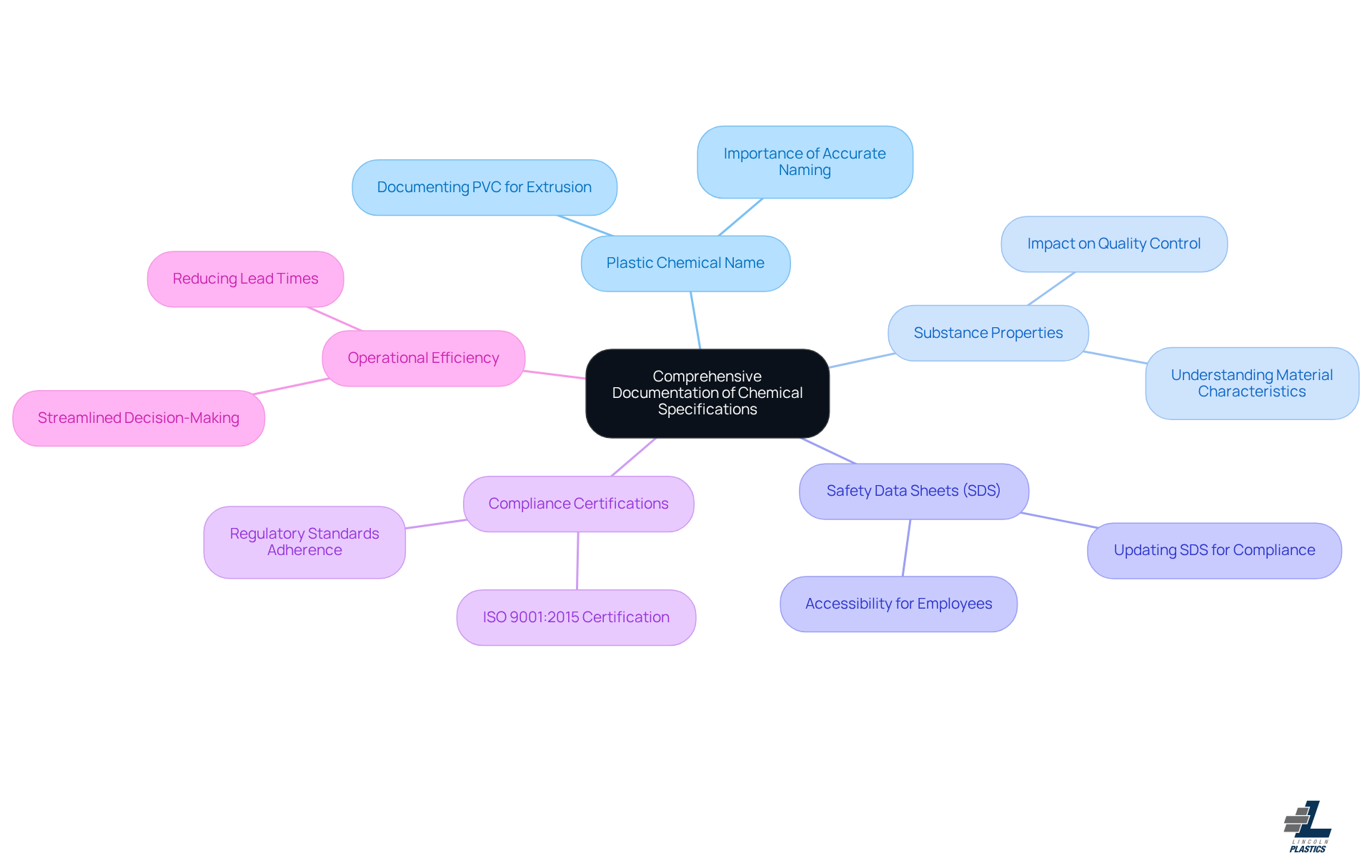
Effective purchasing strategies at Lincoln Plastics hinge on thorough documentation of the plastic chemical name specifications. Keeping detailed records of the plastic chemical name, substance properties, safety data sheets (SDS), and compliance certifications is essential. For instance, when sourcing PVC for extrusion, documenting the plastic chemical name, grade, additives, and relevant compliance standards is crucial. Without proper documentation, purchasing teams risk compliance issues and operational setbacks concerning the plastic chemical name. Such practices not only facilitate regulatory compliance but also enhance traceability of products by ensuring the plastic chemical name is documented throughout the supply chain. By ensuring that all specifications, including the plastic chemical name, are meticulously documented and readily accessible, purchasing teams can significantly mitigate risks associated with material sourcing and uphold high-quality production standards.
We take pride in our ISO 9001:2015 certification at Lincoln Plastics, reinforcing our commitment to quality management. Our robust quality system includes a dedicated quality book for your plastic profile, complete with drawings, critical in-process checks, and run documentation. Expert insights highlight that well-maintained documentation streamlines decision-making processes, allowing for quicker responses to supplier inquiries and compliance checks. Have you considered how thorough documentation can impact your purchasing strategy? Case studies demonstrate that organizations implementing structured documentation practices have seen improved safety outcomes and better compliance with regulatory standards. For instance, a structured workflow for material supply, which includes defined checks and compliance verification, typically results in lead times of 3-10 business days based on product availability and regulatory status. This organized approach not only ensures compliance but also enhances overall operational efficiency. Additionally, maintaining updated Safety Data Sheets (SDS) that include the plastic chemical name is crucial for ensuring compliance and safety, particularly in light of the updated Hazard Communication Standard (HazCom), which emphasizes the need for accurate and accessible documentation. Our strategic location in Lincoln, Nebraska, further enhances our logistics capabilities, enabling quick order turnaround and efficient shipping options. Inadequate documentation can jeopardize your production quality and compliance, making meticulous record-keeping essential.
Educate Teams on Plastic Chemical Terminology
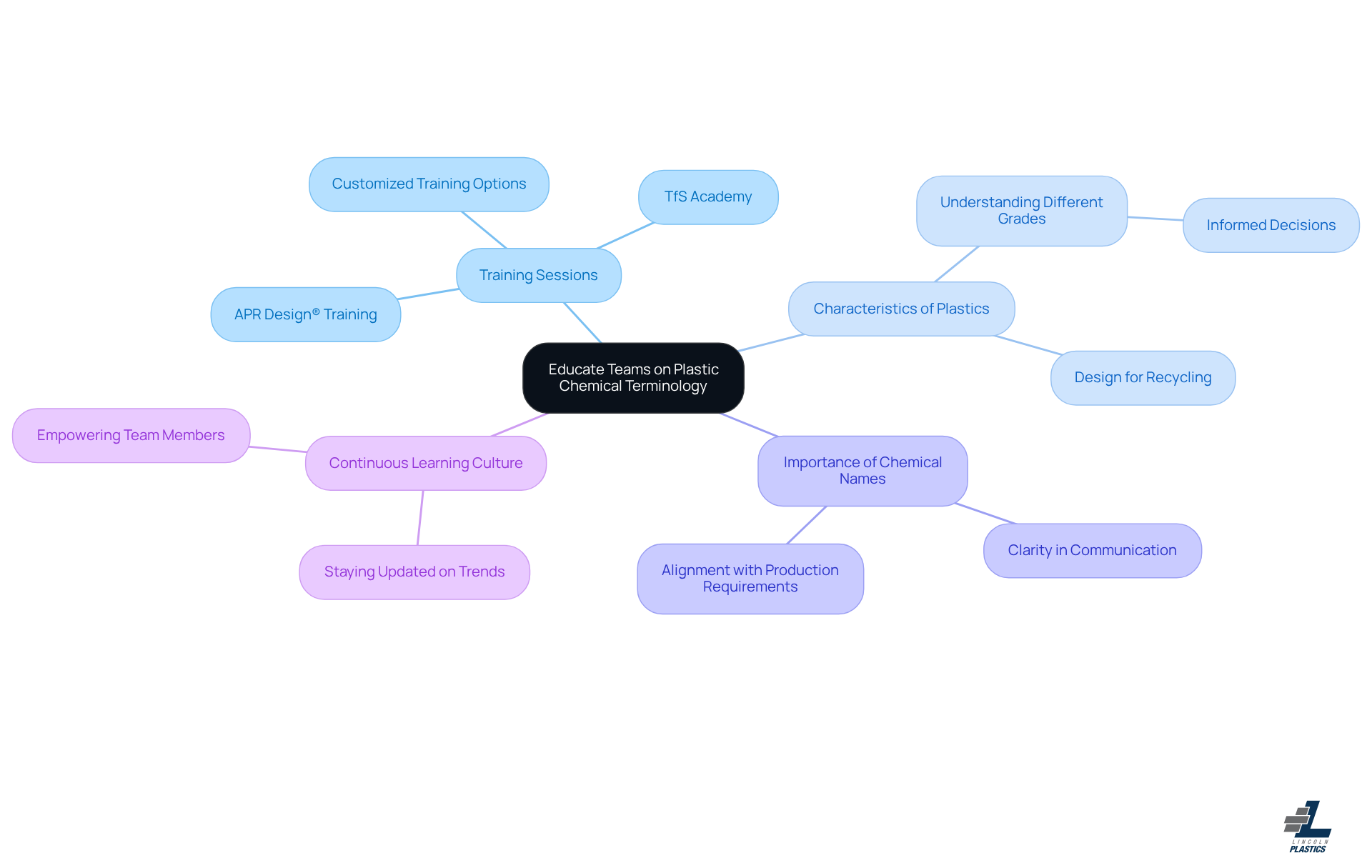
Mastering plastic terminology is crucial for sourcing teams aiming to boost their procurement efficiency. How can regular training sessions on essential topics like the characteristics of common plastics and the importance of plastic chemical names transform your team's efficiency? Understanding the differences between various grades of polyethylene, for instance, empowers teams to make informed decisions that align with production requirements.
Furthermore, fostering a culture of continuous learning ensures that team members stay updated on industry trends and advancements in material science. This knowledge not only streamlines procurement but also positions teams for success in a competitive market.
Conclusion
Mastering plastic chemical names is essential for effective procurement in the custom plastic extrusion industry. Clear communication through precise nomenclature not only enhances operational efficiency but also minimizes the risk of costly errors. Without precise nomenclature, teams risk miscommunication that can lead to significant financial losses. By prioritizing standardized chemical names, teams can ensure that their procurement processes are streamlined and effective, ultimately leading to better supplier relationships and improved production outcomes.
The article highlights several key practices that contribute to successful procurement strategies. These include:
- The importance of utilizing standardized chemical names
- Maintaining comprehensive documentation of chemical specifications
- Educating teams on plastic terminology
Each of these elements plays a crucial role in fostering clarity and consistency, which are essential for navigating the complexities of sourcing materials like polyethylene, polypropylene, and PVC. In addition, Lincoln Plastics' dedication to quality management, supported by ISO 9001:2015 certification, highlights the importance of thorough documentation and compliance with industry standards.
In conclusion, investing in education and adopting best practices in chemical nomenclature can significantly enhance procurement efficiency. Organizations are encouraged to implement structured training programs and maintain meticulous documentation to ensure compliance and operational excellence. By prioritizing these strategies, organizations can not only enhance their procurement efficiency but also secure a stronger position in the market. For tailored solutions and expert guidance, reaching out to Lincoln Plastics can provide invaluable support in optimizing procurement strategies.
Frequently Asked Questions
What is plastic chemical nomenclature?
Plastic chemical nomenclature refers to the systematic naming of polymers and their components, which is essential for clear communication in purchasing within the custom plastic extrusion industry.
Why is understanding plastic chemical nomenclature important?
Understanding plastic chemical nomenclature is crucial for operational success as it enables purchasing teams to specify substances precisely, preventing misunderstandings that could lead to costly purchasing mistakes or production delays.
What are some common terms in plastic chemical nomenclature?
Common terms include polyethylene (PE), polypropylene (PP), and polyvinyl chloride (PVC), which are important for accurately identifying the materials needed for production.
How can knowledge of IUPAC naming conventions benefit a purchasing team?
Knowledge of IUPAC naming conventions enhances clarity and alignment among all stakeholders, reducing the risk of misunderstandings and ensuring that the correct materials are ordered.
What are the consequences of not understanding plastic chemical nomenclature?
A lack of understanding can lead to costly errors in purchasing decisions and production setbacks, impacting overall operational efficiency.
List of Sources
- Understand Plastic Chemical Nomenclature
- Solvay Unveils New Name for Plastics Business (https://plasticstoday.com/automotive-mobility/solvay-unveils-new-name-for-plastics-business)
- Plastics: It’s a chemical safety matter (https://oecd.org/en/blogs/2026/05/plastics-it-is-a-chemical-safety-matter.html)
- Chemistry’s authority on nomenclature Iupac seeks new home (https://chemistryworld.com/news/chemistrys-authority-on-nomenclature-iupac-seeks-new-home/4019707.article)
- PlastChem report synthesizes current science on plastic chemicals | Food Packaging Forum (https://foodpackagingforum.org/news/plastchem-report-synthesizes-current-science-on-plastic-chemicals)
- Chemicals and Plastics Breaking News and Press Releases (https://businesswire.com/newsroom/industry/manufacturing/chemicals-plastics)
- Utilize Standardized Chemical Names in Procurement
- 7 Proven Chemical Sourcing Strategies for 2026 (https://neshielagrochem.com/blog/chemical-sourcing-strategies-for-supply-chains)
- Top 10 Procurement Trends to Watch in 2026 (https://kodiakhub.com/blog/top-10-procurement-trends-to-watch-in-2026)
- Chemical Industry Regulatory Update - April 2026 | Thompson Hine LLP (https://thompsonhine.com/insights/chemical-industry-regulatory-update-april-2026)
- Chemical Industry Spend Outlook 2026: Strategic Priorities Ahead | GEP Blog (https://gep.com/blog/strategy/chemical-industry-spend-outlook-strategic-priorities-2026)
- 2026 Chemical Raw Material Procurement Guide (https://emilcq.com/2026-chemical-raw-material-procurement-guide)
- Maintain Comprehensive Documentation of Chemical Specifications
- The Role of Documentation in a Successful Procurement Strate (https://eoxs.com/new_blog/the-role-of-documentation-in-a-successful-procurement-strategy)
- Evaluating Supplier Reliability in Fine Chemicals: Lead Time, Documentation, and Traceability — Molekula (https://molekula.com/articles/evaluating-supplier-reliability-in-fine-chemicals-lead-time-documentation-and-traceability)
- Major Changes Coming to Workplace Chemical Safety Standards (https://corporatecomplianceinsights.com/major-changes-coming-workplace-chemical-safety-standards)
- Technical documentation of chemical products – what do you need to know? - CHEMNOVATIC (https://chemnovatic.com/blog/technical-documentation-of-chemical-products)
- Regulation - American Chemistry Council (https://americanchemistry.com/chemistry-in-america-industry-innovation-impact/chemical-industry-statistics-u.s.-jobs-economic-impact/economic-impact-of-the-u.s.-chemical-industry/regulation)
- Educate Teams on Plastic Chemical Terminology
- Master the Properties of Plastic for Effective OEM Procurement (https://lincoln-plastics.com/news-post/master-the-properties-of-plastic-for-effective-oem-procurement)
- TfS launches learning hub for chemical companies and suppliers - TFS Initiative (https://tfs-initiative.com/news/tfs-launches-learning-hub-for-chemical-companies-and-suppliers)
- APR Design® for Recyclability Training - Association of Plastic Recyclers (APR) (https://plasticsrecycling.org/apr-design-hub/apr-design-for-recyclability-training)
- The Education Imperative: How to Develop Your Team Through Next Generation Learning (https://artofprocurement.com/blog/podcast-education)
- Educational Webinar: How APR Supports Packaging Designers, Engineers, and Procurement - Association of Plastic Recyclers (APR) (https://plasticsrecycling.org/resources/educational-webinar-how-apr-supports-packaging-designers-engineers-and-procurement)
Related posts

Discover essential strategies on how to improve quality in manufacturing effectively.


Discover the top 10 benefits of plastic angles for enhancing manufacturing efficiency and safety.
Optimize your manufacturing process with coextrusion for efficiency, quality, and design flexibility.
