
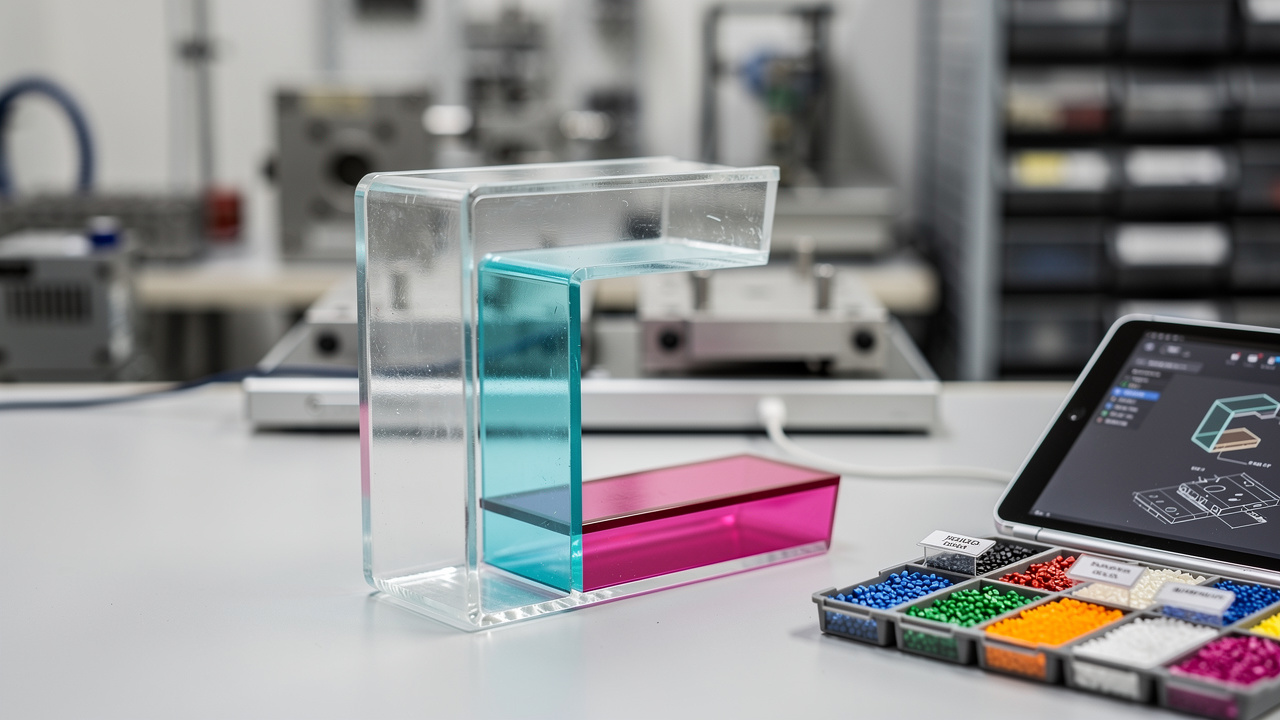
Master L-Shaped Plastic Molding: Best Practices for OEM Managers
Introduction
In manufacturing, achieving precise angles in plastic components is crucial for success, not merely a technical requirement. L-shaped plastic molding, with its distinctive 90-degree angle, presents OEM managers with a unique opportunity to enhance product functionality while optimizing material use. Yet, many face significant challenges, including warpage and surface defects, that threaten product integrity.
So, how can OEM managers tackle these challenges and make the most of L-shaped plastic molding to guarantee top-notch product quality? Understanding how to effectively leverage L-shaped plastic molding can be the key to ensuring product excellence in a competitive market.
Understand L-Shaped Plastic Molding: Definition and Importance
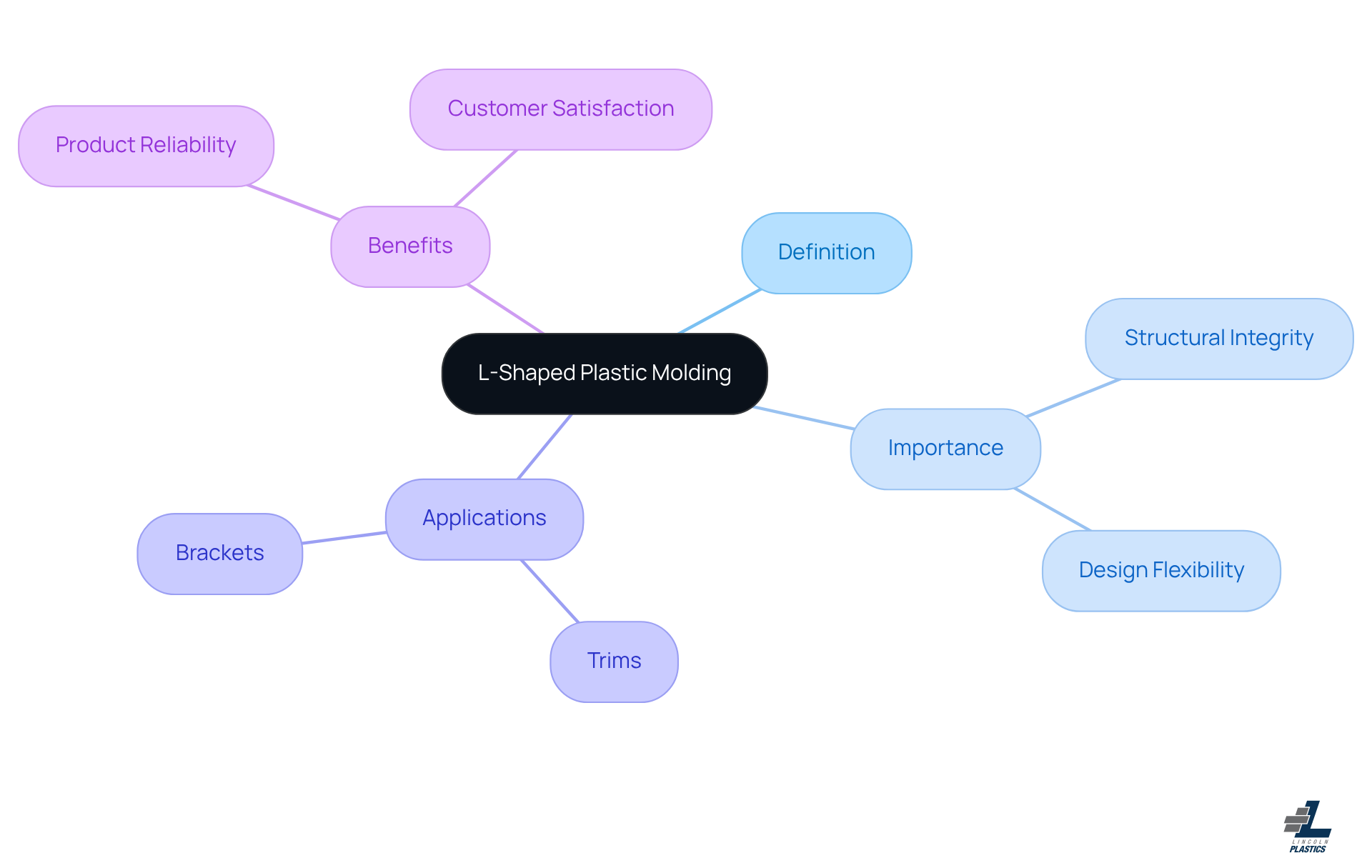
In the world of manufacturing, achieving precise angles in plastic components is crucial for success. The formation of plastic components known as l shaped plastic molding, which feature a 90-degree angle resembling the letter 'L', is referred to as plastic shaping. This process is vital in various manufacturing applications, as it provides both structural integrity and design flexibility. Have you considered how corner molds can streamline your production of trims and brackets? They are essential for achieving the right angles needed for assembly and support.
The importance of corner trim lies in its ability to enhance product functionality while maximizing material utilization. This enhancement leads to increased product reliability and customer satisfaction, establishing corner trims as a favored option for OEM managers. By choosing corner trims, OEM managers not only enhance product functionality but also drive efficiency in their operations.
Explore Applications of L-Shaped Plastic Molding in Manufacturing
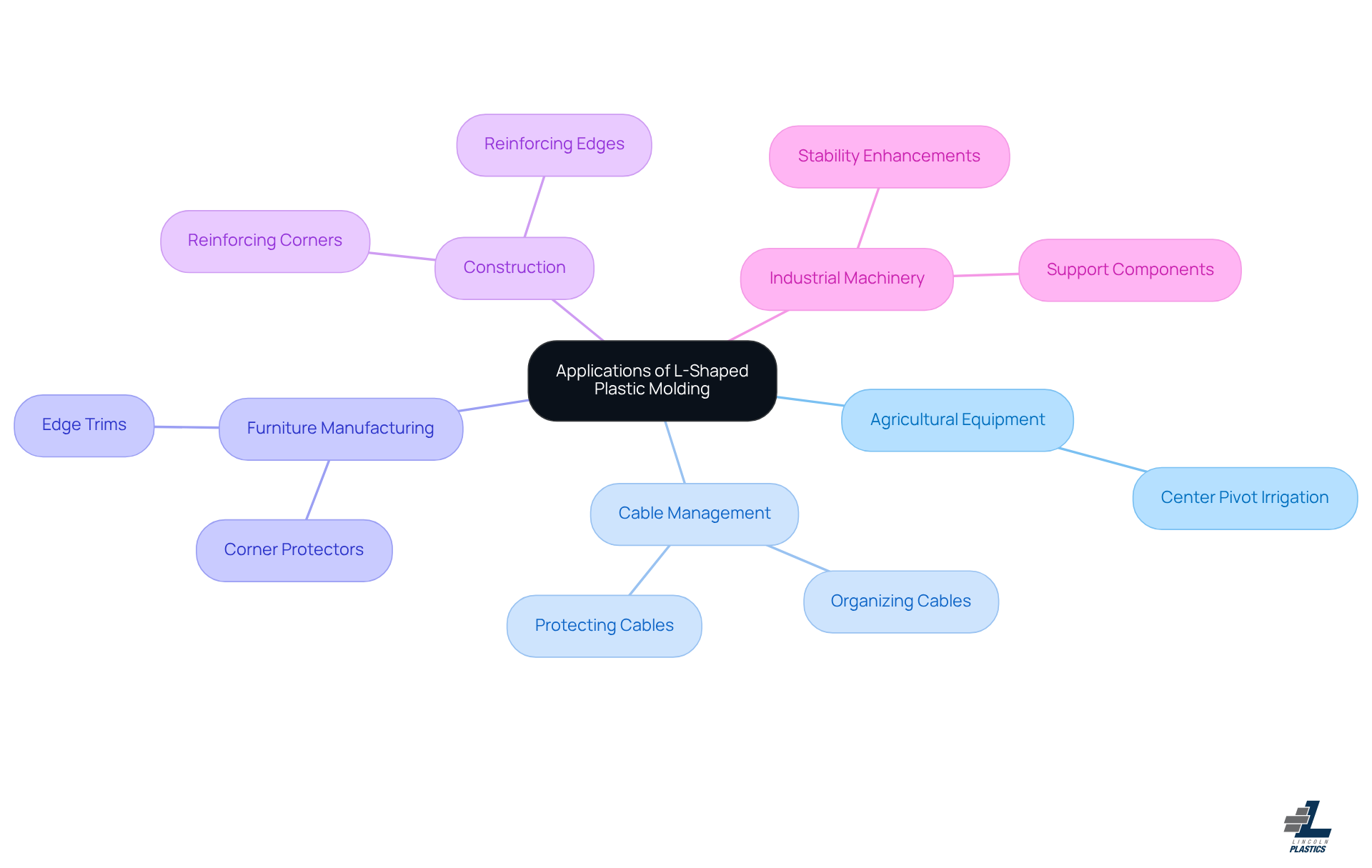
Industries are being revolutionized by L-shaped plastic molding, which provides versatile solutions that enhance performance and reliability. Its extensive applications span various sectors, including:
- Agricultural Equipment: Angled profiles are utilized in center pivot irrigation systems, offering structural support and improving the durability of components.
- Cable Management: In electrical applications, angled trims help organize and protect cables, ensuring safety and efficiency in installations.
- Furniture Manufacturing: Angular moldings are utilized to create corner protectors and edge trims, enhancing both aesthetics and functionality.
- Construction: These profiles are essential in reinforcing corners and edges in building materials, contributing to the overall structural integrity of constructions.
- Industrial Machinery: Angular components are often integrated into machinery for added support and stability, optimizing performance in demanding environments.
Are you struggling to find reliable materials that meet your operational needs? Understanding these applications empowers OEM managers to effectively leverage L-shaped plastic molding in their operations. Embracing these applications can significantly elevate your operational capabilities and product offerings.
Implement Best Practices for Effective Use of L-Shaped Plastic Molding
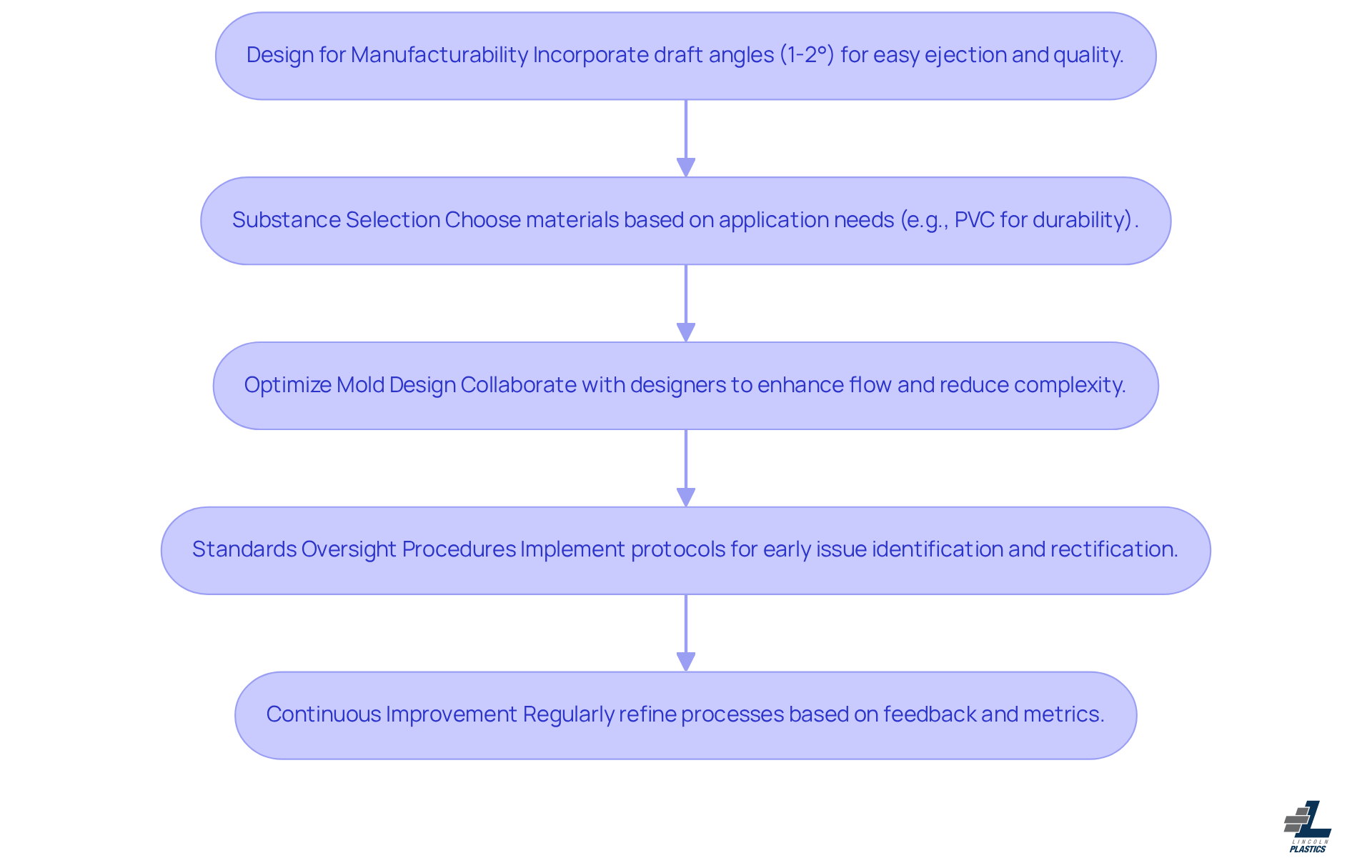
To achieve excellence in L-shaped plastic molding, OEM managers must adopt best practices that ensure efficiency and quality:
- Design for Manufacturability: Incorporate appropriate draft angles, typically between 1-2 degrees, to facilitate easy ejection from molds. This practice reduces the risk of defects and enhances the overall quality of the molded parts.
- Substance Selection: Choose substances that align with the specific application requirements. For instance, PVC is ideal for durability in outdoor settings, while polypropylene is suitable for lightweight applications. At Lincoln Plastics, we’re here to guide you in selecting the right materials for your needs, ensuring that the chosen components meet the necessary specifications for performance and compliance.
- Optimize Mold Design: Collaborate closely with mold designers to create molds that minimize complexity and enhance material flow. Optimizing mold design leads to better surface finishes and shorter cycle times. This boosts production efficiency. Lincoln Plastics works with OEMs to ensure that mold designs are optimized for manufacturing efficiency.
- Standards Oversight Procedures: Implement rigorous standards oversight protocols throughout the production process. Early identification and rectification of issues ensure that all components of L-shaped plastic molding meet the required specifications. Lincoln Plastics utilizes various kinds of check gauges and a strong assurance system, including essential in-process checks and documentation, to uphold high standards of excellence.
- Continuous Improvement: Regularly review and refine processes based on feedback and performance metrics. This commitment to continuous improvement enhances efficiency and product quality over time. By leveraging Vendor Managed Inventory (VMI) solutions, Lincoln Plastics helps clients maintain optimal inventory levels, further supporting continuous improvement efforts.
By implementing these best practices, OEM managers ensure effective plastic forming and achieve superior product outcomes. Implementing these best practices not only enhances product outcomes but also positions OEM managers for long-term success in a competitive market.
Address Challenges in L-Shaped Plastic Molding and Find Solutions
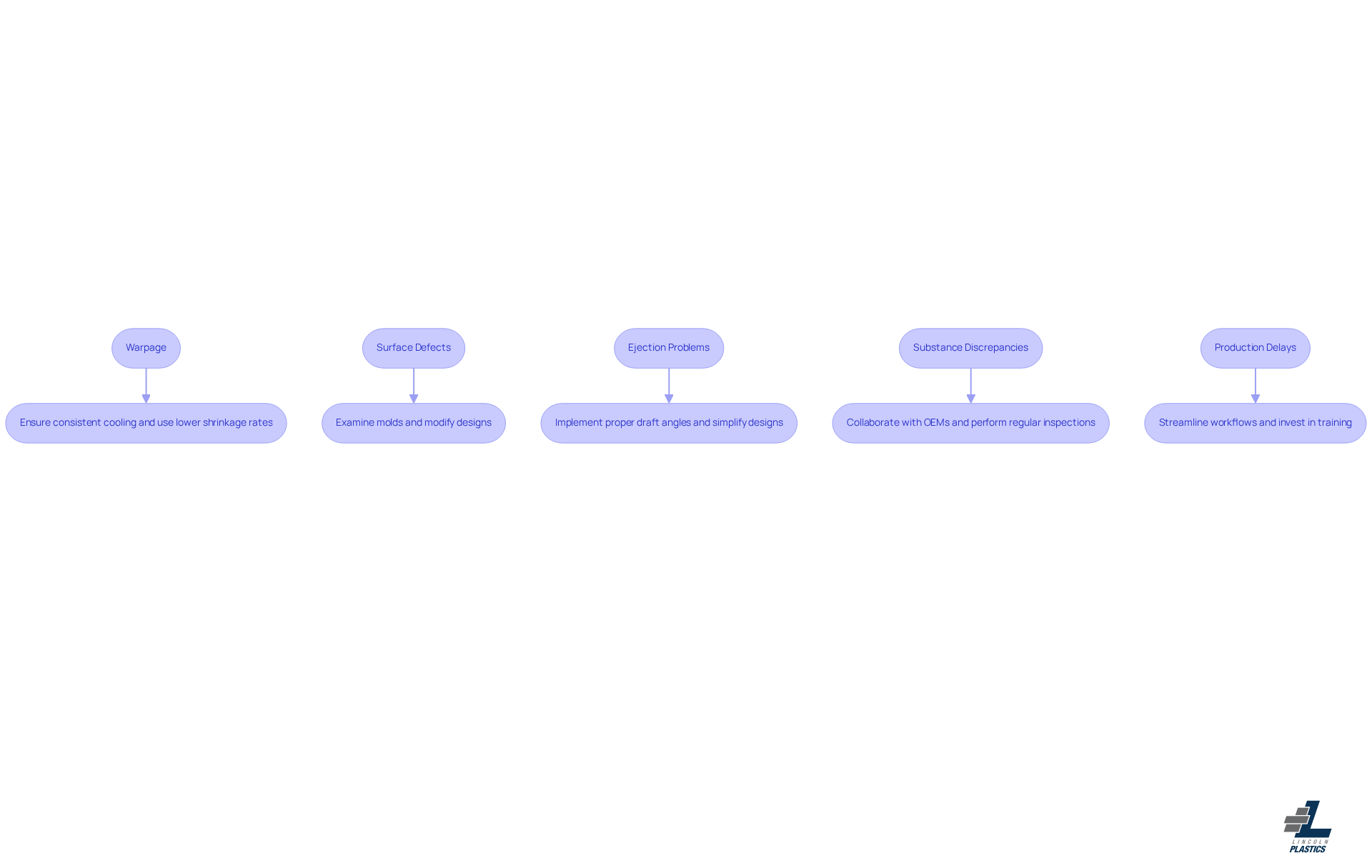
While L-shaped plastic molding provides numerous advantages, it also presents significant challenges that require attention. These challenges include:
- Warpage: Inconsistent cooling can lead to warpage, compromising product integrity. To alleviate this, ensure consistent cooling and consider utilizing substances with lower shrinkage rates.
- Surface Defects: Issues such as sink marks or blemishes can arise from improper mold design or substance selection. Consistently examining molds and modifying designs can enhance surface appearance.
- Ejection Problems: Parts may stick in the mold due to insufficient draft angles or complex geometries. Implementing proper draft angles and simplifying designs can alleviate this issue.
- Substance Discrepancies: Variations in substance caliber can lead to inconsistent product performance. At Lincoln Plastics, we collaborate closely with OEMs to ensure that materials meet specified standards and perform regular inspections to maintain consistency across manufacturers. Our robust quality system includes special checks for ‘fit and function’ to ensure your rigid profiles are precisely what you specified.
- Production Delays: Production delays can arise from inefficiencies in the shaping process, but streamlining workflows and investing in training for staff can significantly enhance productivity and reduce lead times.
By recognizing these challenges and implementing the suggested solutions, OEM managers can enhance the reliability and efficiency of their processes involving L-shaped plastic molding. Proactively addressing these challenges ensures that products not only meet specifications but also exceed expectations in quality and performance.
Conclusion
L-shaped plastic molding is not just a technique; it's a game-changer in manufacturing. This process enhances product functionality. It also streamlines production efficiency, making it a critical consideration for OEM managers striving to meet industry demands.
Throughout this article, we've explored the definition, applications, and best practices for L-shaped plastic molding. From understanding the importance of corner trims to examining their diverse applications in agriculture, furniture, and construction, it's clear that this molding technique is integral to achieving high-quality products. Best practices, such as optimizing mold design and ensuring substance selection, underscore the need for a strategic approach to enhance both efficiency and product outcomes.
What challenges do OEM managers face, and how can they refine their processes? Embracing L-shaped plastic molding can elevate operational capabilities. Implementing best practices enhances product reliability. By addressing these challenges and continuously refining processes, OEM managers can not only meet but exceed customer expectations. The commitment to mastering L-shaped plastic molding can redefine success in the competitive manufacturing landscape.
Frequently Asked Questions
What is L-shaped plastic molding?
L-shaped plastic molding is a manufacturing process that creates plastic components featuring a 90-degree angle, resembling the letter 'L'. It is also known as plastic shaping.
Why is L-shaped plastic molding important in manufacturing?
L-shaped plastic molding is important because it provides structural integrity and design flexibility, which are crucial for various manufacturing applications.
How do corner molds contribute to production?
Corner molds streamline the production of trims and brackets by ensuring the right angles needed for assembly and support, enhancing the overall manufacturing process.
What is the significance of corner trim in products?
Corner trim enhances product functionality while maximizing material utilization, leading to increased product reliability and customer satisfaction.
Why do OEM managers prefer corner trims?
OEM managers prefer corner trims because they enhance product functionality and drive efficiency in their operations, making them a favored option in manufacturing.
List of Sources
- Implement Best Practices for Effective Use of L-Shaped Plastic Molding
- moldingdynamics.net (https://moldingdynamics.net/blog/plastic-injection-molding-online-quote-comparison-guide)
- protolabs.com (https://protolabs.com/resources/design-tips/improving-part-moldability-with-draft)
Related posts

Discover essential strategies on how to improve quality in manufacturing effectively.


Discover the top 10 benefits of plastic angles for enhancing manufacturing efficiency and safety.
Optimize your manufacturing process with coextrusion for efficiency, quality, and design flexibility.
