
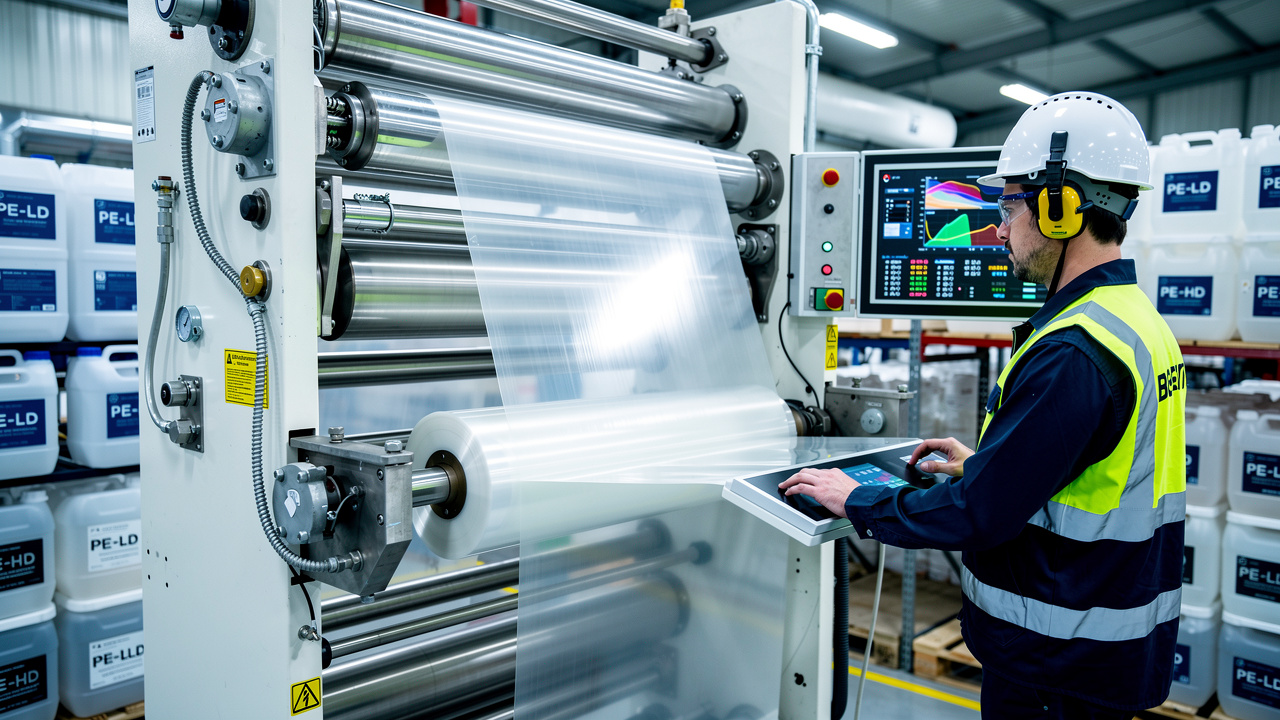
Master Key Practices for Successful Polyethylene Film Extrusion
Introduction
In a fiercely competitive market, mastering polyethylene film extrusion is not just beneficial - it's essential for manufacturers committed to delivering superior quality.
Let’s explore essential practices that can enhance the extrusion process, from selecting the right materials and equipment to implementing rigorous quality control measures.
As the industry rapidly evolves with innovative technologies and sustainability trends, how can manufacturers stay ahead? Without proactive measures, manufacturers risk falling behind competitors who embrace innovation.
The path to maintaining product excellence lies in embracing innovation and rigorous quality control.
Understand the Fundamentals of Polyethylene Film Extrusion
In the world of custom plastic extrusion, mastering polyethylene film extrusion is not just beneficial; it's essential for delivering high-quality results. Let’s explore the key factors that drive success in this process:
- Material Properties: Polyethylene (PE) comes in various grades, notably Low-Density Polyethylene (LDPE) and Linear Low-Density Polyethylene (LLDPE). Each grade has distinct characteristics that influence flexibility, strength, and processing behavior. Selecting the appropriate grade is crucial for specific applications.
- Polyethylene Film Extrusion: The polyethylene film extrusion process involves melting the resin and pushing it through a die to create a continuous sheet. Essential factors such as melt temperature, die design, and cooling rates significantly impact the final characteristics of the material, including its thickness and mechanical strength.
- Key Parameters: Furthermore, maintaining optimal conditions is vital for achieving desired characteristics of the material. For instance, the blow-up ratio (BUR) is a crucial parameter in blown material extrusion, usually varying from 2:1 to 4:1. This ratio enhances the material's strength and clarity, contributing to its overall performance in various applications.
Recent advancements in polyethylene film extrusion characteristics and applications highlight the industry's focus on sustainability and performance. Manufacturers are increasingly adopting eco-friendly practices, including the use of biodegradable polymers and optimizing energy consumption during manufacturing. These trends reflect a growing commitment to reducing environmental impact while enhancing product functionality.
By comprehending and mastering these fundamentals, manufacturers can effectively manage the shaping process, ensuring the creation of materials that meet specific application requirements and industry standards. Understanding these fundamentals not only enhances product quality but also positions manufacturers as leaders in a competitive market.

Choose Optimal Materials and Equipment for Extrusion Success
Achieving excellence in plastic sheet extrusion hinges on the careful selection of materials and tools. Key considerations include:
- Material Selection: Choose polyethylene grades based on the desired film properties. For instance, low-density polyethylene (LDPE) is ideal for applications requiring flexibility, while linear low-density polyethylene (LLDPE) offers enhanced strength and puncture resistance. Working together with resin suppliers guarantees compatibility with your shaping process. Recent advancements in resin technology, such as those highlighted by Reifenhäuser, emphasize the importance of selecting materials that can enhance recyclability and performance.
- Extruder Type: The choice between single-screw and twin-screw extruders significantly impacts the melting and mixing of the resin. Twin-screw extruders are often favored for their ability to handle a broader range of materials and additives, providing superior control over the extrusion process and enhancing product quality. As highlighted by industry specialists, the latest twin-screw technologies enable improved processing of low-quality recyclates, which is essential for sustainable manufacturing.
- Die Design: The die must be customized to meet specific material thickness and width requirements. Proper die design minimizes defects and ensures uniformity in the final product. Employing adjustable dies enables the fine-tuning of the output as required, which is essential for satisfying diverse manufacturing demands. Innovations in die technology, such as those introduced by leading manufacturers, can further optimize film quality and efficiency in creation.
- Equipment Maintenance: Keeping your extrusion equipment in top shape is crucial for ensuring it runs smoothly and efficiently. Implementing a preventive maintenance schedule addresses wear and tear, ensuring that machinery operates at peak efficiency and prolonging its lifespan. Industry case studies have demonstrated that companies that prioritize maintenance experience significant enhancements in operational reliability and product quality.
By thoughtfully choosing materials and tools, producers can greatly improve the quality of their products through polyethylene film extrusion while maximizing production efficiency. By embracing innovation and best practices, producers can not only enhance product quality but also secure a competitive edge in the market.

Implement Rigorous Quality Control Practices in Extrusion
In the competitive landscape of plastic sheet production, quality control stands as a non-negotiable pillar of success. To achieve excellence, manufacturers must focus on several key components of effective quality control:
- Raw Material Inspection: Conduct thorough inspections of incoming polyethylene resin to verify quality and compatibility with the extrusion process. This includes checking for contaminants and ensuring compliance with specified standards.
- In-Process Monitoring: Utilize real-time monitoring systems to track critical parameters such as temperature, pressure, and layer thickness during polyethylene film extrusion processes. This capability allows for immediate adjustments, maintaining quality and preventing defects.
- Final Product Testing: Establish a robust testing protocol for finished films, assessing mechanical properties, thickness uniformity, and optical clarity. Utilize standardized testing techniques to guarantee consistency and reliability across manufacturing runs.
- Documentation and Traceability: Maintain detailed records of manufacturing runs, including material batches, process parameters, and quality test results. This documentation is vital for identifying trends and addressing issues promptly.
By establishing a comprehensive quality control framework, manufacturers can significantly enhance product reliability and customer satisfaction. Without a robust quality control framework, manufacturers risk not only their reputation but also their operational efficiency.

Leverage Innovative Technologies for Enhanced Extrusion Efficiency
Are you struggling to keep up with the demands for higher quality and efficiency in polyethylene film extrusion? Integrating innovative technologies into the polyethylene film extrusion process can lead to remarkable enhancements in both efficiency and product quality. Consider the following advancements:
- Automation and Control Systems: Implement advanced automation systems such as the EVEREX system, which integrates seamlessly into existing setups and includes an edge encapsulation system to minimize material waste. These automated systems can adjust settings in real-time based on sensor feedback, significantly reducing variability and enhancing consistency in manufacturing. The PAM 2.0 system in EVEREX fully automates width adjustment, allowing for faster and more reliable product changeovers.
- Energy Efficiency Solutions: Utilize energy-efficient equipment and practices to minimize energy consumption during extrusion. Technologies like liquid-cooled barrels and optimized screw designs can significantly lower energy costs while maintaining performance. For instance, the EVO GEN3 system provides about a 30 percent increase in output compared to its predecessors, showcasing the potential for enhanced efficiency.
- Data Analytics and Machine Learning: Leverage data analytics to monitor production processes and identify areas for improvement. Machine learning algorithms can analyze historical data to predict potential issues and optimize settings for better outcomes, enhancing overall operational efficiency.
- Additive Manufacturing: Explore the use of additives to enhance the characteristics of plastic sheets. Incorporating specific additives can improve strength, flexibility, and barrier properties, allowing for more versatile applications across various industries.
By integrating these technologies, you can not only streamline your polyethylene film extrusion processes but also reduce waste and produce higher-quality films that meet evolving market demands. Additionally, industry leaders like BG Plast emphasize that automation not only increases production accuracy but also reduces scrap and operating costs, further supporting the case for these advancements. Embracing these advancements could be the key to not just meeting but exceeding market expectations in polyethylene film extrusion.

Conclusion
Mastering polyethylene film extrusion is not just beneficial; it’s essential for manufacturers striving for excellence in product quality. Understanding the extrusion process, selecting the right materials, and implementing strict quality control can significantly boost operational efficiency and product reliability.
Key insights from this article emphasize the importance of:
- Material selection
- Equipment maintenance
- Innovative technologies
Choosing the right polyethylene grades and extruder types, along with maintaining equipment and leveraging automation, can lead to improved product quality and reduced waste. Furthermore, establishing a comprehensive quality control framework ensures that manufacturers can consistently meet customer expectations and regulatory requirements.
However, many manufacturers struggle with inconsistent product quality and rising operational costs. By implementing these strategies, manufacturers can not only improve their processes but also gain a significant edge in the market. As the industry evolves, embracing these best practices and tech advancements is crucial for staying ahead. Are you ready to explore partnerships with experts like Lincoln Plastics, who are dedicated to excellence and customer satisfaction? The choice to partner with experts like Lincoln Plastics could be the key to unlocking your manufacturing potential.
Frequently Asked Questions
What is polyethylene film extrusion?
Polyethylene film extrusion is a manufacturing process that involves melting polyethylene resin and pushing it through a die to create a continuous sheet of film. This process is essential for producing high-quality plastic products.
What are the different grades of polyethylene used in film extrusion?
The main grades of polyethylene used in film extrusion are Low-Density Polyethylene (LDPE) and Linear Low-Density Polyethylene (LLDPE). Each grade has unique characteristics that affect flexibility, strength, and processing behavior.
Why is selecting the appropriate grade of polyethylene important?
Selecting the appropriate grade of polyethylene is crucial because each grade has distinct properties that influence the performance of the final product in specific applications.
What are some key factors that impact the polyethylene film extrusion process?
Key factors that impact the polyethylene film extrusion process include melt temperature, die design, cooling rates, and the blow-up ratio (BUR). These factors significantly affect the thickness, mechanical strength, and overall characteristics of the material.
What is the blow-up ratio (BUR) in blown material extrusion?
The blow-up ratio (BUR) is a crucial parameter in blown material extrusion that typically varies from 2:1 to 4:1. It enhances the strength and clarity of the material, contributing to its performance in various applications.
How are recent advancements in polyethylene film extrusion addressing sustainability?
Recent advancements in polyethylene film extrusion focus on sustainability by adopting eco-friendly practices, such as using biodegradable polymers and optimizing energy consumption during manufacturing. This reflects a commitment to reducing environmental impact while improving product functionality.
Why is it important for manufacturers to understand the fundamentals of polyethylene film extrusion?
Understanding the fundamentals of polyethylene film extrusion allows manufacturers to effectively manage the shaping process, ensuring the creation of materials that meet specific application requirements and industry standards. This knowledge enhances product quality and positions manufacturers as leaders in a competitive market.
List of Sources
- Understand the Fundamentals of Polyethylene Film Extrusion
- Exploring the Different Types of Plastic Extrusion Processes (https://paulmurphyplastics.com/industry-news-blog/exploring-the-different-types-of-plastic-extrusion-processes)
- Shaping the Future: Innovations in Plastic Extrusion Techniques - SeaGate Plastics Company (https://seagateplastics.com/shaping-the-future-innovations-in-plastic-extrusion-techniques)
- Engineering Realities Defining Plastic Extrusion Manufacturing in 2026 - SANTA FE MACHINE WORKS, INC. (https://santafemachine.com/extrusion/engineering-realities-defining-plastic-extrusion-manufacturing-in-2026)
- Choose Optimal Materials and Equipment for Extrusion Success
- Film Extrusion | Plastics Technology (https://ptonline.com/topics/film-extrusion)
- Technology Converts Low-Quality Recyclate into High-Performance Film (https://plasticstoday.com/extrusion-film-sheet/extrusion-technology-converts-low-quality-recyclate-into-high-performance-blown-film)
- Interplas Insights | Latest Plastics Extrusion Machinery News (https://interplasinsights.com/plastics-machinery/plastics-extrusion-machinery-news)
- News | Octagon Blown Film Control (https://octagon-company.com/news)
- Chinaplas 2026: Reifenhäuser presents new line generation | Reifenhauser (https://reifenhauser.com/en/company/media/news-and-stories/press-releases/chinaplas-2026-reifenhaeuser-presents-new-line-generation)
- Implement Rigorous Quality Control Practices in Extrusion
- One moment, please... (https://condaleplastics.com/extrusion-advice/plastic-extrusion-a-guide-to-quality-control)
- 5 Proven Practices to Increase Product Quality in Extrusion (https://lincoln-plastics.com/news-post/5-proven-practices-to-increase-product-quality-in-extrusion)
- Quality Control and Testing Procedures - Plastic Extrusion Technologies (https://plasticextrusiontech.net/quality-control-and-testing-procedures-in-plastic-extrusions)
- Monitoring extrusion quality inline (https://promix-solutions.com/en/company/news-exhibitions/news-detail/monitoring-extrusion-quality-inline)
- Leverage Innovative Technologies for Enhanced Extrusion Efficiency
- Automation in BG Plast's extrusion lines: the new efficiency - BG-plast (https://bgplast.it/https-www-bgplast-it-automation-in-extrusion)
- Chinaplas 2026: Reifenhäuser presents new line generation | Reifenhauser (https://reifenhauser.com/en/company/media/news-and-stories/press-releases/chinaplas-2026-reifenhaeuser-presents-new-line-generation)
- Technology Converts Low-Quality Recyclate into High-Performance Film (https://plasticstoday.com/extrusion-film-sheet/extrusion-technology-converts-low-quality-recyclate-into-high-performance-blown-film)
- News | Octagon Blown Film Control (https://octagon-company.com/news)
Related posts

Right-Sized Production Runs: Flexibility Without the Waste
Lincoln Plastics offers right-sized production runs with a 10-hour minimum — balancing efficiency with flexibility so OEMs avoid oversized orders.


Co-Extrusion: Combining Two Materials for Better Performance
Lincoln Plastics offers co-extrusion, combining two plastics into a single profile for greater design freedom, performance, and cost savings.
Beyond Extrusion: Value-Added Services That Simplify Production
Beyond Extrusion: Value-Added Services That Simplify Production
