
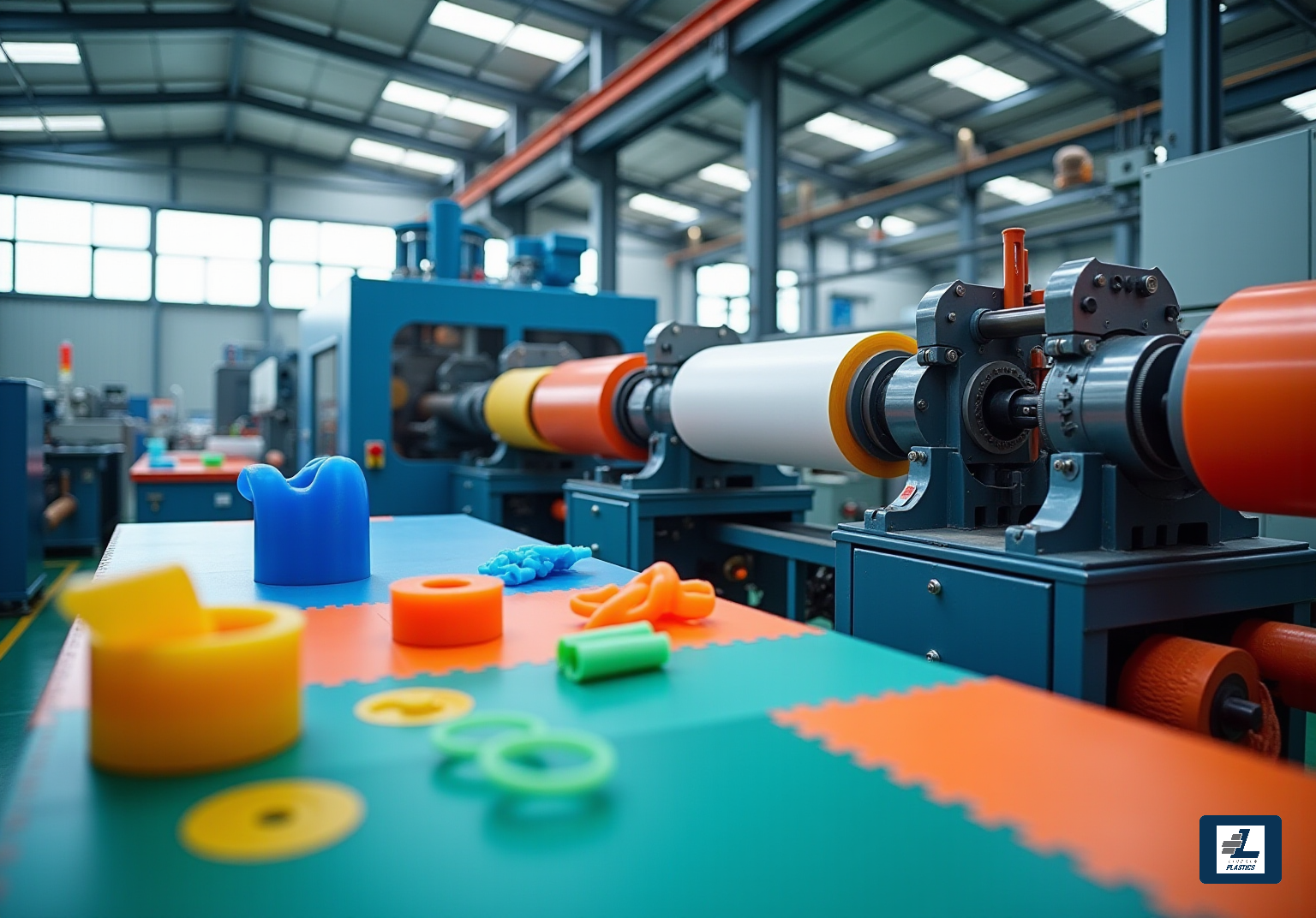
Master Coextrusion: Steps to Optimize Your Manufacturing Process
Introduction
Coextrusion is really shaking things up in modern manufacturing! It’s an exciting way to extrude multiple materials at once, leading to some truly innovative, multi-layered products. This technique not only boosts efficiency and cuts costs but also gives manufacturers the power to create products with unique performance features and eye-catching looks.
But as industries strive to get the most out of their production processes, a big question arises: how can manufacturers effectively use coextrusion to reap all its benefits?
In this article, we’ll explore the key steps and best practices for optimizing coextrusion. Let’s dive in and discover how businesses can tap into its full potential while tackling the challenges of material selection, equipment setup, and quality control.
Understand Coextrusion: Definition and Benefits
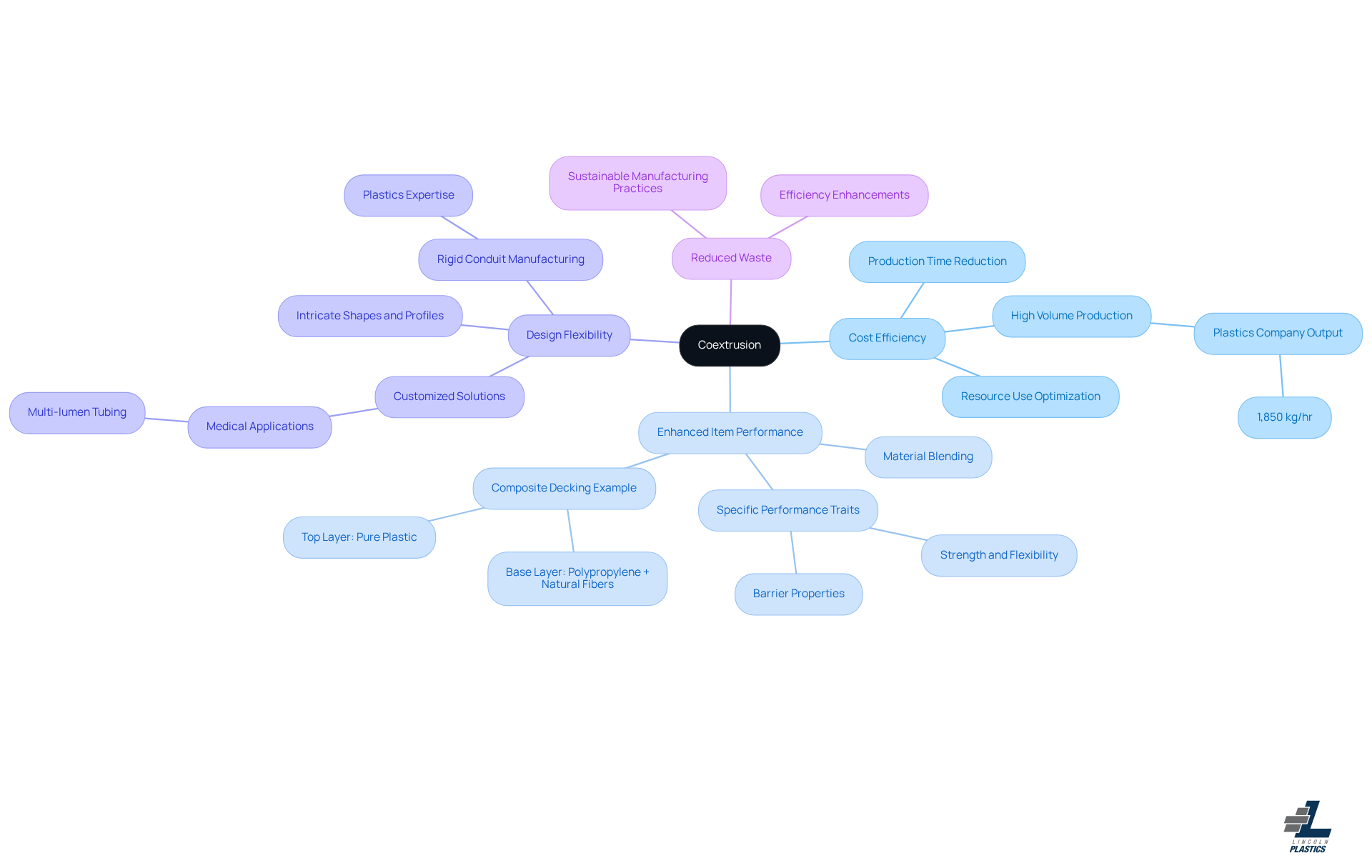
Coextrusion is an impressive manufacturing technique that enables the simultaneous extrusion of two or more substances through a single die. This means you get to take advantage of the unique characteristics of each material. So, what’s in it for you? Let’s break down some of the big advantages:
- Increased efficiency: Imagine cutting down on production time and resource use all in one go! Coextrusion achieves this by integrating multiple materials into a single manufacturing step. This streamlined approach can lead to significant cost savings, especially when you’re cranking out high volumes. Just look at Plastics Company—they can produce up to 1,850 kg/hr of goods!
- Enhanced product customization: With the ability to blend different materials, manufacturers can tailor items to have specific performance traits. Think about it—improved strength, flexibility, or fantastic barrier properties. For example, the process used in composite decking combines a base layer of polypropylene with natural fibers for strength, while a top layer of pure plastic ensures waterproof and wear-resistant properties. Plus, the company ensures color consistency and Pantone color matching to boost product performance even more.
- Design flexibility: Coextrusion is enhanced by advanced tooling, which opens up possibilities for creating intricate shapes and profiles that traditional methods might struggle with. This is super important for industries that need customized solutions, like medical applications where multi-lumen tubing is often essential. Just take a look at Plastics' expertise in design adaptability—it’s a great example of this design adaptability.
- Sustainability: Coextrusion not only enhances efficiency but also contributes to reduced waste. This is a big deal as the industry shifts towards more sustainable manufacturing practices.
These benefits really highlight why the process of coextrusion is crucial for manufacturers' production processes and meeting market demands. As this technology keeps evolving, it’s going to play an even bigger role in boosting product quality and operational efficiency. Therefore, if you're a forward-thinking manufacturer such as Lincoln Plastics, considering coextrusion is definitely worthwhile!
Prepare Your Manufacturing Environment for Coextrusion
To get your facility ready for coextrusion, let’s dive into some helpful steps:
- Assess Space Requirements: First things first—ensure your facility has sufficient space for all the necessary equipment, including extruders, dies, and downstream processing units. Having enough space is key for keeping things running smoothly and safely. Did you know that the cost of an advanced coextrusion system is about the same as two single-layer blown film machines? That just shows how important it is to plan for this equipment!
- Plan Layout: Next up, think about your layout. You want to encourage a smooth flow of resources and cut down on handling. Position your equipment in a logical order to streamline operations. This can really enhance productivity! As noted by Chyi Yang's senior director, optimizing workflow is essential for cutting production costs and enhancing efficiency.
- Control Environment: Now, let’s talk about keeping things clean and controlled. It’s crucial to prevent contamination, so keep an eye on temperature and humidity levels. Even small variations can mess with material characteristics and processing results. For example, the coextrusion process allows for multiple layers, which can be sensitive to environmental conditions.
- Ensure Safety Compliance: Safety is a big deal! Make sure you have solid protocols in place to protect your workers and equipment. This includes proper ventilation, emergency shut-off systems, and thorough training for your team on how to manage materials and machinery safely. A strong commitment to safety is vital, especially when using advanced machinery such as the Chyi Yang coextrusion machines.
- Install Necessary Utilities: Finally, double-check that all utilities—like water, electricity, and compressed air—are available and set up correctly to support the coextrusion process. The Chyi Yang machine operates at 110m/min, so having efficient utility setups is crucial for maximizing production capabilities.
By following these best practices, you can create an efficient and safe environment that enhances your coextrusion operations. For instance, a Taiwanese producer effectively used the ABA 3-Layer Co-Extrusion Machine, which not only improved product quality but also cut costs by utilizing recycled resources. This really highlights the benefits of optimizing your facility specifically for coextrusion!
Select and Configure Equipment for Coextrusion
When selecting and configuring the right equipment for coextrusion, it's important to keep a few key factors in mind, particularly if you want to utilize the technology offered by suppliers. They offer a variety of colors, diameters, and lengths that can really make a difference.
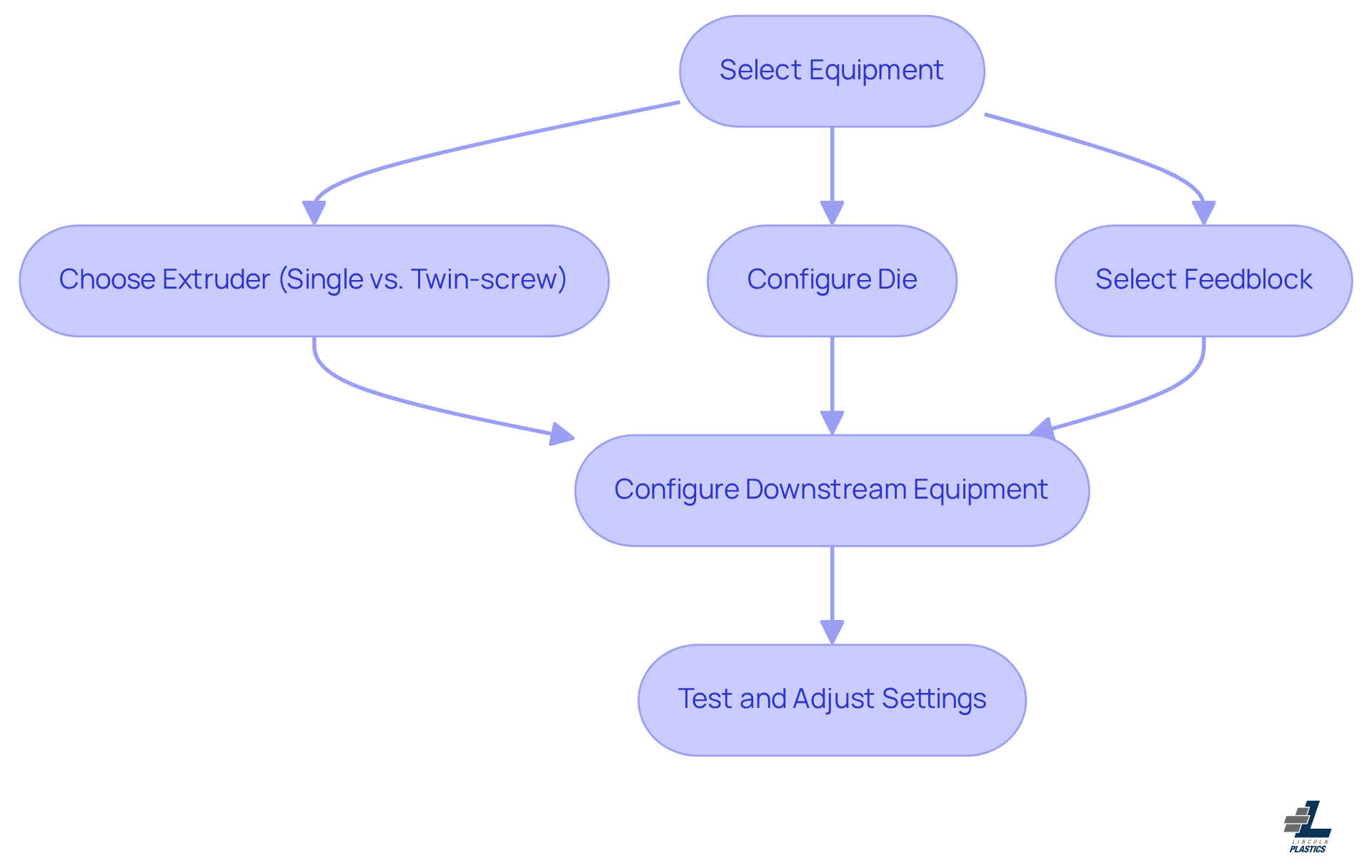
First up, let’s talk about extruders. You might be wondering whether to go with single or twin-screw extruders. Most folks lean toward twin-screw extruders because they handle a variety of substances better and mix them more effectively. This flexibility is super helpful, especially when you need to create those intricate combinations found in Plastics' custom and standard round plastic profiles.
Now, configuring the die is crucial. It determines the shape and thickness of your final product. It’s important to ensure that the die works well with your chosen extruders and can manage the necessary flow rates. This can significantly impact the quality of your output, particularly when you’re integrating flexible profiles.
Next, let’s not forget about the feedblock. This piece is essential for merging different substance streams before they hit the die. You’ll want a feedblock that optimizes layer thickness and substance distribution. This is key for achieving a uniform look, especially in profiles created through coextrusion with those eye-catching color combinations.
Don’t overlook the downstream equipment either! Ensure that your cooling systems are compatible with your coextrusion setup. This equipment must meet the specific demands of your coextrusion items to ensure everything operates smoothly and efficiently, just like the high standards you expect from manufacturers.
Finally, once everything is set up, it’s time to test and adjust. Conduct thorough tests to fine-tune settings like temperature, pressure, and flow rates. You might find that some tweaks are necessary to optimize the process for the materials you’re using. This helps ensure that production runs smoothly, leading to better results and happier customers with the solutions provided by Plastics.
By thoughtfully selecting and configuring your equipment, you can significantly enhance the efficiency and quality of your coextrusion processes. Remember, the team is here to help you with their expertise in manufacturing and technology. For a visual reference of the flexible profiles available, check out the image linked in the context.
Choose Appropriate Materials for Coextrusion
Selecting the appropriate components for coextrusion is crucial if you aim to achieve the best performance from your output. Let’s break down some key things to consider:
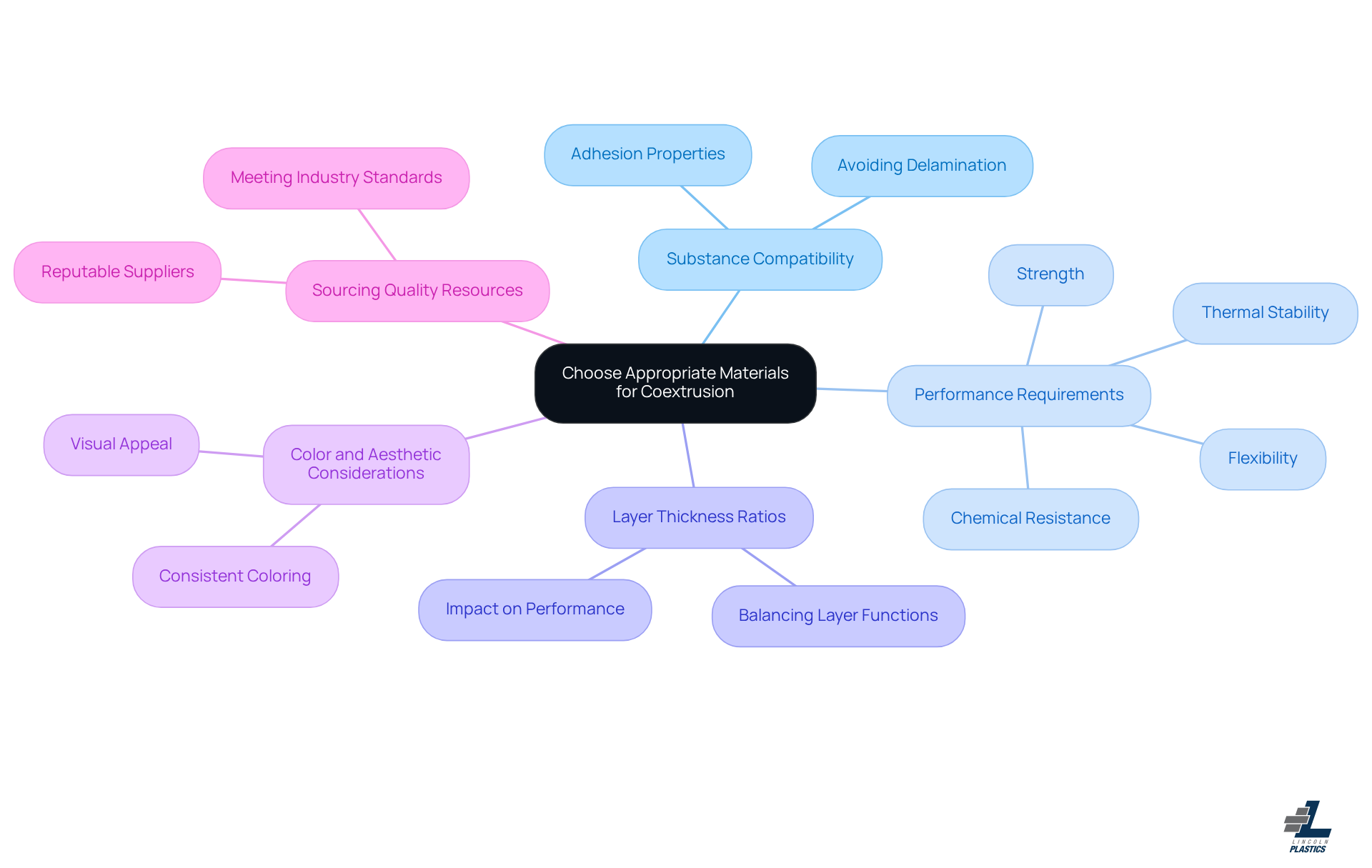
- Compatibility is crucial; you need to ensure that the substances you choose will adhere to each other during the process. If the materials aren’t compatible, you might end up with delamination, which can ruin the integrity of your final product.
- Performance characteristics are crucial; what specific performance characteristics do you need? Think about strength, flexibility, chemical resistance, and thermal stability. These factors are crucial for how well the item will function in its intended application.
- Layer thicknesses are also important to determine for each layer in your item produced through coextrusion. Getting this balance right can really affect overall performance and functionality, making sure that each layer does its job effectively.
- Aesthetic qualities matter; if how the product looks matters to you, check that the components can be colored consistently. You want to achieve the desired appearance without sacrificing performance. For instance, coextrusion allows Plastics to add an additional color into your profile, boosting both functionality and visual appeal.
- Supplier relationships are key; don’t forget to work with reputable suppliers to ensure that the materials meet industry standards. Companies, for example, partners closely with OEMs to make sure all items meet standards, including special evaluations for fit and function. Quality materials are key to creating products that meet performance standards.
By thoughtfully selecting your resources based on these considerations, you can significantly enhance the performance and quality of your products, ensuring they meet the diverse needs of various applications.
Implement Quality Control Measures in Coextrusion
To implement effective quality control in coextrusion, let’s break it down into some straightforward steps:
- Establish Excellence Criteria: First things first, clearly define what excellence looks like for your coextrusion items. Think about product specifications, material properties, and aesthetic requirements. This foundational step ensures that everything meets the necessary specifications right from the get-go, staying true to Plastics' commitment to accuracy for customers.
- Conduct Regular Inspections: Now, don’t forget to schedule routine inspections of the production line. Focus on temperature, pressure, and flow rates. Regular oversight is super important for keeping item integrity intact and avoiding any flaws—just like with their stringent control measures.
- Utilize In-Line Testing: How about integrating some in-line testing methods? These can help you evaluate product standards in real-time. Techniques like thickness measurements, visual inspections, and material property assessments can quickly catch any issues, ensuring compliance with standards. A plastics company might use various check gauges to ensure everything fits just right for end use, highlighting how crucial this step is.
- Document and Analyze Data: Keeping comprehensive records of production parameters and performance test results is key. By examining this data, you can spot trends and identify areas for improvement, paving the way for enhanced quality—similar to the dedicated reference book some companies keep for their plastic profiles.
- Provide Thorough Training: It’s also essential to provide thorough training for everyone involved in the quality control protocols of the process. When you highlight the importance of standards, you ensure that each team member aligns with the organization’s performance goals, reflecting the company’s emphasis on collaboration with colleagues.
- Implement Continuous Monitoring: Make sure to continuously monitor temperature, pressure, and flow rates throughout the extrusion process. This step is vital for preserving item integrity and avoiding flaws, just as Lincoln Plastics does to maintain quality.
- Highlight Cooling Methods: Let’s talk about cooling methods! Incorporate techniques like water baths or air jets to maintain item integrity after extrusion. Proper cooling is crucial to prevent warping and dimensional inaccuracies, which are essential for meeting OEM specifications.
- Source Colors to Meet Specifications: Lastly, ensure you can source colors that match Pantone specifications for consistency across manufacturers. This enhances the customization aspect of your control measures.
By putting these steps into action, you can make sure your coextrusion products consistently meet the required specifications and performance standards. This not only boosts customer satisfaction but also fosters long-term business success!
Conclusion
Mastering coextrusion is a key step for manufacturers looking to boost their production processes. By tapping into the unique perks of this technique—like cost efficiency, better product performance, and design flexibility—companies can really elevate their operational game. Plus, integrating multiple materials not only streamlines production but also sparks innovation in product design, making coextrusion an invaluable tool in today’s manufacturing landscape.
Now, let’s dive into some essential strategies to optimize the coextrusion process:
- Prepping the manufacturing environment
- Picking the right equipment
- Enforcing strict quality control measures
Every step is crucial for achieving top-notch outcomes. Don't forget to consider material compatibility, environmental factors, and workflow optimization; these elements highlight the need for a well-structured approach to coextrusion.
Ultimately, embracing these best practices can lead to significant improvements in product quality and operational efficiency. Manufacturers should definitely take these insights and strategies to heart to stay competitive in a constantly changing market. By prioritizing coextrusion optimization, businesses can not only meet but exceed their customers’ diverse needs, ensuring long-term success and sustainability in their manufacturing journeys.
Frequently Asked Questions
What is coextrusion?
Coextrusion is a manufacturing technique that allows the simultaneous extrusion of two or more substances through a single die, resulting in multi-layered items that leverage the unique characteristics of each material.
What are the main benefits of coextrusion?
The main benefits of coextrusion include cost efficiency, enhanced item performance, design flexibility, and reduced waste. It streamlines production, allows for tailored product characteristics, enables intricate designs, and contributes to sustainable manufacturing practices.
How does coextrusion achieve cost efficiency?
Coextrusion achieves cost efficiency by integrating multiple materials into a single manufacturing step, which reduces production time and resource use, leading to significant cost savings, especially in high-volume production.
Can you give an example of enhanced item performance through coextrusion?
An example of enhanced item performance is in composite decking, where coextrusion combines a base layer of polypropylene with natural fibers for strength, and a top layer of pure plastic for waterproof and wear-resistant properties.
How does coextrusion provide design flexibility?
Coextrusion provides design flexibility by allowing the creation of intricate shapes and profiles that traditional methods may struggle with, making it particularly useful for customized solutions in industries like medical applications.
What steps should be taken to prepare a manufacturing environment for coextrusion?
Steps to prepare a manufacturing environment for coextrusion include assessing space requirements, optimizing workflow, controlling environmental factors, ensuring safety compliance, and installing necessary utilities.
Why is it important to control environmental factors in coextrusion?
Controlling environmental factors such as temperature and humidity is important to prevent contamination, as small variations can affect substance characteristics and processing results, particularly when using recycled materials.
What safety measures should be in place for coextrusion operations?
Safety measures should include proper ventilation, emergency shut-off systems, and thorough training for staff on how to safely manage substances and machinery, ensuring a safe working environment.
What utilities are essential for coextrusion processes?
Essential utilities for coextrusion processes include water, electricity, and compressed air, which must be set up correctly to support the operation of coextrusion machinery effectively.
List of Sources
- Understand Coextrusion: Definition and Benefits
- coperion.com (https://coperion.com/en/news-media/newsletter/2024/food-in-focus-edition-22024/co-extrusion-adds-value-to-extruded-cereals-snacks-and-pet-treats)
- plasticsmachinerymanufacturing.com (https://plasticsmachinerymanufacturing.com/extrusion/article/53099742/guill-develops-new-co-extrusion-crosshead-design)
- wallong-wpc.com (https://wallong-wpc.com/advantages-and-applications-of-coextrusion-composite-decking.html)
- Redefining Durability and Customization with Coextrusion Technology (https://windowanddoor.com/article/redefining-durability-and-customization-coextrusion-technology)
- tpschem.com (https://tpschem.com/news/2025-evoh-co-extrusion-film-white-paper-cost-reduction-and-effici)
- Prepare Your Manufacturing Environment for Coextrusion
- chyiyang.com (https://chyiyang.com/transforming-waste-into-gold-aba-co-extrusion-machine-revolutionizes-bag-manufacturing)
- prm-taiwan.com (https://prm-taiwan.com/enews/issue-261/polystar-coextrusion-amp-recycling-making-plastic-film-sustainable_1733)
- Redefining Durability and Customization with Coextrusion Technology (https://windowanddoor.com/article/redefining-durability-and-customization-coextrusion-technology)
- Select and Configure Equipment for Coextrusion
- exelliq.com (https://exelliq.com/en/news-en)
- corporate.davis-standard.com (https://corporate.davis-standard.com/news)
- coperion.com (https://coperion.com/en/news-media/newsletter/2024/food-in-focus-edition-22024/co-extrusion-adds-value-to-extruded-cereals-snacks-and-pet-treats)
- Current News Articles (https://ptiextruders.com/news)
- Choose Appropriate Materials for Coextrusion
- trangtinpackaging.com (https://trangtinpackaging.com/blogs/news/elevating-flexible-packaging-the-power-of-coextrusion-technology)
- Redefining Durability and Customization with Coextrusion Technology (https://windowanddoor.com/article/redefining-durability-and-customization-coextrusion-technology)
- intelmarketresearch.com (https://intelmarketresearch.com/multilayer-co-extrusion-vacuum-bagging-film-market-7674)
- hysum.com (https://hysum.com/news/multilayer-coextruded-films-more-layers-better-solutions)
- gmatw.com (https://gmatw.com/en/article/Innovation-in-Co-Extrusion-Process--Multi-Manifold-Die.html)
- Implement Quality Control Measures in Coextrusion
- quality-assurance.com (https://quality-assurance.com/blog/importance-of-quality-standards-for-manufacturing-industry.html)
- Quality Control in Plastic Extrusion for Consistent Results | Rocal (https://rocalextrusions.co.uk/news/quality-control-in-plastic-extrusion-to-ensure-consistent-results)
- Unlocking the Versatility of Plastic Profile Extrusion (https://lakelandplastics.com/understanding-the-versatility-of-plastic-profile-extrusion)
- pri-plastics.com (https://pri-plastics.com/understanding-plastic-extrusion-a-comprehensive-guide)
- wintechmc.com (https://wintechmc.com/news_detail/1858349647352315981.html)
Related posts

Right-Sized Production Runs: Flexibility Without the Waste
Lincoln Plastics offers right-sized production runs with a 10-hour minimum — balancing efficiency with flexibility so OEMs avoid oversized orders.


Co-Extrusion: Combining Two Materials for Better Performance
Lincoln Plastics offers co-extrusion, combining two plastics into a single profile for greater design freedom, performance, and cost savings.
Beyond Extrusion: Value-Added Services That Simplify Production
Beyond Extrusion: Value-Added Services That Simplify Production
