

Master Co-Extrusion: Best Practices for OEM Success
Introduction
Co-extrusion is not just a trend; it's a game-changer for OEMs aiming to elevate their product performance and efficiency. This innovative process enables the simultaneous extrusion of multiple materials. The result? Composite profiles that harness the strengths of each component.
As industries increasingly prioritize sustainability and cost-effectiveness, many OEMs struggle with integrating these advanced techniques into their existing workflows. However, by mastering co-extrusion, manufacturers can not only enhance product quality but also gain a competitive edge in the market.
Understanding and adopting co-extrusion techniques could be the key to thriving in an increasingly competitive landscape.
Define Co-Extrusion: Understanding the Process and Its Importance
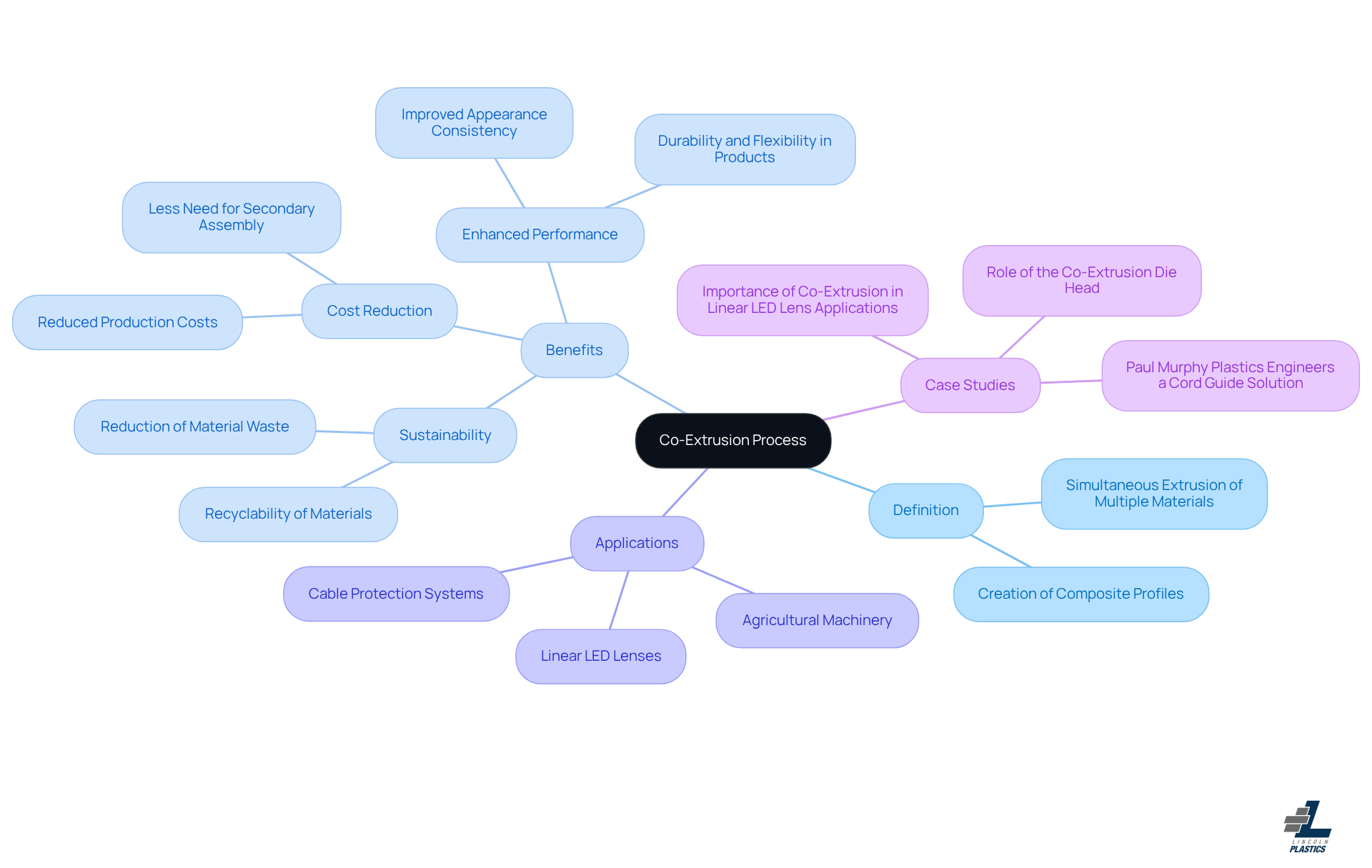
Co-extrusion transforms manufacturing by enabling the simultaneous extrusion of multiple materials, resulting in products that surpass those made by traditional methods. This technique creates composite profiles that combine the best features of each material, leading to better performance and functionality. For instance, in cable protection systems, it effectively merges a rigid outer layer with a flexible inner layer, providing both durability and flexibility.
Are you aware of how crucial this manufacturing process is for OEMs? It allows manufacturers to optimize product design and performance while simultaneously reducing production costs. Statistics indicate that this technology can significantly streamline production processes, as it reduces the need for secondary assembly and enhances appearance consistency. This is particularly beneficial in applications such as linear LED lenses, where integrating multiple optical functions is essential.
Case studies emphasize the practical uses of combined extrusion in various sectors, including agriculture. For example, the combined extrusion method has been employed to produce specialized components that satisfy the stringent requirements of agricultural machinery, ensuring reliability and efficiency in the field. Lincoln Plastics excels in custom rigid conduit manufacturing and can easily source colors that meet your Pantone specifications for consistency across manufacturers. Specialist views highlight that utilizing dual-extrusion technology not only enhances item standards but also promotes sustainability by reducing material waste.
By embracing co-extrusion, OEMs can elevate their product standards while positioning themselves as leaders in innovation and sustainability. With Lincoln Plastics' ISO 9001:2015 certification and stringent management plans, including dedicated manuals and in-process checks, OEMs can rely on the precision and assurance that Lincoln Plastics delivers. OEMs are encouraged to reach out to Lincoln Plastics for customized solutions and expert advice to discover how co-extrusion can enhance their offerings.
Explore Advantages of Co-Extrusion: Enhancing Product Quality and Efficiency
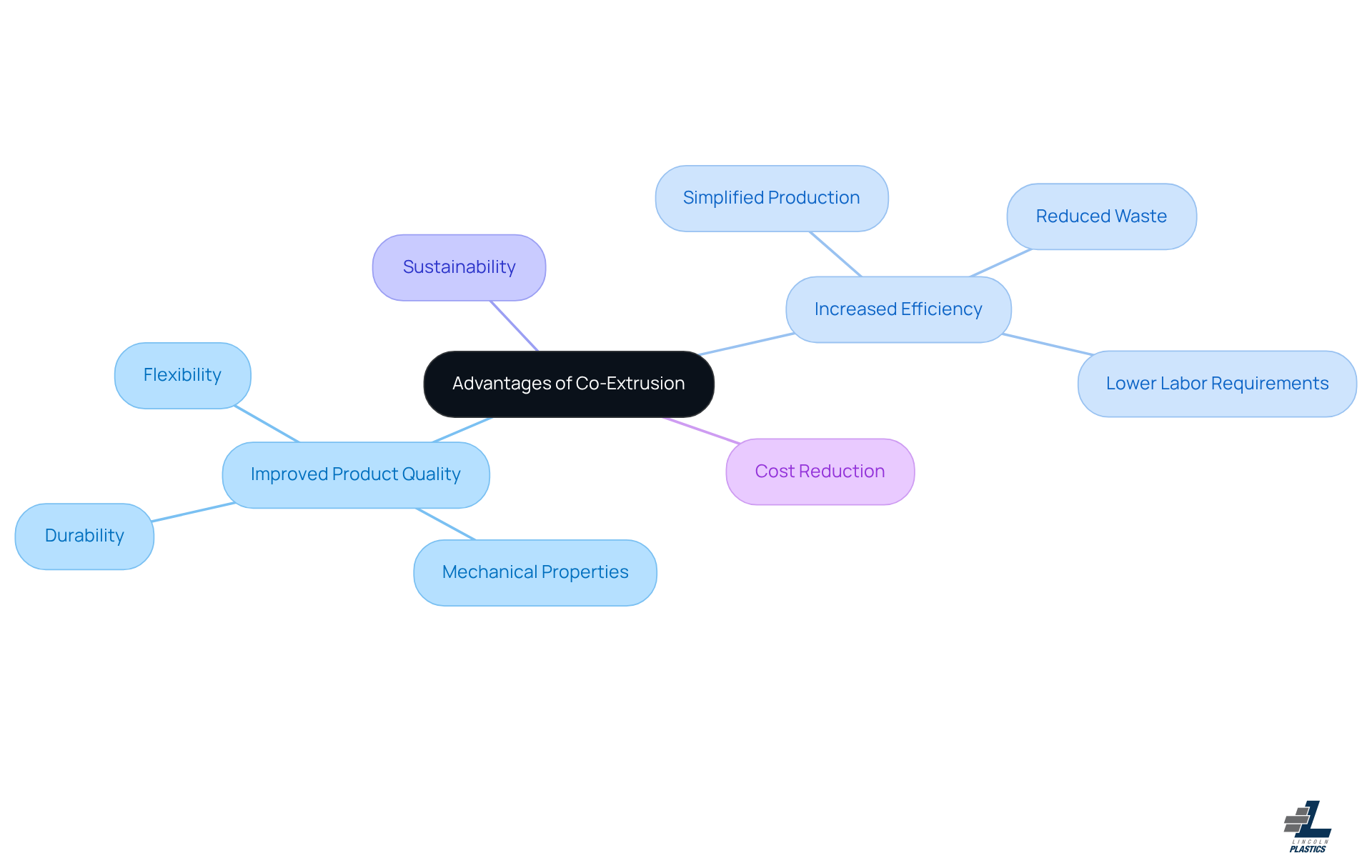
At Lincoln Plastics, strategically located in Lincoln, Nebraska, co-extrusion is not just a manufacturing technique; it’s a game-changer for product quality and efficiency. A key benefit is the ability to integrate different materials, resulting in improved mechanical properties such as increased strength and flexibility. For instance, in the agricultural sector, Lincoln Plastics specializes in irrigation pipes made through co-extrusion, featuring a robust outer layer for durability and a softer inner layer that enhances flexibility, facilitating easier installation and operation.
Co-extrusion simplifies production. It reduces the need for secondary processes like lamination or assembly. This not only speeds up manufacturing but also cuts down on waste, making it a sustainable choice. This efficiency leads to lower production costs and supports environmentally friendly practices, meeting the rising demand for sustainability in manufacturing.
Lincoln Plastics' strong management program, including ISO 9001:2015 certification, ensures that all items meet rigorous standards. Their dedicated quality plans and in-process checks, including the use of multiple types of check gauges, guarantee that profiles produced through co-extrusion are manufactured to precise specifications, providing OEMs with confidence in their product's performance.
Consider this: profiles created through co-extrusion in telecom infrastructure provide UV resistance. How does that enhance reliability and performance over time? These profiles have exhibited notable enhancements in longevity and decreased maintenance expenses, illustrating the efficacy of this technique in practical applications. Furthermore, custom cord covers created through combined extrusion enhance safety by arranging loose cords, demonstrating how personalized solutions can tackle specific operational challenges.
Statistics further support the benefits of simultaneous extrusion, indicating that it eliminates the need for secondary bonding processes, thereby reducing labor requirements by up to 30% and optimizing production economics. By utilizing a co-extrusion process, Lincoln Plastics enables manufacturers to achieve high-performance components that meet the rigorous demands of various industries, including agriculture, while ensuring product longevity and operational efficiency. Reach out to Lincoln Plastics today to invest in solutions that will elevate your manufacturing process.
Implement Best Practices: Material Selection and Process Optimization for Co-Extrusion
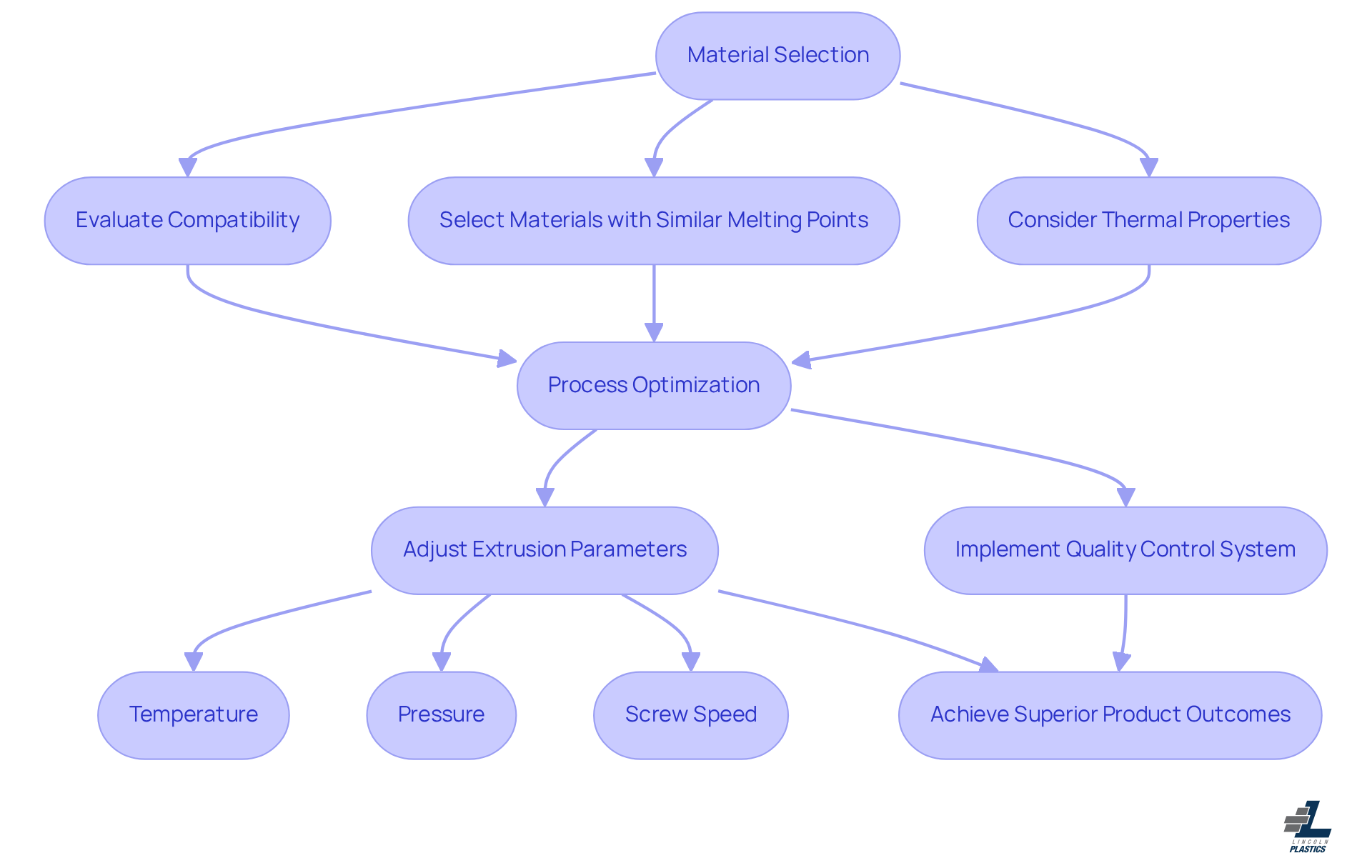
Achieving excellence in combined extrusion hinges on meticulous substance selection and process optimization. When selecting materials, evaluating compatibility regarding thermal properties, viscosity, and adhesion characteristics is essential. For instance, selecting materials with similar melting points facilitates a smoother co-extrusion process, which reduces the risk of delamination.
Furthermore, adjusting extrusion parameters - such as temperature, pressure, and screw speed - can significantly impact the quality of the final product. A robust control system during production is vital for spotting and fixing issues early, ensuring the final extruded profiles meet specifications. Lincoln Plastics, certified to ISO 9001:2015, employs a dedicated quality management program, including quality books and in-process checks, to uphold these standards.
By adhering to these best practices, OEMs can achieve superior product outcomes and customer satisfaction. A case study on dual-layer fluid and gas handling tubing illustrates how effective pairing of substances can lead to economical solutions that satisfy stringent application requirements. This tubing showcases the advantages of co-extrusion, featuring an inner layer made from a premium fluoropolymer for chemical inertness and an outer layer from thermoplastic materials that withstand high temperatures.
Additionally, expert insights from the University of Padova emphasize the importance of understanding the mechanical properties of materials produced through co-extrusion, which can vary based on deposition patterns and combinations. This approach not only streamlines production but also ensures that the final products meet the high standards expected across various industries, addressing challenges like supplier reliability and fluctuating resource costs.
For tailored solutions and quotes, OEMs are encouraged to contact Lincoln Plastics experts, who are committed to excellence and customer partnership. The strategic Midwest location of Lincoln Plastics enables quick order turnaround and efficient logistics, further enhancing the value offered to OEMs.
Overcome Challenges: Solutions for Common Co-Extrusion Issues
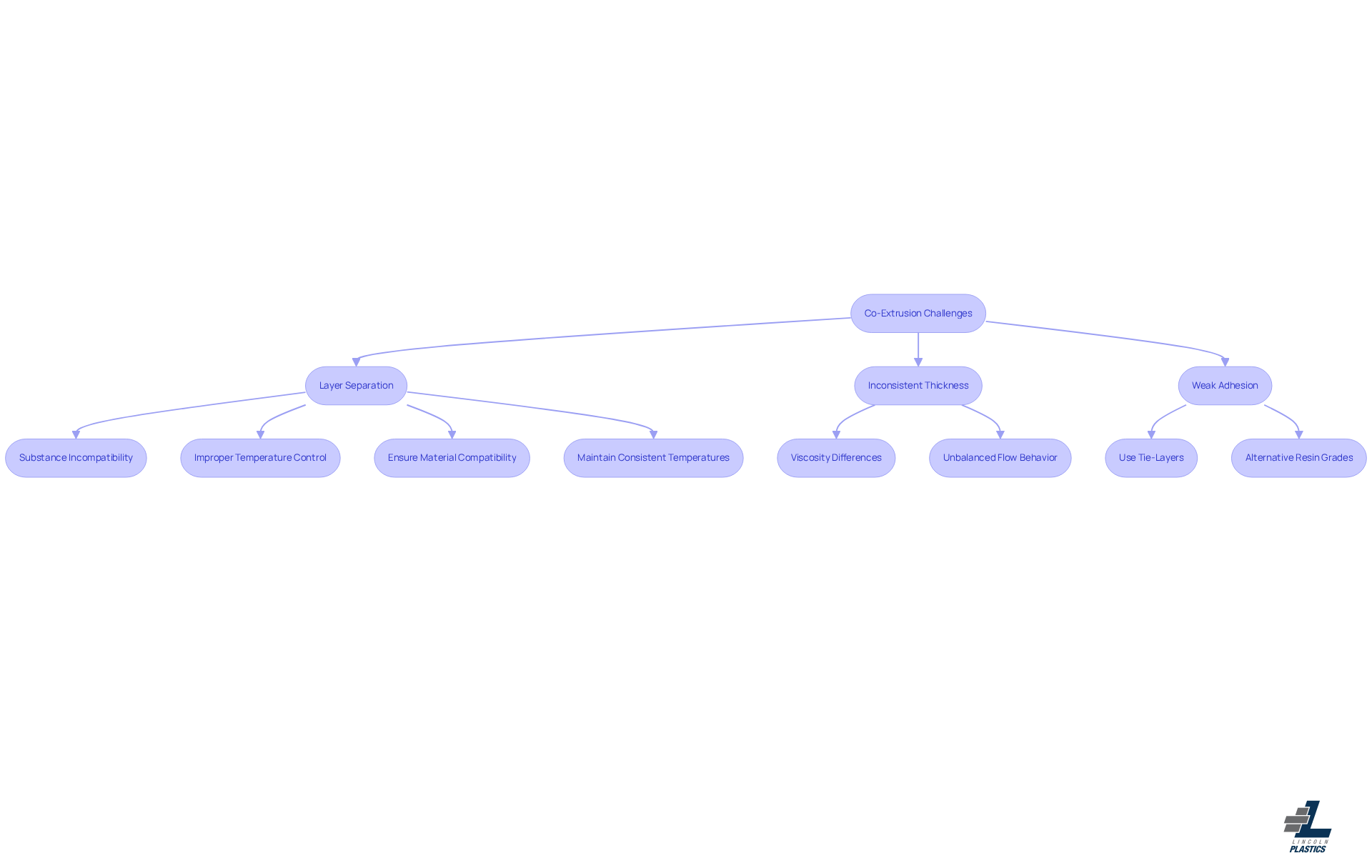
While the process of co-extrusion offers the potential for innovative multi-layered products, it also introduces significant challenges that manufacturers must navigate. Manufacturers encounter significant challenges with co-extrusion, such as:
For instance, layer separation can occur due to substance incompatibility, improper temperature control, or uneven pressure during the extrusion process. Layer instability often results from viscosity differences and unbalanced flow behavior between polymer layers, leading to defects such as irregular thickness and phase mixing.
To mitigate these challenges, ensuring material compatibility is crucial. Manufacturers should:
- Consult supplier data sheets
- Consider using tie-layers or alternative resin grades to enhance adhesion
Furthermore, maintaining consistent temperatures throughout the extrusion process is vital for preventing layer separation and ensuring proper bonding. Monitoring barrel, die, and adapter temperatures can help avoid issues like premature solidification or degradation.
At Lincoln Plastics, we take pride in our rigorous management program that ensures quality at every step, including:
- ISO 9001:2015 certification
- Dedicated manuals
- In-process checks
We utilize multiple types of check gauges to ensure a proper end-use fit and can easily source colors that meet your Pantone specifications for consistency across manufacturers. Regular maintenance of extrusion equipment is also essential. Routine inspections and timely upgrades can prevent layer separation and improve process reliability. Case studies have demonstrated that manufacturers who adopt strict maintenance protocols encounter fewer defects and improved standards. Additionally, investing in operator training can significantly reduce the risk of errors during production.
By choosing Lincoln Plastics, you're not just investing in products; you're securing a partnership that prioritizes quality and reliability in every layer. For tailored solutions and expert guidance, contact Lincoln Plastics today to discuss how we can meet your specific needs.
Conclusion
For OEMs striving to enhance product quality and operational efficiency, embracing co-extrusion is not just beneficial; it's essential. This innovative manufacturing technique allows multiple materials to be used simultaneously. As a result, it enhances product performance and reduces production costs. By leveraging co-extrusion, manufacturers can create composite profiles that cater to the diverse needs of industries such as agriculture, office management, and tradeshow applications, all while upholding sustainability.
Throughout this article, we've explored the advantages of co-extrusion, including:
- Improved mechanical properties
- Streamlined production processes
- The critical importance of material compatibility
At Lincoln Plastics, our ISO 9001:2015 certification reflects our commitment to quality management, ensuring every product meets high standards. Additionally, we've highlighted practical solutions for overcoming common co-extrusion challenges, emphasizing the need for meticulous process optimization and operator training.
In conclusion, the significance of co-extrusion in modern manufacturing cannot be overstated. Without adopting this technique, manufacturers risk falling behind in a competitive market. As OEMs seek to innovate and improve their offerings, partnering with experts like Lincoln Plastics can provide the tailored solutions necessary for success. By choosing to partner with Lincoln Plastics, OEMs can unlock the full potential of co-extrusion, ensuring they stay ahead in a rapidly evolving industry.
Frequently Asked Questions
What is co-extrusion?
Co-extrusion is a manufacturing process that allows the simultaneous extrusion of multiple materials, resulting in composite profiles that combine the best features of each material for improved performance and functionality.
How does co-extrusion benefit manufacturers?
Co-extrusion enables manufacturers to optimize product design and performance while reducing production costs. It streamlines production processes by minimizing the need for secondary assembly and enhancing appearance consistency.
Can you provide an example of co-extrusion in use?
An example of co-extrusion is in cable protection systems, where a rigid outer layer is combined with a flexible inner layer, providing both durability and flexibility.
What industries benefit from co-extrusion?
Co-extrusion is beneficial in various sectors, including agriculture, where it is used to produce specialized components that meet the stringent requirements of agricultural machinery.
How does Lincoln Plastics utilize co-extrusion?
Lincoln Plastics excels in custom rigid conduit manufacturing and can source colors that meet Pantone specifications, ensuring consistency across manufacturers.
What are the sustainability benefits of co-extrusion?
Utilizing dual-extrusion technology enhances product standards and promotes sustainability by reducing material waste.
What quality certifications does Lincoln Plastics hold?
Lincoln Plastics is ISO 9001:2015 certified and follows stringent management plans, including dedicated manuals and in-process checks to ensure precision and quality.
How can OEMs benefit from working with Lincoln Plastics?
OEMs can elevate their product standards and position themselves as leaders in innovation and sustainability by embracing co-extrusion with Lincoln Plastics. They are encouraged to reach out for customized solutions and expert advice.
List of Sources
- Define Co-Extrusion: Understanding the Process and Its Importance
- Co-Extrusion Manufacturing for Linear LED Lenses | Asahi Optics (https://asahi-optics.com/news/blog/co-extrusion-lens-manufacturing-linear-led-lenses.html)
- Exploring the Advantages of Co-Extrusion for Different Industries | High-Volume Plastic Profile Extrusion with In-House Tooling|Custom Profile (https://custom-profile.com/blog/exploring-the-advantages-of-co-extrusion-for-different-industries-and-applications)
- What is Co-extrusion Technology? (https://paulmurphyplastics.com/industry-news-blog/what-is-co-extrusion-technology)
- Plastic Co-Extrusion (https://paulmurphyplastics.com/industry-news-blog/plastic-co-extrusion)
- Explore Advantages of Co-Extrusion: Enhancing Product Quality and Efficiency
- 10 Innovative Examples of Extrusion Transforming Industries (https://lincoln-plastics.com/news-post/10-innovative-examples-of-extrusion-transforming-industries)
- Benefits of Co-Extrusion in Product Development (https://craftedplastics.com/blog/benefits-of-co-extrusion-in-product-development)
- The Co-Extrusion Process: A Complete Guide (https://lakelandplastics.com/what-is-the-co-extrusion-process-for-plastic)
- Plastic Co-Extrusion: What It Is and Examples | Bausano (https://bausano.com/en/press-and-news/plastic-co-extrusion-process-what-is-it-and-examples)
- Exploring the Advantages of Co-Extrusion for Different Industries | High-Volume Plastic Profile Extrusion with In-House Tooling|Custom Profile (https://custom-profile.com/blog/exploring-the-advantages-of-co-extrusion-for-different-industries-and-applications)
- Implement Best Practices: Material Selection and Process Optimization for Co-Extrusion
- 5 Best Practices for High-Quality Extrusion Molding Solutions (https://lincoln-plastics.com/news-post/5-best-practices-for-high-quality-extrusion-molding-solutions)
- Co-extrusion: Why, What and How? | Optinova (https://optinova.com/news/co-extrusion-why-what-and-how)
- Modeling Materials Coextrusion in Polymers Additive Manufacturing - PMC (https://pmc.ncbi.nlm.nih.gov/articles/PMC9863070)
- Coextrusion - an overview | ScienceDirect Topics (https://sciencedirect.com/topics/engineering/coextrusion)
- Overcome Challenges: Solutions for Common Co-Extrusion Issues
- How to Troubleshoot Layer Separation in Coextrusion - MAIWEI (https://maiwei-machine.com/how-to-troubleshoot-layer-separation-in-coextrusion)
- Modeling Materials Coextrusion in Polymers Additive Manufacturing - PMC (https://pmc.ncbi.nlm.nih.gov/articles/PMC9863070)
- Plastic Co-Extrusion: What It Is and Examples | Bausano (https://bausano.com/en/press-and-news/plastic-co-extrusion-process-what-is-it-and-examples)
- News - Multilayer Co-Extrusion Defects & PFAS-Free PPA Solutions (https://siliketech.com/news/multilayer-co-extrusion-defects-causes-solutions-and-pfas-free-processing-aid-technology)


