
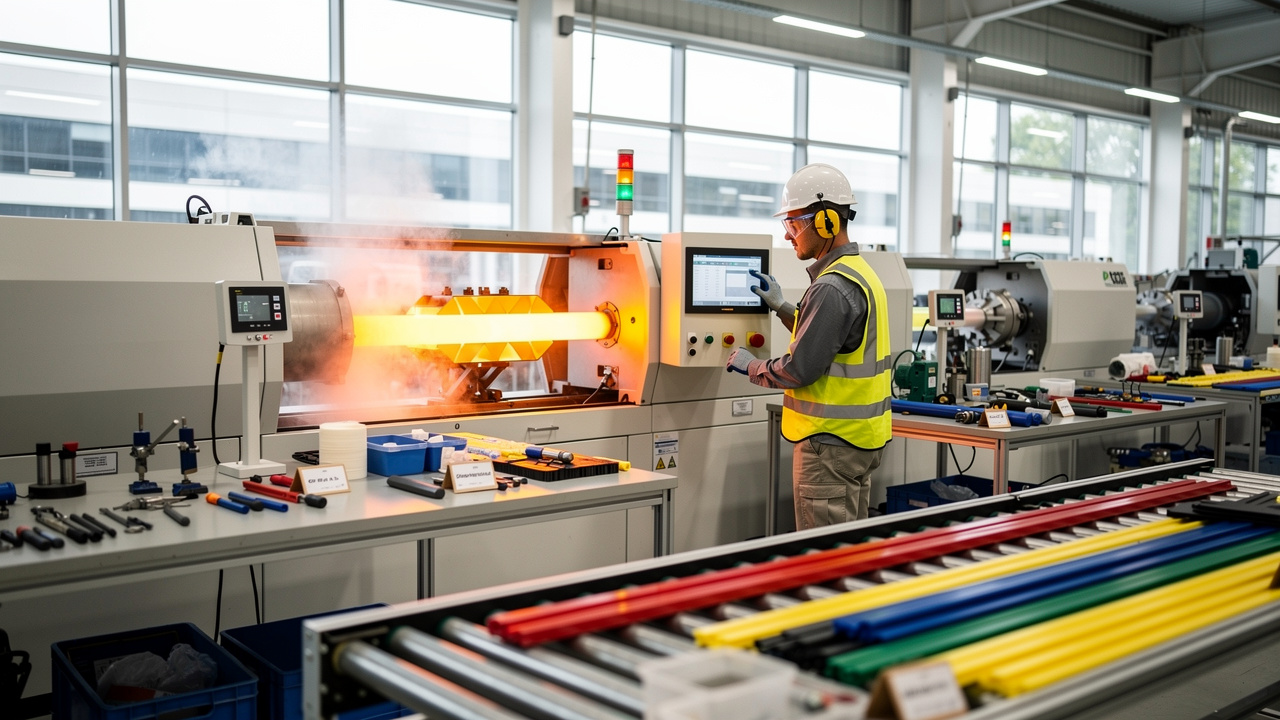
Master Best Practices for Extruded ABS in Custom Manufacturing
Introduction
Acrylonitrile Butadiene Styrene (ABS) stands as a pivotal material in custom manufacturing, celebrated for its exceptional mechanical properties and versatility. Let’s explore the best practices for extruding ABS, offering manufacturers insights on optimizing production processes while ensuring quality and efficiency. Yet, as the landscape of ABS applications evolves, manufacturers often struggle with the complexities of its extrusion. Understanding how to navigate these complexities is vital for manufacturers aiming to thrive in a competitive landscape.
Understand Key Properties of ABS Plastic
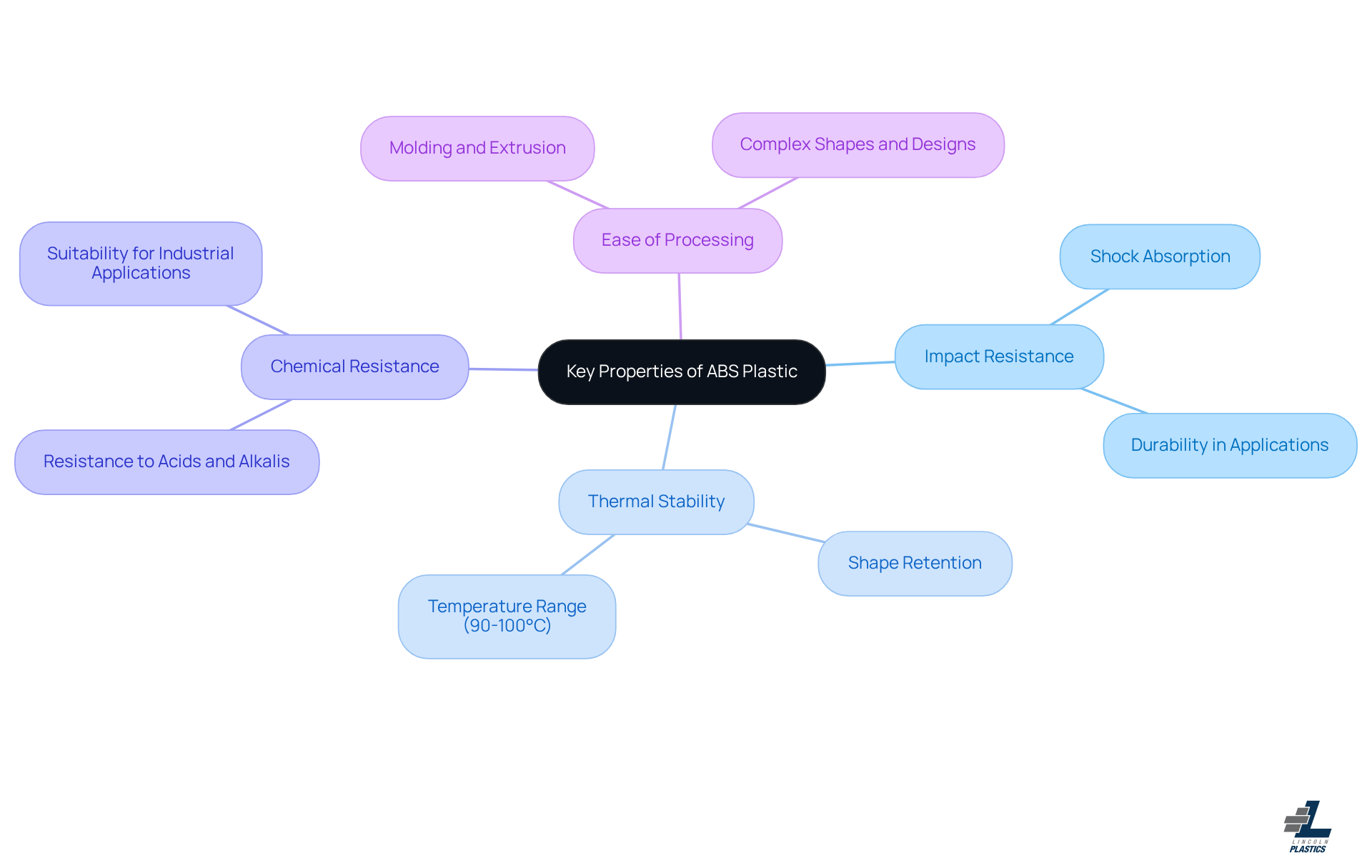
Acrylonitrile Butadiene Styrene (ABS) stands out as a leading thermoplastic, celebrated for its superior mechanical properties that cater to diverse industrial needs. Key characteristics of ABS include:
- Impact Resistance: ABS exhibits remarkable shock absorption capabilities, allowing it to withstand impacts without cracking, which is essential for durable applications.
- Thermal Stability: This material retains its shape and strength across a wide temperature range, with a glass transition temperature between 90-100°C, ensuring reliability in fluctuating environments.
- Chemical Resistance: ABS is resistant to a variety of chemicals, including acids and alkalis, making it suitable for demanding industrial applications.
- Ease of Processing: The material's ability to be easily molded and extruded facilitates the creation of complex shapes and designs, enhancing its applicability in custom manufacturing.
At Lincoln Plastics, we work hand-in-hand with OEMs to guarantee our ABS products meet all standards. This includes rigorous checks for ‘fit and function’. Our robust quality system features a dedicated quality book for each plastic profile, complete with drawings, critical in-process checks, and run documentation. We utilize multiple types of check gauges to ensure a proper end-use fit, and we can easily source colors that meet your Pantone specifications for consistency across manufacturers.
How does ABS's adaptability translate into real-world applications? From automotive components to consumer goods, its performance in custom manufacturing is unmatched. As of 2026, advancements in ABS applications continue to evolve, with an expected increase in production capacity that may lead to price fluctuations in the short term. This growth is anticipated to stabilize in the long run due to rising market demand. Furthermore, ABS's versatility is demonstrated in various sectors, including automotive, where it is used for structural components, and consumer goods, where its durability and aesthetic appeal are highly valued. Understanding these dynamics is essential for OEM purchasing managers aiming to optimize their procurement strategies amidst evolving market conditions.
Leverage Advantages of ABS in Custom Manufacturing
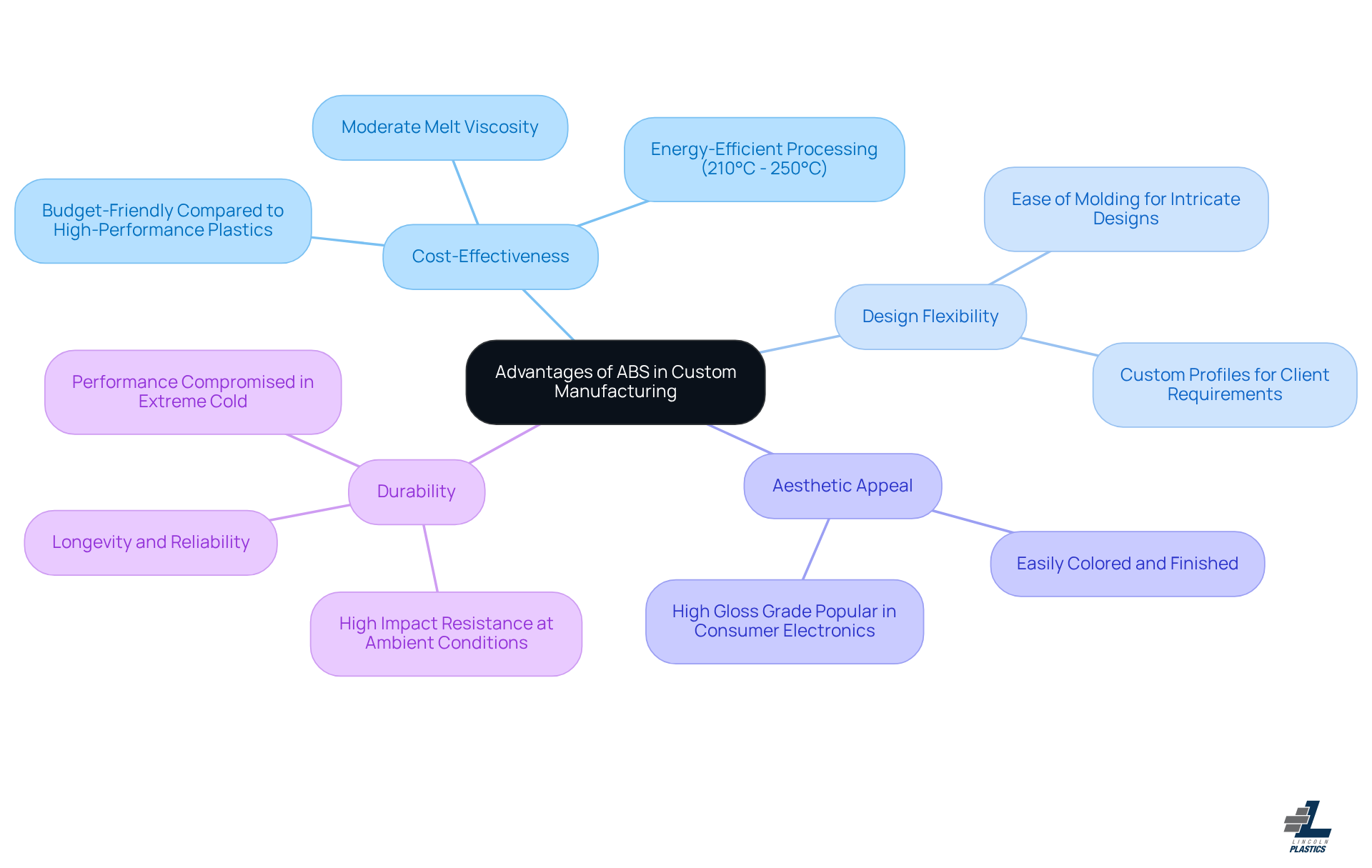
When it comes to custom manufacturing, ABS stands out as a material that combines cost-effectiveness with exceptional design flexibility and durability. Utilizing ABS in custom manufacturing presents numerous advantages:
- Cost-Effectiveness: ABS is a budget-friendly option compared to other engineering plastics, particularly when stacked against high-performance plastics like polycarbonate and nylon. This makes it ideal for mass production. Its moderate melt viscosity allows for energy-efficient processing at temperatures between 210°C and 250°C, further enhancing its cost-effectiveness.
- Design Flexibility: The material's ease of molding facilitates intricate designs and custom profiles tailored to specific client requirements. This flexibility is essential for manufacturers seeking to innovate and distinguish their offerings in competitive markets.
- Aesthetic Appeal: ABS can be easily colored and finished, significantly enhancing the visual quality of items. Its high gloss grade, for example, is particularly popular in consumer electronics and appliances, where aesthetics are paramount.
- Durability: Known for its toughness, ABS ensures longevity and reliability, reducing the frequency of replacements and maintenance. While ABS offers many advantages, its performance can be compromised in extreme cold, which may affect its application in outdoor settings. However, its high impact resistance at ambient conditions makes it suitable for demanding applications, such as automotive dashboards and interior panels, where both durability and a high-quality finish are essential.
Have you considered how ABS is revolutionizing the automotive sector? It's favored for components like bumpers and trim, thanks to its ability to withstand impacts while maintaining a visually appealing surface. This adaptability not only enhances product offerings but also positions manufacturers to meet diverse market demands effectively. By choosing ABS, manufacturers can not only improve their product quality but also gain a competitive edge in the market.
Implement Best Practices for ABS Extrusion
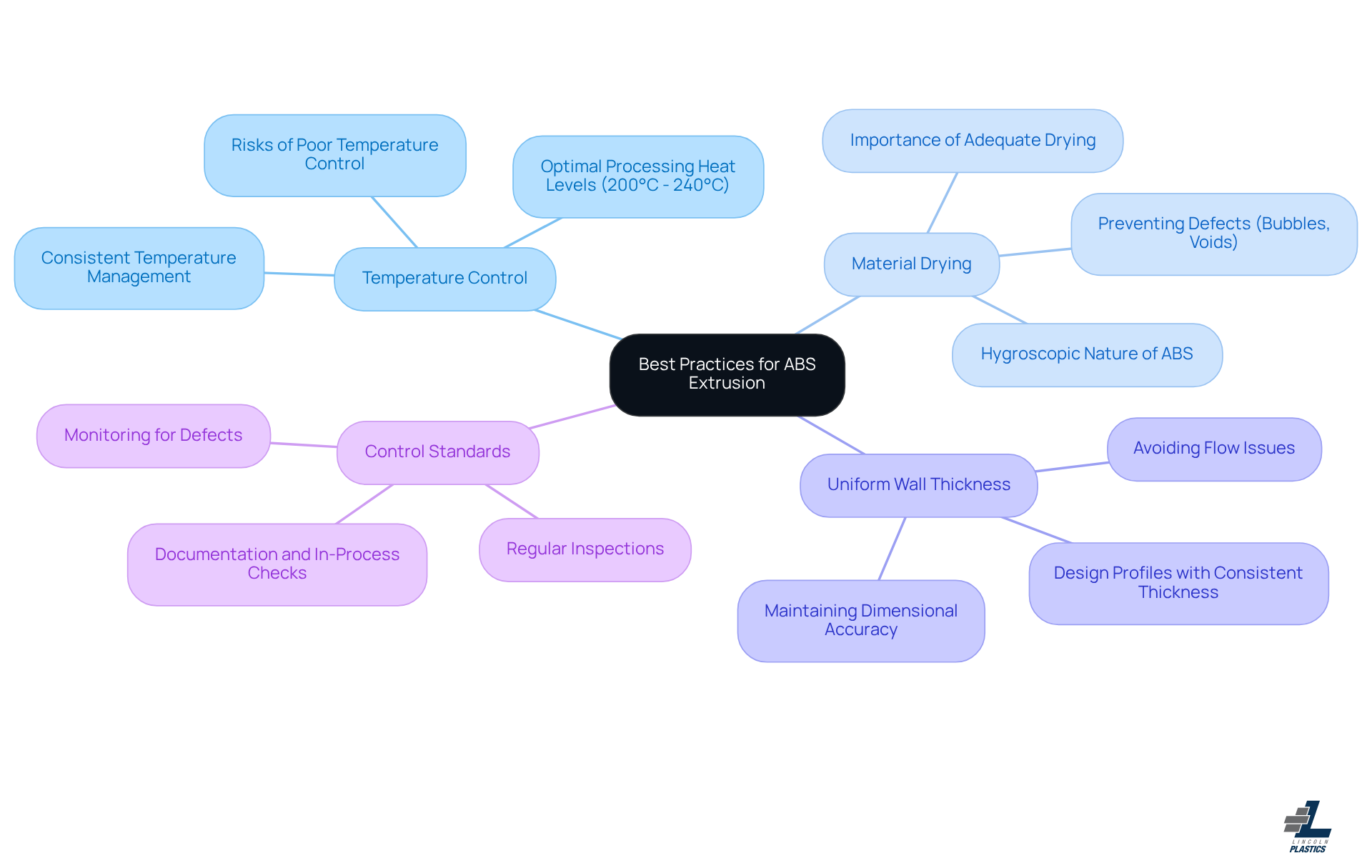
To excel in producing extruded ABS, manufacturers must prioritize best practices that ensure quality and efficiency. Here are key strategies to achieve optimal results:
- Temperature Control: Have you considered how maintaining consistent temperatures throughout the extrusion process can ensure proper melting and flow of ABS? Optimal processing heat levels for extruded ABS typically vary from 200°C to 240°C. Without precise temperature management, manufacturers risk producing flawed items that fail to meet quality standards.
- Material Drying: ABS is hygroscopic, meaning it absorbs moisture. Proper drying before the production of extruded ABS is essential to prevent defects like bubbles and voids. Have you considered how proper drying can prevent these issues? Failure to adequately dry the extruded ABS can compromise the integrity and performance of the item.
- Uniform Wall Thickness: Design profiles with consistent wall thickness to avoid flow issues and ensure even cooling, which helps maintain dimensional accuracy. Variations in wall thickness can lead to weak points in extruded ABS products.
- Control Standards: Implement regular inspections during production to monitor for defects and ensure compliance with specifications. A robust control system, as practiced by Lincoln Plastics, includes dedicated documentation and critical in-process checks to significantly reduce the likelihood of production errors.
For example, a manufacturer that implemented strict temperature controls and performed regular assessments reported a 30% decrease in defects, directly associating these practices with improved production efficiency and item standards. By adopting these practices, manufacturers can enhance their production processes and deliver superior products using extruded ABS. This aligns with Lincoln Plastics' commitment to providing custom extruded profiles tailored to the specific needs of OEMs, ensuring that they receive high-quality components that meet their exact requirements. Embracing these best practices not only elevates product quality but also positions manufacturers as leaders in the competitive landscape.
Ensure Quality Control and Certification in Production
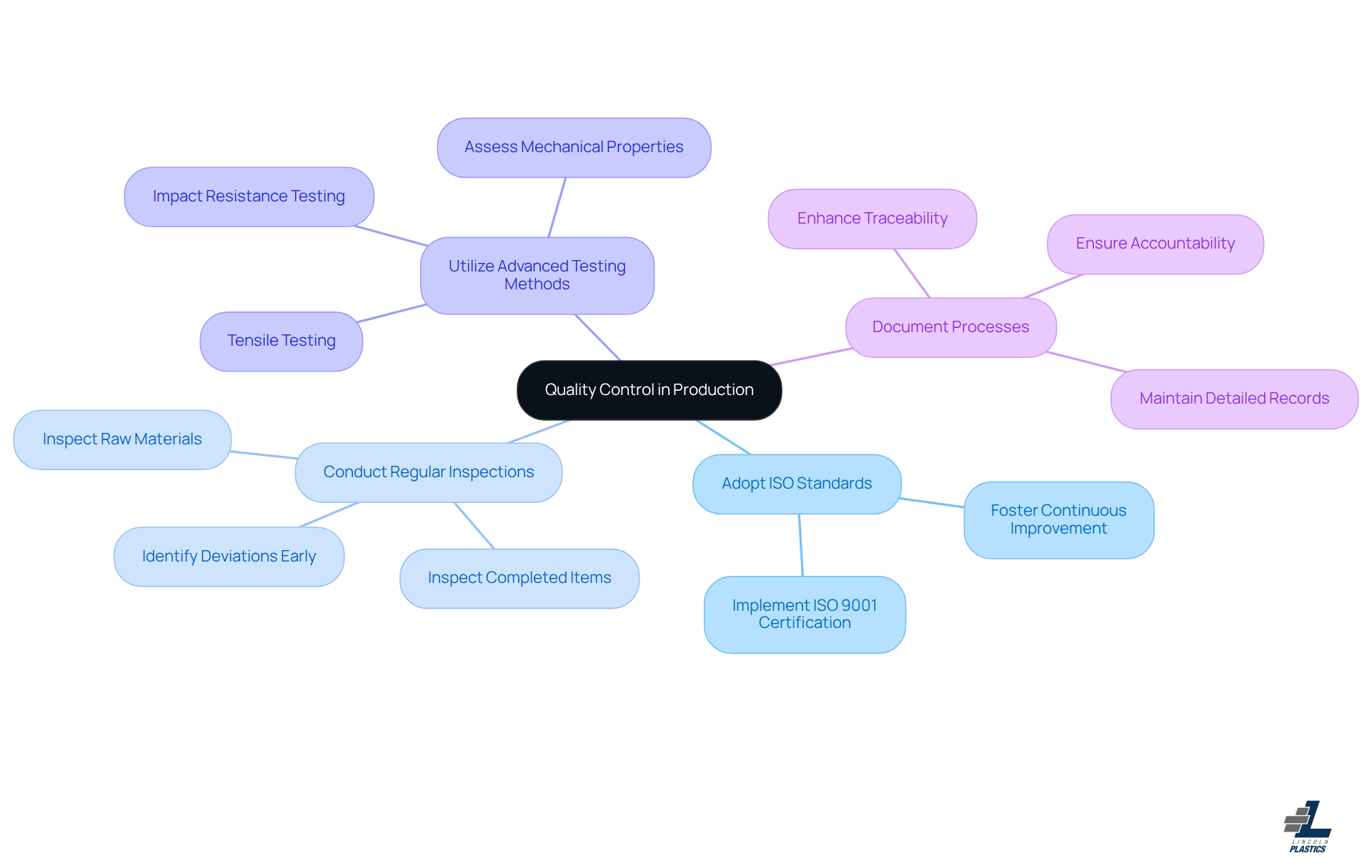
In the competitive landscape of manufacturing extruded ABS, quality control stands as a non-negotiable pillar of success. Manufacturers must prioritize the following key practices to ensure excellence:
- Adopt ISO Standards: Implementing ISO 9001 certification establishes a robust framework for quality management and fosters continuous improvement across production processes.
- Conduct Regular Inspections: Routine inspections of both raw materials and completed items are essential for verifying compliance with specifications and identifying deviations early in the production cycle.
- Utilize Advanced Testing Methods: Employing techniques such as tensile testing and impact resistance testing allows manufacturers to assess the mechanical properties of extruded ABS products, ensuring they meet required performance criteria.
- Document Processes: Maintaining detailed records of production procedures and standards checks enhances traceability and accountability, which are critical for effective management.
For instance, a manufacturer that integrated ISO 9001 practices into its operations reported improved customer satisfaction and a notable reduction in return rates. This underscores the effectiveness of stringent quality control measures. By prioritizing quality control, manufacturers not only enhance their reputation but also secure their position in the market, ultimately driving long-term success.
Conclusion
Mastering the best practices for extruded ABS is not just beneficial; it's essential for staying competitive in today's market. The unique properties of ABS - its impact resistance, thermal stability, and design flexibility - make it a versatile choice for various applications. Understanding these characteristics allows manufacturers to optimize production processes and deliver superior, tailored products.
This article highlights several key strategies for successful ABS extrusion:
- Maintaining proper temperature control
- Ensuring thorough material drying
- Implementing rigorous quality control measures
These practices enhance product quality and streamline production efficiency, ultimately leading to improved customer satisfaction. Furthermore, adhering to ISO standards and conducting regular inspections are critical for maintaining compliance and ensuring the integrity of extruded ABS products.
In a landscape where quality and innovation are paramount, manufacturers are encouraged to adopt these best practices and continuously refine their processes. Are you ready to elevate your manufacturing processes? By prioritizing quality control and embracing the advantages of ABS, companies can improve their product offerings and position themselves as leaders in the custom manufacturing sector. Embracing these practices is not merely an option; it's a necessity for those who aspire to lead in the custom manufacturing arena.
Frequently Asked Questions
What is ABS plastic and why is it significant?
Acrylonitrile Butadiene Styrene (ABS) is a leading thermoplastic known for its superior mechanical properties, making it suitable for diverse industrial applications.
What are the key characteristics of ABS plastic?
The key characteristics of ABS include impact resistance, thermal stability, chemical resistance, and ease of processing.
How does ABS perform in terms of impact resistance?
ABS exhibits remarkable shock absorption capabilities, allowing it to withstand impacts without cracking, which is essential for durable applications.
What is the thermal stability range of ABS?
ABS retains its shape and strength across a wide temperature range, with a glass transition temperature between 90-100°C.
Is ABS resistant to chemicals?
Yes, ABS is resistant to a variety of chemicals, including acids and alkalis, making it suitable for demanding industrial applications.
How easy is it to process ABS plastic?
ABS is easy to mold and extrude, which facilitates the creation of complex shapes and designs, enhancing its applicability in custom manufacturing.
What quality assurance measures does Lincoln Plastics implement for ABS products?
Lincoln Plastics ensures that ABS products meet all standards through rigorous checks for ‘fit and function,’ maintaining a dedicated quality book for each plastic profile, and utilizing multiple types of check gauges.
In what industries is ABS plastic commonly used?
ABS plastic is commonly used in the automotive industry for structural components and in consumer goods for its durability and aesthetic appeal.
What trends are expected in ABS production and pricing by 2026?
Advancements in ABS applications are expected to increase production capacity, which may lead to short-term price fluctuations, but the growth is anticipated to stabilize in the long run due to rising market demand.
Why is it important for OEM purchasing managers to understand ABS dynamics?
Understanding the dynamics of ABS is essential for OEM purchasing managers to optimize their procurement strategies amidst evolving market conditions.
List of Sources
- Understand Key Properties of ABS Plastic
- th-filter.com (https://th-filter.com/news/the-abs-plastic-market-will-see-a-further-increase-in-new-production-capacity-by-2026)
- Leverage Advantages of ABS in Custom Manufacturing
- rjcmold.com (https://rjcmold.com/news/the-benefits-of-abs-plastic-in-injection-molding)
- Implement Best Practices for ABS Extrusion
- 5 Best Practices for the Manufacturing Process of Extrusion (https://lincoln-plastics.com/news-post/5-best-practices-for-the-manufacturing-process-of-extrusion)
- Ensure Quality Control and Certification in Production
- 4 Best Practices for Quality Extrusion in Your Supply Chain (https://lincoln-plastics.com/news-post/4-best-practices-for-quality-extrusion-in-your-supply-chain)
- The Importance of Quality Control in Plastic Extrusion Manufacturing - Craftedplastics (https://craftedplastics.com/blog/the-importance-of-quality-control-in-plastic-extrusion-manufacturing)
- 25 Quotes to Inspire Quality And Success - Pro QC Blog (https://proqc.com/blog/25-quotes-to-inspire-quality-success)
Related posts

Right-Sized Production Runs: Flexibility Without the Waste
Lincoln Plastics offers right-sized production runs with a 10-hour minimum — balancing efficiency with flexibility so OEMs avoid oversized orders.


Co-Extrusion: Combining Two Materials for Better Performance
Lincoln Plastics offers co-extrusion, combining two plastics into a single profile for greater design freedom, performance, and cost savings.
Beyond Extrusion: Value-Added Services That Simplify Production
Beyond Extrusion: Value-Added Services That Simplify Production
