
How to Maintain Product Quality: 4 Essential Steps for OEMs
Introduction
In OEM manufacturing, product quality isn't just a goal; it's the cornerstone of success. This guide outlines four essential steps that OEMs can implement to elevate their quality assurance processes, ensuring that products not only meet but exceed industry standards.
Navigating the complexities of quality assurance can be daunting for manufacturers. Are you ready to explore strategies that ensure consistent excellence? By implementing these strategies, manufacturers can not only meet but redefine excellence in product quality.
Define Product Quality Standards
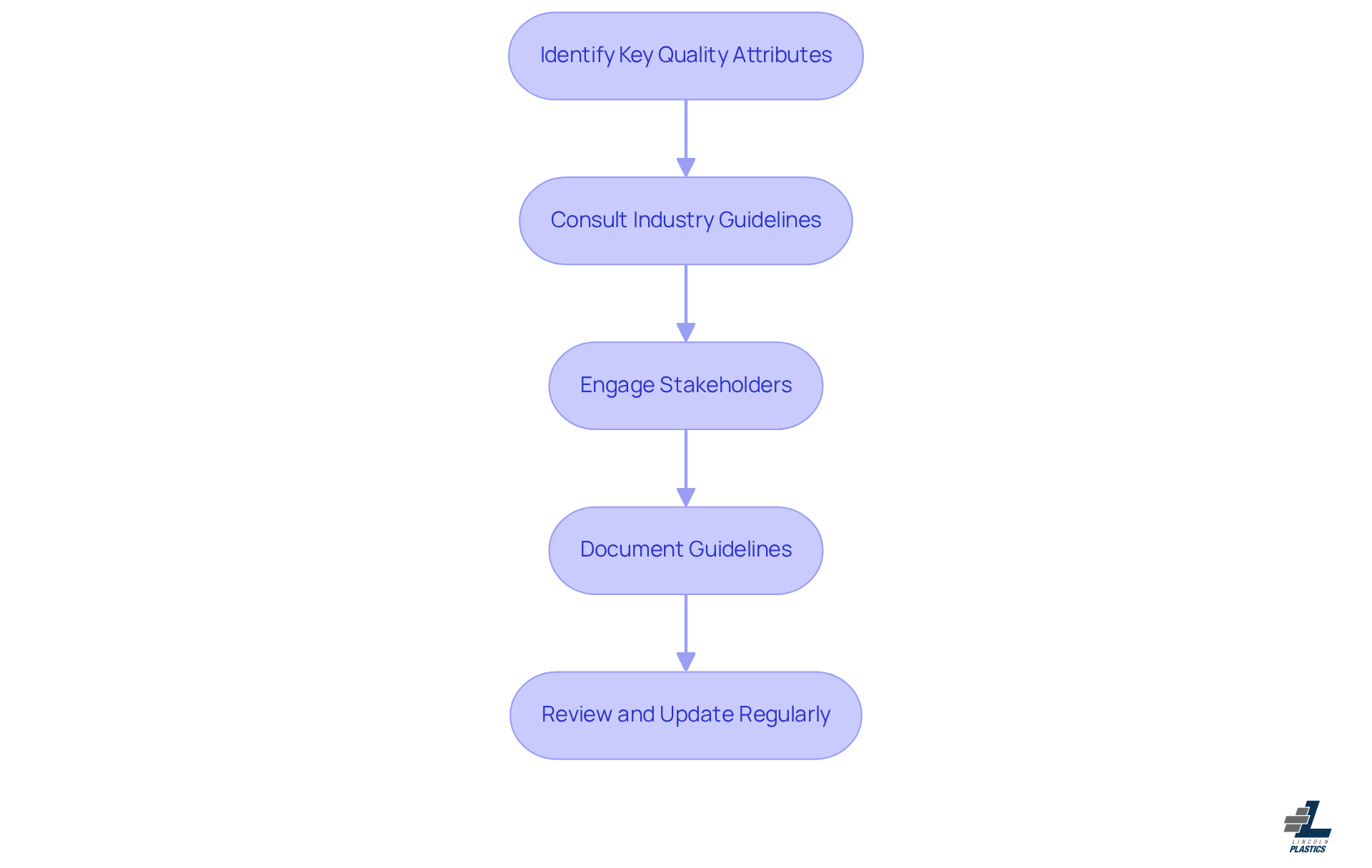
To understand how to maintain product quality, OEMs must establish clear and measurable quality criteria that drive excellence in production. Here’s how to do it:
- Identify Key Quality Attributes: Start by pinpointing the key quality attributes that your products must meet, like dimensions, material properties, and performance criteria. For example, when creating irrigation pipes, think about crucial factors such as pressure tolerance and flexibility.
- Consult Industry Guidelines: Refer to relevant industry guidelines, such as ISO and ASTM, that apply to your products. These criteria offer recommendations on acceptable performance levels and testing techniques, ensuring adherence to regulatory expectations.
- Engage Stakeholders: Collaborate with internal teams, including engineering, production, and assurance, as well as external stakeholders like suppliers and customers. This partnership aids in collecting insights on expectations and promotes a mutual comprehension of criteria.
- Document Guidelines: Create a comprehensive document outlining the excellence criteria, including specifications, testing methods, and acceptance benchmarks. This document should be readily available to all pertinent staff, fostering transparency and consistency in management standards.
- Review and Update Regularly: Quality criteria should not be static. Regularly review and update them based on feedback, technological advancements, and changes in customer requirements. However, many OEMs struggle to define these criteria clearly, leading to inconsistencies in product quality. This proactive method guarantees that your performance criteria are relevant and efficient in how to maintain product quality. By implementing these strategies, you not only enhance product quality but also solidify your position as a trusted leader in the industry.
Implement Quality Control Processes
In the competitive landscape of plastic extrusion, knowing how to maintain product quality through establishing rigorous quality control processes is essential for success. Follow these steps to ensure excellence:
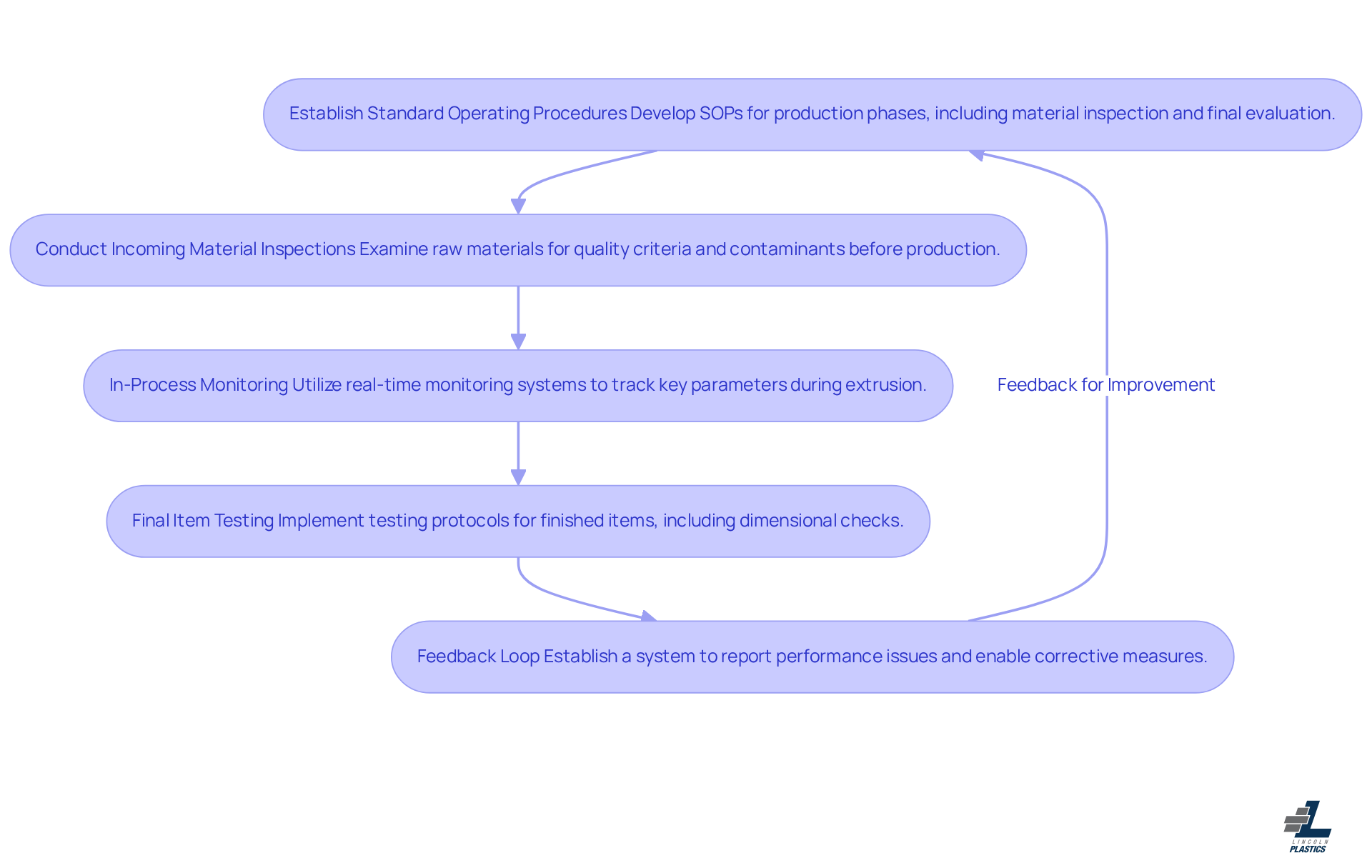
- Establish Standard Operating Procedures (SOPs): Develop SOPs that clearly outline the steps for each production phase, including material inspection, processing parameters, and final product evaluation. Training all employees on these procedures is crucial for understanding how to maintain product quality, ensuring consistency and standards that reflect Lincoln Plastics' commitment to excellence and adherence to ISO 9001:2015 certification.
- Conduct Incoming Material Inspections: Before production begins, examine raw materials to ensure they meet quality criteria. This includes checking for contaminants and verifying material specifications, which is vital for achieving high-quality outputs. At Lincoln Plastics, we rigorously check all materials to ensure they meet the specifications needed for top performance.
- In-Process Monitoring: Use real-time monitoring systems and AI-enhanced inspection software to track key parameters like temperature, pressure, and flow rate during the extrusion process. Continuous monitoring helps identify deviations from set standards immediately, which is crucial for understanding how to maintain product quality and addressing potential issues before they escalate. Lincoln Plastics' robust quality system includes dedicated quality books and in-process checks to ensure that all rigid profiles meet specified critical dimensions.
- Final Item Testing: Implement a testing protocol for finished items, including dimensional checks and performance tests. Utilize statistical sampling techniques to guarantee that a representative selection of items is examined, in accordance with the principles of Statistical Quality Control (SQC) to improve reliability. Notably, 93% of U.S. manufacturers consider how to maintain product quality as mission-critical to addressing industry challenges in 2025, underscoring the significance of these processes. Lincoln Plastics also provides Pantone color matching to ensure consistency across manufacturers, further enhancing product standards.
- Feedback Loop: Establish a feedback system to report performance issues back to the production team. This enables prompt corrective measures and fosters a culture of ongoing enhancement in the manufacturing system, which is crucial for understanding how to maintain product quality in the competitive environment of plastic extrusion. Furthermore, consider incorporating Six Sigma methodology to systematically minimize defects and improve overall control efforts. By mastering these methods, OEMs can significantly enhance their production quality, ensuring efficiency and excellence in every item created.
Monitor and Evaluate Product Quality
In the competitive landscape of manufacturing, knowing how to maintain product quality is not just a goal; it's a necessity for OEMs striving for excellence. Let’s explore the essential steps that can elevate your product standards:
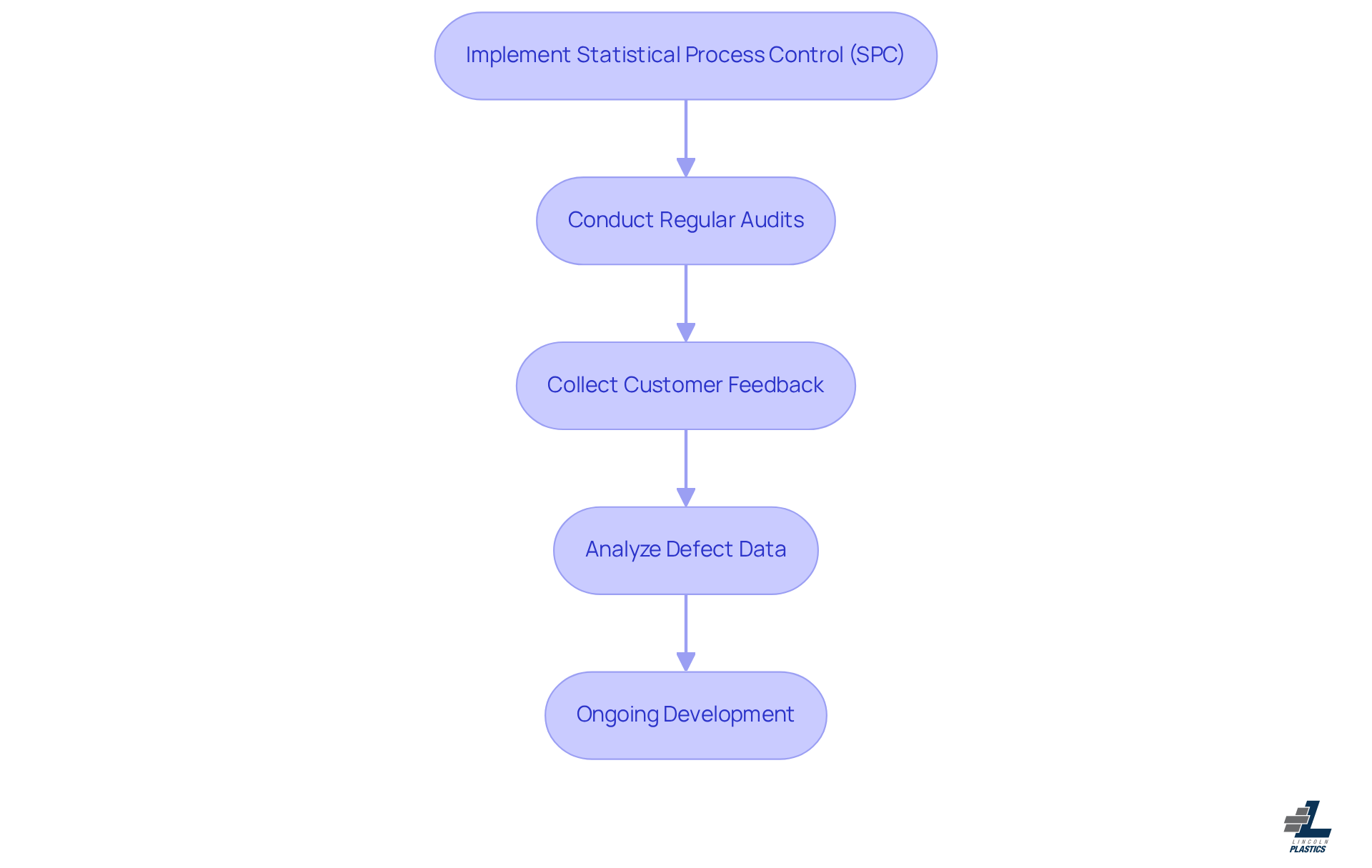
- Implement Statistical Process Control (SPC): Utilize SPC techniques to analyze production data and identify variations in the manufacturing system. This entails developing control charts to illustrate trends and identify anomalies, which can greatly improve assurance efforts.
- Conduct Regular Audits: Schedule periodic evaluations of control processes and production practices. These audits help ensure compliance with established standards and identify areas for improvement, which is crucial for understanding how to maintain product quality while fostering a culture of accountability and excellence.
- Collect Customer Feedback: Actively seek input from customers regarding item performance and standards. Utilize surveys, interviews, and direct communication to collect insights that can guide enhancements, ensuring that the products meet or surpass customer expectations.
- Analyze Defect Data: Maintain a comprehensive database of defects and performance issues. Regularly analyzing this data helps identify patterns and root causes, which is crucial for understanding how to maintain product quality through guiding corrective actions and process enhancements. This proactive approach can lead to significant reductions in defect rates.
- Ongoing Development: Cultivate an environment of ongoing development by motivating employees to propose enhancements to standards. Implement training programs to keep staff updated on best practices and new technologies, ensuring that the organization remains competitive in a rapidly evolving market.
At Lincoln Plastics, we collaborate closely with OEMs to ensure their items meet all standards, including special assessments for ‘fit and function’ using various types of check gauges. Our strong assurance system includes a dedicated manual for your plastic profile with drawings, critical in-process checks, and run documentation. We can also easily source colors that meet your Pantone specifications for consistency across manufacturers. This commitment to precision and assurance is further backed by our ISO 9001:2015 certification, ensuring that we consistently deliver products that meet your specifications. By partnering with Lincoln Plastics, you’re not just meeting standards; you’re setting them, ensuring your products stand out in the market.
Utilize Tools and Resources for Quality Maintenance
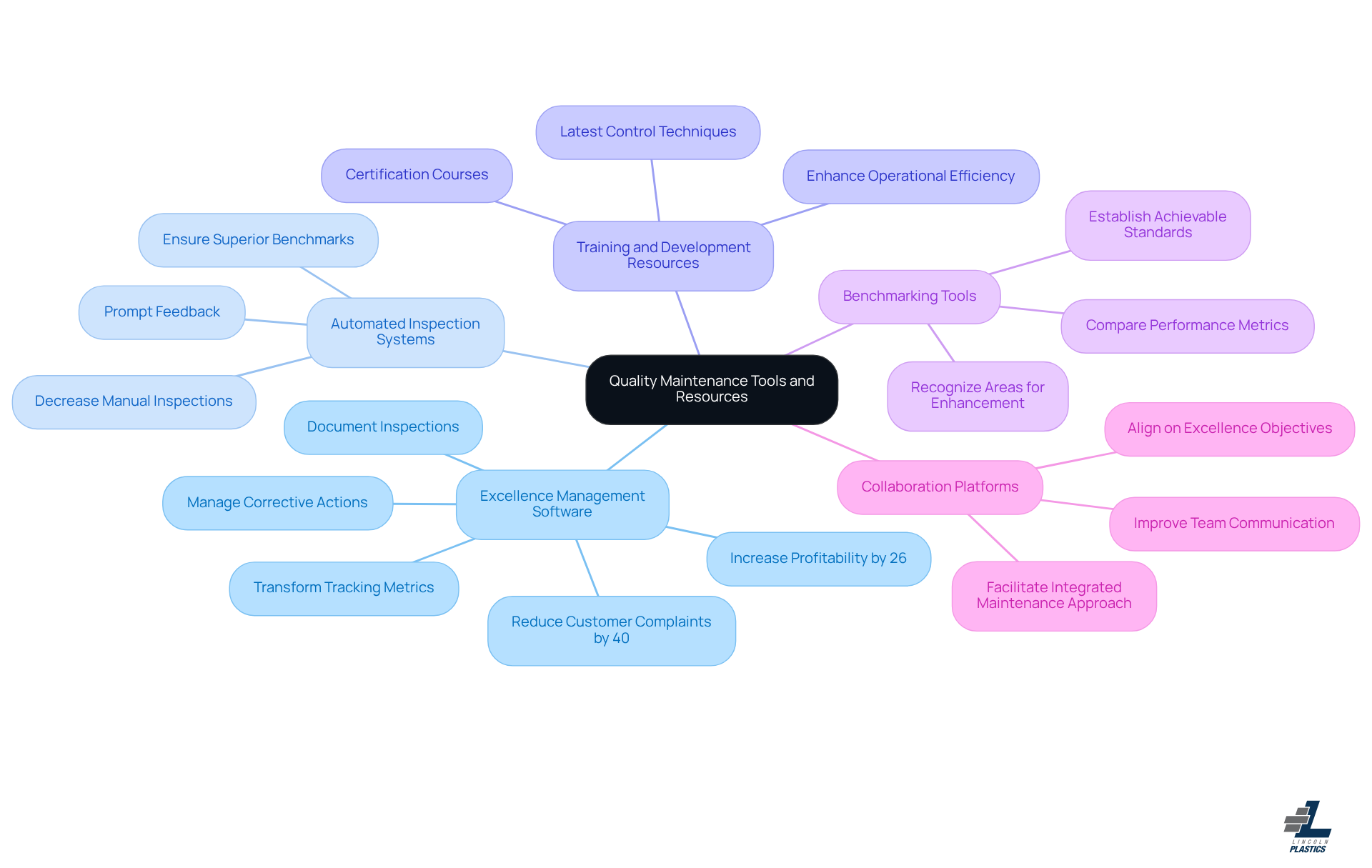
In an industry where precision and reliability are paramount, OEMs must adopt innovative tools to enhance maintenance efforts and learn how to maintain product quality to ensure standards are met.
- Excellence Management Software: Investing in excellence management software can transform how you track metrics, document inspections, and manage corrective actions, ensuring you stay ahead of the curve. This software not only simplifies standard procedures but also enhances data accessibility, leading to a more effective management system. Furthermore, businesses that prioritize management of standards report a 26% rise in profitability and a 40% decrease in customer complaints, as noted in recent industry statistics.
- Automated Inspection Systems: Have you considered how automated inspection systems with sensors and cameras can revolutionize defect detection during production? These systems offer prompt feedback, decreasing dependence on manual inspections and ensuring superior benchmarks are upheld throughout the manufacturing process.
- Training and Development Resources: Is your team equipped with the latest control techniques and management tools? Continuous training is essential to ensure they are prepared on how to maintain product quality, which ultimately aids in enhanced operational efficiency. Organizations should consider certification courses designed for assurance and regulatory affairs, as suggested in industry guidelines.
- Benchmarking Tools: How do your performance metrics stack up against industry standards? Utilizing benchmarking tools enables OEMs to compare their performance metrics against industry standards or competitors. This practice aids in recognizing areas for enhancement and establishes achievable standards, promoting a culture of ongoing improvement.
- Collaboration Platforms: Are your teams communicating effectively? Utilizing collaboration platforms improves communication among teams engaged in management of standards. Enhanced coordination guarantees that all team members are aligned on excellence objectives and processes, facilitating a more integrated approach to maintenance. As the FDA's Quality Management System Regulation (QMSR) takes effect on February 2, 2026, it is crucial for OEMs to learn how to maintain product quality through robust and compliant quality management strategies. Without these advancements, OEMs risk falling behind in a competitive landscape where quality is non-negotiable.
Conclusion
In the fiercely competitive world of plastic extrusion, maintaining product quality is not just important - it's essential for survival. By implementing clear quality standards and rigorous control processes, manufacturers can ensure their products meet and even exceed customer expectations. This commitment to excellence builds trust and strengthens market presence.
The article outlined four essential steps for maintaining product quality:
- Defining product quality standards
- Implementing quality control processes
- Monitoring and evaluating product quality
- Utilizing advanced tools and resources
Each step emphasizes collaboration, continuous improvement, and adherence to industry standards, such as ISO 9001:2015 certification. Lincoln Plastics exemplifies these principles by integrating robust quality management practices and leveraging its strategic Midwest location for efficient logistics and quick order turnaround.
How can you ensure your product quality keeps pace in this rapidly evolving market? OEMs are encouraged to adopt these best practices and consider partnering with Lincoln Plastics for tailored solutions that meet their specific needs. By prioritizing quality and leveraging the right tools, manufacturers can enhance their operational efficiency and position themselves as leaders in their respective industries. By committing to quality, you not only safeguard your reputation but also pave the way for future growth and success.
Frequently Asked Questions
What are product quality standards?
Product quality standards are clear and measurable criteria that define the expected quality attributes of a product, such as dimensions, material properties, and performance criteria.
How can OEMs identify key quality attributes for their products?
OEMs can identify key quality attributes by pinpointing essential factors that their products must meet, such as pressure tolerance and flexibility for irrigation pipes.
Why is it important to consult industry guidelines when establishing quality standards?
Consulting industry guidelines, such as ISO and ASTM, ensures that the products meet acceptable performance levels and testing techniques, helping to adhere to regulatory expectations.
How can engaging stakeholders improve the establishment of quality standards?
Engaging stakeholders, including internal teams and external partners, helps collect insights on expectations and promotes a mutual understanding of quality criteria.
What should be included in the documentation of quality guidelines?
The documentation should outline excellence criteria, including specifications, testing methods, and acceptance benchmarks, and be readily available to all relevant staff.
Why is it necessary to review and update quality criteria regularly?
Regular reviews and updates of quality criteria are necessary to incorporate feedback, technological advancements, and changes in customer requirements, ensuring that the criteria remain relevant and effective.
What challenges do OEMs face in defining product quality criteria?
Many OEMs struggle to define quality criteria clearly, which can lead to inconsistencies in product quality.
How does maintaining high product quality benefit OEMs?
By implementing effective quality standards, OEMs enhance product quality and solidify their position as trusted leaders in the industry.
List of Sources
- Define Product Quality Standards
- QMSR 2026 Explained: FDA Quality Management System Regulation & ISO 13485 Alignment Guide (https://sushvin.com/qmsr-2026-fda-quality-management-system-regulation.html)
- What the FDA’s QMSR Means for Medical Device OEMs and Manufacturing Partners (https://lso-inc.com/news/fda-qmsr-what-it-means-for-oems)
- FDA’s Revised QMSR Modernizes Device Quality Regulation - Gardner Law (https://gardner.law/news/fda-revised-qmsr-modernizes-device-quality-regulation)
- Quality Management System Regulation (https://fda.gov/medical-devices/postmarket-requirements-devices/quality-management-system-regulation-qmsr)
- FDA QMSR & ISO 13485: Key Changes Effective 2026 | IntuitionLabs (https://intuitionlabs.ai/articles/fda-qmsr-iso-13485-changes-2026)
- Implement Quality Control Processes
- Quality Control in Plastic Extrusion for Consistent Results | Rocal (https://rocalextrusions.co.uk/news/quality-control-in-plastic-extrusion-to-ensure-consistent-results)
- US manufacturers are turning to quality assurance to overcome 2025 industry challenges (https://todaysmedicaldevelopments.com/news/us-manufacturers-are-turning-to-quality-assurance-to-overcome-2025-industry-challenges)
- 4 Best Practices for Effective Process Control Quality in Extrusion (https://lincoln-plastics.com/news-post/4-best-practices-for-effective-process-control-quality-in-extrusion?dcc2137a_page=2)
- Statistical Quality Control in Manufacturing | Business and Management | Research Starters | EBSCOhost (https://ebsco.com/research-starters/business-and-management/statistical-quality-control-manufacturing)
- Quality Control and Testing Procedures - Plastic Extrusion Technologies (https://plasticextrusiontech.net/quality-control-and-testing-procedures-in-plastic-extrusions)
- Monitor and Evaluate Product Quality
- OEM UPDATE | Industrial Manufacturing News India (https://oemupdate.com)
- 2026 Manufacturing Industry Outlook (https://deloitte.com/us/en/insights/industry/manufacturing-industrial-products/manufacturing-industry-outlook.html)
- 2026 State of Manufacturing Report | Industry Trends & Outlook (https://fictiv.com/2026-state-of-manufacturing-report)
- Manufacturing Industry Trends 2026 (https://slalom.com/us/en/insights/manufacturing-outlook-2026)
- 2026 Trends in Manufacturing Automation (https://eosysgroup.com/insights/manufacturing-automation-system-integration-trends)
- Utilize Tools and Resources for Quality Maintenance
- Big Regulatory Changes in 2026 | PSC Software (https://pscsoftware.com/resource-center/article/regulatory-changes-2026-eqms-users)
- 2026 Medical Device Quality Trends (https://mastercontrol.com/gxp-lifeline/2026-medical-device-trends-quality-management)
- Quality Statistics and Why Your QMS Matters | Steelhead Technologies (https://gosteelhead.com/quality-statistics-and-why-your-qms-matters)
- assurx.com (https://assurx.com/preparing-for-the-fdas-quality-management-system-regulation-qmsr-a-guide-for-life-science-manufacturers)
- Quality Management Software for Manufacturing: 2026 Comparison (https://csp-sw.com/blog/quality-management-software-for-manufacturing-2026-comparison?hs_amp=true)
Related posts

Discover the key benefits of ISO certified plastic extrusion services for reliability and efficiency.


Discover the diverse applications of plastic tubing PVC across industries, enhancing efficiency and safety.
Master the installation and benefits of strain relief clamps for range cords to enhance safety and reliability.
