
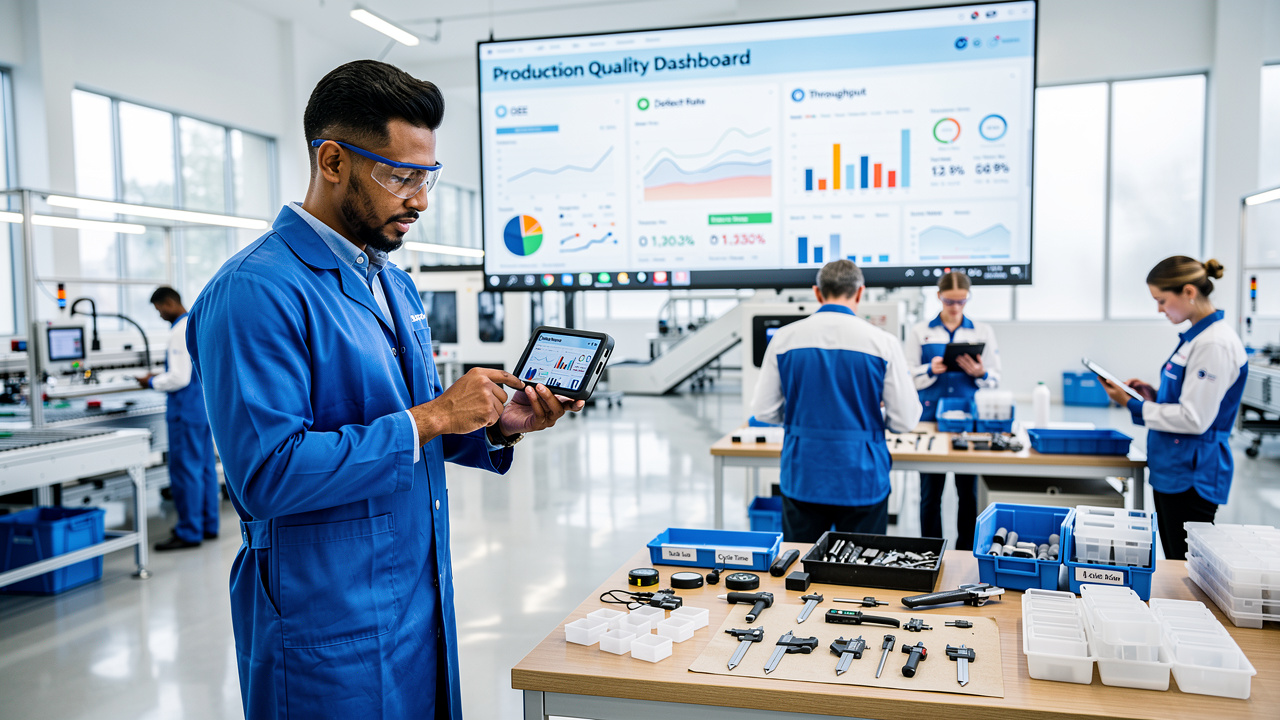
How to Improve Product Quality in Manufacturing: 5 Essential Steps
Introduction
In the fiercely competitive landscape of manufacturing, product quality is not just important; it is the bedrock of success, shaping customer satisfaction and brand loyalty. This guide outlines five crucial steps that manufacturers can take to enhance product quality, from defining excellence criteria to leveraging advanced technology for quality control.
Manufacturers face significant hurdles, including rising material costs and stringent regulatory demands. To thrive, manufacturers must not only overcome these challenges but also foster a culture of quality that empowers their workforce and drives continuous improvement.
Define Product Quality in Manufacturing
In manufacturing, knowing how to improve product quality in manufacturing is paramount, as it directly impacts customer satisfaction and business success. Here are essential steps manufacturers must take to define and enhance product quality:
- Identify Customer Requirements: Actively gather input from customers to gain insights into their needs and expectations regarding the product. This feedback is essential for aligning production with market demands.
- Establish Excellence Criteria: Create clear and measurable excellence criteria based on industry benchmarks and customer feedback. At Lincoln Plastics, these criteria are backed by our ISO 9001:2015 certification, ensuring strict management plans that include dedicated assurance documents and in-process evaluations.
- Consider Regulatory Adherence: Ensure that items comply with relevant regulations and safety requirements, particularly in sectors such as agriculture and manufacturing, where adherence is critical for operational success. Lincoln Plastics goes beyond ISO 9001 to meet additional regulatory requirements as needed.
- Evaluate Performance Metrics: Define key performance indicators (KPIs) that will be utilized to assess item standards at various stages of production. This helps pinpoint where improvements can be made and ensures that we consistently meet our high standards.
By establishing a comprehensive definition of merchandise excellence, manufacturers can create a strategic roadmap for enhancement that aligns with customer expectations and industry standards, which includes understanding how to improve product quality in manufacturing. A 2025 Deloitte survey revealed that 80% of manufacturing leaders intended to invest heavily in smart manufacturing efforts, highlighting the significance of control in improving performance and customer satisfaction. Case studies show that efficient control methods not only lower expenses but also promote brand loyalty by ensuring that items consistently meet or surpass customer expectations. For example, firms that adopted strong control measures reported a significant reduction in recalls and an increase in customer satisfaction ratings. Furthermore, AI technologies, including machine learning and computer vision, are progressively being employed to manage control processes, leading to enhanced product standards and minimized human error. However, manufacturers encounter challenges such as fluctuating material costs and supplier reliability issues, which can affect their capacity to uphold high-quality requirements. Addressing these challenges is crucial for sustaining competitive advantage in the market. At Lincoln Plastics, situated in Lincoln, Nebraska, we are dedicated to excellence and customer collaboration, guaranteeing that our rigid plastic extrusion solutions, including co-extrusion for multi-color or multi-material profiles, fulfill the highest standards while providing timely delivery to our clients. Manufacturers can secure their place in a competitive market by prioritizing quality and embracing innovative control methods, which demonstrates how to improve product quality in manufacturing to not only meet but exceed customer expectations.

Cultivate a Culture of Quality Among Employees
How can an organization truly excel if its employees don’t understand their vital roles in maintaining product standards? Establishing a culture of excellence within an organization requires nurturing an atmosphere where every employee comprehends their role in upholding and enhancing product standards. Here are actionable steps to cultivate this culture:
- Leadership Commitment: Leadership needs to demonstrate a real commitment to excellence by making it a priority in their decisions and how they allocate resources. As Brian Martensen states, "Leadership must set measurable performance goals that align with broader organizational objectives."
- Training and Development: Provide regular training sessions to educate employees about standards, processes, and their significance in the manufacturing workflow. Did you know that only 46% of employees clearly understand what’s expected of them in their role? This highlights the necessity of effective training.
- Encourage Open Communication: Foster an environment where employees feel comfortable sharing ideas and concerns related to standards. This can be achieved through regular meetings and feedback sessions. Did you know that 63% of employees thinking about leaving their jobs point to poor communication as a key factor? This shows just how vital effective communication is for keeping employees engaged.
- Acknowledge and Reward Excellent Efforts: Create a recognition program that celebrates employees who contribute to improving our standards, showing everyone how important these efforts are.
- Involve Employees in Improvement Initiatives: Engage employees in enhancement projects, allowing them to contribute their insights and expertise, which can lead to innovative solutions. Imagine the impact on retention if we actively involve our employees in improvement initiatives. Engaged employees are 31% more likely to stay at their organization, making their involvement crucial for long-term success.
Failing to prioritize excellence not only jeopardizes how to improve product quality in manufacturing but also risks employee retention and overall organizational success. By integrating excellence into the organizational culture, manufacturers can boost employee engagement and dedication to performance goals, which is essential for understanding how to improve product quality in manufacturing and enhance customer satisfaction.

Implement a Quality Management System (QMS)
In today's competitive landscape, a robust Quality Management System (QMS) is not just beneficial; it's essential for OEMs striving for excellence. A QMS is a structured system that records processes, procedures, and responsibilities for achieving standards and objectives. At Lincoln Plastics, we understand the challenges OEMs face without a QMS, and we emphasize the importance of a strong system to ensure our products meet the highest standards of quality and compliance. Implementing a QMS effectively involves several key steps:
- Define Standards Objectives: Establish clear, measurable standards objectives that align with overall business goals and customer expectations, ensuring they reflect the specific needs of OEM partners.
- Document Processes: Develop comprehensive documentation of all manufacturing procedures, including operating protocols (SOPs) and work instructions, supported by our dedicated reference book that includes essential in-process checks and run documentation.
- Assign Responsibilities: Clearly define roles and responsibilities for excellence management within the organization, ensuring accountability at all levels, which is crucial for maintaining our ISO 9001:2015 certification.
- Conduct Training: Provide training for employees on the QMS, emphasizing their roles in upholding standards and compliance, fostering a culture of excellence and teamwork.
- Monitor and Measure Performance: Implement metrics to assess performance standards, using tools like control charts and audits to identify areas for enhancement, ensuring that our offerings consistently meet OEM specifications.
The discussion will focus on how to improve product quality in manufacturing. Evaluate and enhance how to improve product quality in manufacturing by consistently assessing the QMS to identify opportunities for improvement and implementing necessary modifications to procedures and records.
How can a robust QMS transform your operations? By establishing one, Lincoln Plastics enhances its ability to deliver high-quality items consistently, reinforcing our commitment to excellence and customer partnership. Failing to ensure color consistency can lead to brand dilution; however, we can source colors that meet your Pantone specifications for consistency across manufacturers. Our strategic location in Lincoln, Nebraska, allows for efficient logistics and quick order turnaround. For tailored solutions, we invite you to contact Lincoln Plastics experts today.

Leverage Technology for Enhanced Quality Control
In today's competitive landscape, integrating advanced technology into control processes is not just beneficial; it's essential for maintaining high product standards and operational efficiency. Here are key technologies to consider:
- Automated Inspection Systems: Implement automated inspection systems that use sensors and cameras to detect defects in real-time, reducing human error and increasing inspection speed.
- Data Analytics: Utilize data analytics tools to analyze production data, identifying trends and patterns that can inform enhancement initiatives.
- IoT Integration: Leverage the Internet of Things (IoT) to link machines and devices, facilitating real-time observation of production processes and prompt feedback on performance metrics.
- Management Software: Invest in management software that centralizes data, streamlining documentation and reporting processes while facilitating compliance with industry standards.
- Predictive Maintenance: Employ predictive maintenance technologies to foresee equipment failures prior to their occurrence, reducing downtime and ensuring consistent production standards.
By embracing these technologies, manufacturers can discover how to improve product quality in manufacturing, enhance their quality control processes, and ensure better customer satisfaction. Embracing these technologies is not merely an option; it’s a strategic imperative for manufacturers aiming to excel in quality and customer satisfaction.

Establish Continuous Improvement and Monitoring Practices
In a rapidly evolving market, continuous advancement is not just beneficial; it's essential for survival. Continuous advancement is a systematic approach aimed at enhancing processes, products, and services over time. To establish effective continuous improvement practices, consider the following steps:
- Adopt Enhancement Methodologies: Implement methodologies such as Lean, Six Sigma, or Kaizen to guide ongoing enhancement efforts, emphasizing waste reduction and process optimization. These frameworks are anticipated to greatly improve operational efficiency and product standards, with companies implementing Lean Six Sigma expected to reach a mean defect rate of 3.18%.
- Establish Consistent Evaluation Periods: Arrange consistent assessments of performance metrics and processes to evaluate effectiveness and pinpoint areas for enhancement. This practice helps keep your organization aligned with its goals and ready to adapt to market changes.
- Promote Employee Input: Establish avenues for staff to share their thoughts on standards concerns and enhancement possibilities. Fostering a culture of collaboration and innovation can lead to valuable insights that drive continuous improvement initiatives.
- Implement Corrective Actions: Develop a structured process for addressing issues of excellence, ensuring that corrective actions are documented and communicated effectively. This method not only addresses urgent issues but also aids in long-term management of standards.
- Monitor Progress: Use key performance indicators (KPIs) to track the effectiveness of ongoing enhancement initiatives. Regularly revisiting these metrics allows for data-driven decision-making and adjustments to strategies as needed to achieve desired outcomes.
Without a commitment to continuous improvement, your organization risks stagnation in a competitive industry. By fostering a culture of ongoing enhancement, manufacturers can focus on how to improve product quality in manufacturing, ensuring they adjust to changing customer demands and industry standards. Leadership commitment, which averages 3.47 on a 5-point scale, and employee training, averaging 26.3 hours, are critical components that support these initiatives.

Conclusion
Improving product quality in manufacturing is not just a goal; it’s a necessity for survival in a competitive landscape. This multifaceted endeavor requires a strategic approach. By:
- Defining product quality
- Cultivating a culture of excellence
- Implementing a robust Quality Management System (QMS)
- Leveraging technology
- Committing to continuous improvement
manufacturers can significantly enhance their offerings. However, many manufacturers struggle to keep pace with changing standards and customer demands. These steps help align production with what customers expect and create a collaborative environment where every employee plays a vital role in maintaining high standards.
Key insights from this guide emphasize the importance of:
- Understanding customer requirements
- Establishing measurable excellence criteria
- Ensuring regulatory compliance
The integration of advanced technologies, such as automated inspection systems and data analytics, further supports quality control efforts. Additionally, fostering a culture of quality among employees through training and open communication is essential for sustaining engagement and commitment to excellence.
Failing to prioritize quality can result in lost customers and diminished market share. Ultimately, prioritizing product quality goes beyond just meeting standards; it builds trust and loyalty with customers. Manufacturers are encouraged to embrace these best practices and consider reaching out to Lincoln Plastics for tailored solutions that meet specific needs. By doing so, organizations can secure their competitive edge and ensure that they not only meet but redefine customer expectations, ensuring long-term success.
Frequently Asked Questions
Why is product quality important in manufacturing?
Product quality is crucial in manufacturing as it directly impacts customer satisfaction and business success. High-quality products lead to increased customer loyalty and reduced recalls.
What steps can manufacturers take to define and enhance product quality?
Manufacturers can enhance product quality by identifying customer requirements, establishing excellence criteria, ensuring regulatory adherence, and evaluating performance metrics.
How does Lincoln Plastics ensure product quality?
Lincoln Plastics ensures product quality through its ISO 9001:2015 certification, which includes strict management plans, dedicated assurance documents, and in-process evaluations.
What role does regulatory adherence play in product quality?
Regulatory adherence is essential for operational success, especially in sectors like agriculture and manufacturing. Lincoln Plastics goes beyond ISO 9001 to meet additional regulatory requirements as needed.
What are key performance indicators (KPIs) in manufacturing?
KPIs are metrics used to assess product standards at various production stages, helping manufacturers identify areas for improvement and ensure they meet high-quality standards.
How can manufacturers cultivate a culture of quality among employees?
Manufacturers can cultivate a culture of quality by demonstrating leadership commitment, providing training and development, encouraging open communication, acknowledging excellent efforts, and involving employees in improvement initiatives.
Why is employee engagement important for product quality?
Engaged employees are more likely to understand their roles in maintaining product standards, which enhances overall quality and can lead to higher retention rates.
What challenges do manufacturers face in maintaining product quality?
Manufacturers face challenges such as fluctuating material costs and supplier reliability issues, which can affect their ability to uphold high-quality requirements.
How does Lincoln Plastics' location benefit its manufacturing processes?
Lincoln Plastics' strategic location in Lincoln, Nebraska, enables quick order turnaround and efficient logistics, including less-than-truckload shipping and international delivery.
How can manufacturers improve their product quality using technology?
Manufacturers can leverage AI technologies, such as machine learning and computer vision, to manage control processes, enhance product standards, and minimize human error.
List of Sources
- Define Product Quality in Manufacturing
- Manufacturing modernization: Avoid stagnation in 2026 (https://cgi.com/us/en-us/article/it-modernization/manufacturing-modernization)
- AI and Agility the Critical Trends to Define Manufacturing Competitiveness in 2026 – Metrology and Quality News - Online Magazine (https://metrology.news/ai-and-agility-the-critical-trends-to-define-manufacturing-competitiveness-in-2026)
- 2026 Manufacturing Industry Outlook (https://deloitte.com/us/en/insights/industry/manufacturing-industrial-products/manufacturing-industry-outlook.html)
- The Importance of Quality Control in Manufacturing | Dalmec (https://dalmec-na.com/blog/the-importance-of-quality-control-in-manufacturing)
- The Importance of Investing in Product Quality (https://compliancequest.com/blog/need-for-investing-in-product-quality)
- Cultivate a Culture of Quality Among Employees
- The Benefits of Employee Engagement (https://gallup.com/workplace/236927/employee-engagement-drives-growth.aspx)
- Resilient Manufacturing: Embedding Quality with Leadership and Technology (https://solutionsreview.com/enterprise-resource-planning/resilient-manufacturing-embedding-quality-with-leadership-and-technology)
- 52 Employee Engagement Statistics for the Modern Workplace (https://zoom.com/en/blog/employee-engagement-statistics)
- Manufacturing Retention: Strategies for Improving Company Culture, Engagement and Skill Development (https://qualitymag.com/articles/99596-manufacturing-retention-strategies-for-improving-company-culture-engagement-and-skill-development)
- The Power of Employee Engagement: Driving Retention and Quality in Manufacturing - Pyramid Plastics (https://pyramidplastics.com/news/the-power-of-employee-engagement-driving-retention-and-quality-in-manufacturing)
- Implement a Quality Management System (QMS)
- Building a global-ready quality management system in the QMSR era (https://todaysmedicaldevelopments.com/news/building-global-ready-quality-management-system-qmsr-era)
- Quality Statistics and Why Your QMS Matters | Steelhead Technologies (https://gosteelhead.com/quality-statistics-and-why-your-qms-matters)
- Quality Resources | ASQ (https://asq.org/quality-resources/more-on-quality-quotes?srsltid=AfmBOopB1aK_MytkvnovbwJzttxhQqMEoabAlgFIJCbvVjHBjwT6fBZn)
- QMS Success Stories: Case Studies of How Companies Effectively Implemented QMS (https://qad.com/blog/2019/02/case-studies-of-how-companies-effectively-implemented-qms)
- Case Studies on Quality Management Systems (https://compliancequest.com/cq-guide/technology-to-bolster-the-implementation-of-qms)
- Leverage Technology for Enhanced Quality Control
- Quality Control in 2026: Beyond Factory Audits and Inspections. (https://linkedin.com/pulse/quality-control-2026-beyond-factory-audits-barkha-shrivastava-tve2c)
- Driving Quality Through Manufacturing Intelligence – Metrology and Quality News - Online Magazine (https://metrology.news/driving-quality-through-manufacturing-intelligence)
- US manufacturers are turning to quality assurance to overcome 2025 industry challenges (https://todaysmedicaldevelopments.com/news/us-manufacturers-are-turning-to-quality-assurance-to-overcome-2025-industry-challenges)
- Automated Quality Inspection AI - Complete Guide (https://overview.ai/blog/automated-quality-inspection-ai)
- IMTS 2026 Spotlights the Technologies Powering Manufacturing’s Next Leap (https://qualitymag.com/articles/99759-imts-2026-spotlights-the-technologies-powering-manufacturings-next-leap)
- Establish Continuous Improvement and Monitoring Practices
- Continuous Improvement (https://industryweek.com/operations/continuous-improvement)
- What is Continuous Improvement in Manufacturing? (https://ptc.com/en/blogs/iiot/continuous-improvement-in-manufacturing?srsltid=AfmBOornt4VRvFfRWj0nnQb07ObDQ_o-az8xCd0fNBtPfeIj4yvoksbm)
- Integrating six sigma and lean management for enhanced quality management in industrial applications (https://sciencedirect.com/science/article/pii/S2307187725003657)
- Complete Guide to Continuous Improvement In Manufacturing (https://twi-institute.com/continuous-improvement-in-manufacturing)
- Lean Six Sigma News (https://isixsigma.com/news)
Related posts

Discover best practices for sourcing polycarbonate plastic products effectively and efficiently.


Explore the diverse applications of PVC across industries, showcasing its versatility and benefits.
Explore 10 innovative applications of co-extruded plastics for enhanced performance across industries.
