

Ensure Quality in Sourcing Plastic Industrial Products: Key Practices
Introduction
Sourcing plastic industrial products can be quite the challenge, right? It really requires a good grasp of material properties and how suppliers operate. When you dig into things like tensile strength, flexibility, and thermal resistance, you can make sure the materials you choose fit your specific needs. But hang on, it doesn’t stop there! Finding reliable suppliers and keeping the lines of communication open are just as important for keeping those quality standards in check.
So, what can organizations do to tackle these complexities and step up their sourcing game? Let’s explore some strategies together!
Understand Material Properties and Specifications
Sourcing can indeed be a bit tricky, right? You’ve got to really understand various materials. Each application has its own needs. For instance, think about plastic products - they need to handle environmental stress while staying flexible.
That's where Lincoln Plastics specializes in plastic manufacturing. They offer both regular and custom round products, including flexible options that can be tailored to meet specific requirements. When it comes to irrigation, the materials usually sit between 50 to 80 MPa in tensile strength. This means they can bend and take pressure without failing.
To make sure everything runs smoothly, it’s a good idea for manufacturers to check out suppliers and do some thorough testing. This way, they can confirm that the materials meet all the necessary specs. And hey, like Lincoln Plastics can really help in obtaining quality materials. They provide detailed info about their materials and offer guidance and support, making the selection process a lot easier.
This kind of diligence not only boosts reliability but also keeps you in line with industry standards, leading to better operational efficiency. So, why not take the time to explore your options? It could make a world of difference!

Evaluate and Select Reliable Suppliers
Choosing the right vendor can feel like a daunting task, right? It’s all about digging into their skills, experience, and how they’ve performed in the past. You’ll want to lean towards vendors with a proven track record. Why? Because it shows they’re committed to quality.
Now, let’s talk about reliability. Check how well they deliver on time and how they handle challenges. A quick chat with potential suppliers can give you some great insights into how they operate, setting the stage for a successful partnership.
And hey, if you can, go for a site visit! It’s a fantastic way to see their operations up close. This thorough approach not only ensures they meet your standards but also builds trust in your supply chain. So, are you ready to take the next step in your sourcing process?

Establish Clear Communication and Expectations
Effective communication really is the backbone of successful supplier relationships, especially when we’re talking about aspects like customization and secondary operations. So, let’s set some expectations right from the start - think clarity, responsiveness, and transparency. For example, Lincoln Plastics has a bunch of services, like:
- Laser etching
- Fitting insertion
It’s super important to communicate these clearly to make sure we’re all on the same page with client needs.
Now, how about we utilize structured communication methods? Regular updates and meetings can keep everyone in the loop about these services. Plus, implementing a centralized communication platform can really streamline interactions, ensuring that everyone has access to the same info. And don’t forget to encourage feedback and open dialogue! Addressing any concerns promptly helps foster a collaborative environment, which can lead to some pretty great outcomes.
Implement Quality Control Measures
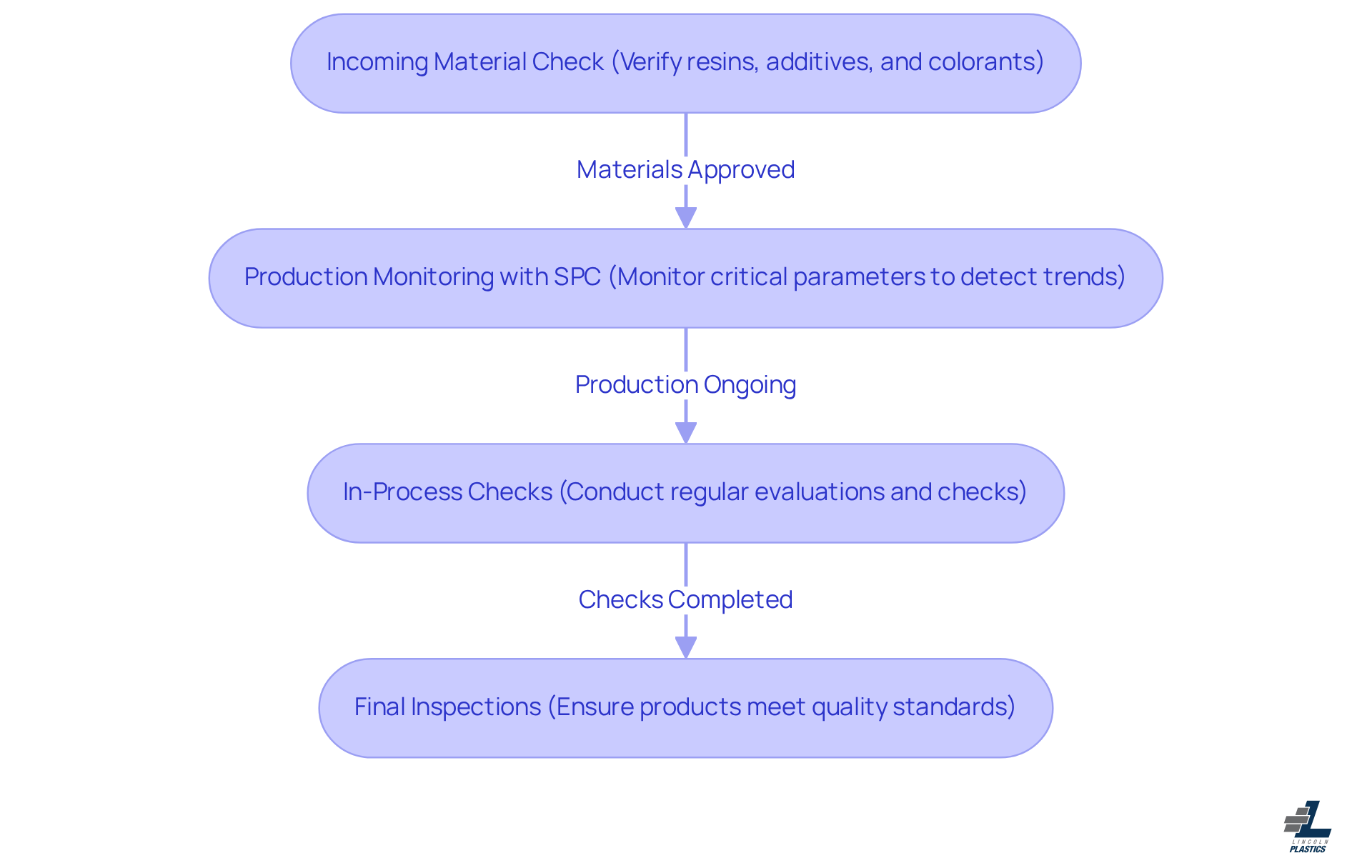
When it comes to sourcing plastic at Lincoln Plastics, quality isn’t just a checkbox - it’s woven into every step of the process. Think about it: it all kicks off with a thorough evaluation. We’re talking about making sure the resins, additives, and colorants meet our standards. And yes, that includes finding colors that match your Pantone specs, so everything looks consistent across the board.
Now, let’s talk about keeping an eye on things during production. Implementing statistical process control (SPC) techniques is key here. These methods help us monitor critical parameters, ensuring product consistency. Plus, regular evaluations of our suppliers’ practices really bolster our assurance, ensuring they stick to the standards we’ve set.
A solid assurance program should cover both in-process checks and final inspections. This way, we can catch defects early and stop them from reaching customers. For example, enhanced training can really amp up our control efforts. It’s all about proactive measures. This proactive approach not only minimizes the risk of defective items but also builds trust in the plastic components we procure.
Looking ahead to 2026, the importance of quality control is huge. As industries face more scrutiny over compliance and safety, manufacturers need to step up their control measures. After all, nobody wants costly recalls or a tarnished reputation. By weaving SPC and thorough quality assurance practices into our operations, Lincoln Plastics ensures our products consistently hit the highest standards. This, in turn, boosts customer satisfaction and brand loyalty. Remember what John Ruskin said: "Quality is never an accident; it is always the result of intelligent effort." So, let’s keep that in mind as we move forward!
Conclusion
Sourcing plastic industrial products can feel a bit overwhelming, right? It’s all about understanding material properties and picking the right suppliers. When you focus on what your applications really need - like tensile strength and flexibility - you’re setting yourself up for success. Working with specialized vendors, like Lincoln Plastics, can make this whole process a lot easier and boost your operational efficiency with tailored solutions.
Throughout this journey, it’s crucial to keep a few key practices in mind. Think about:
- Evaluating supplier reliability
- Establishing clear communication
- Implementing solid quality control measures
Each of these plays a vital role in keeping your standards high and ensuring the products you source meet industry specs. By prioritizing these practices, you can reduce risks and build strong partnerships with your suppliers.
Now, let’s get real for a moment. Committing to quality in sourcing plastic industrial products isn’t just about ticking boxes; it’s a strategic advantage that can really make a difference in your business success. As industries face more scrutiny and demand for top-notch materials, adopting these best practices will not only boost product reliability but also help you build trust and loyalty with your customers. Embracing these principles is key for any manufacturer looking to thrive in today’s competitive landscape.
Frequently Asked Questions
What are the key material properties to consider when sourcing plastic industrial products?
Key material properties include tensile strength, flexibility, thermal resistance, and chemical compatibility. Each application may have specific requirements based on these properties.
What is the tensile strength range for plastics used in irrigation applications?
The flexibility ratings of plastics used in irrigation typically range between 50 to 80 MPa in tensile strength, allowing them to bend and withstand pressure without failing.
How can manufacturers ensure they are selecting the right materials for their products?
Manufacturers should check material data sheets and conduct thorough testing to confirm that the materials meet all necessary specifications.
What services does Lincoln Plastics offer for plastic industrial products?
Lincoln Plastics specializes in both regular and custom round plastic industrial products, including flexible options tailored to meet specific application requirements. They also provide detailed information about their materials, custom flexible profiles, and co-extrusion solutions.
Why is it important to collaborate with vendors like Lincoln Plastics?
Collaborating with vendors can simplify the selection process by providing detailed material information and custom solutions, which boosts reliability and helps maintain compliance with industry standards.
How does understanding material properties contribute to operational efficiency?
A thorough understanding of material properties and specifications enhances reliability and ensures that products meet industry standards, ultimately leading to better operational efficiency.
List of Sources
- Understand Material Properties and Specifications
- jlccnc.com (https://jlccnc.com/blog/plastic-material-properties-and-applications)
- plasticpartsusa.com (https://plasticpartsusa.com/resources/technical-material-data)
- paulmurphyplastics.com (https://paulmurphyplastics.com/extruded-plastic-case-studies)
- redwoodplastics.com (https://redwoodplastics.com/industrial-plastic-strengths-limitations)
- cooperplastics.com (https://cooperplastics.com/the-importance-of-material-selection-in-custom-plastics-fabrication)
- Evaluate and Select Reliable Suppliers
- cognitivemarketresearch.com (https://cognitivemarketresearch.com/iso-certification-market-report)
- ISO Certification Market Size and Share | Statistics - 2034 (https://factmr.com/report/iso-certification-market)
- talismangroup.co.uk (https://talismangroup.co.uk/news/standards-in-plastics-manufacturing-why-certification-matters)
- Why ISO9001 Certification Matters in Plastic Manufacturing (https://jinenplastic.com/why-iso9001-certification-matters-in-plastic-manufacturing)
- Establish Clear Communication and Expectations
- plasticsnews.com (https://plasticsnews.com/news/trust-respect-and-communication-key-growth-pcs)
- 85 quotes about communication in business to motivate teams and leaders (https://textline.com/blog/quotes-about-communication-in-business)
- artofprocurement.com (https://artofprocurement.com/blog/learn-supplier-performance-management-metrics)
- 50 Quotes To Inspire Business Partnerships and Collaboration (https://indeed.com/career-advice/career-development/business-partnership-quotes)
- 4 Best Practices for Supplier Reliability in Plastic Manufacturing (https://lincoln-plastics.com/news-post/4-best-practices-for-supplier-reliability-in-plastic-manufacturing)
- Implement Quality Control Measures
- The Importance of Quality Control in Plastic Manufacturing (https://plastekgroup.com/blog/the-importance-of-quality-control-in-plastic-manufacturing)
- The Best Quality Assurance Quotes You Need to Hear (https://rarecrew.com/blog/post/the-best-qa-quotes-you-need-to-hear)
- azquotes.com (https://azquotes.com/quotes/topics/quality-management.html)


