

Comparing the Strongest Plastics: Acetal, Nylon, and Polycarbonate
Introduction
Understanding the nuances of plastic materials is super important in today’s manufacturing world. The right choice can really make a difference in performance and sustainability. Take Acetal, Nylon, and Polycarbonate, for instance. Each has its own unique strengths and weaknesses, making them suitable for various applications—from automotive components to protective gear.
But with so many options out there, how do you figure out which material is the strongest and best for your needs? You might be wondering the same thing! This article dives into a friendly comparison of these three impressive plastics. We’ll explore their characteristics, applications, and the key factors that can help you make the best choice in this fast-changing industry.
Understanding Strong Plastic Materials: Key Characteristics and Applications
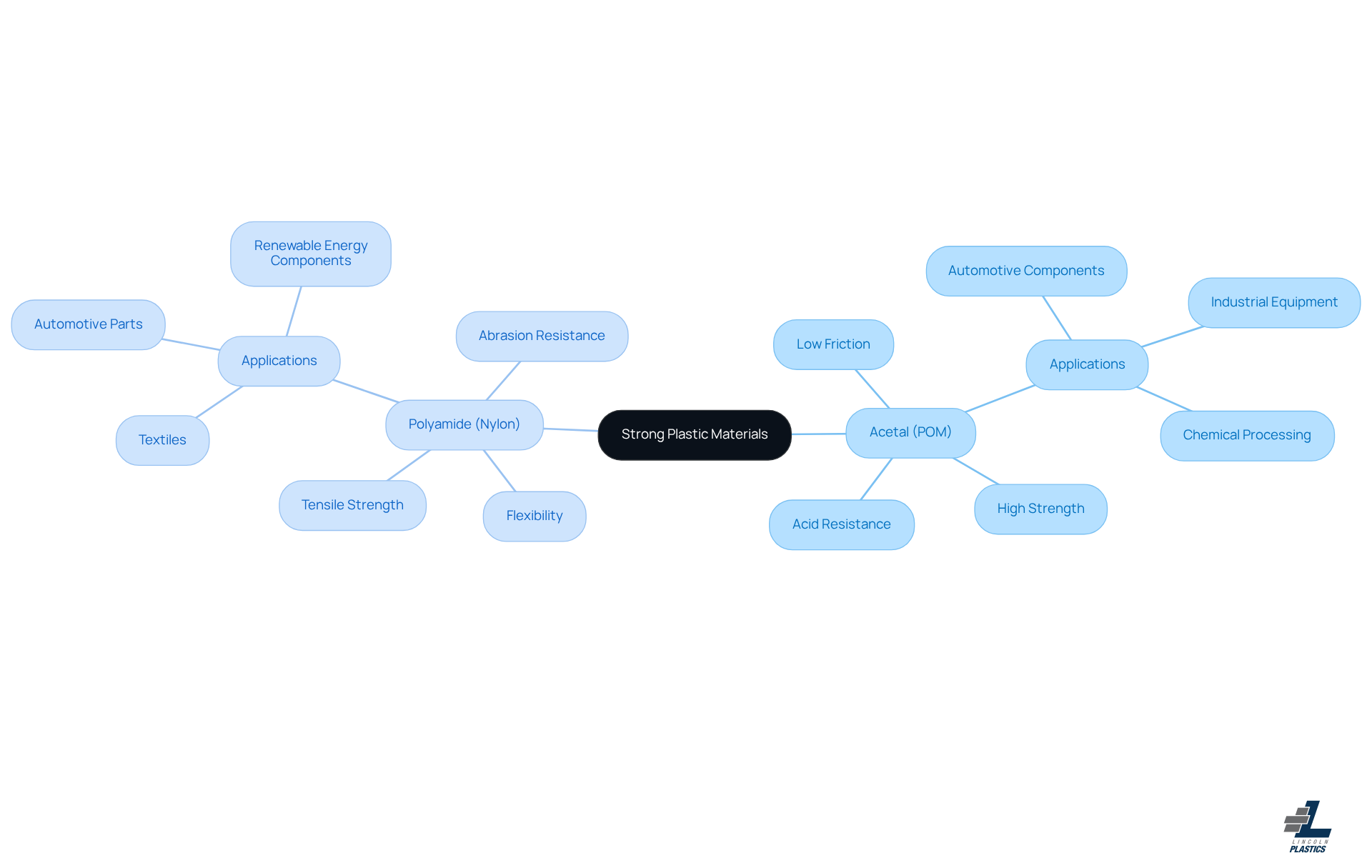
Hey there! Let’s chat about acetal, also known as polyoxymethylene (POM). This material is pretty impressive with its high strength, low friction, and excellent wear characteristics, making it the choice for precision components in automotive and industrial settings. Plus, its chemical resistance makes it a star in chemical processing equipment. Talk about versatility in tough environments! At Lincoln Plastics, we take pride in ensuring our products meet strict quality standards, giving OEMs reliable solutions that promise consistent performance.
Now, shifting gears to polyamide. This material is famous for its strength and durability. You’ll often find it in textiles, automotive parts, and gears. Its thermal stability is a game-changer for applications like solar panel brackets and wind turbine components, where it needs to withstand extreme weather and thermal cycling. And guess what? Recent innovations, including its use in 3D printing and the development of recyclable versions, show how it’s keeping pace with sustainability initiatives. At Lincoln Plastics, we offer tailored solutions, ensuring our products meet your specific needs while maintaining high quality.
Let’s not forget about polycarbonate, this durable, impact-resistant thermoplastic that’s known for its clarity and heat tolerance. You’ll see it in safety glasses, eyewear lenses, and electronic casings. Each material, especially the strongest plastic, has unique characteristics that make it suitable for specific applications, influencing design choices across various sectors. And if you’re in the B2B space, choosing a partner like Lincoln Plastics is crucial. You want to depend on consistent quality and performance, right? Our solid quality system includes dedicated checks and documentation, reinforcing our commitment to precision and reliability in every product we deliver. So, why not explore how we can support your needs?
Comparing Top Strong Plastics: Acetal, Nylon, and Polycarbonate
When you think about Acetal, Nylon, and Polycarbonate, a few key factors come into play, right?
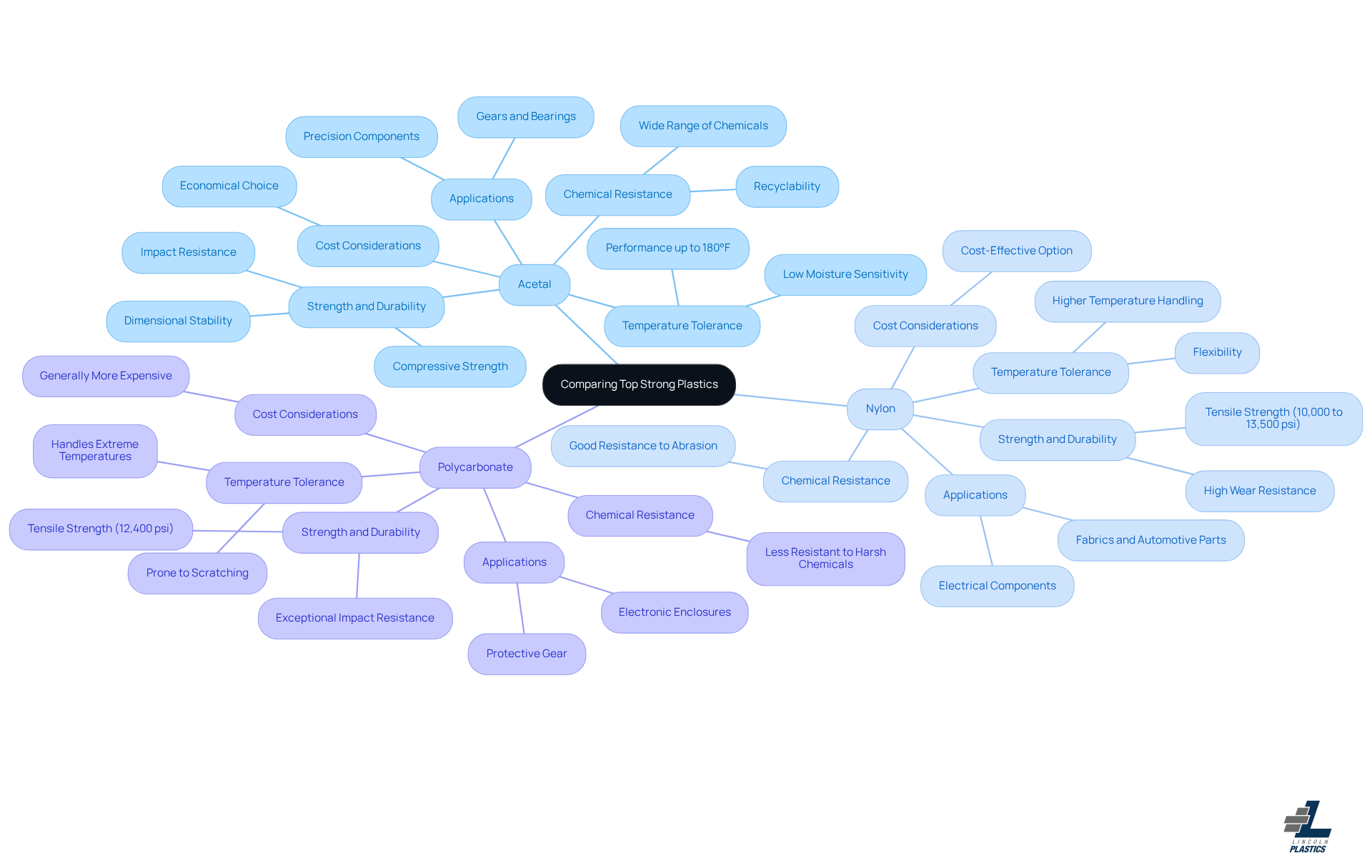
- Strength and Durability: Acetal really shines here. With the material properties, it boasts superior compressive strength and dimensional stability, making it perfect for mechanical applications. Plus, it can be reground and recycled, which is a win for sustainable manufacturing. While Acetal is strong, it’s also a bit more flexible and can absorb moisture (with a moisture absorption rating of 0.6 to 1.2). This might impact its performance in certain environments. But don’t worry, it excels in high-stress applications, making it one of the best options and a great choice for applications that need both transparency and toughness.
- Chemical Resistance: Now, let’s talk about chemical resistance. Some plastics can handle a wide range of chemicals, while others might struggle with certain solvents. One material, although tough, can degrade if exposed to harsh chemicals for too long. Recent studies show that one type consistently outperforms another in those tough chemical settings.
- Temperature Resistance: How about temperature? One material is the one that keeps its properties up to 180°F, while another can handle higher temperatures but may lose some strength. It’s important to note that this material can take extreme temperatures but is a bit prone to scratching.
- Applications: So, where do these materials fit in? Acetal is used in precision parts, while Polycarbonate is popular for protective gear and electronic enclosures. Industry experts have noticed that while moisture absorption in certain synthetic fibers can affect performance, Acetal remains reliable in various applications.
- Cost Considerations: Finally, let’s chat about cost. Generally, Acetal is more economical compared to the alternatives, which might not be an option for every manufacturer. This distinction is crucial for those looking for the best material that can withstand the rigors of their specific applications.
And just to put some numbers on it, one type of plastic has a tensile strength of 12,400 psi, while another ranges from 10,000 to 13,500 psi. This quantitative comparison really highlights the differences between these materials.
Evaluating Selection Criteria: Cost, Durability, and Project Suitability
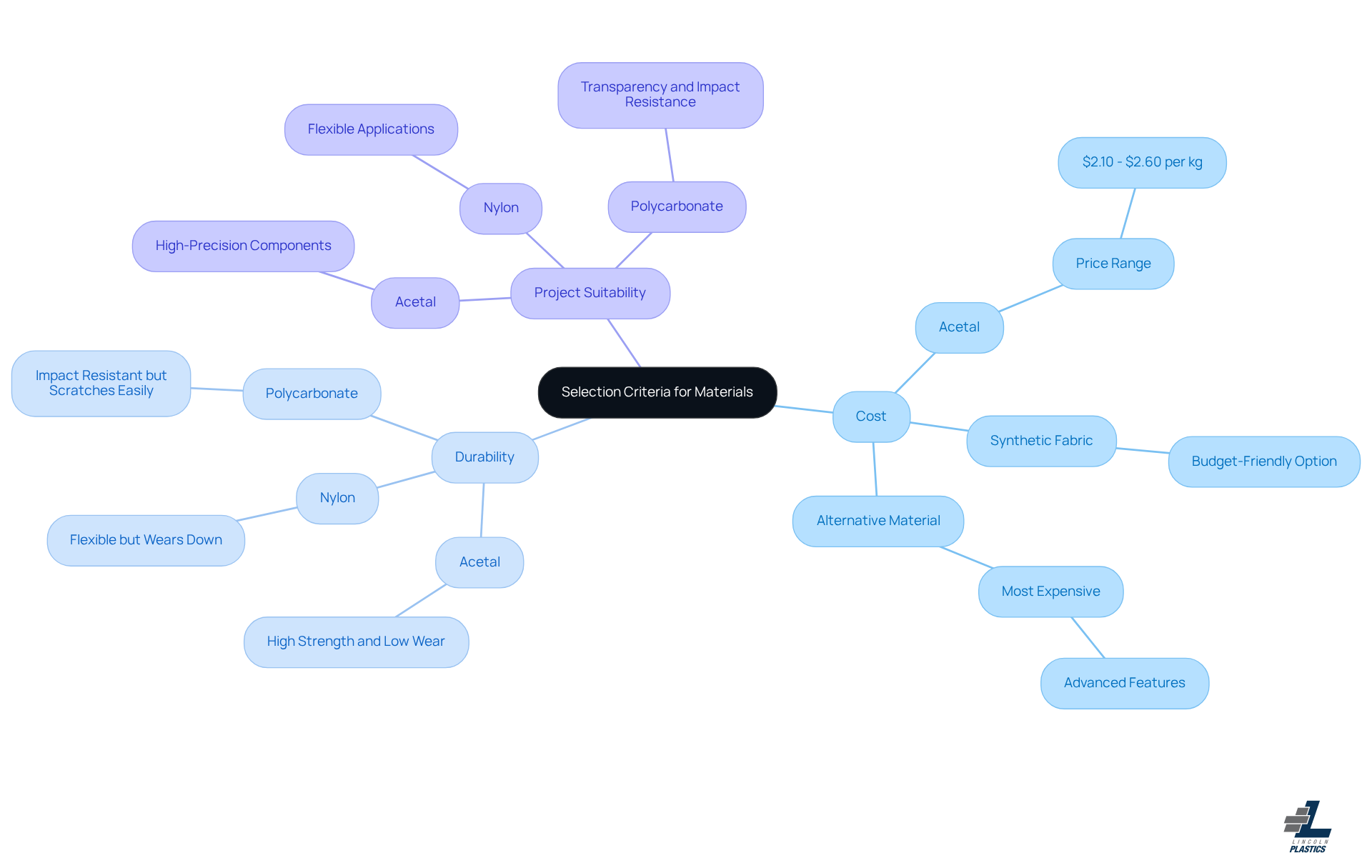
When it comes to choosing materials, price is definitely something to think about. Typically, this substance falls between $2.10 and $2.60 per kilogram, placing it in the mid-range category. Now, while Nylon usually offers a more budget-friendly option, keep in mind that it has limitations. On the other hand, the alternative material Polycarbonate often stands out as the most expensive, thanks to its superior properties.
Durability? That's another biggie! Acetal is highly durable due to its high strength and low wear, making it a reliable choice. However, Nylon, with its flexibility, might wear down over time, especially in high-friction situations. And let’s not forget about Polycarbonate—its impact resistance is top-notch, but it can be prone to scratching, which might be a deal-breaker for some applications.
So, how do you figure out what’s best for your project? It really depends on what you need. If you’re looking for cost-effectiveness, Acetal is often the go-to. For applications that require a mix of strength and flexibility, Nylon is one of the best options. And if transparency and impact resistance are your priorities, Polycarbonate is ideal.
What do you think? Each material has its perks, so take a moment to consider what fits your needs best!
Environmental Considerations and Sustainability
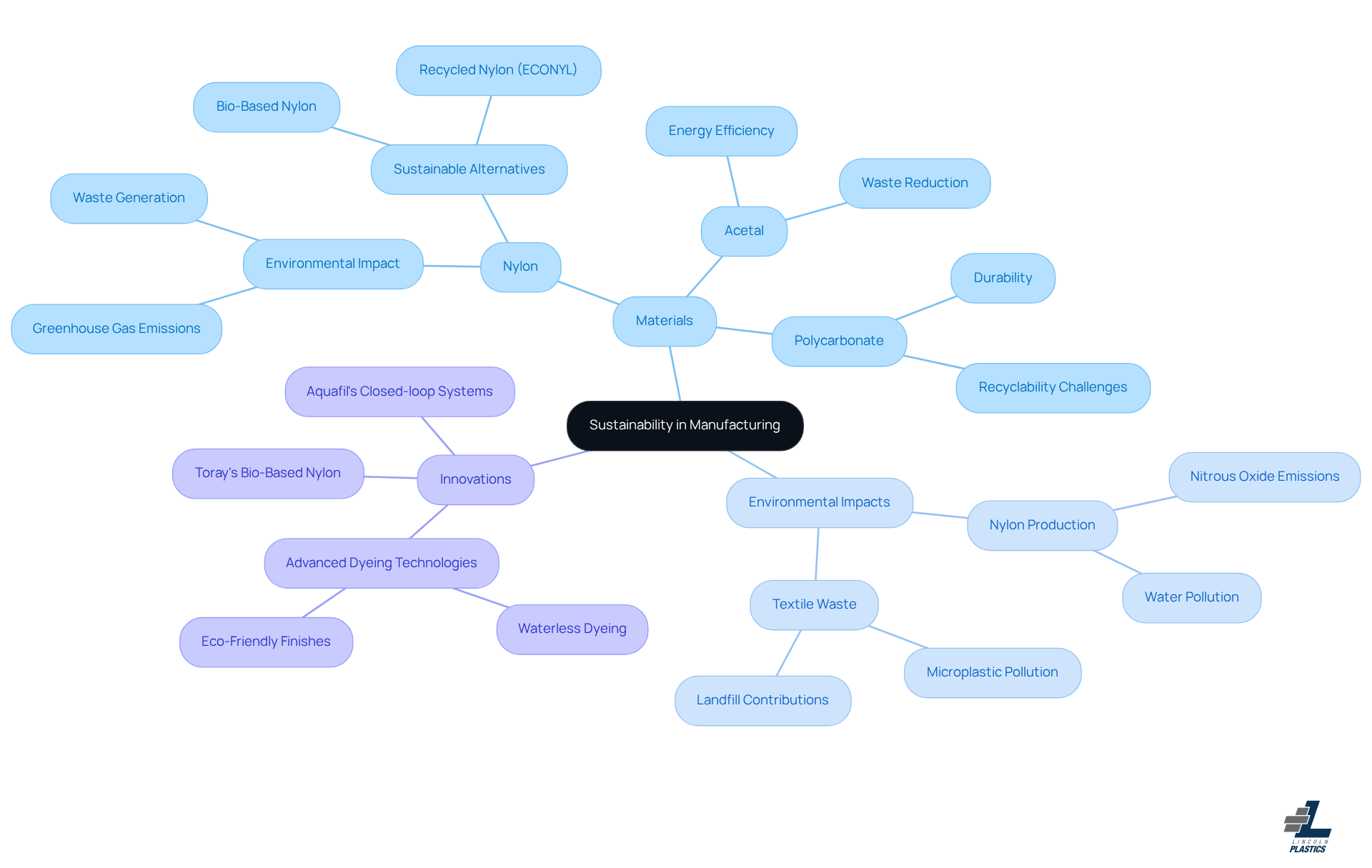
In today's manufacturing world, sustainability is a big deal, right? Take acetal, for example. It's often made with an eye on cutting down waste and energy use. Dr. Shahriar Hossain puts it well: "The production of plastics raises serious concerns, highlighting the need for more sustainable practices." While synthetic materials like nylon are super versatile, they can leave a hefty carbon footprint due to how they're made, often using petrochemicals. Did you know that methane is a greenhouse gas that packs a punch—300 times the global warming potential of carbon dioxide! So, yeah, that complicates its profile. And polycarbonate? It's tough and long-lasting, but its recyclability and production impact are definitely worth a second thought.
Many manufacturers are now on the hunt for solutions and innovations to tackle these challenges. For example, companies like Aquafil are getting creative with closed-loop systems to turn recycled materials into high-end textiles, which really cuts down on landfill waste. Pretty cool, right? Similarly, Toray is diving into fully bio-based nylon fibers sourced from renewable plant materials. This move aims to lower the carbon emissions tied to nylon production. As sustainability takes center stage, the materials a company chooses will increasingly show their commitment to being environmentally responsible.
Now, let’s talk about innovations! Advances in dyeing and finishing processes, along with new technologies, are paving the way for a greener future in plastic manufacturing. The industry’s response to our demand for eco-friendly practices really highlights how important it is to weave sustainability into material choices and production methods. So, what do you think? Are you ready to embrace these changes in your own practices?
Conclusion
When it comes to strong plastics, Acetal, Nylon, and Polycarbonate each have their own unique strengths and applications. It’s really important to understand what makes these materials stand out, especially when you're trying to choose the right one for your industry needs. So, here’s the scoop:
- Acetal is known for its strength and durability.
- Nylon brings flexibility and thermal stability to the table.
- Polycarbonate shines with its impact resistance and clarity.
Now, let’s talk about some key insights. When choosing between these plastics, you’ll want to consider things like:
- Chemical resistance
- Temperature tolerance
- Cost
Acetal is a solid choice if you're looking for something that’s low in moisture sensitivity and easy on the budget—perfect for precision components. On the flip side, Nylon has made strides in sustainability and versatility, making it suitable for a wide range of applications. And don’t forget about Polycarbonate! Its durability and transparency make it a go-to for protective gear and electronic casings.
As industries shift towards sustainability, the materials we choose are going to be crucial in promoting eco-friendly practices. Embracing innovations in material production and recycling can really help reduce our environmental impact. So, why not explore these strong plastics? Not only do they perform well, but they also have the potential to contribute to a greener future. By making informed decisions about material selection, you can help advance both product quality and environmental responsibility. How cool is that?
Frequently Asked Questions
What is acetal, and what are its key characteristics?
Acetal, also known as polyoxymethylene (POM), is a strong plastic material known for its high strength, low friction, and excellent wear characteristics. It is particularly suitable for precision components in automotive and industrial settings.
In what applications is acetal commonly used?
Acetal is commonly used in automotive components, industrial applications, and chemical processing equipment due to its acid resistance and versatility in tough environments.
What are the main features of polyamide?
Polyamide, often referred to as Nylon, is known for its fantastic tensile strength, abrasion resistance, and flexibility. It also exhibits thermal stability, making it ideal for applications that experience extreme weather and thermal cycling.
Where can polyamide be found in practical applications?
Polyamide is frequently used in textiles, automotive parts, gears, solar panel brackets, and wind turbine components.
How is Nylon evolving in terms of technology and sustainability?
Recent advancements in Nylon include its use in 3D printing and the development of recyclable versions, reflecting its adaptability to sustainability initiatives.
What type of thermoplastic is mentioned for its clarity and heat tolerance?
The article refers to a durable, impact-resistant thermoplastic known for its clarity and heat tolerance, commonly used in safety glasses, eyewear lenses, and electronic casings.
Why is it important to choose a reliable acetal supplier?
Choosing a reliable acetal supplier, like Lincoln Plastics, is crucial for ensuring consistent quality and performance in products, which is essential for B2B applications.
What quality assurance measures does Lincoln Plastics implement?
Lincoln Plastics has a solid quality system that includes dedicated checks and documentation to reinforce their commitment to precision and quality assurance in every product they deliver.
List of Sources
- Understanding Strong Plastic Materials: Key Characteristics and Applications
- phys.org (https://phys.org/news/2025-10-rapid-method-recycles-nylon-fishing.html)
- sterlingplasticsinc.com (https://sterlingplasticsinc.com/insights/emerging-applications-of-nylon-plastics)
- jxzd-chem.com (https://jxzd-chem.com/2025/10/12/acetal-top-4-applications-acetal-resin)
- weforum.org (https://weforum.org/stories/2025/10/automotive-plastics-circular-asset)
- Comparing Top Strong Plastics: Acetal, Nylon, and Polycarbonate
- gonplastics.com (https://gonplastics.com/a-polycarbonate-vs-nylon-which-one-is-better-for-plastic-manufact.html)
- fox4kc.com (https://fox4kc.com/business/press-releases/ein-presswire/852183270/acetal-vs-nylon-new-interstate-plastics-guide-for-engineers-machinists-and-buyers)
- epol.net.au (https://epol.net.au/blog/46-acetal-vs-other-engineering-plastics-a-comparison?srsltid=AfmBOorRWlqvlKzBsh4254NDzycQ5B1NgOaRNMbp903o0ddqmwk6yb3t)
- europlas.com.vn (https://europlas.com.vn/en-US/blog-1/polycarbonate-vs-nylon-which-one-is-better-for-plastic-manufacturing)
- anebon.com (https://anebon.com/news/nylon-12-vs-polycarbonate-decoding-thermal-resistance-for-high-temp-prototype-validation)
- Evaluating Selection Criteria: Cost, Durability, and Project Suitability
- mordorintelligence.com (https://mordorintelligence.com/industry-reports/north-america-polycarbonate-pc-market)
- nbc4i.com (https://nbc4i.com/business/press-releases/ein-presswire/852183270/acetal-vs-nylon-new-interstate-plastics-guide-for-engineers-machinists-and-buyers)
- ptonline.com (https://ptonline.com/articles/august-2025-prices-for-the-five-commodity-resins-flat-to-slightly-up)
- meviy-usa.com (https://meviy-usa.com/acetal-group-of-materials-choosing-the-right-option-for-on-demand-manufacturing)
- Environmental Considerations and Sustainability
- The Sustainable Future of Nylon (https://performancedays.com/loop/focus-topic/2021-12-the-sustainable-future-of-nylon.html)
- asepindustries.com.my (https://asepindustries.com.my/post/environmental-impact-nylon)
- market-prospects.com (https://market-prospects.com/articles/nylon-and-sustainability-exploring-greener-alternatives-for-the-future)
- sustainfashion.info (https://sustainfashion.info/the-production-of-nylon-and-sustainable-fashion)
- Shaping the Future of Plastic Recycling with Innovation (https://corporate.dow.com/en-us/news/seek-together/future-of-plastic-recycling-innovative-solutions.html)


