
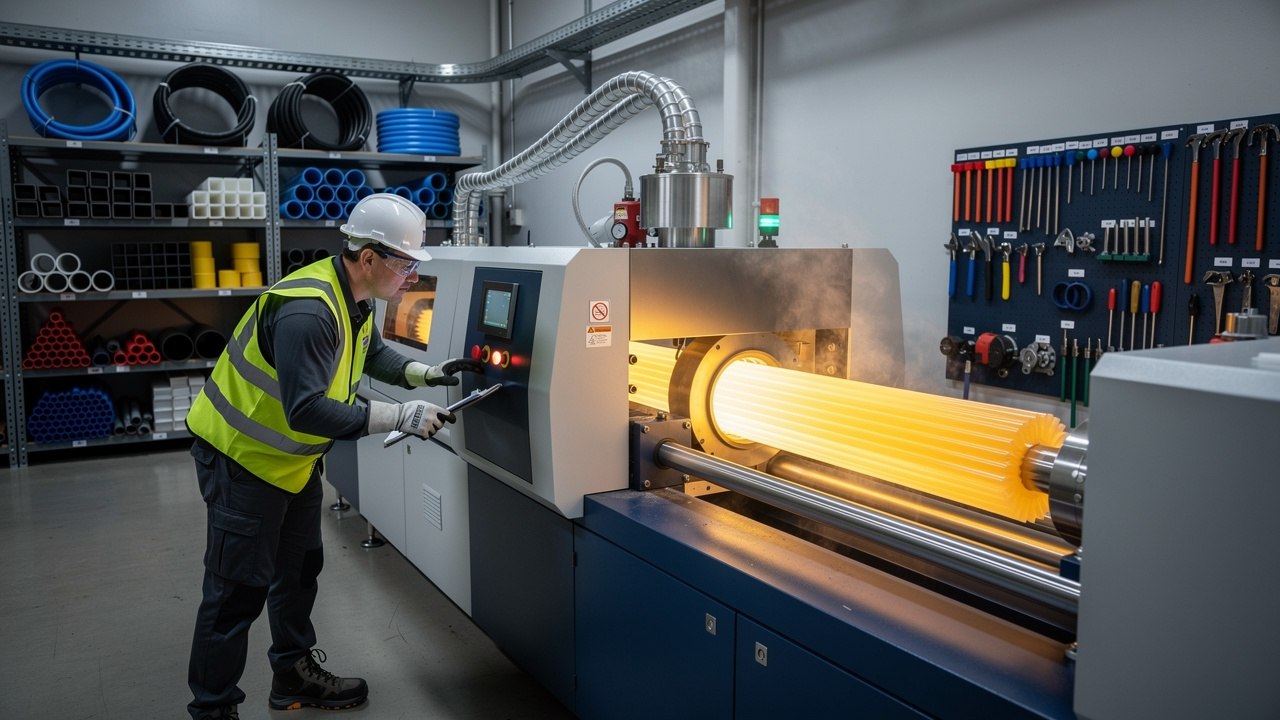
Best Practices for Using Extruded Polyurethane in Manufacturing
Introduction
In manufacturing, extruded polyurethane stands as a game-changer, revolutionizing product design and functionality across industries. This versatile material, known for its exceptional durability and flexibility, offers manufacturers a unique opportunity to enhance performance across various applications, from automotive components to construction materials. Yet, as demand for tailored solutions rises, manufacturers must tackle the challenge of effectively integrating these advanced materials into their production processes. Are manufacturers ready to tackle the complexities of polyurethane extrusion to ensure maximum efficiency and product quality?
Understand Polyurethane Extrusion and Its Importance
In the competitive landscape of manufacturing, the shaping of extruded polyurethane stands out as a crucial process that transforms thermoplastic elastomer (TPU) into tailored solutions. This technique is vital in industries like automotive, construction, and consumer goods, thanks to the unique characteristics of TPU, including flexibility, durability, and resistance to abrasion and chemicals. Its ability to transition between rigid and flexible forms allows manufacturers to harness its advantages effectively.
The extrusion process for extruded polyurethane enables continuous production. This boosts efficiency and reduces waste, making it ideal for high-volume applications. For instance, custom extruded profiles designed for OEMs eliminate the compromises often associated with off-the-shelf solutions. They ensure that specific requirements are met precisely. Recent advancements in polymer technology have further expanded its applications, reinforcing its role in innovative manufacturing solutions.
Case studies demonstrate the impact of this material across various industries. In automotive manufacturing, for example, synthetic components contribute to lightweight designs that enhance fuel efficiency while preserving structural integrity. Additionally, the material's resilience under demanding conditions, such as heat and moisture, makes it a preferred choice for high-performance applications.
As industries continue to evolve, many manufacturers struggle with the limitations of generic products that fail to meet specific needs. The significance of extruded polyurethane remains clear, with ongoing advancements improving its capabilities and applications. These advancements not only enhance product performance but also open new avenues for innovation. As we embrace these advancements, the potential for custom plastic extrusion to redefine manufacturing efficiency is limitless.

Leverage the Benefits of Extruded Polyurethane for Enhanced Performance
Extruded foam stands out as a game-changer in performance across various applications, offering unmatched elasticity and resilience. Its superior properties make it particularly effective for flexible components such as seals and gaskets. The material's exceptional resistance to wear and tear contributes to an extended product lifespan, minimizing the frequency of replacements and associated costs. Furthermore, extruded polyurethane is skilled at enduring harsh environmental conditions, such as chemical exposure and UV radiation, which makes it an ideal choice for outdoor applications.
Have you faced challenges with standard sizes? Lincoln Plastics tackles this by offering custom pipe extrusion solutions that provide tailored diameters and wall thicknesses. This customization not only improves the efficiency of applications but also ensures that clients receive precisely what they need for optimal performance. Additionally, Lincoln Plastics provides co-extrusion capabilities for multi-color or multi-material profiles, further enhancing the versatility of their offerings.
Lincoln Plastics' commitment to quality is underscored by their ISO 9001:2015 certification and a robust quality management program that includes dedicated quality books and in-process checks. This rigorous approach ensures that all items meet the highest standards of precision and compliance, reinforcing their partnership with OEMs.
Statistics show a growing demand for materials that balance strength, flexibility, and durability. This trend is especially evident in sectors like automotive and construction. The segmented block copolymer framework of these materials permits customized mechanical characteristics, improving their appropriateness for various industrial uses. By leveraging these benefits, manufacturers can significantly improve the durability and functionality of their products, leading to increased customer satisfaction and reduced operational costs. Moreover, the rise of water-based coatings and adherence to environmental regulations, such as the EU's REACH, further highlight the significance of sustainable practices in the industry. As manufacturers adapt to these evolving demands, the choice of materials will play a pivotal role in shaping the future of their products and operations.

Implement Best Practices for Integrating Polyurethane into Production
To achieve excellence in production, manufacturers must prioritize best practices for integrating extruded polyurethane foam. First, keep the material dry and store it at the right temperatures. Specifically, maintain component temperatures between 20-25°C to prevent degradation. Additionally, mold temperature should be kept between 40-60°C for optimal curing.
Second, optimizing shaping parameters, such as temperature and pressure, is vital for achieving consistent product quality. Studies indicate that maintaining mixing pressure between 120-150 bar ensures even mixing and prevents density variations, which is critical for high-quality flexible polyurethane foam.
Regularly maintaining your extrusion equipment is crucial. It helps prevent downtime and keeps operations running smoothly. Moreover, performing comprehensive control assessments during the production process aids in detecting and correcting problems early, guaranteeing that final items adhere to strict specifications.
Lincoln Plastics utilizes a strong management program, featuring dedicated plans and process check sheets, to ensure adherence to ISO 9001:2015 standards. By implementing these practices, manufacturers not only enhance product quality but also secure their competitive edge in the market.

Overcome Challenges in Polyurethane Extrusion Implementation
Are you struggling with the complexities of plastic molding techniques? Producers frequently encounter various difficulties when applying these methods, leading to costly production delays and compromised product quality. A common issue is the formation of gels or particulates during extrusion, which can compromise quality. To mitigate this, controlling temperature and shear rates during processing is crucial. Additionally, ensuring that the polyurethane is adequately dried before processing can prevent moisture-related defects.
Achieving uniform material flow poses another significant challenge. Inconsistencies in the final product can arise from this issue. Regular calibration of shaping equipment and continuous monitoring of material properties are essential strategies to address this. Furthermore, manufacturers must be vigilant about voids and air traps in extruded polyurethane profiles, which can occur due to insufficient venting or moisture in raw materials. It's crucial to tackle these issues to keep your products structurally sound.
Thermal degradation is another concern that can lead to defects such as discoloration and brittleness; thus, managing processing temperatures and using appropriate stabilizers is essential. By proactively identifying and resolving these challenges, manufacturers not only enhance efficiency but also elevate product quality.
Lincoln Plastics offers tailored solutions, including custom cord covers and Flexiduct systems, to improve safety and efficiency in workplaces, further supporting manufacturers in overcoming these challenges. Our commitment to quality is underscored by our ISO 9001:2015 certification, which ensures rigorous quality management plans, including dedicated quality books and in-process checks, to meet the precise needs of OEMs. Embracing these solutions can transform your production process and elevate your product quality to new heights.

Conclusion
Extruded polyurethane is revolutionizing manufacturing, offering unmatched versatility and performance. This article has highlighted the critical importance of proper handling and optimal shaping parameters in the extrusion process. With Lincoln Plastics' ISO 9001:2015 certification, manufacturers can trust in the consistent quality of their outputs. Additionally, addressing common challenges in polyurethane extrusion, such as temperature control and material flow, is essential for maintaining product integrity and operational efficiency.
As industries evolve, integrating extruded polyurethane can be a game-changer for growth and efficiency. Embracing these best practices not only enhances product quality but also positions manufacturers to meet the increasing demands of the market. For those looking to optimize their production capabilities, reaching out to Lincoln Plastics experts for tailored solutions and quotes can be a crucial step toward achieving excellence in manufacturing.
Frequently Asked Questions
What is polyurethane extrusion and why is it important?
Polyurethane extrusion is a manufacturing process that transforms thermoplastic elastomer (TPU) into customized solutions. It is important because it allows for the production of tailored products that meet specific industry needs, particularly in sectors like automotive, construction, and consumer goods.
What are the key characteristics of TPU that make it suitable for extrusion?
TPU is known for its flexibility, durability, and resistance to abrasion and chemicals. Its ability to transition between rigid and flexible forms allows manufacturers to effectively utilize its advantages in various applications.
How does the extrusion process benefit manufacturers?
The extrusion process enables continuous production, which boosts efficiency and reduces waste. This is particularly beneficial for high-volume applications, allowing for the creation of custom extruded profiles that meet specific requirements without the compromises of off-the-shelf solutions.
Can you provide examples of industries that benefit from extruded polyurethane?
Yes, industries such as automotive manufacturing benefit significantly from extruded polyurethane. For instance, synthetic components made from TPU contribute to lightweight designs that enhance fuel efficiency while maintaining structural integrity.
What advancements have been made in polymer technology related to polyurethane extrusion?
Recent advancements in polymer technology have expanded the applications of extruded polyurethane, reinforcing its role in innovative manufacturing solutions and improving product performance.
What challenges do manufacturers face with generic products in the market?
Many manufacturers struggle with the limitations of generic products that do not meet their specific needs. This highlights the significance of extruded polyurethane, which offers tailored solutions that enhance performance and innovation.
How does custom plastic extrusion redefine manufacturing efficiency?
Custom plastic extrusion, particularly with advancements in materials like TPU, has the potential to redefine manufacturing efficiency by providing solutions that are specifically designed to meet the unique requirements of various industries, thus enhancing overall productivity.
List of Sources
- Understand Polyurethane Extrusion and Its Importance
- CPI Announces 2026 Polyurethane Innovation Award Finalists (https://americanchemistry.com/chemistry-in-america-industry-innovation-impact/news-trends/press-release/2026/cpi-announces-2026-polyurethane-innovation-award-finalists)
- Polyurethane's Role in High-Performance Plastic Extrusions | Crafted Plastics Inc (https://craftedplastics.com/blog/polyurethane-s-role-in-high-performance-plastic-extrusions)
- News – Polyurethanes (https://polyurethanes.org/news)
- What is Polyurethane Extrusion and Why It Matters in Manufacturing (https://lincoln-plastics.com/news-post/what-is-polyurethane-extrusion-and-why-it-matters-in-manufacturing)
- Insights on the Polyurethanes Global Market to 2026 - New Technologies and Applications are Driving Growth (https://prnewswire.com/news-releases/insights-on-the-polyurethanes-global-market-to-2026---new-technologies-and-applications-are-driving-growth-301368459.html)
- Leverage the Benefits of Extruded Polyurethane for Enhanced Performance
- How Custom Plastic Extrusions Improve Product Durability (https://paulmurphyplastics.com/industry-news-blog/how-custom-plastic-extrusions-improve-product-durability)
- Increase Resilience of Polyurethane in Industrial Applications (https://eureka.patsnap.com/report-increase-resilience-of-polyurethane-in-industrial-applications)
- What is Polyurethane Extrusion and Why It Matters in Manufacturing (https://lincoln-plastics.com/news-post/what-is-polyurethane-extrusion-and-why-it-matters-in-manufacturing)
- Polyurethane's Role in High-Performance Plastic Extrusions | Crafted Plastics Inc (https://craftedplastics.com/blog/polyurethane-s-role-in-high-performance-plastic-extrusions)
- Implement Best Practices for Integrating Polyurethane into Production
- How to optimize the process of polymer extrusion (https://tue.nl/en/news-and-events/news-overview/21-01-2022-how-to-optimize-the-process-of-polymer-extrusion)
- Multi-objective optimization of material extrusion parameters to balance mechanical and economic performance - Progress in Additive Manufacturing (https://link.springer.com/article/10.1007/s40964-026-01681-0)
- Optimize Extrusion Techniques for Polyurethane Dispersion Layers (https://eureka.patsnap.com/report-optimize-extrusion-techniques-for-polyurethane-dispersion-layers)
- How to optimize process parameters for PU foam molding | Shubhashish Solanki . posted on the topic | LinkedIn (https://linkedin.com/posts/shubhashish-solanki_pufoam-polyurethane-activity-7327493346891837440-Dmjr)
- Overcome Challenges in Polyurethane Extrusion Implementation
- Common Extrusion Defects & Effective Solutions for Manufactu (https://in.chemtrend.com/news/common-extrusion-defects-how-to-resolve-them)
- What is Polyurethane Extrusion and Why It Matters in Manufacturing (https://lincoln-plastics.com/news-post/what-is-polyurethane-extrusion-and-why-it-matters-in-manufacturing)
- News - Common Plastic Extrusion Defects and How to Solve Them (https://jwextrusion.com/news/common-plastic-extrusion-defects-and-how-to-solve-them)
- Common problems in the plastic extrusion process - SHARC (https://sharcpm.com/news/common-problems-in-the-plastic-extrusion-process)
Related posts

Why Custom Pipe Extrusion Matters More Than Ever
Standard pipe sizes don’t always work. Learn how Lincoln Plastics delivers custom diameters, wall thicknesses, and finishes in right-sized runs.


Reducing Trip Hazards with Custom Cord Management
Loose cords are more than messy — they’re a safety hazard. Lincoln Plastics’ custom cord covers and Flexiduct solutions improve safety and efficiency.
The Power of Custom Plastic Profiles for OEMs
Off-the-shelf profiles force compromises. Learn how Lincoln Plastics designs custom extruded profiles for OEMs with exact specs and right-sized runs.
