
Best Practices for Using Bendable Plastic in Manufacturing
Introduction
In manufacturing, the right materials are crucial for maximizing operational efficiency and ensuring product quality. Bendable plastics, with their unique properties such as flexibility and durability, are becoming increasingly vital across various industries, including agriculture and packaging. However, manufacturers often struggle with the complexities of integrating bendable plastics into their processes.
Manufacturers must adopt strategic approaches to fully leverage the potential of bendable plastics and tackle common challenges. By addressing these challenges head-on, manufacturers can unlock significant improvements in efficiency and sustainability.
Understand the Properties and Applications of Bendable Plastic
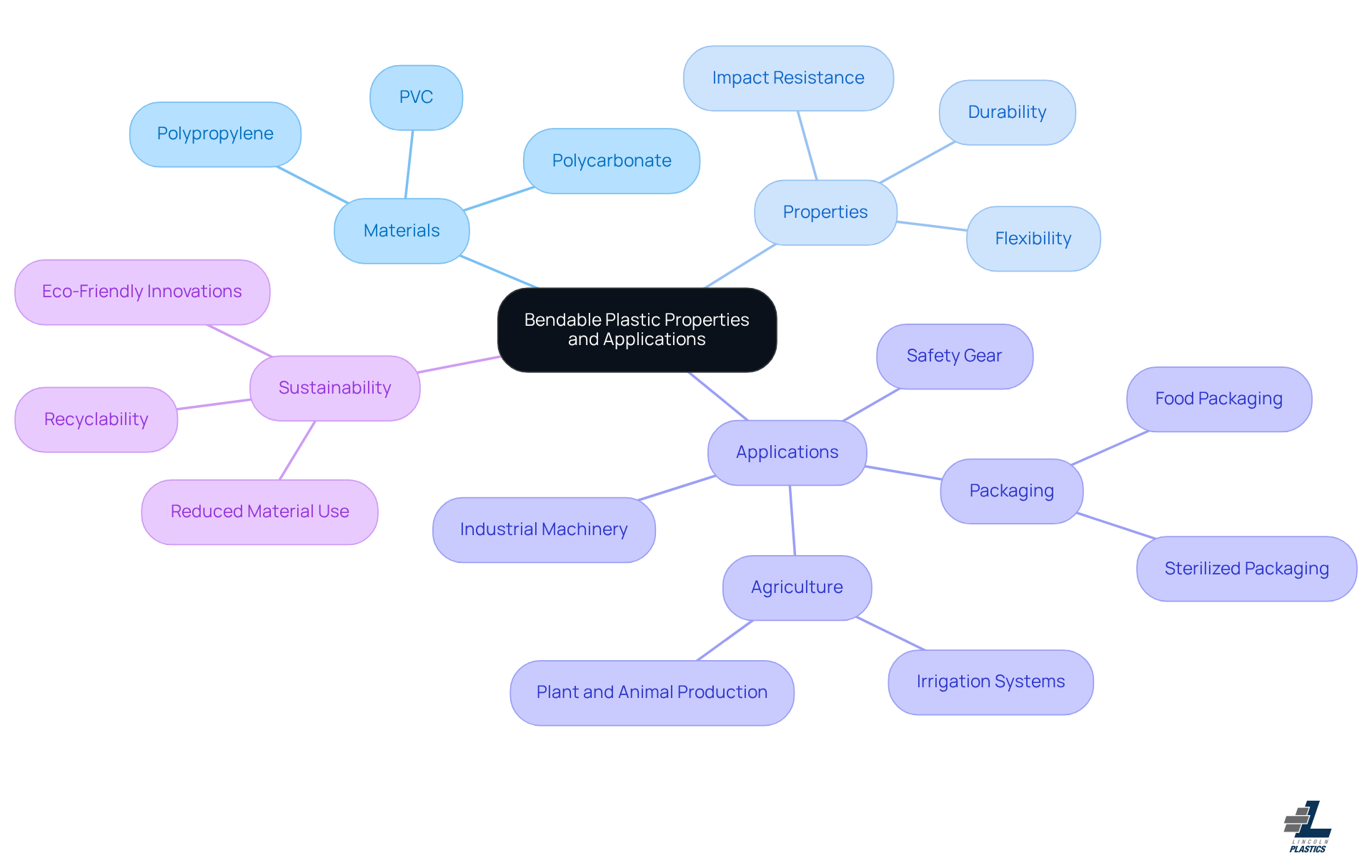
In a world where manufacturing demands flexibility and resilience, the choice of materials can make all the difference. Flexible materials, such as bendable plastic options like polycarbonate, PVC, and polypropylene, possess distinctive properties that make them highly suitable for a variety of manufacturing applications. These materials offer flexibility, impact resistance, and durability. They can be molded into intricate shapes without losing structural integrity. Lincoln Plastics specializes in crafting both standard and custom round profiles. We offer a range of materials, colors, diameters, and lengths, including flexible profiles designed to meet your specific needs.
In agriculture, how essential are flexible synthetic tubes to your irrigation systems? They provide the adaptability and strength needed to withstand environmental pressures. In 2019, agricultural value chains employed around 12.5 million tonnes of synthetic materials, highlighting the importance of these substances in improving productivity and efficiency in farming practices.
Beyond agriculture, many manufacturers face challenges with materials that don’t conform easily, making bendable plastic a game-changer in safety gear, packaging, and custom components for industrial machinery. Their lightweight design reduces shipping costs and minimizes product damage during transportation, making them essential in logistics. Recent advancements in resin technology and multi-layer coextrusion processes have further optimized these substances for specific performance characteristics, such as puncture resistance and moisture barriers.
The versatility of bendable plastic is evident in its ability to conform to various shapes, making it ideal for packaging, storage, and protective applications across multiple industries. As manufacturers increasingly adopt these materials, they benefit from enhanced product functionality and longevity, aligning with sustainability goals through reduced material use and improved recyclability. The FAO emphasizes that addressing waste pollution in agrifood value chains is crucial for transforming these systems into more efficient, inclusive, resilient, and sustainable operations. By choosing flexible materials, you not only enhance your product's performance but also position your business for a sustainable future. For tailored solutions and quotes, we invite OEM purchasing managers to contact Lincoln Plastics experts today.
Evaluate Key Criteria for Selecting Bendable Plastic Materials
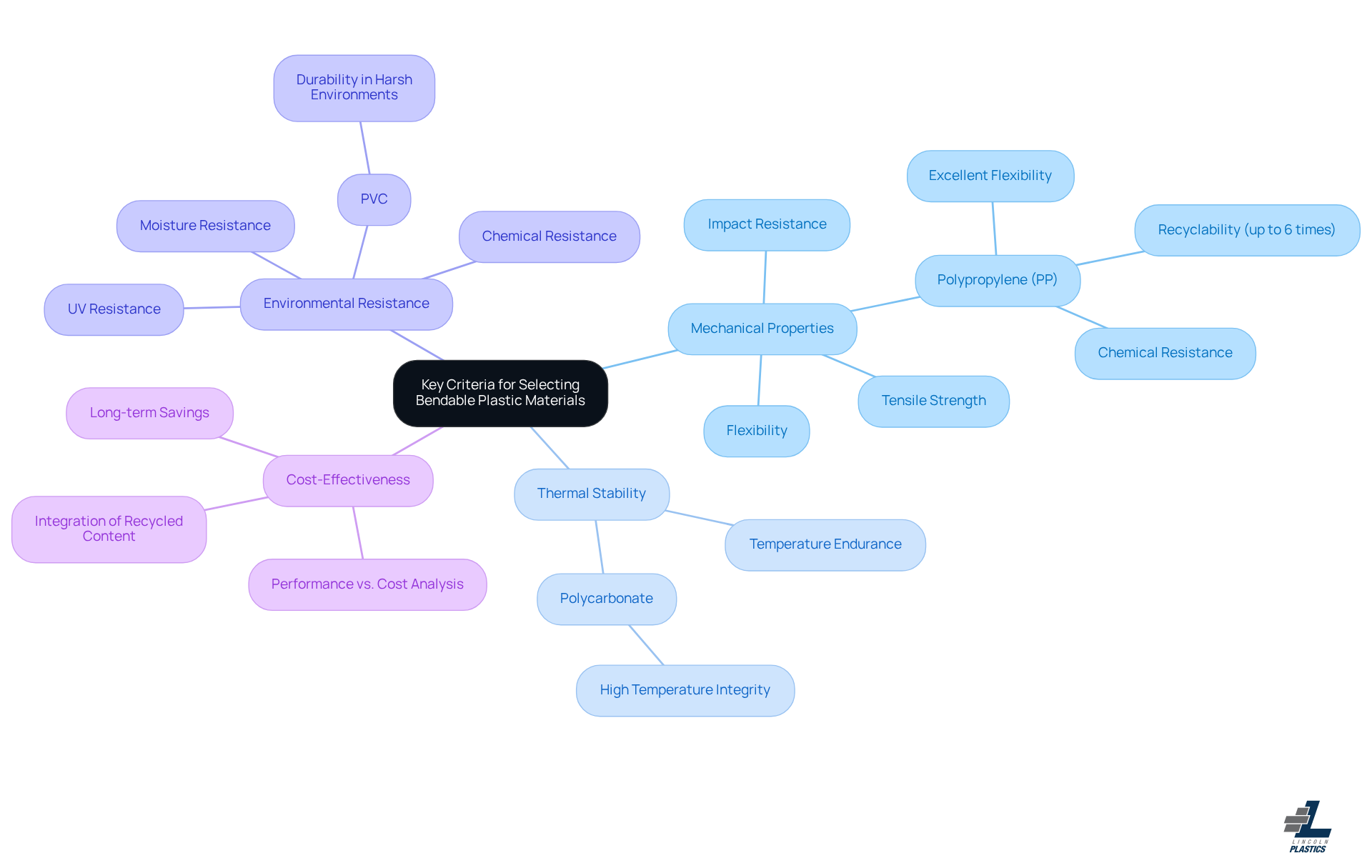
For manufacturers aiming to optimize performance and cost efficiency, selecting the right materials made of bendable plastic is crucial. Here are several key criteria to consider:
- Mechanical Properties: Evaluate the tensile strength, flexibility, and impact resistance of the substance. Polypropylene (PP), for instance, is renowned for its excellent flexibility and chemical resistance, making it suitable for a wide range of applications. Research shows that PP can be recycled up to six times without significant loss of quality, enhancing its appeal for sustainable manufacturing.
- Thermal Stability: Assess the substance's capacity to endure temperature variations without deteriorating. Polycarbonate, for example, maintains its integrity under high temperatures, making it ideal for outdoor applications where thermal stability is crucial.
- Environmental Resistance: Consider the substance's resistance to UV light, moisture, and chemicals, particularly for outdoor or industrial applications. PVC is often selected for its durability in harsh environments, demonstrating resilience against various environmental factors.
- Cost-Effectiveness: Analyze the cost of materials in relation to their performance benefits. High-performance materials might come with a higher initial cost. However, their durability can lead to significant savings over time. For example, the integration of recycled content in packaging solutions is becoming a standard practice, driven by regulatory pressures and consumer demand for sustainability.
Are you ready to choose the most suitable flexible materials for your needs? By assessing these criteria, you can ensure optimal performance and cost effectiveness. Case studies emphasize that companies concentrating on design-for-recycling enhancements and incorporating recycled materials are not only fulfilling regulatory standards but also boosting their market competitiveness.
Implement Effective Strategies for Integrating Bendable Plastic in Manufacturing
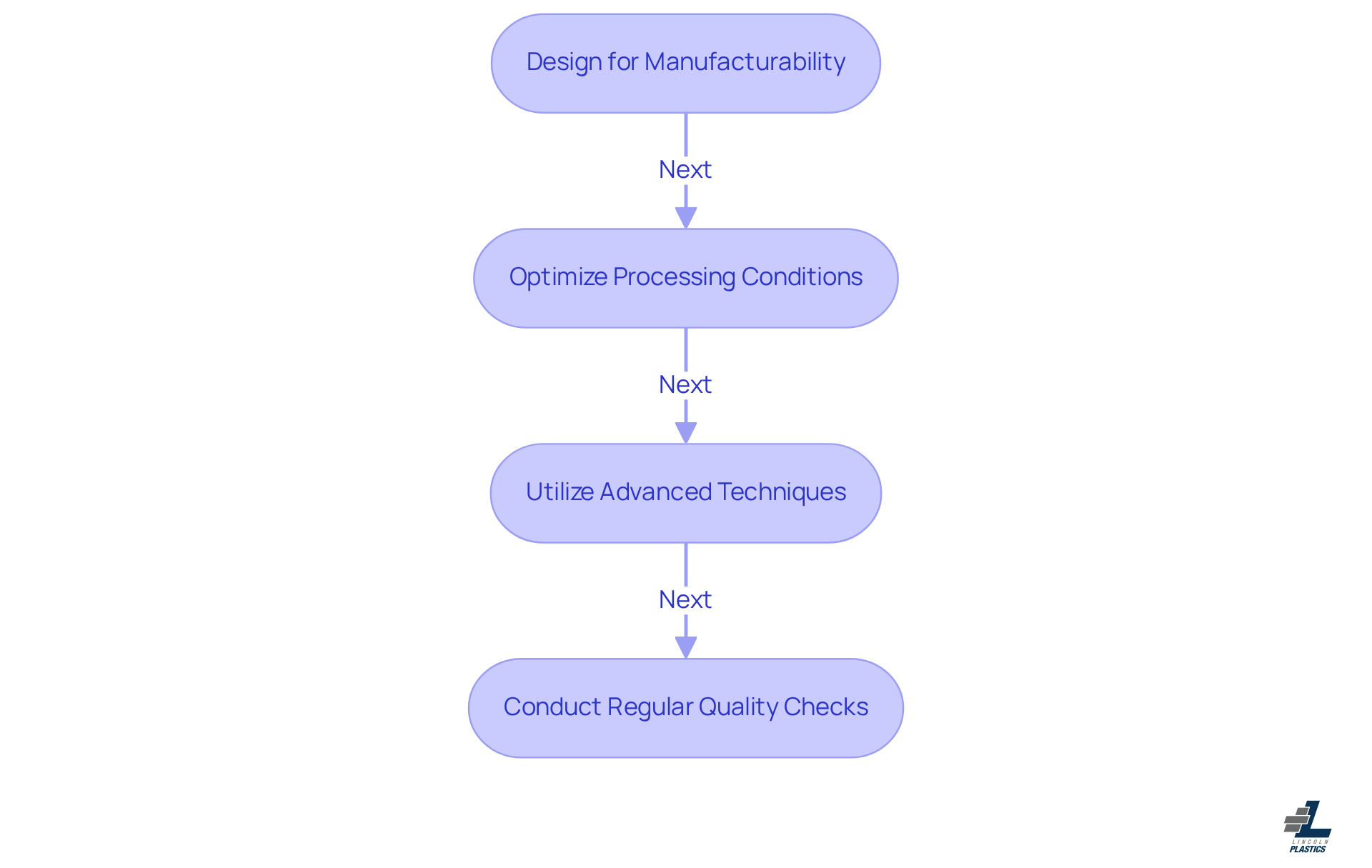
Integrating bendable plastic into manufacturing processes can present challenges, but the right strategies can unlock significant advantages. Consider these approaches:
- Design for Manufacturability: Are your designs taking advantage of the unique properties of bendable plastic? Incorporating features like snap-fit joints can enhance assembly efficiency and item functionality.
- Optimize Processing Conditions: Maintain precise temperature control during the extrusion process to ensure uniform flow and minimize defects. This is especially crucial for substances such as polycarbonate, which need specific processing temperatures to attain optimal results. Lincoln Plastics emphasizes the importance of these conditions in their tube extrusion processes, ensuring high-quality outputs.
- Utilize Advanced Techniques: Explore techniques such as co-extrusion to combine different materials, enhancing the performance characteristics of the final outcome. Lincoln Plastics' co-extrusion capabilities enable innovative solutions that satisfy diverse customer requirements, particularly in OEM irrigation items and cable management solutions.
- Conduct Regular Quality Checks: Implement stringent quality control measures throughout the manufacturing process to identify and address issues early. Lincoln Plastics adheres to ISO 9001:2015 certification standards, ensuring rigorous quality management plans, including dedicated quality books and in-process checks, to maintain high standards and reduce waste.
Failing to implement these strategies can lead to inefficiencies and compromised product quality. Don't let inefficiencies hold you back; reach out to Lincoln Plastics for expert solutions that elevate your manufacturing capabilities.
Address Challenges and Solutions in Using Bendable Plastic
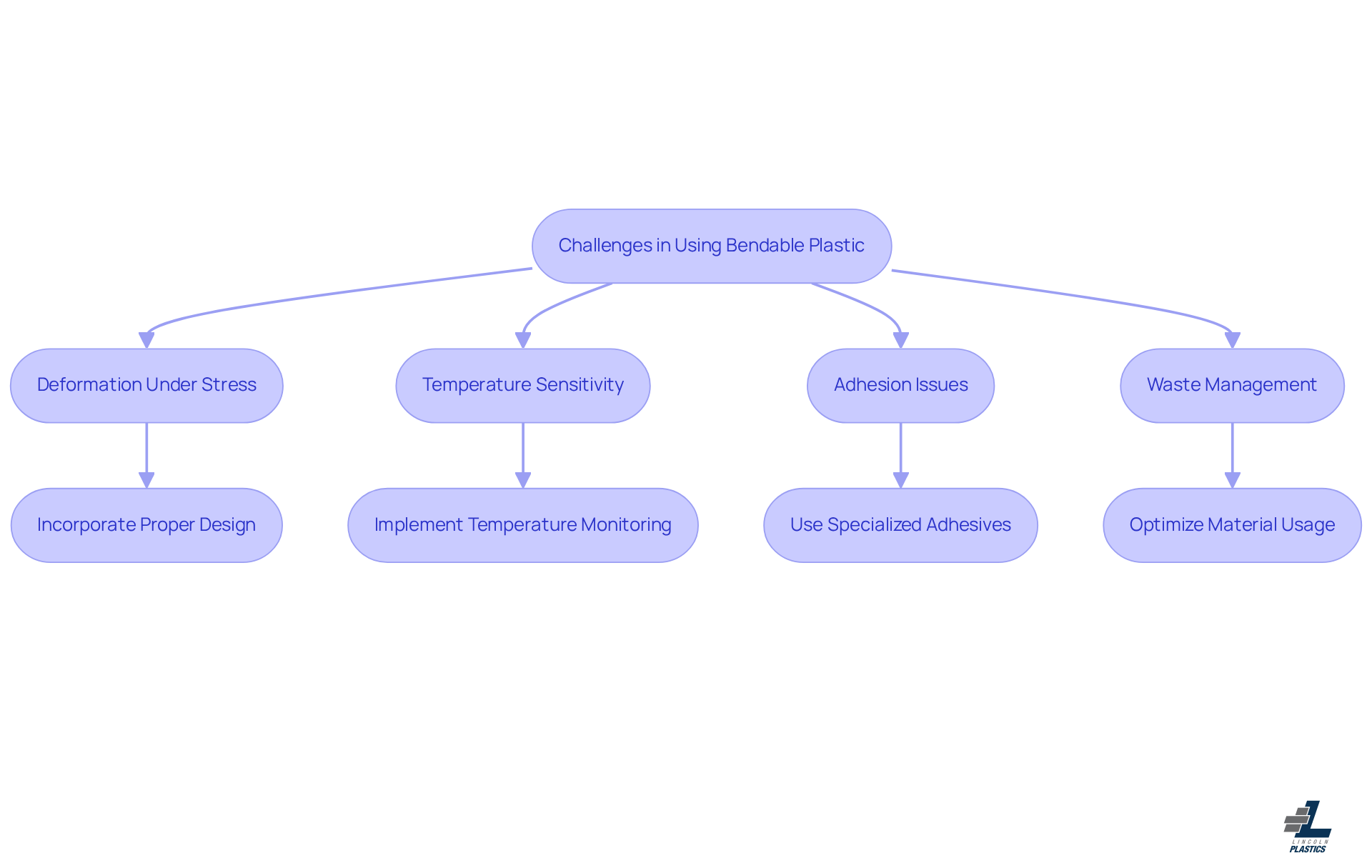
Have you ever considered the significant challenges producers encounter with flexible materials? These hurdles can severely impact production efficiency and product quality. Let’s explore some key issues that can arise:
- Bendable plastic materials are prone to deformation under stress if not designed correctly. Without proper design, flexible materials can lead to costly production delays and compromised product quality. To counteract this, it is essential to incorporate appropriate bend radii and support structures in designs, ensuring shape integrity is maintained during use.
- Temperature sensitivity: Certain bendable plastic materials may lose their desirable properties when exposed to extreme temperatures. Implementing temperature monitoring systems during processing can help maintain optimal conditions, preventing degradation of substances and ensuring consistent performance. At Lincoln Plastics, our strong quality system incorporates essential in-process checks to guarantee that temperature-sensitive substances are managed properly.
- Adhesion Issues: Bonding flexible polymers to other materials can present challenges, particularly regarding adhesion. Employing specialized adhesives intended for bonding materials can improve the effectiveness of joints and connections, ensuring durability and reliability in applications. Lincoln Plastics can provide guidance on the best practices for adhesive selection to ensure strong bonds.
- Waste Management: The creation of flexible materials can produce considerable waste, which presents difficulties for sustainability initiatives. Implementing robust recycling programs and optimizing material usage can help mitigate waste generation, improving the overall environmental impact of manufacturing processes. Our commitment to quality and sustainability is reflected in our ISO 9001:2015 certification and our ongoing efforts to minimize waste throughout the manufacturing process.
By addressing these challenges head-on, manufacturers can not only improve their product quality but also enhance their operational efficiency, ultimately leading to greater customer satisfaction. For tailored solutions and expert guidance, contact Lincoln Plastics today to learn how our strategic Midwest location can benefit your logistics and order turnaround.
Conclusion
Incorporating bendable plastic into manufacturing processes presents both challenges and opportunities for innovation. Understanding materials like polycarbonate, PVC, and polypropylene allows manufacturers to leverage their flexibility and durability. This helps meet diverse industry needs. Lincoln Plastics stands at the forefront of this innovation, providing tailored solutions that align with the specific requirements of OEMs in agriculture, office management, and tradeshow industries.
Key considerations for selecting bendable plastic materials include:
- Mechanical properties
- Thermal stability
- Environmental resistance
- Cost-effectiveness
Manufacturers often struggle with selecting the right materials for their specific applications. By evaluating these criteria, they can optimize production processes and ensure long-lasting performance. Additionally, implementing effective strategies such as:
- Design for manufacturability
- Advanced processing techniques
- Stringent quality checks
can significantly improve integration and reduce challenges associated with bendable plastics.
The shift to bendable plastic isn’t just about improving product quality; it’s also a crucial step toward a sustainable manufacturing future. By addressing common challenges and embracing innovative solutions, manufacturers can position themselves as leaders in their respective fields. Curious about how bendable plastics can benefit your operations? Connect with Lincoln Plastics experts for insights and tailored solutions that enhance efficiency and excellence in manufacturing.
Frequently Asked Questions
What are bendable plastics and what materials are commonly used?
Bendable plastics are flexible materials used in manufacturing that include polycarbonate, PVC, and polypropylene. These materials are known for their flexibility, impact resistance, and durability.
What are the advantages of using bendable plastics in manufacturing?
Bendable plastics can be molded into intricate shapes without losing structural integrity, making them suitable for various applications. They offer flexibility, impact resistance, and durability, which enhance product functionality and longevity.
How are bendable plastics utilized in agriculture?
In agriculture, flexible synthetic tubes are essential for irrigation systems as they provide the adaptability and strength needed to withstand environmental pressures. They play a significant role in improving productivity and efficiency in farming practices.
What challenges do manufacturers face that bendable plastics can address?
Many manufacturers struggle with materials that do not conform easily to required shapes. Bendable plastics are a solution for safety gear, packaging, and custom components for industrial machinery, offering lightweight designs that reduce shipping costs and minimize product damage.
How do recent advancements in resin technology impact bendable plastics?
Recent advancements in resin technology and multi-layer coextrusion processes have optimized bendable plastics for specific performance characteristics, such as puncture resistance and moisture barriers, enhancing their usability across various applications.
In what industries are bendable plastics commonly used?
Bendable plastics are used across multiple industries, including agriculture, packaging, storage, and protective applications, due to their versatility and ability to conform to various shapes.
How do bendable plastics contribute to sustainability?
By using flexible materials, manufacturers can reduce material use and improve recyclability, aligning with sustainability goals. This helps address waste pollution in agrifood value chains and promotes more efficient and resilient operations.
How can OEM purchasing managers get tailored solutions from Lincoln Plastics?
OEM purchasing managers are invited to contact Lincoln Plastics experts for quotes and tailored solutions to meet their specific needs in bendable plastic applications.
List of Sources
- Understand the Properties and Applications of Bendable Plastic
- Plastics in Agriculture | Climate change | Food and Agriculture Organization of the United Nations (https://fao.org/climate-change/thematic-areas/plastics-in-agriculture/en)
- Flexible Plastic: Key Benefits and Applications Revealed (https://dallasplastics.com/blog/flexible-plastic-benefits-and-applications)
- Breaking News in Flexible Plastic Packaging (https://plasticstoday.com/packaging/breaking-news-in-flexible-plastic-packaging)
- Evaluate Key Criteria for Selecting Bendable Plastic Materials
- Research and application of polypropylene: a review - PMC (https://pmc.ncbi.nlm.nih.gov/articles/PMC10761633)
- Flexible plastic packaging: regulation and sustainability (https://packaginginsights.com/news/flexible-packaging-regulation-recyclability-trends.html)
- 8 Trends in Plastic Materials and Packaging for 2026 (https://productsandsolutions.pttgcgroup.com/en/market-movement/8-trends-in-plastic-materials-and-packaging-for-2026)
- Sustainable Trends in Plastic Manufacturing for 2026 | Langgeng Jaya Group (https://langgengjayagroup.co.id/blog/sustainable-trends-in-plastic-manufacturing)
- What are the Plastic Manufacturing Trends for 2026? (https://linkedin.com/pulse/what-plastic-manufacturing-trends-2026-key-plastics-ltd-d4ekf)
- Implement Effective Strategies for Integrating Bendable Plastic in Manufacturing
- Scientists Invent New Type of Reformable Plastic Material (https://plasticsindustry.org/articles/university-chicago-scientists-invent-new-type-reformable-plastic-material)
- Flexible Plastic Packaging Market Trends and Size 2035 (https://towardspackaging.com/insights/flexible-plastic-packaging-market-sizing)
- USA Flexible Plastic Packaging Market: Innovation Trends and Future Market Prospects (2026-2035) (https://linkedin.com/pulse/usa-flexible-plastic-packaging-market-innovation-trends-w11hf)
- FlexForum 2026: Key Policy Shifts in Flexible Packaging (https://plasticsengineering.org/2026/03/flexforum-2026-key-policy-shifts-in-flexible-packaging-011125)
- Why Manufacturers Are Regionalizing Plastic Supply Chains in 2026 - Sterling Plastics (https://sterlingplasticsinc.com/insights/why-manufacturers-are-regionalizing-plastic-supply-chains-in-2026)
- Address Challenges and Solutions in Using Bendable Plastic
- Four Major Challenges Facing Plastics Manufacturing (https://themanufacturingoutlook.com/news/four-major-challenges-facing-plastics-manufacturing--nwid-587.html)
- Addressing the challenges of flexible plastic waste (https://innovationnewsnetwork.com/addressing-the-challenges-of-flexible-plastic-waste/68897)
- Plastics Manufacturing: 11 Challenges And Solutions (https://bdcmagazine.com/2024/07/plastics-manufacturing-11-challenges-and-solutions)


