
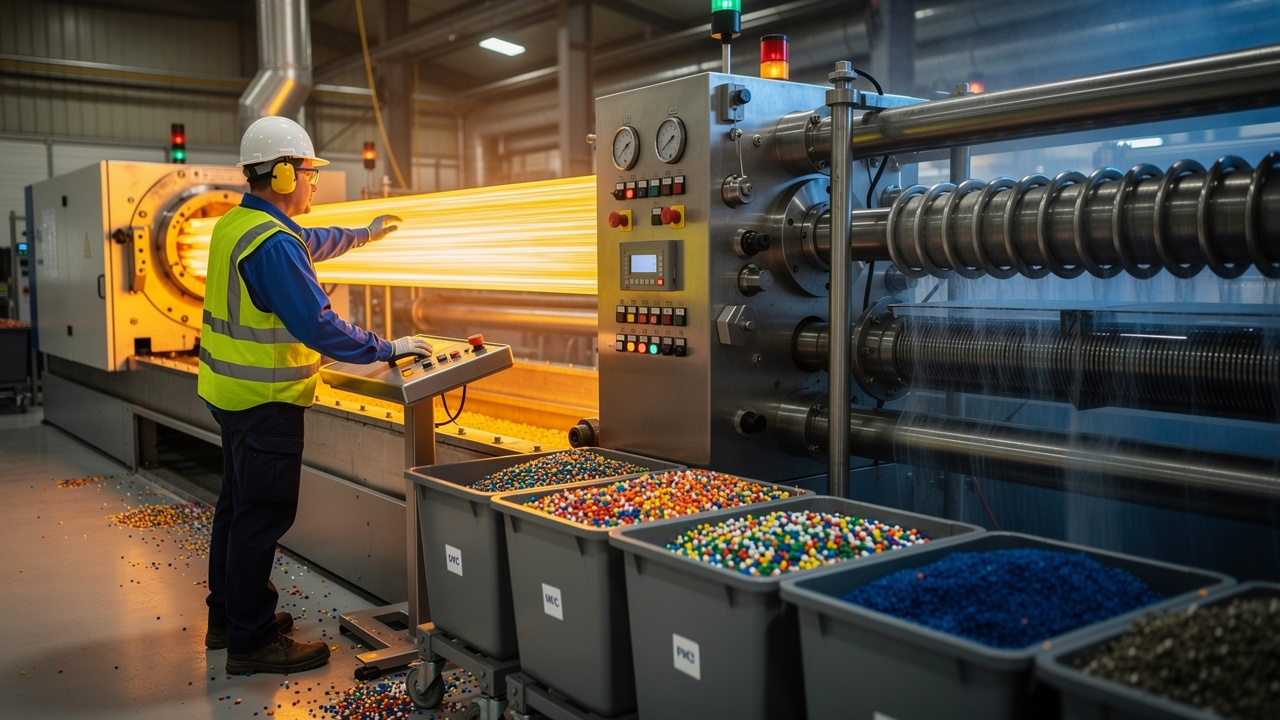
Best Practices for Sourcing Plastic Extruded Tubing Effectively
Introduction
Sourcing plastic extruded tubing effectively is crucial for businesses seeking to boost operational efficiency and enhance product performance. Finding trustworthy suppliers can feel overwhelming with so many choices available. How can organizations ensure they make the best choices for their unique needs? In this article, we’ll explore effective strategies for sourcing plastic extruded tubing, highlighting key considerations that can lead to successful supplier partnerships.
Understand the Plastic Extrusion Process
Mastering the plastic extrusion process is vital for sourcing high-quality plastic extruded tubing that meets specific operational needs. The process consists of several critical stages: material feeding, melting, shaping, cooling, and cutting. A thorough understanding of these stages is essential for effectively sourcing plastic extruded tubing, especially when considering the reliable solutions offered by Lincoln Plastics, located in Lincoln, Nebraska.
- Material Feeding: Raw plastic materials, including PVC, polyethylene, and polypropylene, are introduced into the extruder. The choice of material is essential, as it directly affects the final item's characteristics such as strength, flexibility, and chemical resistance.
- Melting: The materials are subjected to heat until they reach a molten state, enabling shaping. This stage requires accurate temperature regulation to guarantee consistent melting and avoid material degradation, which can jeopardize quality.
- Shaping: Shaping the molten plastic through a precisely designed die is crucial for achieving the desired profile of the extruded item. Lincoln Plastics excels in this area, providing custom flexible profiles and co-extrusion capabilities that enable multi-color or multi-material designs, enhancing the versatility of the offerings. The design of the die is pivotal, as it dictates the dimensions and characteristics of the plastic extruded tubing, which impacts its performance in various applications.
- Cooling: After shaping, the extruded item undergoes cooling to solidify its form. The cooling technique used can differ, significantly influencing the final item's surface finish and dimensional precision, which are essential for meeting industry standards. How does Lincoln Plastics ensure that every item meets the highest standards? Through strict management plans, specialized manuals, and in-process inspections.
- Cutting: Cutting the plastic extruded tubing to specified lengths is the final stage. Consistency in this cutting process is essential for preserving standards and ensuring that the plastic extruded tubing meets exact specifications.
Understanding these phases empowers purchasers to assess vendors effectively, ensuring sourced items align with their operational standards. Recent advancements in the extrusion process, including the integration of smart manufacturing technologies and predictive maintenance, further enhance efficiency and product standards. By staying informed about advancements in extrusion technology, sourcing managers can secure a competitive edge in their industries. For tailored solutions or quotes, potential customers are encouraged to contact Lincoln Plastics directly.

Leverage the Benefits of Custom Extruded Tubing
In today's competitive landscape, plastic extruded tubing stands out as a game-changer for operational efficiency and product performance. Here’s how:
- Tailored Specifications: Custom tubing is designed to meet precise dimensions, wall thicknesses, and material properties, ensuring an optimal fit for specific applications. Are you struggling to find tubing that meets your exact specifications? This customization of plastic extruded tubing is crucial for industries like agriculture and medical devices, where standard sizes may not suffice.
- Material Selection: The ability to choose materials like PVC or polyethylene enables companies to enhance their offerings for desired traits, including durability, flexibility, and chemical resistance. This tailored approach is essential for applications involving plastic extruded tubing that require specific performance metrics.
- Cost Efficiency: Custom extrusion processes can lead to substantial cost savings by minimizing waste and reducing the need for additional processing or assembly. This is particularly advantageous for high-volume production runs, where even small efficiencies can translate into significant financial benefits.
- Enhanced Performance: Custom profiles can be engineered to improve functionality, such as incorporating features that enhance insulation in electrical conduits or increase strength in agricultural applications. This means your operations can run more smoothly and efficiently. For instance, plastic extruded tubing designed for center pivot irrigation systems can optimize water flow and reduce maintenance needs.
- Quality Assurance: At Lincoln Plastics, we collaborate closely with OEMs to ensure that all products meet rigorous standards. Our robust management program, certified to ISO 9001:2015, includes dedicated manuals for each plastic profile, featuring drawings, critical in-process checks, and run documentation. This dedication to quality means you can trust our custom extrusions to deliver exceptional results in your applications.
- Brand Differentiation: Unique custom designs enable companies to stand out in competitive markets, providing a strategic advantage through innovative product offerings. This differentiation is vital in sectors like office management and tradeshow setups, where aesthetics and functionality are paramount.
By leveraging these benefits, businesses can effectively address current operational needs while positioning themselves to adapt to future challenges and opportunities within their industries. Additionally, we invite you to contact Lincoln Plastics for quotes or tailored solutions that meet your specific requirements. By choosing Lincoln Plastics, you're not just investing in products; you're investing in a partnership that prioritizes your unique needs and future growth.

Evaluate and Select Reliable Suppliers
Selecting the right supplier for extruded tubing can make or break your production quality. Here are key factors to consider:
- Certifications and Standards: Seek suppliers with pertinent certifications, such as ISO 9001:2015, which demonstrate a commitment to excellence in management and consistent production standards. Our company is certified to this standard, ensuring rigorous quality management plans, including dedicated quality books and in-process checks, and the ability to meet additional regulatory requirements.
- Experience and expertise: Evaluate the supplier's experience in producing plastic extruded tubing within the plastic extrusion industry. A supplier with a proven track record in your specific application area is more likely to understand your needs and deliver suitable solutions. Our extensive experience collaborating with OEMs across various sectors ensures tailored solutions for each client.
- Production Capabilities: Assess the supplier's production capacity and technology. Ensure they have the necessary equipment and expertise to meet your volume requirements and can handle custom specifications. Lincoln Plastics specializes in custom extrusion processes, including co-extrusion capabilities for multi-color or multi-material profiles, enabling versatile designs with plastic extruded tubing.
- Standards Assurance Procedures: Ask about the supplier's standards assurance measures. Dependable suppliers should have stringent testing and inspection procedures in place to ensure that items meet specified standards. We employ multiple types of check gauges and collaborate closely with OEMs to ensure that all products meet quality requirements, including special checks for ‘fit and function.’
- Customer Support and Communication: Strong communication and customer support are essential for a successful partnership. Choose suppliers who are responsive and willing to collaborate on design and production challenges. We’re committed to excellence and work closely with you to tackle any design or production challenges, ensuring that you receive the assistance you require throughout the process.
- International Shipping Capabilities: Consider suppliers who can ship to international locations. We collaborate with global clients to offer shipping solutions that best satisfy their requirements, ensuring a seamless supply chain.
By thoroughly assessing these factors, companies can choose vendors like Lincoln's supplier who will aid in their success and assist them in reaching their operational objectives. Choosing the right partner can elevate your operations and drive your success forward. For tailored solutions, contact Lincoln Plastics experts today.

Negotiate Contracts for Optimal Outcomes
Navigating supplier relationships in the plastic industry requires more than just transactional exchanges; it demands strategic negotiation skills. Here are key strategies to achieve optimal outcomes:
- Define Your Needs Clearly: Clearly outline your requirements, including specifications, quantities, and delivery timelines. This clarity helps communicate expectations effectively and sets the stage for productive discussions.
- Research Market Rates: Familiarize yourself with current market rates for plastic extruded tubing in the Midwest. Understanding the rates for plastic extruded tubing allows you to negotiate from an informed position, ensuring that pricing and terms are reasonable and competitive. For instance, recent data indicates that price variances for identical SKUs can exceed 10% across international units, highlighting the importance of market awareness.
- Be Open to Collaboration: Approach negotiations as a partnership rather than a mere transaction. Are you willing to explore options that enhance the relationship? Finding mutually beneficial solutions fosters long-term cooperation. Establishing key performance indicators (KPIs) in contracts can guide discussions on cost, delivery performance, and quality levels, ensuring accountability.
- Consider Long-Term Agreements: If ongoing needs are anticipated, negotiate long-term contracts. Such agreements can lead to better pricing and supply stability, benefiting both parties and reducing the frequency of negotiations. Organizations that consolidate procurement can uncover pricing discrepancies of over 10%, potentially saving significant costs.
- Document Everything: Ensure that all agreements are documented clearly, including terms, conditions, and expectations. Think of this documentation as your safety net, preventing misunderstandings and keeping everyone accountable. A case study on effective contract negotiation illustrates that by identifying issues early and establishing KPIs, organizations can facilitate regular reviews and maintain strong supplier relationships.
By mastering these negotiation strategies, you not only secure better contracts but also lay the groundwork for enduring partnerships that drive success.

Conclusion
Mastering the sourcing of plastic extruded tubing is crucial for businesses seeking to boost efficiency and performance. Understanding the plastic extrusion process - from material feeding to cutting - enables organizations to make informed decisions that meet their specific needs. The capabilities offered by Lincoln Plastics, particularly in custom extrusion and co-extrusion, provide a significant advantage in achieving tailored solutions that meet diverse application requirements.
Key insights discussed include:
- The importance of selecting reliable suppliers
- Evaluating their certifications
- Understanding their production capabilities
The emphasis on quality management, backed by Lincoln Plastics' ISO 9001:2015 certification, highlights the commitment to excellence that is crucial in today’s competitive landscape. Additionally, effective negotiation strategies can lead to favorable contract terms, ensuring that partnerships are built on mutual benefit and long-term success.
In conclusion, sourcing plastic extruded tubing effectively requires a strategic approach that encompasses understanding the extrusion process, leveraging custom capabilities, and fostering strong supplier relationships. When businesses prioritize quality and collaboration, they not only meet their current needs but also set themselves up for future growth. For tailored solutions and expert guidance, engaging with Lincoln Plastics could be the key to unlocking innovative solutions that drive your business forward.
Frequently Asked Questions
What is the plastic extrusion process?
The plastic extrusion process involves several critical stages: material feeding, melting, shaping, cooling, and cutting. Each stage is essential for producing high-quality plastic extruded tubing that meets specific operational needs.
What materials are used in the plastic extrusion process?
Raw plastic materials used in the process include PVC, polyethylene, and polypropylene. The choice of material affects the final item's characteristics such as strength, flexibility, and chemical resistance.
How does the melting stage work in plastic extrusion?
In the melting stage, the raw materials are subjected to heat until they reach a molten state. Accurate temperature regulation is crucial to ensure consistent melting and prevent material degradation, which can compromise quality.
What is the significance of the shaping stage in plastic extrusion?
The shaping stage involves forming the molten plastic through a precisely designed die, which determines the dimensions and characteristics of the extruded item. Lincoln Plastics specializes in providing custom flexible profiles and co-extrusion capabilities for multi-color or multi-material designs.
How does cooling affect the final product in the extrusion process?
After shaping, the extruded item undergoes cooling to solidify its form. The cooling technique used can significantly influence the final item's surface finish and dimensional precision, which are critical for meeting industry standards.
What is the importance of the cutting stage in plastic extrusion?
The cutting stage involves trimming the plastic extruded tubing to specified lengths. Consistency in this process is essential to ensure that the tubing meets exact specifications and quality standards.
How does Lincoln Plastics ensure quality in the extrusion process?
Lincoln Plastics employs strict management plans, specialized manuals, and in-process inspections to ensure that every item meets the highest quality standards.
What advancements are influencing the plastic extrusion process?
Recent advancements include the integration of smart manufacturing technologies and predictive maintenance, which enhance efficiency and product standards in the extrusion process.
How can potential customers obtain tailored solutions or quotes from Lincoln Plastics?
Potential customers are encouraged to contact Lincoln Plastics directly for tailored solutions or quotes regarding their plastic extrusion needs.
List of Sources
- Understand the Plastic Extrusion Process
- Understanding Plastic Extrusion (https://paulmurphyplastics.com/industry-news-blog/understanding-plastic-extrusion)
- Emerging Trends Shaping Plastic Extruders in 2026 (https://audop.com/c/emerging-trends-shaping-plastic-extruders-in-2026.htm)
- Shaping the Future: Innovations in Plastic Extrusion Techniques - SeaGate Plastics Company (https://seagateplastics.com/shaping-the-future-innovations-in-plastic-extrusion-techniques)
- The Plastic Extrusion Process Explained (https://lakelandplastics.com/what-is-plastic-extrusion)
- Plastic Extrusion News and Press Releases | Bausano (https://bausano.com/en/press-and-news?q=NEWS)
- Leverage the Benefits of Custom Extruded Tubing
- Plastics Extrusion: 4 Critical Statistics to Track for Increased Quality & Plant Profit (https://gaugeadvisor.com/plastics-extrusion-4-critical-statistics-to-track-for-increased-quality-plant-profit)
- 10 Innovative Examples of Extrusion Transforming Industries (https://lincoln-plastics.com/news-post/10-innovative-examples-of-extrusion-transforming-industries)
- The Versatility of Plastic Tubing in Modern Industries (https://paulmurphyplastics.com/industry-news-blog/the-versatility-of-plastic-tubing-in-modern-industries)
- Custom Plastic Extrusion Services | Medical Tubing Solutions (https://aptyx.com/solutions/extrusion)
- Custom Extruded Plastic Tubing: Process, Applications, and More | High-Volume Plastic Profile Extrusion with In-House Tooling|Custom Profile (https://custom-profile.com/blog/custom-extruded-plastic-tubing-manufacturing-process-applications-and-benefits)
- Evaluate and Select Reliable Suppliers
- Meaning of Plastic Manufacturers ISO 9001:2015 Certification | TriEnda (https://trienda.com/services/what-plastic-manufacturers-with-iso-9001-2015-certification-means-for-you)
- Our ISO Certifications | The Plastek Group (https://plastekgroup.com/blog/iso-certifications-plastics-manufacturing)
- Top 12 Plastic Extrusion Manufacturers in the USA for 2026 - Plastic Extruder Supplier & Plastic Pelletizer OEM Factory | Plastic For Pellet Pelletizer Wholesales Custom Twin Screw Extruder Manufacturer China (https://exintellmach.com/top-12-plastic-extrusion-manufacturers-in-the-usa-for-2026)
- ISO Certification for Plastic Manufacturing Companies (https://rajstartup.com/blog/iso-certification-for-plastic-manufacturing-companies)
- Why ISO9001 Certification Matters in Plastic Manufacturing (https://jinenplastic.com/why-iso9001-certification-matters-in-plastic-manufacturing)
- Negotiate Contracts for Optimal Outcomes
- Negotiations in the News, Week of March 9, 2026 (https://watershedassociates.com/negotiations-in-the-news-week-of-march-9-2026)
- 5 steps to successful supplier negotiations (https://supplychaindive.com/news/negotiation-tactics-suppliers-buyers-procurement/558492)
- 5 negotiation tactics manufacturers need to win in 2026 (https://fastmarkets.com/insights/5-negotiation-tactics-manufacturers-need-to-win-in-2026)
- Contract Management Statistics 2026 - 65 Key Figures (https://procurementtactics.com/contract-management-statistics)
- Manufacturing Contract Management: The Missing Link in Production Efficiency (https://sirion.ai/library/contract-management/manufacturing-contract-management)
Related posts

Custom Colors & Branding in Extrusion
Lincoln Plastics delivers Pantone-matched colors, striping, and finishes in extrusion for OEMs — combining performance with branding.


How We Solve Problems When Standard Parts Don’t Work
Lincoln Plastics solves challenges OEMs face when standard parts don’t work — delivering custom extrusions that improve fit, cost, and reliability.
Cable & Cord Protection in High-Traffic Environments
Lincoln Plastics manufactures durable cord covers and management solutions to keep high-traffic environments safe, organized, and compliant.
