
4 Best Practices for Sourcing Co-Extruded Plastic Products for OEMs
Introduction
Co-extrusion is really shaking things up in the manufacturing world! It lets you blend different materials seamlessly to create top-notch plastic products. For OEMs, getting a grip on how to source co-extruded items isn’t just a nice-to-have; it’s a must if you want to boost product performance and streamline operations.
But here’s the thing: with so many options out there, it can feel a bit overwhelming. How do you make sure you’re choosing the right sourcing strategies? You might be wondering what the best practices are for navigating the ins and outs of co-extruded plastic products. Well, you’re in luck! This article is here to help you understand the complexities and equip you with the knowledge you need to make smart sourcing decisions and achieve fantastic results.
Understand the Co-Extrusion Process
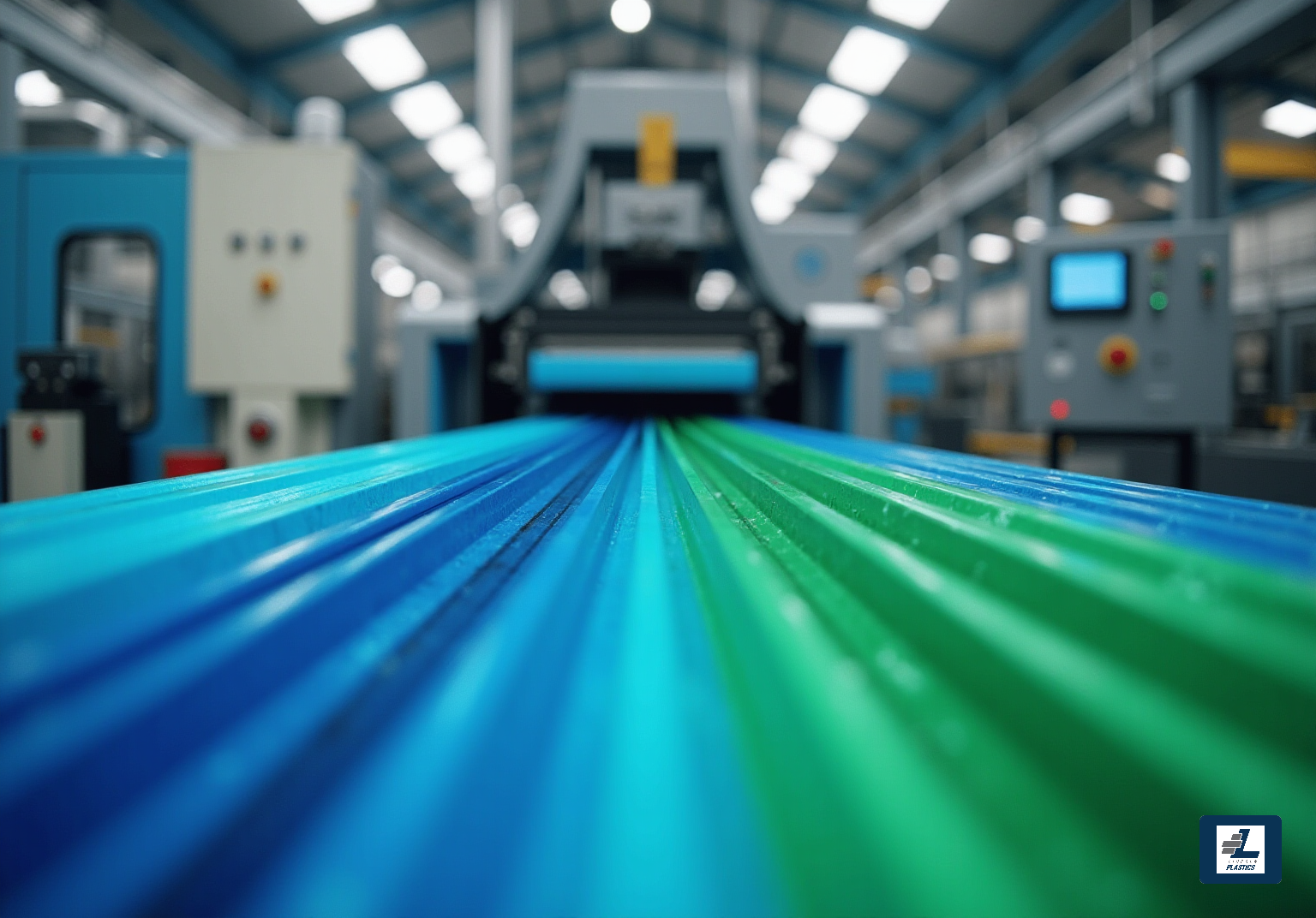
Co-extrusion is a pretty cool manufacturing technique that lets us push two or more substances through a single die at the same time. This means we can create multi-layered products that combine the best features of different materials, making them perform better and work harder for you. At Lincoln Plastics, we’re all about crafting standard and custom round plastic profiles, including flexible ones that can be tailored just for you.
Now, let’s talk about some key aspects of the co-extrusion process:
- Material Compatibility: It’s super important to pick materials that bond well during extrusion. Understanding each material's characteristics, like viscosity and thermal behavior, helps us get the best results. We offer a variety of substances to meet your needs.
- Extruder Configuration: The way we set up our extruders-whether single-screw or twin-screw-really impacts the quality of the final product. Twin-screw extruders are often the go-to choice because they blend materials thoroughly, which is essential for our co-extruded profiles.
- Die Design: The die needs to be designed specifically for the materials we’re using. This ensures they’re layered correctly and that the final product meets all the dimensional specs. Our expertise in die design means we can create profiles with precision.
- Process Parameters: We have to keep a close eye on factors like temperature, pressure, and speed to achieve the desired characteristics. If these parameters vary too much, it can lead to defects or inconsistencies. At Lincoln Plastics, we monitor these closely to ensure top-notch quality.
By understanding these components, OEMs can better navigate the complexities of sourcing co-extruded plastic products for OEMs. This way, they can choose the right materials and methods for their specific applications. With Lincoln Plastics, you can count on our custom flexible profiles and co-extrusion solutions to meet your manufacturing needs!

Identify the Benefits of Co-Extruded Products
The advantages of co-extruded plastic products for OEMs can significantly boost the performance and efficiency of applications. Let’s dive into some key benefits:
- Enhanced Performance: Co-extrusion lets you mix materials with different properties, like rigidity and flexibility. Imagine a co-extruded pipe that has a tough outer layer for strength but a flexible inner layer for easy installation. This combo leads to top-notch performance in all sorts of conditions.
- Cost Efficiency: By using co-extrusion, producers can cut down on resource costs and waste. Since materials are combined in one go, there’s less need for extra manufacturing steps, which means lower production costs overall.
- Enhanced Aesthetics: This process allows for the creation of visually appealing products with various colors and finishes. This is super important in consumer-facing applications where looks matter. Lincoln Plastics can easily find colors that match your Pantone specs for consistency across manufacturers.
- Customization: OEMs can customize co-extruded plastic products to meet specific needs, such as UV resistance, chemical resistance, or thermal insulation. This level of customization gives you a competitive edge, allowing for innovative solutions tailored to unique application requirements. Lincoln Plastics works closely with OEMs to ensure their products meet all standards, including specific assessments for 'fit and function'.
- Sustainability: Co-extrusion makes it easier to integrate recycled materials, promoting more sustainable manufacturing practices. By blending recycled and new materials, manufacturers can reduce their environmental footprint while keeping quality intact.
- Quality Assurance: The co-extrusion process emphasizes quality from the start by creating the necessary tooling and dies, ensuring that products meet strict criteria. Lincoln Plastics uses various check gauges to guarantee a proper fit for end use, reinforcing their commitment to quality assurance.
- Specific Applications: Co-extrusion is widely used in different sectors, like construction for window seals and siding, automotive for safety components, and medical packaging to ensure product integrity. Lincoln Plastics has produced many types of conduit for various electrical and specialty plastic applications.
- Potential Pitfalls: While co-extrusion has plenty of perks, OEMs should be aware of common pitfalls, like needing specialized machinery and expertise, which can complicate the manufacturing process.
These advantages make co-extruded plastic products for OEMs an attractive option for those looking to expand their offerings and improve operational efficiency.

Evaluate Suppliers and Ensure Quality Control
When it comes to sourcing layered plastic items, OEMs face a real challenge. It’s crucial to thoroughly assess potential suppliers and put strict control measures in place. So, what should you keep in mind? Here are some key practices to consider:
-
Supplier Assessment: Start by digging into potential suppliers. Check out their experience with co-extruded plastic products for OEMs and assess their reputation in the industry. Look for certifications like ISO 9001; they’re solid indicators of compliance with management standards and show a commitment to continuous improvement and operational excellence. Before you seal any deals, don’t forget to ask for samples of co-extruded plastic products for OEMs. This step is vital! It lets you evaluate the standards, consistency, and performance directly, ensuring the supplier meets your specific needs.
-
Control Processes: Now, let’s talk about control protocols. Ask your supplier about their measures. Effective ones should include regular inspections, raw material testing, and production monitoring to ensure they stick to the specifications. A strong management system can really boost operational performance, and studies show a solid link between ISO 9001 implementation and better business outcomes.
-
Communication: Establishing clear communication channels with suppliers is key. Regular updates and constructive feedback can help resolve issues quickly and foster a cooperative relationship, which is essential for maintaining high standards.
-
Performance Metrics: Finally, develop and use performance metrics to gauge supplier reliability. Look at on-time delivery rates, defect rates, and how responsive they are to inquiries. Analyzing this data can guide your future sourcing decisions and help you keep those high standards intact.
By following these practices, you can ensure that you’re working with suppliers who prioritize quality and reliability. This approach will ultimately lead to exceptional outcomes!

Leverage Customization for Tailored Solutions
Customization is a game-changer for OEMs looking to enhance their co-extruded plastic products for OEMs. So, how can you make the most of it? Here are some key practices to consider:
-
Define Requirements: First things first, get clear on what you need for your co-extruded products. Think about material properties, dimensions, and performance characteristics. This clarity will steer the customization process and help you stay aligned with your operational needs.
-
Collaborate with Suppliers: Next up, team up with suppliers like Lincoln Plastics, a top player in OEM irrigation solutions and cable management. Dive into discussions about different customization options. Explore material combinations, design tweaks, and production techniques that can boost your product's functionality. When you collaborate effectively, you can come up with innovative solutions tailored to your specific needs, thanks to Lincoln Plastics' impressive extrusion molding capabilities.
-
Prototype Development: Now, let’s talk about prototypes. Creating tailored prototypes is crucial for testing how your products perform in real-world situations. This iterative process allows you to make adjustments based on feedback, ensuring the final product meets or even exceeds expectations. Plus, efficient prototype creation can significantly increase your success rates during launches. Many developers have noticed that tight deadlines will be key to hitting prototyping goals in the coming years.
-
Utilize Advanced Technologies: Don’t forget to leverage advanced manufacturing technologies! Tools like computer-aided design (CAD) and simulation software can help you optimize the design and production of your customized co-extruded items. These technologies let you visualize the final product and spot potential issues before you even start production.
-
Feedback Loop: Finally, set up a feedback loop with your end-users. Gathering insights on performance is invaluable for shaping future customization efforts and refining your offerings to better meet market demands.
By embracing these strategies, OEMs can create co-extruded plastic products for OEMs that not only meet client specifications but also enhance satisfaction and loyalty. This positions you competitively in the market. Plus, keeping an eye on economic factors and customer demands-often highlighted as top influences on product development-will further enhance your customization initiatives.

Conclusion
Sourcing co-extruded plastic products for OEMs can feel a bit tricky, right? It’s all about understanding the co-extrusion process, which lets you create those multi-layered products that really boost performance and efficiency. When you get the hang of material compatibility, extruder setup, die design, and process parameters, you can navigate the complexities of this manufacturing technique like a pro, leading to some pretty impressive results.
Now, let’s talk about the perks of co-extruded products. You’ve got:
- Enhanced performance thanks to clever material combinations
- Cost savings by cutting down on production steps
- The chance to customize products to fit specific needs
Plus, it’s super important to evaluate suppliers and stick to strict quality control measures. This way, OEMs can count on high-quality outputs. And hey, leveraging customization not only sparks innovation but also gives manufacturers a competitive edge in the market.
In conclusion, embracing smart practices for sourcing co-extruded plastic products is key for OEMs wanting to optimize their offerings. By focusing on teamwork with suppliers, using advanced technologies, and keeping communication open, manufacturers can whip up tailored solutions that meet market demands. This strategic approach doesn’t just boost product quality; it also supports sustainability efforts, paving the way for a more efficient and innovative future in plastic manufacturing.
Frequently Asked Questions
What is co-extrusion?
Co-extrusion is a manufacturing technique that allows two or more substances to be pushed through a single die simultaneously, creating multi-layered products that combine the best features of different materials.
What are the benefits of using co-extrusion?
Co-extrusion allows for the creation of products that perform better by combining different materials, resulting in enhanced functionality and performance.
What factors are important for material compatibility in co-extrusion?
It's crucial to select materials that bond well during extrusion. Understanding each material's characteristics, such as viscosity and thermal behavior, is essential for achieving optimal results.
How does extruder configuration affect co-extrusion?
The configuration of the extruder, whether single-screw or twin-screw, impacts the quality of the final product. Twin-screw extruders are preferred as they blend materials thoroughly, which is vital for co-extruded profiles.
Why is die design important in the co-extrusion process?
Die design is important because it ensures that the materials are layered correctly and that the final product meets all dimensional specifications. Proper die design contributes to the precision of the profiles created.
What process parameters must be monitored during co-extrusion?
Key process parameters include temperature, pressure, and speed. Monitoring these factors closely is necessary to achieve the desired characteristics and prevent defects or inconsistencies in the final product.
How can OEMs benefit from understanding the co-extrusion process?
By understanding the components of co-extrusion, OEMs can better navigate the complexities of sourcing co-extruded plastic products, allowing them to choose the right materials and methods for their specific applications.
What services does Lincoln Plastics offer related to co-extrusion?
Lincoln Plastics offers custom flexible profiles and co-extrusion solutions tailored to meet various manufacturing needs, including standard and custom round plastic profiles.
List of Sources
- Understand the Co-Extrusion Process
- 10 Innovative Applications of Co-Extruded Plastics for OEMs (https://lincoln-plastics.com/news-post/10-innovative-applications-of-co-extruded-plastics-for-oe-ms?dcc2137a_page=21)
- Case study - Problem solving for gels in co-extruded films (https://norner.no/articles/case-study-problem-solving-for-gels-in-co-extruded-films)
- Exploring the Advantages of Co-Extrusion for Different Industries | Plastic Profile Extrusion|Custom Profile (https://custom-profile.com/blog/exploring-the-advantages-of-co-extrusion-for-different-industries-and-applications)
- Co-extrusion vs. Traditional Extrusion: A Comparative Analysis | Crafted Plastics Inc (https://craftedplastics.com/blog/co-extrusion-vs-traditional-extrusion-a-comparative-analysis)
- Plastics Extrusion: 4 Critical Statistics to Track for Increased Quality & Plant Profit (https://gaugeadvisor.com/2025/05/26/plastics-extrusion-4-critical-statistics-to-track-for-increased-quality-plant-profit)
- Identify the Benefits of Co-Extruded Products
- Exploring the Advantages of Co-Extrusion for Different Industries | Plastic Profile Extrusion|Custom Profile (https://custom-profile.com/blog/exploring-the-advantages-of-co-extrusion-for-different-industries-and-applications)
- Co-extrusion vs. Traditional Extrusion: A Comparative Analysis | Crafted Plastics Inc (https://craftedplastics.com/blog/co-extrusion-vs-traditional-extrusion-a-comparative-analysis)
- 10 Innovative Applications of Co-Extruded Plastics for OEMs (https://lincoln-plastics.com/news-post/10-innovative-applications-of-co-extruded-plastics-for-oe-ms?dcc2137a_page=51)
- Benefits of the Co-Extrusion process (https://jpbindustry.com/benefits-co-extrusion-process.html)
- Evaluate Suppliers and Ensure Quality Control
- 5 Proven Practices to Increase Product Quality in Extrusion (https://lincoln-plastics.com/news-post/5-proven-practices-to-increase-product-quality-in-extrusion)
- (PDF) Evaluation of Supplier Performance in Plastic Manufacturing Industry: A Case Study (https://researchgate.net/publication/350335645_Evaluation_of_Supplier_Performance_in_Plastic_Manufacturing_Industry_A_Case_Study)
- 25 Quotes to Inspire Quality And Success - Pro QC Blog (https://proqc.com/blog/25-quotes-to-inspire-quality-success)
- 5 Important Things for Life Sciences Companies to Consider | MasterControl (https://mastercontrol.com/gxp-lifeline/quality-inspiration)
- Relationship between ISO 9001:2015 and operational and business performance of manufacturing industries in a developing country (Indonesia) - PMC (https://pmc.ncbi.nlm.nih.gov/articles/PMC7814109)
- Leverage Customization for Tailored Solutions
- 10 Ways Extrusion Technology Transforms Manufacturing Efficiency (https://lincoln-plastics.com/news-post/10-ways-extrusion-technology-transforms-manufacturing-efficiency?dcc2137a_page=5)
- Product Development Trends in 2024 | Key Stats and Findings (https://protolabs.com/resources/guides-and-trend-reports/product-development-trends)
- Case Studies (https://hitechextrusions.com/case-studies)
- 15 Great Quotes That Will Inspire You to Start Optimizing (https://dynamicyield.com/article/15-quotes)
- Extruded Plastic Case Studies (https://paulmurphyplastics.com/extruded-plastic-case-studies)


