
4 Best Practices for Advanced Extrusions in OEM Production
Introduction
In the competitive landscape of manufacturing, advanced extrusion techniques position OEMs at the forefront of innovation and efficiency. By leveraging these innovative methods, companies can enhance productivity, minimize waste, and elevate product quality, driving a significant competitive advantage.
Manufacturers face increasing pressure to adapt to customization and sustainability demands while ensuring quality. Failure to implement these practices could lead to lost market share and diminished client trust.
Understand Advanced Extrusion Techniques
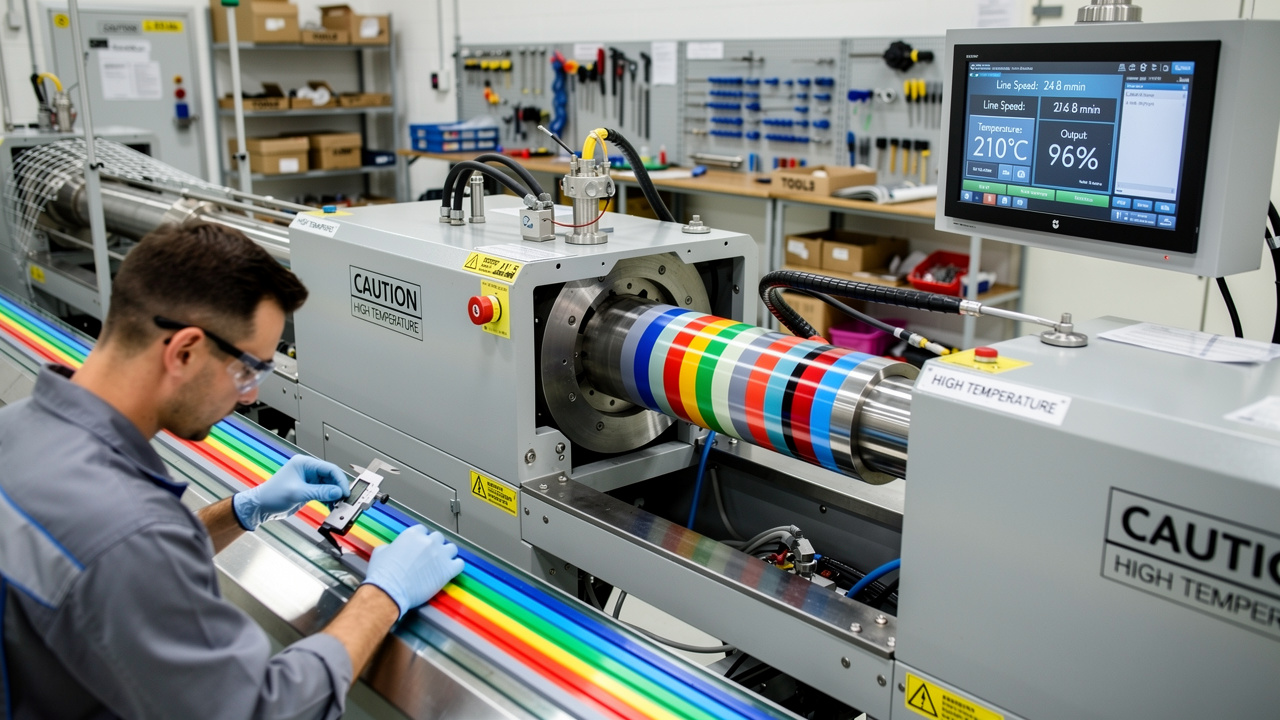
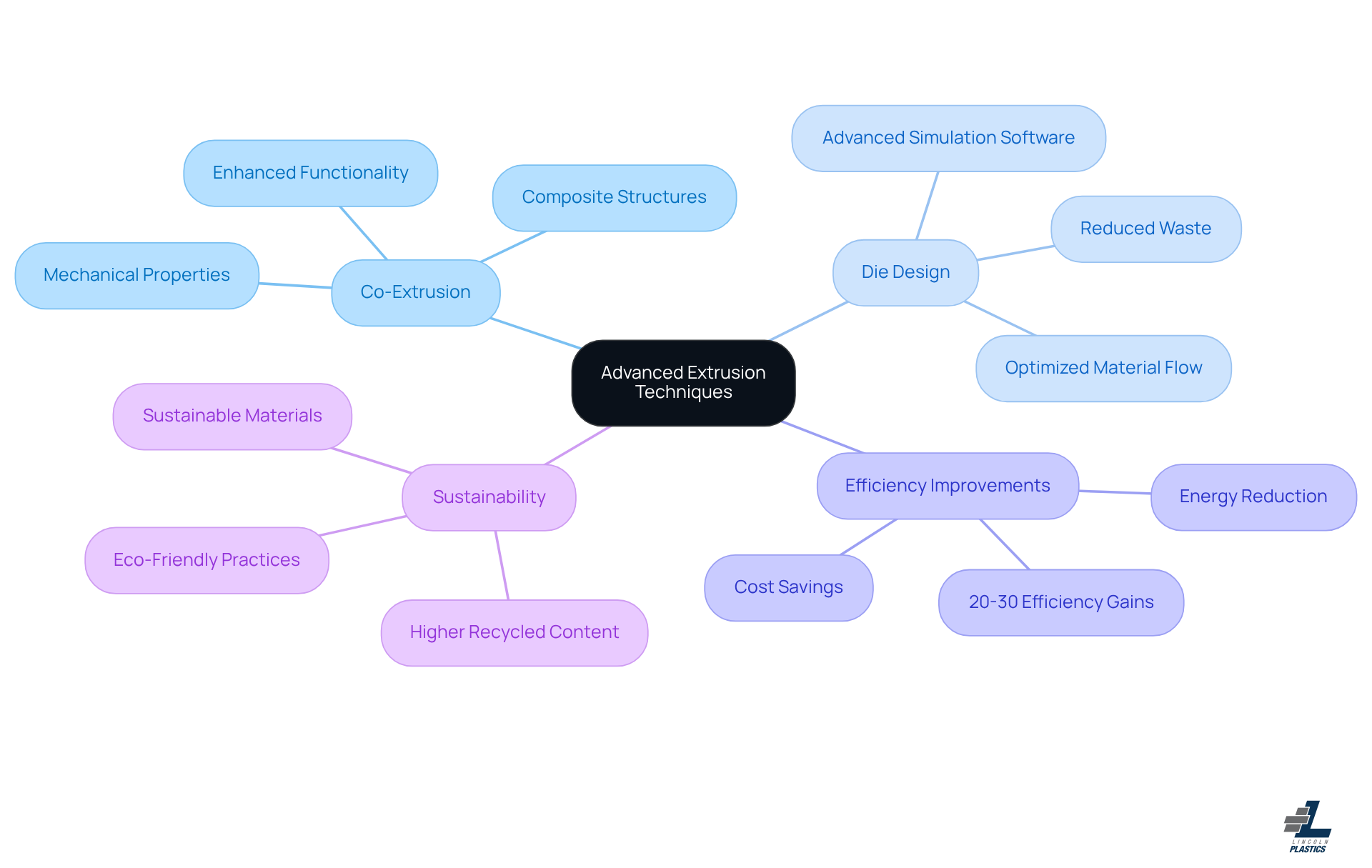
In the competitive landscape of manufacturing, advanced extrusions are not just beneficial; they are essential for success. These techniques play a crucial role in enhancing both the efficiency and quality of the manufacturing process. For instance, co-extrusion allows for the simultaneous processing of various substances, enabling producers to develop intricate profiles tailored for specific applications. Multi-layer co-extrusion can significantly improve the mechanical properties of components, making them ideal for demanding OEM machinery applications.
Advanced die design and simulation software optimizes material flow. This reduces waste and ensures consistency throughout production. Such technological integration streamlines operations and facilitates greater customization in design, effectively meeting the unique requirements of clients, including custom cord management solutions that enhance safety and efficiency.
Have you seen how recent advancements in extrusion technology are reshaping OEM production? Manufacturers adopting these techniques have reported efficiency improvements of 20-30%, alongside enhanced product capabilities such as better temperature control and higher filler loadings. These enhancements lead to cost savings and create new market opportunities by enabling the use of heat-sensitive substances and higher recycled content.
Case studies illustrate the impact of these advanced techniques. Companies that have adopted systematic methods to extrusion technology have realized significant operational enhancements, including reductions in energy usage and waste. By focusing on metrics like Cpk and Ppk, manufacturers can ensure their processes consistently meet target specifications, further enhancing product quality and reducing costs.
As we move into 2026, the focus on advanced extrusions techniques is increasing. This growth is driven by the demand for sustainable practices and high-performance materials across sectors like agriculture and office management. To remain competitive, embracing advanced extrusions is not just an option; it's a necessity for future growth. For tailored solutions and expert guidance, OEM purchasing managers are encouraged to contact Lincoln Plastics, located strategically in Lincoln, Nebraska, for quick order turnaround and efficient logistics.
Select Appropriate Materials for Extrusion
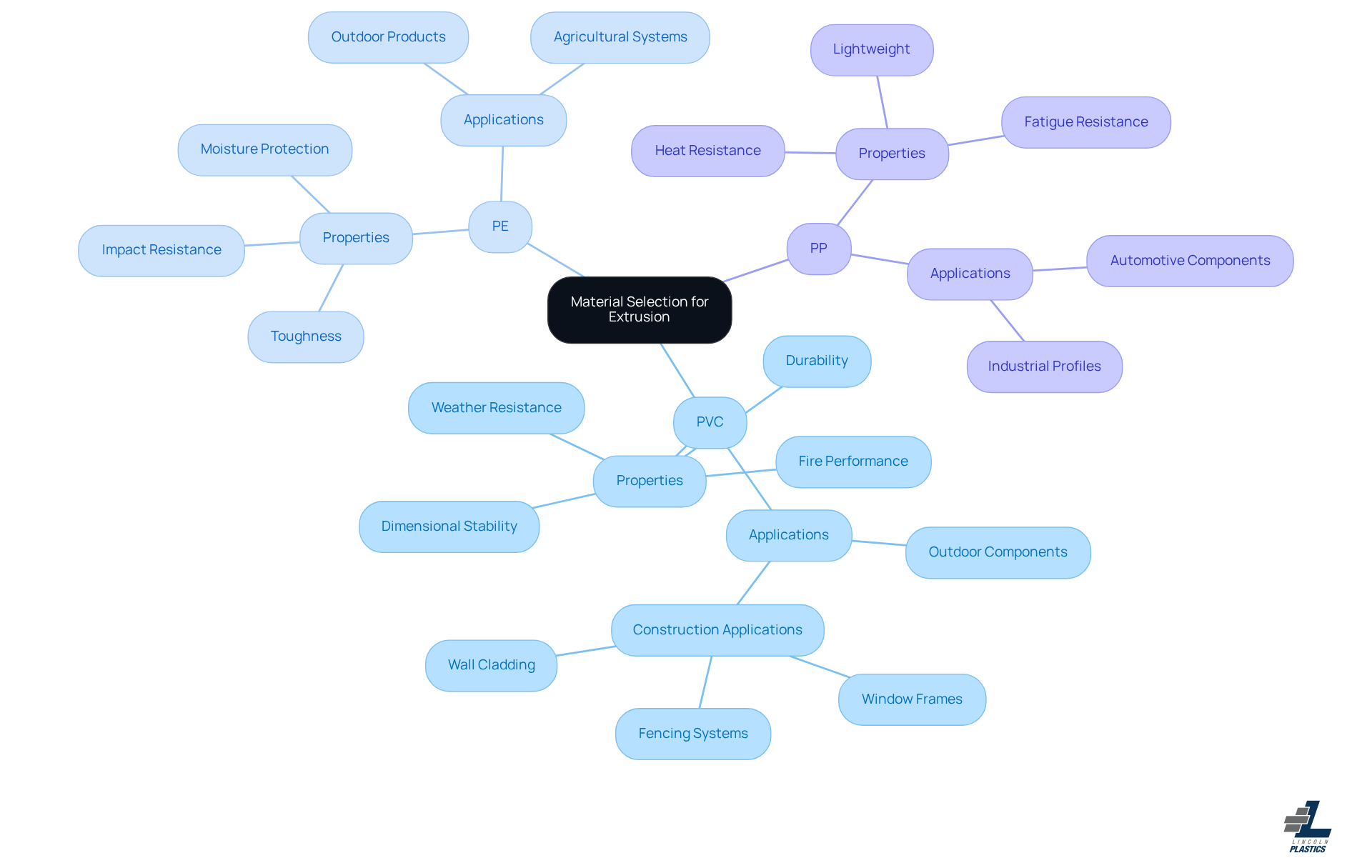
Selecting the right materials for extrusion is not just important; it's critical for ensuring product quality and functionality. Common substances in industrial extrusion include PVC, polyethylene (PE), and polypropylene (PP), each offering distinct properties suited to specific applications. For instance, PVC is favored for its durability and resistance to environmental factors, making it ideal for outdoor components and construction applications. PE, known for its excellent impact resistance and moisture protection, is widely used in outdoor products and agricultural systems. Meanwhile, PP is recognized for its lightweight nature and heat resistance, making it suitable for automotive components and industrial profiles.
Choosing the wrong material can lead to product failure and increased costs. Selecting substances requires careful consideration of thermal stability, chemical resistance, and mechanical properties. While PVC provides rigidity and weather resistance, PE excels in applications requiring toughness and flexibility. Working together with resin providers can produce valuable insights into specifications and performance traits, ensuring that the chosen substances align with the intended application and client needs. Without expert guidance, manufacturers risk compromising product quality and efficiency. This strategic approach not only enhances product performance but also contributes to long-term value by reducing replacement costs and improving overall efficiency in production.
At Lincoln Plastics, we understand how crucial accurate material selection is, which is why we offer custom flexible profiles, including co-extrusion solutions that enable multi-color or multi-substance profiles. Our robust quality management program, certified to ISO 9001:2015, includes dedicated quality plans, in-process checks, and specific tolerances to ensure that your specifications are met with the utmost accuracy. As the aluminum extrusion market is projected to grow from USD 105.8 billion in 2026 to USD 193.3 billion by 2033, manufacturers must prioritize material selection to remain competitive. Prioritizing material selection today can safeguard your competitive edge tomorrow.
Implement Quality Assurance Protocols
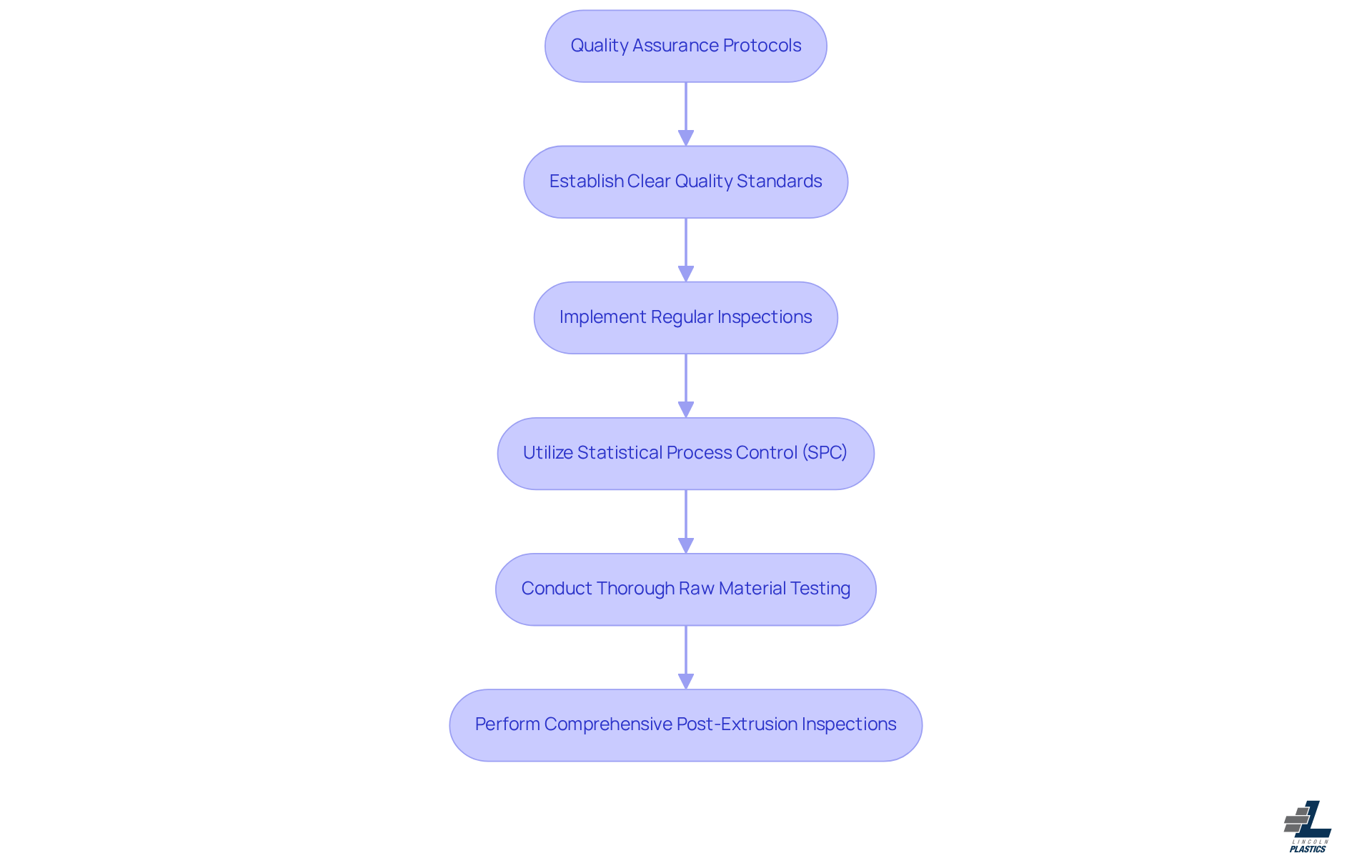
Quality assurance is not just a protocol; it's the backbone of successful advanced extrusions manufacturing, ensuring that every product meets the highest standards of excellence. At Lincoln Plastics, we establish a robust control framework. It starts with clearly defined standards, includes regular inspections, and employs effective in-process monitoring techniques. For instance, the application of statistical process control (SPC) allows us to identify variations in the advanced extrusions process, enabling prompt adjustments to maintain product standards. Additionally, thorough testing of raw materials before production is crucial for preventing defects and ensuring consistency throughout the manufacturing cycle.
How can you optimize quality assurance? Here are some best practices to consider:
- Establish Clear Quality Standards: Define specific criteria for each product to ensure consistency.
- Implement Regular Inspections: Schedule frequent checks throughout the production process to catch issues early.
- Utilize Statistical Process Control (SPC): Monitor production data to identify and correct variations promptly.
- Conduct Thorough Raw Material Testing: Ensure all materials meet standard specifications before production begins.
- Perform Comprehensive Post-Extrusion Inspections: Use techniques such as coordinate measuring machines (CMMs) and visual inspections to verify dimensional accuracy, surface finish, and mechanical properties.
Statistics show that maintaining strict standards can significantly reduce waste and enhance operational efficiency. For example, focusing on average thickness in extrusion can prevent costly resin waste, which can amount to tens of thousands of dollars over high-volume runs due to excess thickness.
By emphasizing assurance and adhering to ISO 9001:2015 certification standards, you enhance your reputation for reliability and foster long-term client relationships, paving the way for sustained business success. Our dedicated quality management program includes quality plans and process check sheets, ensuring that every product meets the highest standards of precision and compliance for OEM applications.
For customized solutions and professional advice, we encourage you to reach out to Plastics today.
Embrace Customization for Client-Specific Solutions
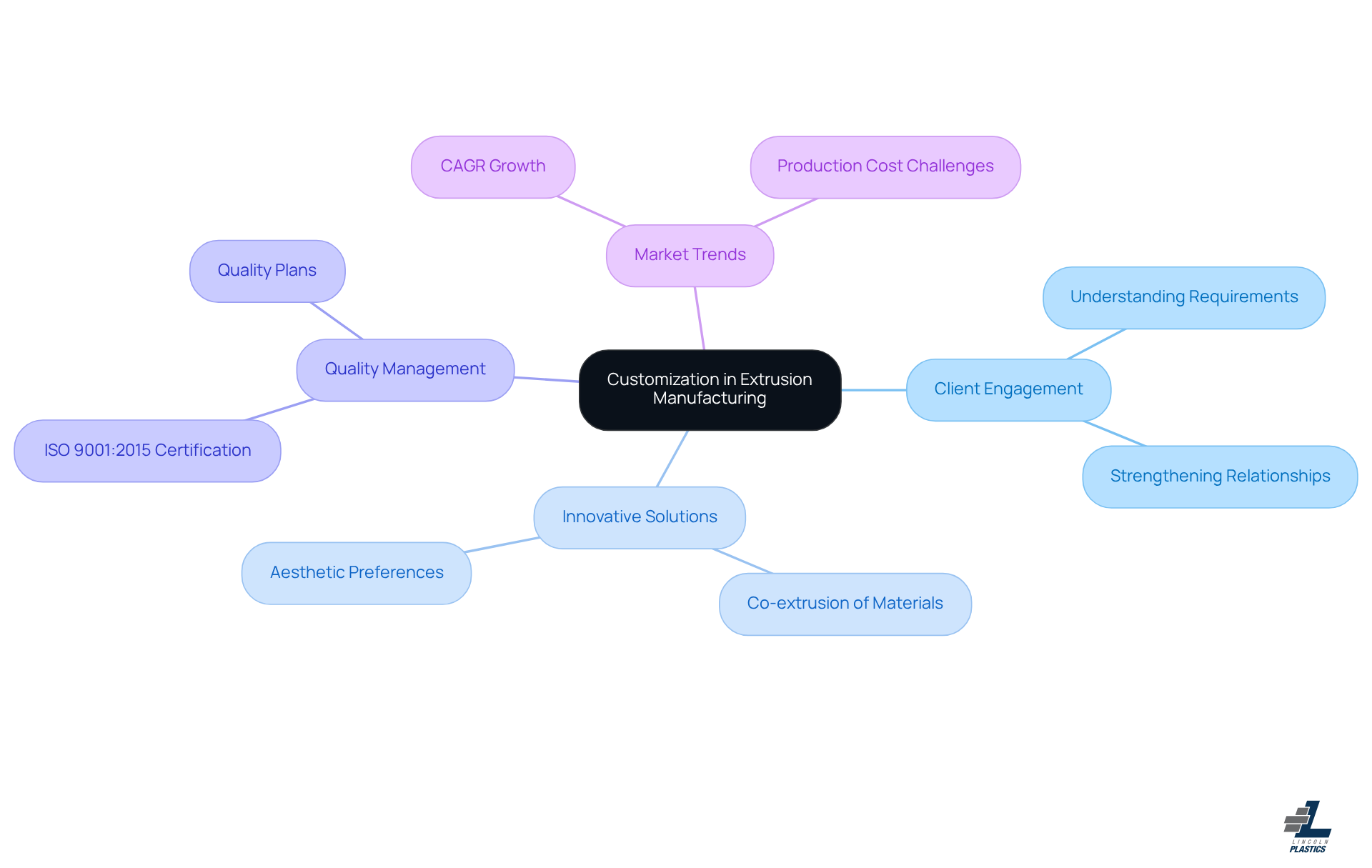
In today's competitive extrusion manufacturing landscape, customization is not just an option; it's a necessity for success. Customization is essential in contemporary extrusion manufacturing, enabling companies to effectively address the unique needs of their clients. Offering customized solutions, like specialized profiles for OEM applications, allows this company to stand out in a competitive landscape. Engaging clients during the design phase is crucial; understanding their specific requirements can lead to innovative solutions that enhance product functionality.
For example, this company excels in co-extruding multiple colors or materials into a single profile, which not only meets aesthetic preferences but also improves performance characteristics. This commitment to personalization strengthens client relationships and positions Plastics as a trusted partner in their success.
Furthermore, the robust quality management program of Plastics, including ISO 9001:2015 certification and dedicated quality plans, ensures that all products meet stringent quality standards. As the demand for personalized solutions continues to rise, manufacturers that prioritize customization will be better equipped to meet evolving market needs and drive growth in 2026.
Additionally, with the aluminum extrusion market projected to grow at a CAGR of 5% from 2023 to 2028, the emphasis on customization becomes even more critical. Manufacturers are grappling with increasing production costs due to rising aluminum prices and tariffs, which complicates their ability to deliver customized solutions.
How can Lincoln Plastics tailor solutions to meet your unique needs? Contact our team today to find out.
Conclusion
Advanced extrusion techniques are not just beneficial; they are essential for manufacturers aiming to excel in OEM production. Adopting these practices allows manufacturers to streamline operations and meet their clients' specific needs more effectively. By integrating co-extrusion, advanced die design, and rigorous quality assurance protocols, companies like Lincoln Plastics position themselves at the forefront of the industry, ensuring they deliver superior products that stand out in a competitive market.
Key insights from the article highlight the importance of:
- Selecting appropriate materials
- Implementing robust quality assurance measures
- Embracing customization
The right material choice, such as PVC, polyethylene, or polypropylene, directly impacts product performance and longevity. Furthermore, maintaining high-quality standards through systematic inspections and testing is crucial for minimizing waste and ensuring consistency. Customization, particularly through co-extrusion capabilities, allows manufacturers to create tailored solutions that meet the unique demands of their clients, fostering stronger partnerships and driving growth.
Yet, many manufacturers struggle to adapt to these evolving demands. As extrusion manufacturing evolves, it's clear that the emphasis on advanced techniques and quality assurance will only grow. Companies that prioritize these best practices will not only enhance their operational efficiency but also secure their position as leaders in the market. For those looking to optimize their extrusion processes and explore customized solutions, reaching out to Lincoln Plastics can provide the expertise and support needed to thrive in this dynamic environment. By choosing to partner with Lincoln Plastics, manufacturers can ensure they are not just keeping pace but leading the way in extrusion innovation.
Frequently Asked Questions
What are advanced extrusion techniques and why are they important?
Advanced extrusion techniques are essential for enhancing the efficiency and quality of the manufacturing process. They enable manufacturers to produce intricate profiles tailored for specific applications, which is crucial for success in a competitive landscape.
How does co-extrusion benefit manufacturers?
Co-extrusion allows for the simultaneous processing of various substances, which can significantly improve the mechanical properties of components, making them ideal for demanding OEM machinery applications.
What role does advanced die design and simulation software play in extrusion?
Advanced die design and simulation software optimizes material flow, reduces waste, and ensures consistency throughout production, facilitating greater customization in design to meet unique client requirements.
What efficiency improvements have manufacturers reported from adopting advanced extrusion techniques?
Manufacturers have reported efficiency improvements of 20-30%, alongside enhanced product capabilities such as better temperature control and higher filler loadings, leading to cost savings and new market opportunities.
How do advanced extrusion techniques contribute to sustainability?
These techniques enable the use of heat-sensitive substances and higher recycled content, aligning with the growing demand for sustainable practices across various sectors.
What metrics are important for ensuring quality in extrusion processes?
Metrics like Cpk and Ppk are important for ensuring that extrusion processes consistently meet target specifications, which enhances product quality and reduces costs.
Why is it necessary for manufacturers to embrace advanced extrusion techniques moving forward?
Embracing advanced extrusion techniques is necessary for future growth due to increasing demands for sustainable practices and high-performance materials in industries such as agriculture and office management.
Where can OEM purchasing managers find expert guidance on advanced extrusion techniques?
OEM purchasing managers are encouraged to contact Lincoln Plastics, located in Lincoln, Nebraska, for tailored solutions, quick order turnaround, and efficient logistics.
List of Sources
- Understand Advanced Extrusion Techniques
- Plastics Extrusion: 4 Critical Statistics to Track for Increased Quality & Plant Profit (https://gaugeadvisor.com/plastics-extrusion-4-critical-statistics-to-track-for-increased-quality-plant-profit)
- How Plastic Extrusion Is Powering Modern Manufacturing Across Industries | The Ritz Herald (https://ritzherald.com/how-plastic-extrusion-is-powering-modern-manufacturing-across-industries)
- Advanced extrusion improves production efficiency (https://dachangplastic.com/info/advanced-extrusion-improves-production-efficie-103185744.html)
- Shaping the Future: Innovations in Plastic Extrusion Techniques - SeaGate Plastics Company (https://seagateplastics.com/shaping-the-future-innovations-in-plastic-extrusion-techniques)
- Select Appropriate Materials for Extrusion
- 10 Essential Insights on Plastic Extrusion Tubing for OEMs (https://lincoln-plastics.com/news-post/10-essential-insights-on-plastic-extrusion-tubing-for-oems)
- PVC vs PE vs PP in Plastic Profile Extrusion - SHARC (https://sharcpm.com/news/pvc-vs-pe-vs-pp-in-plastic-profile-extrusion)
- Aluminum Extrusion Market Size & Share Report, 2026-2033 (https://grandviewresearch.com/industry-analysis/aluminum-extrusion-market)
- Interplas Insights | Latest Plastics Extrusion Machinery News (https://interplasinsights.com/plastics-machinery/plastics-extrusion-machinery-news)
- Implement Quality Assurance Protocols
- Quality Control Measures in Aluminum Extrusion Manufacturing: A Comprehensive Overview (https://aluphant.com/quality-control-measures-in-aluminum-extrusion-manufacturing-a-comprehensive-overview)
- Quality Control in Plastic Extrusion for Consistent Results | Rocal (https://rocalextrusions.co.uk/news/quality-control-in-plastic-extrusion-to-ensure-consistent-results)
- Plastics Extrusion: 4 Critical Statistics to Track for Increased Quality & Plant Profit (https://gaugeadvisor.com/plastics-extrusion-4-critical-statistics-to-track-for-increased-quality-plant-profit)
- The Importance of Quality Control in Plastic Extrusion Manufacturing - Craftedplastics (https://craftedplastics.com/blog/the-importance-of-quality-control-in-plastic-extrusion-manufacturing)
- 4 Best Practices for Effective Process Control Quality in Extrusion (https://lincoln-plastics.com/news-post/4-best-practices-for-effective-process-control-quality-in-extrusion?dcc2137a_page=2)
- Embrace Customization for Client-Specific Solutions
- From Concept to Market: Why Scalable OEM Solutions Matter (https://accumaxlab.com/from-concept-to-market-why-scalable-oem-solutions-matter)
- 2026 Aluminum Extrusion Trends & Outlook | Profile Precision Extrusions (https://profileprecisionextrusions.com/2026-outlook-innovations-and-trends-shaping-the-future-of-aluminum-extrusions)
- OEM Manufacturing Challenges 2026: How Miller Helps (https://millerfabricationsolutions.com/blog/what-oem-customers-are-up-against-in-2026-and-how-miller-helps)
- From concept to creation: Understanding custom component solutions (https://essentracomponents.com/en-us/news/industries/automotive/from-concept-to-creation-understanding-custom-component-solutions?srsltid=AfmBOoos4W7lwY3GmuyRLxqcqBMpbm6hB7qeElg8OQiKDMPkeZF4-8aL)
- Latest News and Insights about Aluminium Extrusion Company (https://zzmetals.com/blog/2026-aluminium-extrusions-trends-innovations)


