

10 Key Benefits of UV Resistant Plastic for OEMs
Introduction
You know how the sun can really do a number on everyday materials? It can cause them to fade, crack, and just fall apart over time. But here’s the good news: UV resistant plastics have stepped in as a game-changer for manufacturers who want to boost the durability and lifespan of their products. By using advanced UV stabilizers, these materials can handle tough environmental conditions while also saving costs and looking good.
As more industries focus on sustainability and reliability, you might be wondering: how can OEMs tap into these innovative materials to enhance product performance and keep up with changing market demands? Let’s dive into this together!
Enhance Durability with UV Resistant Plastic
Have you ever noticed how some plastics seem to fade or crack after spending too much time in the sun? That’s the damaging effect of ultraviolet (UV) radiation at work. But here’s the good news: UV resistant plastic is designed to stand up to that kind of wear and tear. By adding UV stabilizers, manufacturers can boost the durability of their products, helping them keep their shape and look even after long days under the sun. This is super important for outdoor uses, where materials face all sorts of tough weather.
Now, let’s talk about some of the standout UV resistant materials. You’ve probably heard of:
- Polyethylene (PE)
- Polycarbonate (PC)
- Acrylic (PMMA)
For example, UV resistant films, which are a type of plastic, are famous for their excellent UV resistance, making them perfect for greenhouses and silage covers where moisture retention and durability are also key. And then there’s Acrylic, which not only offers UV protection but also keeps its shine even in intense sunlight. That’s why it’s a go-to for outdoor signs and displays.
But the perks of UV resistant plastics go beyond just making things last longer. They help plastics keep their strength and visual appeal, which is crucial for things like agricultural films, outdoor furniture, and protective coverings. More and more manufacturers are realizing how important these stabilizers are in their product development. By using these additives, companies can really extend the life of their products, cutting down on the need for frequent replacements and maintenance. This not only makes customers happier but also saves money in the long run.
Did you know that the market for UV resistant plastics is expected to grow at a compound annual growth rate (CAGR) of 10.4% from 2026 to 2033? That’s driven by the rising demand for durable materials across various industries. This trend really shows how crucial UV resistance is in today’s manufacturing world. Choosing materials that can handle chemicals like fertilizers and pesticides is vital for ensuring durability and effectiveness outdoors.
In summary, prioritizing UV resistance when selecting materials is key to ensuring reliability and safety for products. By opting for UV-proof materials, OEMs can enhance durability, maintain aesthetic appeal, and ultimately deliver better solutions to their clients.

Reduce Long-Term Costs through UV Protection
Investing in UV resistant plastic can really save OEMs a lot in the long run. Sure, the upfront cost might be a bit higher than your usual polymers, but think about it: they last longer and need less maintenance. These materials come packed with UV stabilizers and additives that boost their resistance to environmental wear and tear. This means reduced replacement costs and a longer product lifespan. Sounds smart, right?
For instance, companies that utilize UV resistant plastic often experience significant savings compared to those sticking with standard plastics. This can really help their bottom line! Plus, let’s not forget about the aesthetic benefits. If aesthetics matter in your designs, these materials can be a game changer.
By focusing on UV resistant plastic, manufacturers can protect their products from degradation while also enhancing their market appeal. As Dallas Plastics puts it, 'UV protective substances are specially formulated or treated components designed to endure the detrimental effects of UV radiation.' This really highlights how important these materials are. So, why not consider making the switch?

Improve Safety with UV Resistant Materials
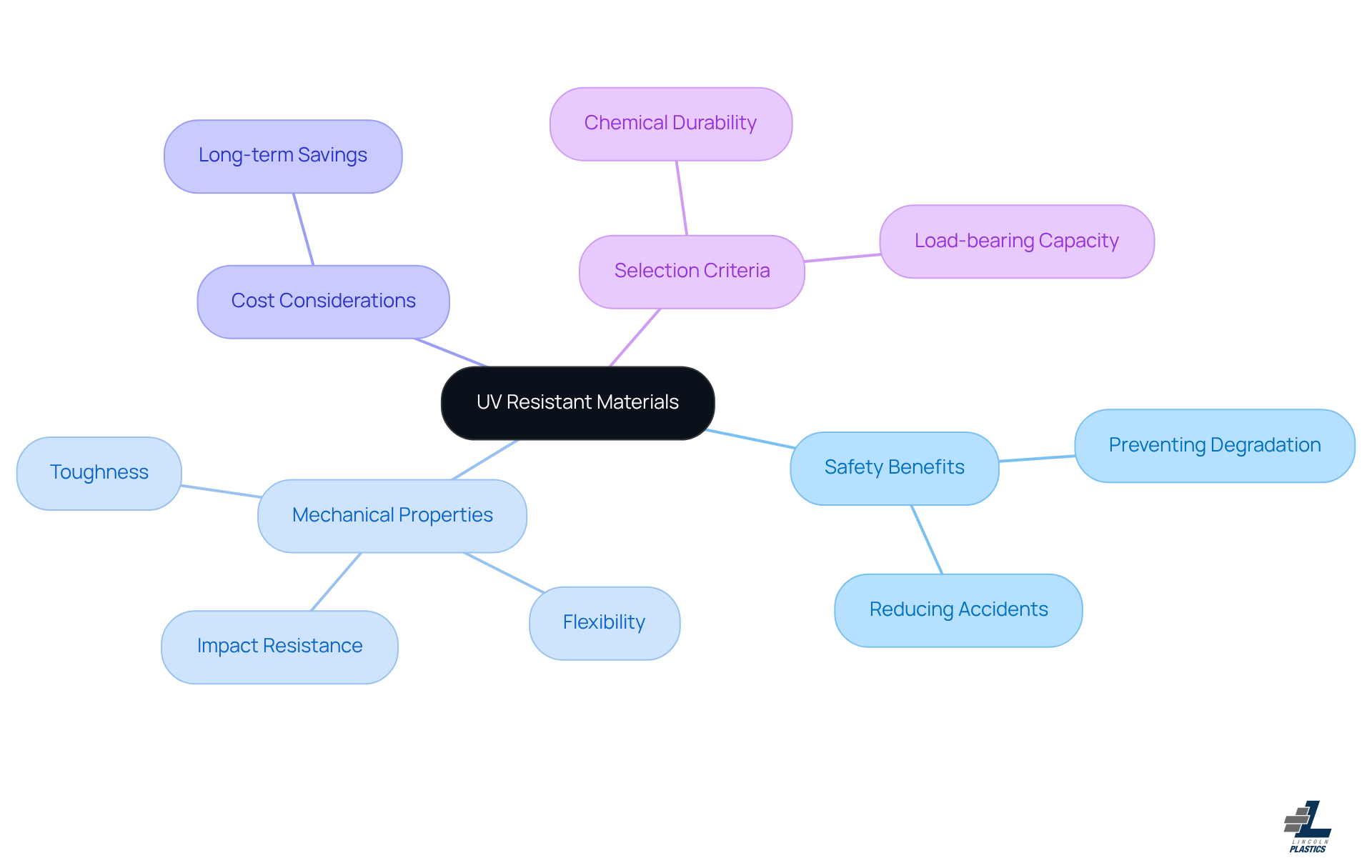
Have you ever thought about how UV resistant materials enhance safety? They do this by preventing degradation and keeping things structurally sound, which helps lower the chances of failures that could lead to accidents or injuries. For example, think about outdoor furniture or car parts made from UV stabilized materials. These items stay secure and reliable over time, which is a big win for users and manufacturers alike. It’s all about protecting everyone from potential liabilities that come with product failures.
Now, let’s discuss the benefits of UV resistant materials. They’re not just tough; they’re also reliable. This is super important for applications that need to handle stress without cracking or deforming. Case studies show that UV resistant plastics, including polycarbonate and acrylic, can withstand harsh environmental conditions, extending the lifespan of outdoor products.
You might be wondering about the cost. Sure, UV-proof materials might have a higher upfront price, but they save you money in the long run by reducing maintenance and replacement costs. That really highlights their value in ensuring safety and longevity in essential applications.
So, how do you choose the right UV durable materials? Consider factors like impact resistance and chemical durability, to make sure they’re getting the best performance for their applications.
Utilize Versatile UV Resistant Plastics Across Industries
You know, UV resistant plastics are quite useful across various fields, including automotive, construction, agriculture, and even consumer products. Their knack for utilizing UV resistant plastic makes them perfect for applications like signage, agricultural films, and packaging. This flexibility means manufacturers can use UV resistant plastic in a variety of projects, significantly improving product longevity across the board.
Now, let’s talk about why this matters. Imagine you’re out in the sun, and your outdoor furniture starts to fade or crack. Not ideal, right? That’s where UV resistant materials come in, ensuring your investments last longer and look great. So, whether you’re in construction or just sprucing up your backyard, UV resistant plastics can make a world of difference!

Support Sustainability with Long-Lasting UV Resistant Solutions
Choosing UV resistant plastic is a smart move for anyone looking to boost sustainability efforts. Why? Because they help reduce waste and save resources. These materials last longer, which means fewer replacements and less junk piling up in landfills. Did you know that a staggering 91% of plastic isn’t recycled? Plus, around 8 million tons of plastic make their way into our oceans every year. That really shows how urgent it is to find sustainable alternatives.
Now, many UV stabilizers are designed to be eco-friendly, which really helps improve the sustainability of these products. Manufacturers are catching on, too, and are increasingly using recycled materials. This not only meets the demand for durability but also aligns with wider environmental goals. As David Suzuki puts it, "If we want to move towards a low-polluting, sustainable society, we need to get consumers to think about their purchases."
So, by investing in durable, UV protective solutions, companies can play a key role in building a sustainable future. Every purchase we make can help shape the world we want to live in. OEM purchasing managers, take note! When you’re looking at UV resistant options, think about their environmental impact. Consider things like the sustainability of the components used. It’s all about making choices that matter!

Maintain Aesthetic Appeal with UV Stability
You know how frustrating it can be when your product starts to fade or your car's interior looks worn out? That’s where UV resistant plastic plays a crucial role! They’re essential for keeping items looking fresh and vibrant, preventing fading, discoloration, and surface degradation. This is especially important for things like outdoor furniture and automotive interiors, where how they look can really impact customer satisfaction.
By using UV resistant materials, manufacturers can ensure their products maintain their original color and appearance. This not only enhances durability but also makes them more appealing to consumers. For example, makers often turn to UV resistant plastics to guarantee longevity and aesthetic quality. It’s a win-win: they meet consumer expectations and build brand loyalty at the same time.
Industry experts emphasize just how crucial appearance is; it’s a major factor in attracting customers and establishing a strong market presence. Plus, using UV resistant materials can lower costs and reduce maintenance needs, which means long-term savings, even if the initial costs are a bit higher.
As Dallas Plastics puts it, "The value lies in its capacity to improve performance in outdoor settings." So, when you think about incorporating UV stability into your designs, remember it’s not just about protecting aesthetic quality; it’s also about enhancing the overall success of consumer items in competitive markets.
Now, if you’re wondering how to pick the right UV protective material for your specific needs, take a close look at the product specifications. And don’t forget to consider the environmental factors your products will face!

Leverage Advanced Technologies in UV Resistant Plastics
Have you ever wondered how some materials, such as plastics, seem to last forever outdoors, even under the harsh sun? Well, recent advancements in technology are making that possible! These innovations have really stepped up the game for UV absorbers and stabilizers, boosting the durability of materials used outdoors.
Take modern formulations, for example. They can actually extend the lifespan of plastics by up to 50%! That’s a big deal when you think about how much degradation can happen from UV exposure if the materials are not made of UV resistant compounds. Manufacturers are catching on, too, adopting these technologies to create products that not only meet but exceed market expectations.
Now, let’s talk about some cool innovations. Ampacet's AgriStab is a great example. It extends the service life of agricultural plastics beyond three years! Plus, it can handle tough pesticide environments while also improving sustainability efforts. How awesome is that?
And there’s more! By integrating additives, manufacturers can enhance packaging material strength and flexibility by 10-20%. This really contributes to overall product performance.
Looking ahead, the global market for UV resistant materials is expected to surpass USD 8 billion by 2028. So, if manufacturers embrace these innovations, they’ll definitely have a competitive edge. Isn’t it exciting to think about how these advancements can change the game?

Ensure Supplier Reliability with Trusted UV Resistant Options
When it comes to choosing UV durable materials, partnering with suppliers who prioritize quality is key. Take Lincoln Plastics, for example. They really stand out with their strong measures, which include special checks for ‘fit and function’ and using various types of check gauges to ensure everything fits just right for its intended use.
Their documentation is pretty impressive, too. They provide a comprehensive package, packed with drawings, critical in-process checks, and run documentation. Plus, reputable manufacturers like Lincoln Plastics often have certifications like ISO 9001, which shows they stick to industry standards.
Did you know that studies show eighty-five percent of failures come from issues in systems and processes, not from the employees? This really highlights how crucial supplier reliability is. By teaming up with reliable partners like Lincoln Plastics, OEMs can consistently obtain high-quality materials. This not only boosts their offerings but also helps improve customer satisfaction.
As John Ruskin wisely said, ''Quality is never an accident; it is always the result of intelligent effort.' And Aristotle reminds us that 'Quality is not an act, it is a habit.' This really drives home the importance of choosing suppliers thoughtfully and staying committed to excellence in product quality.

Choose Lincoln Plastics for Custom UV Resistant Solutions
At Lincoln Plastics, we truly excel in delivering custom solutions made from materials just for OEMs like you. We specialize in crafting products from top-notch materials like polyethylene, ridged PVC, flexible PVC, and polypropylene. With a strong emphasis on quality and innovation, we offer a range of options that can be customized in color, size, and application. This means you get enhanced durability but also boost your operational efficiency and overall product performance.
You might be wondering how we can help you further. Well, we can run any type of resin to fit your needs! Our clients benefit from our expert insights, which guide them in selecting the best materials. Plus, our robust documentation includes a dedicated quality book for your profile, complete with drawings, critical in-process checks, and run documentation. This reflects our commitment to your satisfaction.
By choosing Lincoln Plastics, you’re not just getting a supplier; you’re gaining a trusted partner focused on delivering innovative solutions that address your unique challenges with UV protection. And with the market growing at a CAGR of 6.9% from 2026 to 2033, it’s more important than ever to choose materials for protection. This is especially true for OEMs facing supplier reliability issues and fluctuating resource costs.
So, when making decisions, don’t forget to consult industry experts for indicators of quality. It’s all about making informed choices that work for you!

Enhance Operational Efficiency with UV Resistant Plastics
Have you ever faced the hassle of constant replacements and maintenance in your production line? Well, incorporating UV resistant plastic might just be the game changer you need. These materials are built to handle tough environmental conditions, which means you can say goodbye to frequent replacements.
For example, manufacturers using UV resistant plastic have seen downtime drop by up to 30%. That’s a big win! With less downtime, you can keep your production schedules on track and focus on what really matters - innovation and growth. Imagine shifting your attention from dealing with failures to exploring new opportunities.
By opting for UV resistant materials, OEMs can reduce costs and improve efficiency, thereby creating a competitive advantage overall. At Lincoln Plastics, we’re all about providing solutions. Whether it’s co-extrusion, laser etching, fitting insertion, or specialized packaging, we’ve got options to meet your specific needs.
Our commitment to quality assurance and customer service makes us a reliable partner for OEMs looking to enhance their operations. So, why not explore how our products can benefit your business? Let’s chat!

Conclusion
Choosing UV resistant plastic is a smart move for manufacturers looking to boost the longevity, safety, and visual appeal of their products. By using these specialized materials, OEMs can really step up their game, ensuring that items can handle the tough effects of UV radiation while keeping their shape and good looks intact. This choice not only helps the end consumer but also aids manufacturers in running their operations more efficiently.
Now, let’s talk about some key benefits of UV resistant plastics. They’re durable against environmental wear, which means fewer maintenance headaches and cost savings from reduced replacements. Plus, they contribute to safety by lowering the risk of product failures. And let’s not forget their versatility across various industries! With advancements in UV stabilization technologies, these materials are becoming increasingly important in modern manufacturing.
In a world that’s all about sustainability, adopting UV resistant plastics is a great way to cut down on waste and boost recyclability. By making smart choices about materials, manufacturers can help create a more sustainable future while also meeting the demand for high-quality, durable products. Embracing UV protection isn’t just a trend; it’s a crucial strategy for long-term success and resilience in the ever-changing manufacturing landscape.
Frequently Asked Questions
What is UV resistant plastic and why is it important?
UV resistant plastic is designed to withstand the damaging effects of ultraviolet (UV) radiation, preventing fading and cracking. This is crucial for outdoor applications where materials are exposed to harsh weather conditions.
What are some common types of UV resistant materials?
Common UV resistant materials include Polyethylene (PE), Polycarbonate (PC), and Acrylic (PMMA). High-density polyethylene (HDPE) films are particularly noted for their excellent UV resistance.
How do UV stabilizers enhance the durability of plastics?
UV stabilizers help plastics maintain their strength and visual appeal, extending the life of products and reducing the need for frequent replacements and maintenance.
What are the economic benefits of using UV resistant plastics?
Although the upfront cost may be higher, UV resistant plastics last longer and require fewer replacements, leading to lower operational costs and a better return on investment.
How do UV resistant materials improve safety?
By preventing degradation and maintaining structural integrity, UV resistant materials lower the chances of product failures that could lead to accidents or injuries, enhancing overall safety.
What mechanical properties do UV resistant plastics possess?
UV resistant plastics are tough, flexible, and resistant to impacts, making them suitable for applications that require durability under mechanical stresses.
What factors should manufacturers consider when choosing UV durable materials?
Manufacturers should consider specific functional needs such as load-bearing capacity and chemical durability to ensure optimal performance for their applications.
List of Sources
- Enhance Durability with UV Resistant Plastic
- UV Resistant Plastics: Boosting Outdoor Durability (https://dallasplastics.com/blog/uv-resistant-plastics-boost-durability)
- linkedin.com (https://linkedin.com/pulse/sustaining-industry-growth-study-ultravioletuv-stabilizers-a3ffe)
- Comparing UV Resistance of Plastics: Key Insights for OEMs (https://lincoln-plastics.com/news-post/comparing-uv-resistance-of-plastics-key-insights-for-oe-ms)
- Reduce Long-Term Costs through UV Protection
- linkedin.com (https://linkedin.com/pulse/sustaining-industry-growth-study-ultravioletuv-stabilizers-a3ffe)
- UV Resistant Plastics: Boosting Outdoor Durability (https://dallasplastics.com/blog/uv-resistant-plastics-boost-durability)
- Improve Safety with UV Resistant Materials
- UV Resistant Plastics: Boosting Outdoor Durability (https://dallasplastics.com/blog/uv-resistant-plastics-boost-durability)
- Support Sustainability with Long-Lasting UV Resistant Solutions
- virgio.com (https://virgio.com/blogs/news/50-recycling-and-sustainability-quotes-lifestyle-fashion)
- nationalgeographic.com (https://nationalgeographic.com/science/article/plastic-produced-recycling-waste-ocean-trash-debris-environment)
- trvst.world (https://trvst.world/waste-recycling/plastic-pollution/plastic-waste-quotes)
- Plastics: Material-Specific Data | US EPA (https://epa.gov/facts-and-figures-about-materials-waste-and-recycling/plastics-material-specific-data)
- Plastic Waste Factsheet (https://css.umich.edu/publications/factsheets/material-resources/plastic-waste-factsheet)
- Maintain Aesthetic Appeal with UV Stability
- UV Resistant Plastics: Boosting Outdoor Durability (https://dallasplastics.com/blog/uv-resistant-plastics-boost-durability)
- ewmfg.com (https://ewmfg.com/post/13-motivational-quotes-for-design-and-manufacturing)
- vibrantcolortech.com (https://vibrantcolortech.com/the-role-of-uv-stabilizers-in-plastic-manufacturing)
- 50+ Quotes About Brand | Strategic Piece (https://strategicpiece.com/blog/50-quotes-about-brand)
- Leverage Advanced Technologies in UV Resistant Plastics
- chemistryforsustainability.org (https://chemistryforsustainability.org/community-news/case-study-replacement-uv-stabilizer-uv-328-paints-and-polymer-products)
- ampacet.com (https://ampacet.com/ampacet-introduces-uvprotect-a-new-generation-of-uv-stabilizers-for-outdoor-plastics)
- gminsights.com (https://gminsights.com/industry-analysis/uv-light-stabilizers-market)
- welltchemicals.com (https://welltchemicals.com/blog/uv-light-stabilizers-additives)
- openpr.com (https://openpr.com/news/4396675/emerging-growth-patterns-driving-expansion-in-the-uv)
- Ensure Supplier Reliability with Trusted UV Resistant Options
- Quotes of Total Quality Management - Azumuta (https://azumuta.com/blog/quotes-of-total-quality-management)
- protolabs.com (https://protolabs.com/resources/blog/confirming-quality-why-your-parts-supplier-should-be-iso-certified)
- smithers.com (https://smithers.com/resources/2022/october/the-us-supply-chain-and-iso-9001-certification)
- aqiservice.com (https://aqiservice.com/quality-quotes-from-visionary-leaders-business)
- goodreads.com (https://goodreads.com/quotes/tag/plastics)
- Choose Lincoln Plastics for Custom UV Resistant Solutions
- Evaluating UV-Resistant Plastic Options (https://protolabs.com/resources/design-tips/uv-resistant-plastics)
- UV Resistant Plastics: Boosting Outdoor Durability (https://dallasplastics.com/blog/uv-resistant-plastics-boost-durability)
- UV Stabilizers Market Size, Share | Trends Report [2033] (https://skyquestt.com/report/uv-stabilizers-market)
- Enhance Operational Efficiency with UV Resistant Plastics
- chemistryforsustainability.org (https://chemistryforsustainability.org/community-news/case-study-replacement-uv-stabilizer-uv-328-paints-and-polymer-products)
- UV Stabilizers Market Size & Share | Global Report [2034] (https://fortunebusinessinsights.com/uv-stabilizers-market-108582)
- chicomm.com (https://chicomm.com/blog/6-manufacturing-quotes-to-inspire-and-motivate-your-team)
- The Top 200 Manufacturing & Operations Quotes (https://praxie.com/top-business-operations-manufacturing-quotes)
- mapcon.com (https://mapcon.com/blog/2014/07/11-lean-manufacturing-quotes-to-inspire-you)
Related posts

Custom Colors & Branding in Extrusion
Lincoln Plastics delivers Pantone-matched colors, striping, and finishes in extrusion for OEMs — combining performance with branding.


How We Solve Problems When Standard Parts Don’t Work
Lincoln Plastics solves challenges OEMs face when standard parts don’t work — delivering custom extrusions that improve fit, cost, and reliability.
Cable & Cord Protection in High-Traffic Environments
Lincoln Plastics manufactures durable cord covers and management solutions to keep high-traffic environments safe, organized, and compliant.
